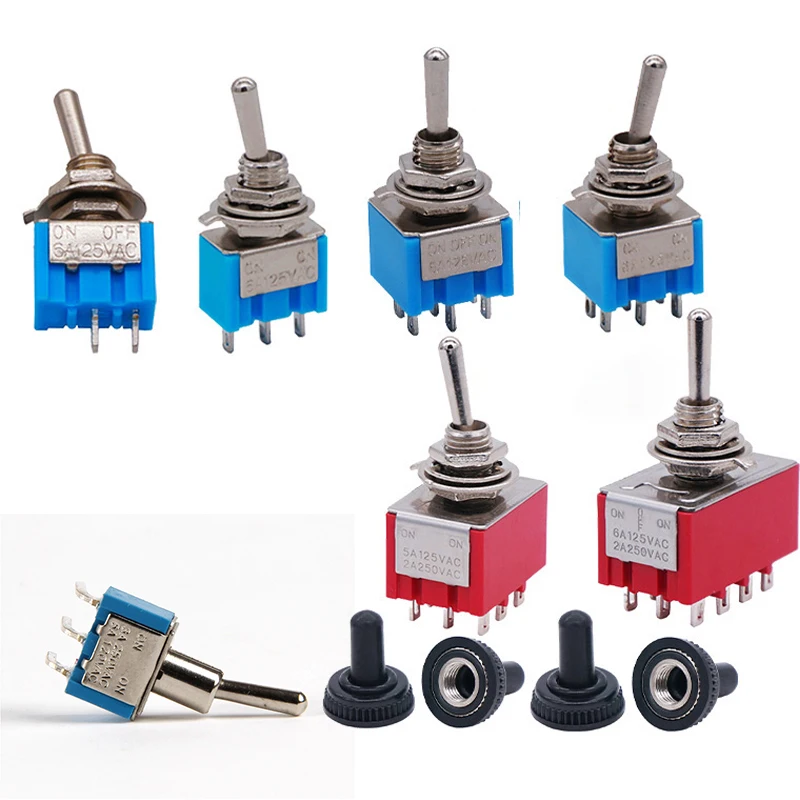
Miniature ON-OFF-ON Toggle Switches with Waterproof Cap
Official Store Deal
Expert Analysis Overview
Precision Control for Intelligent Systems
The Miniature ON-OFF-ON Toggle Switches are a fundamental component for any discerning home automation enthusiast building robust, locally controlled systems. These compact units provide a tangible interface, critical for scenarios where network-dependent solutions introduce unacceptable latency or reliability concerns. Their design prioritizes direct electrical signaling over complex digital protocols, ensuring immediate response. This is not merely a switch; it is a gateway to dependable physical interaction within a smart environment.
Tactile Command Architecture
The switches are characterized by their Single Pole Double Throw (SPDT) configuration and ON-OFF-ON functionality. This means a single input line can be routed to one of two distinct output lines, with a stable central 'off' position. This capability allows for versatile control schemes, such as selecting between two operational modes or toggling power to one of two different circuits. The tactile feedback provided by the toggle mechanism confirms the switch state. It is a simple, effective feedback loop.
In contrast to capacitive touch sensors or virtual buttons, these physical switches offer an unmistakable state. For critical home automation tasks, like activating a security mode or switching between primary and backup power sources, this certainty is invaluable. The direct electrical signal generated by the switch transition minimizes response delay, a crucial factor for time-sensitive automations. Latency is virtually eliminated.
Unlike many smart home input devices that rely on Wi-Fi or Zigbee mesh networks, these switches operate at the most fundamental electrical level. They interface directly with microcontrollers such such as an ESP32 or ESP8266, which can then relay their state to a Home Assistant instance via protocols like ESPHome or Tasmota. This architecture ensures that even if the primary network goes down, the physical input remains functional, offering a layer of resilience often missing in purely wireless setups. This offers true local control.
Engineered Resilience and Longevity
Constructed with visible metal components and a durable plastic body, these switches are designed for sustained operation. The 6A current rating at 125V AC or 3A at 250V AC indicates a robust internal contact mechanism capable of handling moderate electrical loads directly. This capacity extends their utility beyond mere signal input, allowing them to switch smaller appliances or lighting circuits without additional relays. Longevity is paramount.
Crucially, the inclusion of a miniature waterproof cap is a significant enhancement. This cap protects the toggle mechanism from dust, moisture, and incidental splashes, making the switches suitable for installation in environments where exposure to elements is a concern. Think outdoor control panels or utility room interfaces. The cap enhances operational integrity.
Compared to standard, unprotected toggle switches, the waterproof cap significantly extends the operational lifespan in challenging conditions. This feature reduces the need for frequent replacements and maintenance, translating into long-term cost savings and increased system reliability for the end-user. It is a small detail with substantial impact. This adds significant value.
Seamless Integration Protocol
From a home automation engineering perspective, the integration potential of these switches is high. Their simple electrical output makes them ideal for connecting to general-purpose input/output (GPIO) pins on microcontrollers. This direct connection ensures minimal processing overhead and virtually instantaneous state changes. The signal is clear and immediate.
When integrated with platforms like Home Assistant via ESPHome, the switch states become immediately available as entities within the smart home ecosystem. This allows for complex automations to be triggered by physical interaction, blending the reliability of traditional electrical switches with the flexibility of modern smart systems. For instance, a single toggle could initiate a multi-device scene, or arm/disarm a security perimeter. The possibilities are extensive.
Unlike proprietary smart switches that may require specific hubs or cloud services, these miniature toggles offer unparalleled flexibility in integration. They adhere to open-source hardware principles when paired with open-source firmware, providing the user with complete control over their data and system behavior. This avoids vendor lock-in, a common frustration in the smart home landscape. This is true freedom.
Mounting and Spatial Considerations
The 6mm mounting hole diameter specified for these switches indicates their compact footprint. This small size allows for installation in tight spaces, such as custom control panels, project enclosures, or retrofitting into existing appliance fascias. The threaded shaft and accompanying nuts visible in the imagery ensure a secure and stable panel mount. Secure mounting is essential.
However, the miniature size also implies that wiring can be intricate. Users should be prepared for careful soldering and wire management, especially when integrating multiple switches into a dense enclosure. Adequate space for wiring and heat shrinking or insulation is critical to prevent short circuits. Patience is a virtue here.
Compared to larger industrial-grade switches, these miniature units are designed for applications where space is at a premium and direct human interface is still desired. Their form factor makes them suitable for hobbyist projects, custom smart dashboards, or even miniature robotic controls, where a robust, discrete physical input is necessary. They fit where others cannot.
Value Proposition for the DIY Enthusiast
At a price point of approximately 1.35 USD for a pair, these switches represent exceptional value for the DIY home automation builder. The low cost allows for extensive experimentation and deployment across multiple projects without significant financial outlay. This encourages iterative design and broad system implementation. Costs are minimal.
Considering their durable construction and the added protection of a waterproof cap, the long-term cost-per-use is remarkably low. These are not disposable components; they are built to last within their specified parameters, offering reliability that often surpasses their price tag. This is an investment in stability.
Unlike cheaper, flimsy switches that might fail after a few hundred cycles, the visible quality and current rating of these units suggest a much longer operational life. For a hobbyist or professional looking to implement reliable physical controls without breaking the budget, these miniature toggle switches offer a compelling balance of performance, durability, and affordability. This is smart spending.
Imagine a home automation setup where critical functions are always responsive, regardless of network status. Picture a custom control panel, sleek and functional, where each physical toggle provides immediate, satisfying feedback, directly controlling your environment. These switches offer the foundation for such a system, empowering you to build a smart home that truly responds to your command, without delay or compromise. The future of control is tactile and reliable.