MJJC PIR DC Motion Sensor Switch
Official Store Deal
Expert Analysis Overview
The MJJC PIR DC Motion Sensor Switch is a compact, versatile passive infrared (PIR) sensor designed for integrating automated lighting or other low-voltage DC devices into smart home ecosystems. This unit targets DIY enthusiasts and system integrators seeking efficient, localized presence detection without complex network configurations.
This motion sensor operates on a wide 5-12V DC input, making it suitable for a broad range of LED strip lighting, under-cabinet lighting, or small appliance automation projects. Its primary function is to detect movement within its 120-degree field of view and activate a connected load for a user-defined duration. The device is small. Its white plastic casing is unobtrusive.
The sensor incorporates both a movement sensor and a photoswitch sensor, enabling it to function intelligently based on ambient light conditions. This dual-sensing capability prevents unnecessary activation during daylight hours, contributing to energy efficiency. The unit’s compact dimensions (49x40x25mm) facilitate discreet installation in various settings.
Unlike generic motion sensors that offer fixed timing, this MJJC model features an adjustable timer ranging from 10 seconds to a generous 15 minutes. This flexibility is crucial for tailoring automation routines to specific use cases, whether it is a quick closet light or a longer-duration pathway illumination. The adjustable timer mechanism is a significant upgrade from basic, non-configurable options typically found in this price bracket.
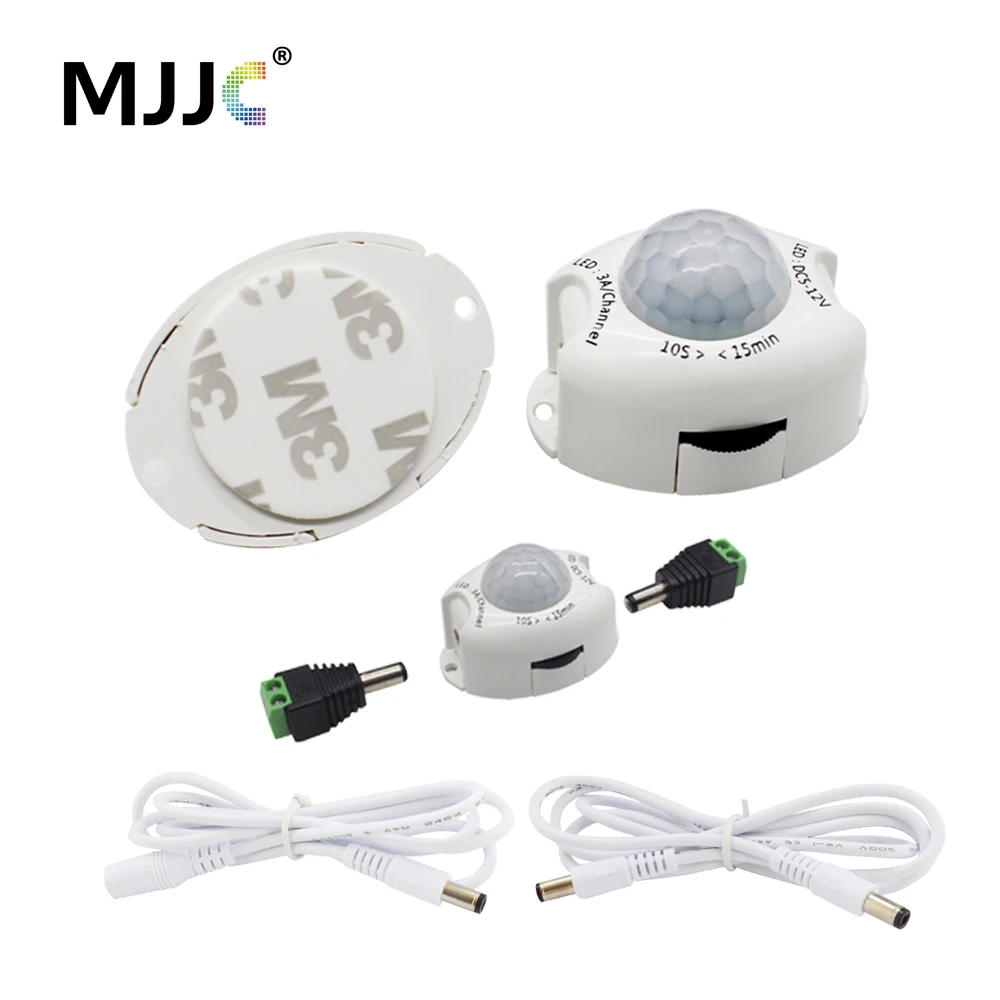
Connectivity is straightforward, utilizing 5.5x2.1mm DC barrel connectors for both input and output. This standardized connector type ensures compatibility with a vast array of existing DC power supplies and LED strips. The product offers variants: some include male DC connectors, others do not, providing options for different installation needs.
For a Home Automation Engineer, the ability to integrate such a sensor into a larger system without proprietary protocols is key. This device, while not directly Wi-Fi or Zigbee enabled, serves as an excellent local trigger for a microcontroller or smart relay. It provides a simple ON/OFF signal.
Consider a scenario where a user wants to automate a pantry light. The sensor detects entry, the light turns on. Its direct DC operation minimizes latency. This is a critical advantage for immediate response applications.
Many smart home setups often rely on hub-based systems, introducing potential delays. By using this sensor as a direct input to a local controller (e.g., an ESP32 or Raspberry Pi running Home Assistant), response times can be significantly reduced. The absence of network overhead simplifies the automation chain.
The sensor boasts a detecting distance of 5 meters, providing ample coverage for most residential rooms, hallways, or utility areas. The 120-degree detecting angle ensures a wide detection zone, reducing blind spots. Its operational range is practical.
With a maximum load current of 3A, this sensor can comfortably handle multiple meters of standard 12V LED strip lighting or several smaller DC-powered devices. Engineers often calculate power budgets carefully. A 3A capacity at 12V translates to 36 watts, which is sufficient for many common lighting applications. This capacity is robust for its size.
The integrated photoswitch sensor automatically disables motion detection when ambient light levels are sufficient. This feature is invaluable for energy conservation. It prevents lights from turning on unnecessarily during the day. This intelligent operation distinguishes it from simpler, always-on motion detectors.
Installation is simplified by the inclusion of double-sided 3M adhesive tape on some variants, allowing for quick and tool-free mounting on various surfaces. The compact form factor further aids in discreet placement, making it less noticeable in finished spaces. Its design prioritizes ease of deployment.
For more permanent installations, the sensor casing appears to have small mounting holes, suggesting screw-based attachment is also an option. This dual mounting flexibility caters to both temporary and long-term setups. Users value installation options.
This device effectively upgrades basic lighting setups to intelligent, responsive systems. Unlike standard wall switches, which require manual intervention, this sensor provides hands-free operation. It is an efficient upgrade for utility spaces, closets, or any area where temporary illumination is beneficial.
Visually, the unit appears constructed from a durable white plastic, typical for indoor electrical components. The domed PIR lens is centrally located, suggesting a standard detection mechanism. The overall build is simple and functional.
Given its low price point, the components are likely mass-produced, but the MJJC brand has a presence in the DIY smart home market. The visible DC connectors appear standard. The internal circuitry, while not visible, is expected to meet basic operational requirements for low-voltage switching.
This sensor represents a cost-effective solution for adding motion-activated control. It offers a tangible return on investment through energy savings and convenience. The device is a solid choice for practical automation projects.
Imagine walking into a dark pantry, and the lights instantly illuminate without fumbling for a switch. Picture a hallway where lights guide your path at night, then gently fade as you pass. This sensor delivers that seamless, responsive experience, making your home more intuitive and energy-efficient, enhancing daily living with effortless automation.
Core Functionality and Design
This motion sensor operates on a wide 5-12V DC input, making it suitable for a broad range of LED strip lighting, under-cabinet lighting, or small appliance automation projects. Its primary function is to detect movement within its 120-degree field of view and activate a connected load for a user-defined duration. The device is small. Its white plastic casing is unobtrusive.
The sensor incorporates both a movement sensor and a photoswitch sensor, enabling it to function intelligently based on ambient light conditions. This dual-sensing capability prevents unnecessary activation during daylight hours, contributing to energy efficiency. The unit’s compact dimensions (49x40x25mm) facilitate discreet installation in various settings.
Unlike generic motion sensors that offer fixed timing, this MJJC model features an adjustable timer ranging from 10 seconds to a generous 15 minutes. This flexibility is crucial for tailoring automation routines to specific use cases, whether it is a quick closet light or a longer-duration pathway illumination. The adjustable timer mechanism is a significant upgrade from basic, non-configurable options typically found in this price bracket.
Connectivity and Integration Potential
Connectivity is straightforward, utilizing 5.5x2.1mm DC barrel connectors for both input and output. This standardized connector type ensures compatibility with a vast array of existing DC power supplies and LED strips. The product offers variants: some include male DC connectors, others do not, providing options for different installation needs.
For a Home Automation Engineer, the ability to integrate such a sensor into a larger system without proprietary protocols is key. This device, while not directly Wi-Fi or Zigbee enabled, serves as an excellent local trigger for a microcontroller or smart relay. It provides a simple ON/OFF signal.
Consider a scenario where a user wants to automate a pantry light. The sensor detects entry, the light turns on. Its direct DC operation minimizes latency. This is a critical advantage for immediate response applications.
Many smart home setups often rely on hub-based systems, introducing potential delays. By using this sensor as a direct input to a local controller (e.g., an ESP32 or Raspberry Pi running Home Assistant), response times can be significantly reduced. The absence of network overhead simplifies the automation chain.
Performance Metrics and Operational Parameters
The sensor boasts a detecting distance of 5 meters, providing ample coverage for most residential rooms, hallways, or utility areas. The 120-degree detecting angle ensures a wide detection zone, reducing blind spots. Its operational range is practical.
With a maximum load current of 3A, this sensor can comfortably handle multiple meters of standard 12V LED strip lighting or several smaller DC-powered devices. Engineers often calculate power budgets carefully. A 3A capacity at 12V translates to 36 watts, which is sufficient for many common lighting applications. This capacity is robust for its size.
The integrated photoswitch sensor automatically disables motion detection when ambient light levels are sufficient. This feature is invaluable for energy conservation. It prevents lights from turning on unnecessarily during the day. This intelligent operation distinguishes it from simpler, always-on motion detectors.
Installation and Practicality
Installation is simplified by the inclusion of double-sided 3M adhesive tape on some variants, allowing for quick and tool-free mounting on various surfaces. The compact form factor further aids in discreet placement, making it less noticeable in finished spaces. Its design prioritizes ease of deployment.
For more permanent installations, the sensor casing appears to have small mounting holes, suggesting screw-based attachment is also an option. This dual mounting flexibility caters to both temporary and long-term setups. Users value installation options.
This device effectively upgrades basic lighting setups to intelligent, responsive systems. Unlike standard wall switches, which require manual intervention, this sensor provides hands-free operation. It is an efficient upgrade for utility spaces, closets, or any area where temporary illumination is beneficial.
Reliability and Build Quality
Visually, the unit appears constructed from a durable white plastic, typical for indoor electrical components. The domed PIR lens is centrally located, suggesting a standard detection mechanism. The overall build is simple and functional.
Given its low price point, the components are likely mass-produced, but the MJJC brand has a presence in the DIY smart home market. The visible DC connectors appear standard. The internal circuitry, while not visible, is expected to meet basic operational requirements for low-voltage switching.
This sensor represents a cost-effective solution for adding motion-activated control. It offers a tangible return on investment through energy savings and convenience. The device is a solid choice for practical automation projects.
Imagine walking into a dark pantry, and the lights instantly illuminate without fumbling for a switch. Picture a hallway where lights guide your path at night, then gently fade as you pass. This sensor delivers that seamless, responsive experience, making your home more intuitive and energy-efficient, enhancing daily living with effortless automation.