Modular Fabric Wardrobe Organizers with PP Board Dividers
Official Store Deal
Expert Analysis Overview
Architecting Internal Wardrobe Space
The Modular Fabric Wardrobe Organizers with PP Board Dividers represent a highly efficient modular system designed for individuals seeking to reclaim and optimize vertical and horizontal space within their closets and drawers. This system moves beyond simple containment, offering a structured approach to garment management that significantly enhances accessibility and visual order. It transforms chaotic piles into neatly organized segments. Each unit is engineered to integrate seamlessly into existing storage infrastructures, providing an immediate upgrade to organizational capacity.
Unlike flimsy fabric bins that collapse under their own weight or rigid plastic containers that offer limited flexibility, these organizers feature integrated PP board support. This structural element ensures that the units maintain their form even when partially filled or stacked, a critical factor for long-term durability and consistent performance. The thoughtful inclusion of these rigid panels prevents the common issue of sagging, which often undermines the effectiveness of other soft-sided storage solutions. This design choice directly addresses the pain point of items becoming disheveled or inaccessible due to container deformation.
The system's design prioritizes both individual item visibility and overall spatial efficiency. By segmenting garments into dedicated compartments, users can quickly locate specific items without disturbing adjacent clothing. This reduces the time spent searching and refolding, contributing to a more streamlined daily routine. The clear delineation of storage zones also encourages a more disciplined approach to putting away laundry, reinforcing good organizational habits.
The Geometry of Garment Containment
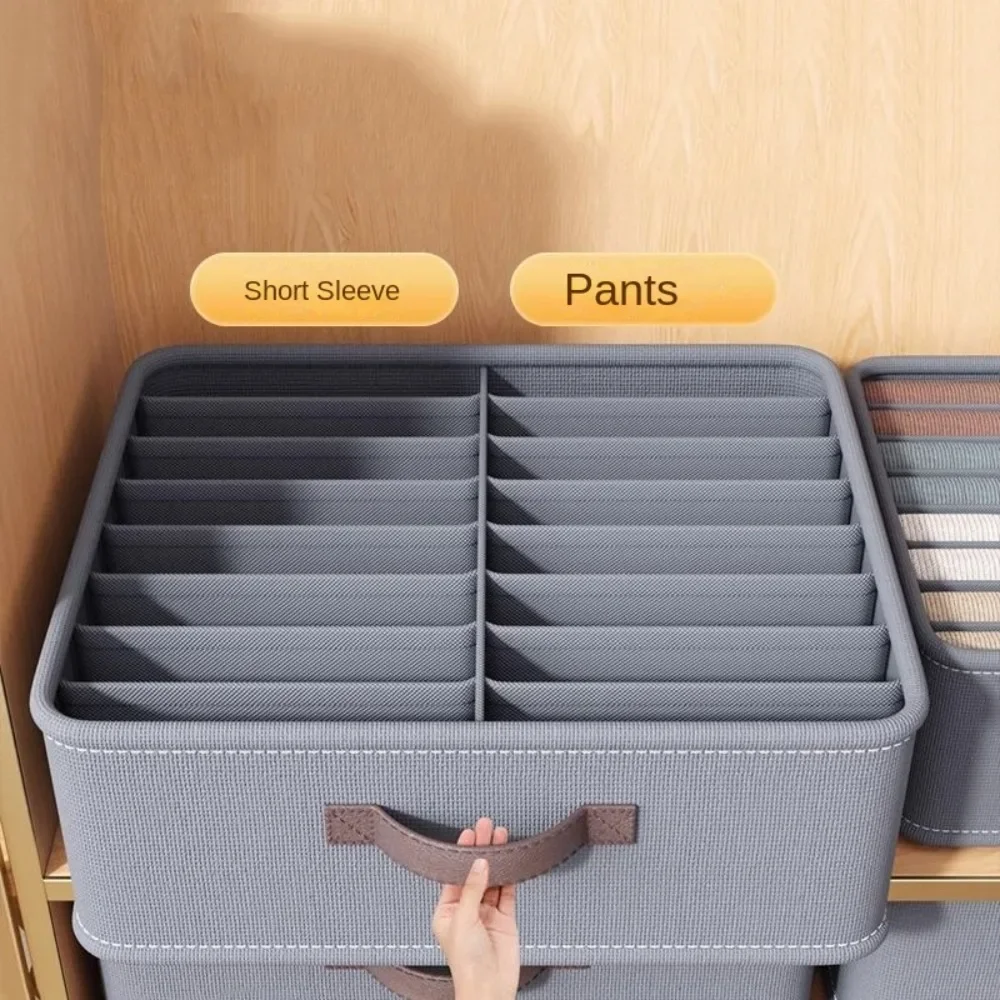
These organizers are available in multiple grid configurations, specifically 7-grid and 9-grid variants, tailored for different garment types. The 7-grid model, often utilized for bulkier items like jeans or sweaters, provides larger individual compartments. The 9-grid variant is optimized for smaller items such as t-shirts, short sleeves, or even undergarments, maximizing the number of items stored per unit footprint. This specialized compartmentalization is a core feature.
Each compartment is dimensionally consistent, ensuring that folded garments maintain their shape and remain wrinkle-free. This uniform presentation is not merely aesthetic; it protects fabrics from creasing and compression damage that can occur in unstructured storage. The precise internal dimensions of each cell are calculated to accommodate standard garment folds, promoting a neat and orderly appearance. This attention to internal geometry is what differentiates a mere box from a true organizational tool.
Compared to simply stacking clothes directly on shelves or in drawers, these dividers dramatically increase storage density. A single organizer can hold numerous items, effectively multiplying the usable space within a given volume. This is particularly beneficial in smaller living spaces or wardrobes where every cubic centimeter counts. The ability to categorize and separate items also prevents the 'black hole' effect where items at the bottom of a stack become forgotten or difficult to retrieve.
Structural Integrity and Material Science
The primary construction material is a durable, non-woven fabric, chosen for its breathability and resistance to dust accumulation. This material choice helps to keep garments fresh and protected from environmental factors. The fabric's texture also provides a gentle surface for clothing, preventing snags or abrasions. It is a practical choice for everyday use.
Crucially, the internal structure is reinforced with PP (Polypropylene) board inserts. These boards provide the necessary rigidity to maintain the organizer's shape, even when lifted or stacked. PP board is known for its lightweight yet robust properties, offering excellent resistance to moisture and mildew, which is vital for long-term clothing storage. This material combination ensures the organizers are both flexible enough for folding and sturdy enough for consistent use. Many generic fabric storage solutions often rely solely on fabric walls, leading to sagging and instability over time. The integration of PP board in these organizers represents a significant upgrade in build quality, offering a level of structural support typically found in more expensive, rigid storage systems. This hybrid construction delivers the best of both worlds: the soft touch of fabric with the steadfastness of a hard-sided container. It's a smart engineering choice.
Deployment and Adaptability
The foldable design of these organizers allows for compact storage when not in use, a key advantage for seasonal items or when reconfiguring storage layouts. The units can be quickly collapsed and expanded, offering flexibility in adapting to changing storage needs. This feature ensures that the organizers do not become clutter themselves when empty.
Integrated handles, visible on the front of each unit, facilitate easy retrieval from shelves or drawers. These handles are securely stitched, designed to withstand the weight of a fully loaded organizer. The ergonomic placement and robust construction of the handles enhance the user experience, making it effortless to access stored items. This small detail makes a big difference in daily utility.
Furthermore, the stackable nature of these organizers, enabled by the rigid PP board structure, allows for efficient vertical space utilization. Multiple units can be placed atop one another without deforming the contents of the lower units. This modularity is crucial for maximizing storage in tall cabinets or deep shelves, transforming underutilized vertical space into accessible storage. The ability to stack creates a multi-tiered system.
Maximizing Every Cubic Centimeter
The value proposition of these organizers extends beyond their initial purchase price. By preventing clothes from becoming wrinkled or damaged, they contribute to the longevity of garments, reducing the need for frequent ironing or replacement. This translates into tangible savings over time. The initial investment pays dividends in garment care.
Consider a scenario where a user frequently struggles with overflowing drawers or disorganized closet shelves. The introduction of these modular organizers immediately brings order and efficiency. The time saved searching for specific items, coupled with the reduced effort in maintaining a tidy wardrobe, adds significant intangible value. It streamlines daily routines.
Compared to custom-built closet systems, which can be prohibitively expensive and permanent, these foldable organizers offer a cost-effective and flexible alternative. They provide a similar level of organization and space optimization at a fraction of the cost, with the added benefit of portability and reconfigurability. This makes them an accessible solution for a wide range of budgets and living situations. They are a smart, economical choice.
Imagine opening your wardrobe to a perfectly ordered display, where every shirt, sweater, and pair of pants has its designated place, easily visible and accessible. The frustration of rummaging through cluttered piles becomes a distant memory, replaced by the calm efficiency of a well-organized system. Your mornings become smoother, your clothes remain pristine, and the overall aesthetic of your personal space is elevated, creating a sense of calm and control.