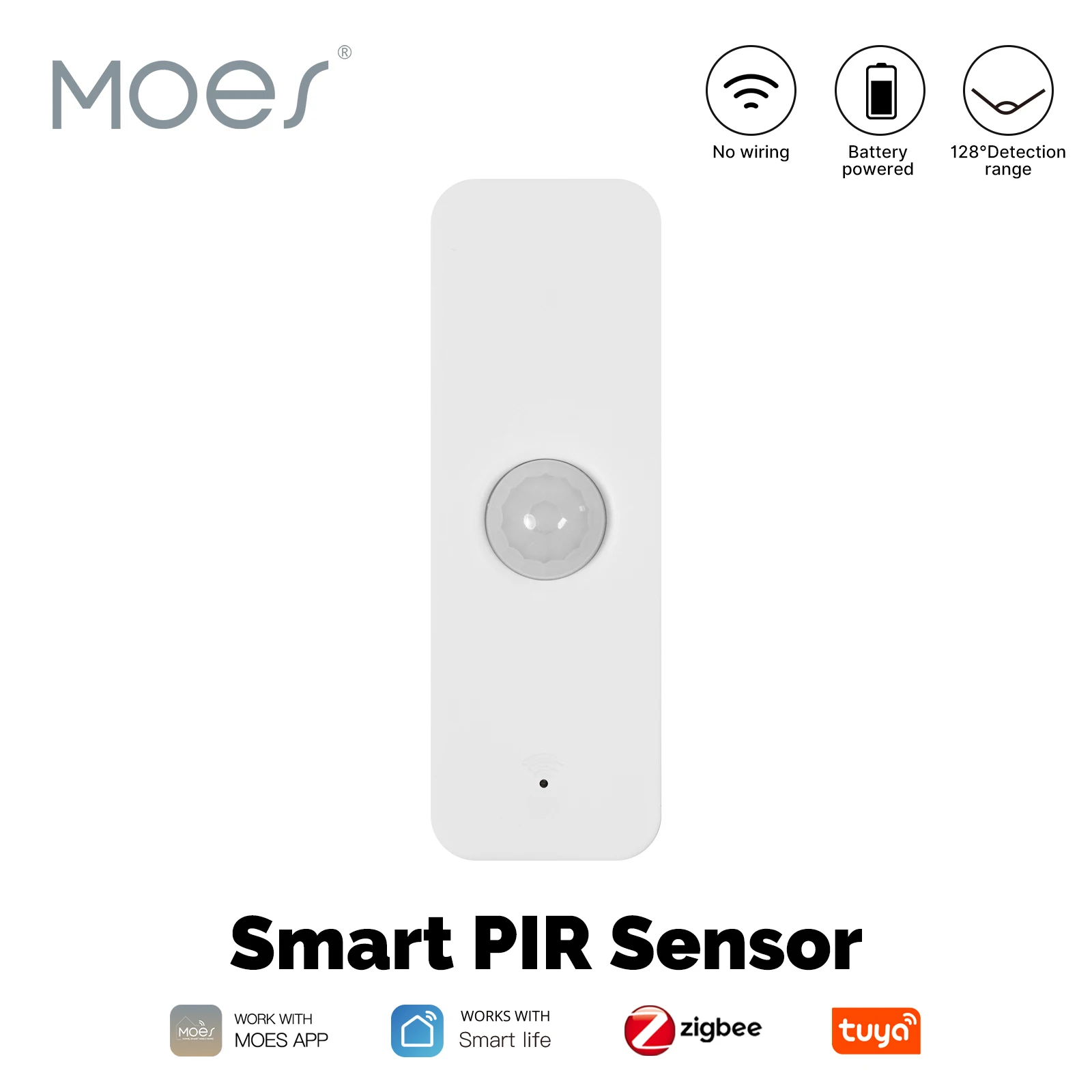
MOES Smart PIR Motion Sensor
Official Store Deal
Expert Analysis Overview
The MOES Smart PIR Sensor is a remarkably efficient and adaptable motion detection unit, specifically engineered for users prioritizing seamless voice control and robust smart home automation. This device doesn't just detect movement; it acts as a silent conductor for an entire ecosystem, allowing for an effortlessly convenient lifestyle. Its compact form factor, combined with a battery-powered design, ensures discreet and flexible placement throughout any living space.
This sensor employs Passive Infrared (PIR) technology. Essentially, it detects changes in infrared radiation within its field of view, which typically means it's looking for the heat signatures of moving objects, like people or larger pets. A 120-degree detection angle provides a wide cone of coverage. This allows it to monitor expansive areas from a single mounting point. Detection range extends up to 6 meters, making it suitable for hallways, entryways, or even open-plan living rooms.
Picture this: a user walks into a previously dark room. The sensor, mounted subtly in a corner, registers the change in heat signature. Almost instantly, a pre-programmed routine kicks in. Lights illuminate, perhaps a smart speaker announces a greeting. This immediate, hands-free response is where the MOES sensor truly shines, eliminating the need to fumble for light switches or manually activate devices.
Compared to older, less sophisticated motion detectors, the MOES Smart PIR Sensor offers a notably broader detection field and a more refined response time. Many basic sensors are limited to narrower angles or shorter ranges, often leading to 'blind spots' or delayed activations. This MOES unit minimizes those frustrations, providing a more reliable trigger for automated scenes.
Connectivity is a core strength, offering both ZigBee and WiFi variants. The ZigBee option requires a compatible hub, typically a Tuya ZigBee gateway, which acts as a central brain, allowing devices to communicate efficiently on a low-power mesh network. For those without a hub, the WiFi version connects directly to a home's 2.4GHz network, simplifying initial setup.
For the voice control fanatic, this dual-protocol approach is a boon. Whether on ZigBee or WiFi, integration with platforms like Amazon Alexa and Google Home is handled through the overarching Tuya Smart or Smart Life apps. Once linked, voice commands become the primary interaction. "Alexa, turn on the hallway lights when motion is detected" isn't just a fantasy; it's a configurable reality. The sensor acts as the trigger, the app handles the logic, and the voice assistant executes the command.
Many entry-level smart devices force users into a single, often proprietary, ecosystem. The MOES sensor's support for both major wireless protocols (via Tuya) offers significantly more flexibility. This means users aren't locked into a specific brand of hub or router. It represents a clear upgrade in terms of interoperability, ensuring it fits into almost any existing or planned smart home setup without requiring a complete system overhaul.
Scene linkage is where the true convenience of this sensor unfolds. Through the Tuya Smart or Smart Life app, users can create intricate automation rules. For instance, motion detected in the living room after sunset could automatically turn on smart lights, adjust a smart thermostat, or even trigger a smart plug connected to a fan. The possibilities extend beyond mere convenience; they encompass security and energy efficiency.
Consider the scenario of home security. If the sensor detects motion while the home is armed (a mode configurable in the app), it can trigger an alarm, send immediate push notifications to a smartphone, or even activate linked security cameras. This proactive approach to security is far more effective than relying on passive monitoring alone. The system becomes a vigilant, always-on guardian.
Unlike simple timers or fixed schedules, motion-based automation is inherently more adaptive and intelligent. It responds to actual presence, not just assumptions. Traditional smart homes might turn lights on at a set time, even if no one is home. This sensor ensures resources are only utilized when needed. It's a fundamental shift from scheduled actions to reactive intelligence, providing a more intuitive and energy-conscious environment.
The physical design of the MOES Smart PIR Sensor emphasizes minimalism and discretion. Its matte white plastic casing feels surprisingly dense for its size, suggesting a robust internal construction. The recessed PIR lens integrates seamlessly, avoiding any protruding elements that might draw unwanted attention. Dimensions are compact: 71mm in length, 25mm in width, and just 19.7mm thick. This slim profile allows it to blend into door frames, wall corners, or under shelves without being an eyesore.
Installation is remarkably simple. The sensor is entirely battery-powered, eliminating the need for any wiring whatsoever. This freedom from power outlets means it can be placed virtually anywhere within its wireless range. Mounting is typically achieved with adhesive strips or small screws, allowing for quick deployment or relocation as needed. This ease of installation is a significant advantage for renters or those who prefer not to modify their walls.
Compared to larger, often bulkier wired sensors, this MOES unit offers superior aesthetic integration. Its small footprint and wireless operation mean it doesn't detract from interior design. The lack of visible cables or power adapters contributes to a cleaner, more modern look. This careful attention to design ensures the technology enhances the living space rather than clutters it.
Powering the device is a single CR2450 coin cell battery (though some models might use different types, it's typically a long-life coin cell). This choice of power source contributes to the compact design and wireless freedom. Battery life is impressive, often lasting 6-12 months depending on detection frequency and environmental conditions. The Tuya app provides real-time battery status, ensuring users are never caught off guard by a dead sensor.
Maintaining the sensor is straightforward. Beyond periodic battery replacement, the device is largely maintenance-free. Its sealed casing protects internal components from dust and minor splashes, though it's not designed for outdoor use. The low power consumption of ZigBee devices, in particular, contributes to the extended battery life, making it a 'set and forget' component for most users.
Many smart devices require frequent charging or complex power solutions. This MOES sensor, with its long-lasting, easily replaceable battery, stands out as a low-hassle option. It alleviates the common pain point of constantly monitoring power levels or running unsightly charging cables. The design prioritizes convenience, allowing the sensor to operate autonomously for extended periods.
For the voice control enthusiast, this sensor is a powerful enabler. It provides the crucial input that allows voice assistants to move beyond simple commands to context-aware actions. Imagine saying, "Good morning, Alexa," and the blinds open, the coffee machine starts, and the news plays, all because the sensor detected you leaving your bedroom. The sensor transforms a 'smart' home into an 'intuitive' home.
The responsiveness of the sensor is key to a satisfying voice-controlled experience. There's nothing more frustrating than a smart home that lags. The MOES sensor, particularly the ZigBee variant, offers quick detection and reporting to the hub, minimizing the delay between motion and action. This speed ensures that when you walk into a room, the lights are on *before* you've even fully entered, making the automation feel truly seamless.
Compared to relying solely on voice commands for every action, integrating a motion sensor significantly reduces the cognitive load. Instead of needing to remember specific phrases, the environment simply adapts to presence. It's an upgrade from active command to passive, intelligent response, freeing up the user's mental energy for more important tasks. This is the essence of a truly smart home, where technology works silently in the background, anticipating needs.
This MOES Smart PIR Sensor offers a future where your home anticipates your movements, responds to your presence, and operates with an effortless grace. Imagine walking through your home and having the environment adapt to you, lights illuminating your path, climate controls adjusting to your comfort, and security systems standing guard, all without a single button press or spoken command. It's about a home that simply *works* for you, making daily life smoother, safer, and infinitely more convenient.
Eyes that Never Sleep
This sensor employs Passive Infrared (PIR) technology. Essentially, it detects changes in infrared radiation within its field of view, which typically means it's looking for the heat signatures of moving objects, like people or larger pets. A 120-degree detection angle provides a wide cone of coverage. This allows it to monitor expansive areas from a single mounting point. Detection range extends up to 6 meters, making it suitable for hallways, entryways, or even open-plan living rooms.
Picture this: a user walks into a previously dark room. The sensor, mounted subtly in a corner, registers the change in heat signature. Almost instantly, a pre-programmed routine kicks in. Lights illuminate, perhaps a smart speaker announces a greeting. This immediate, hands-free response is where the MOES sensor truly shines, eliminating the need to fumble for light switches or manually activate devices.
Compared to older, less sophisticated motion detectors, the MOES Smart PIR Sensor offers a notably broader detection field and a more refined response time. Many basic sensors are limited to narrower angles or shorter ranges, often leading to 'blind spots' or delayed activations. This MOES unit minimizes those frustrations, providing a more reliable trigger for automated scenes.
The Invisible Threads of Control
Connectivity is a core strength, offering both ZigBee and WiFi variants. The ZigBee option requires a compatible hub, typically a Tuya ZigBee gateway, which acts as a central brain, allowing devices to communicate efficiently on a low-power mesh network. For those without a hub, the WiFi version connects directly to a home's 2.4GHz network, simplifying initial setup.
For the voice control fanatic, this dual-protocol approach is a boon. Whether on ZigBee or WiFi, integration with platforms like Amazon Alexa and Google Home is handled through the overarching Tuya Smart or Smart Life apps. Once linked, voice commands become the primary interaction. "Alexa, turn on the hallway lights when motion is detected" isn't just a fantasy; it's a configurable reality. The sensor acts as the trigger, the app handles the logic, and the voice assistant executes the command.
Many entry-level smart devices force users into a single, often proprietary, ecosystem. The MOES sensor's support for both major wireless protocols (via Tuya) offers significantly more flexibility. This means users aren't locked into a specific brand of hub or router. It represents a clear upgrade in terms of interoperability, ensuring it fits into almost any existing or planned smart home setup without requiring a complete system overhaul.
Crafting Your Automated Domain
Scene linkage is where the true convenience of this sensor unfolds. Through the Tuya Smart or Smart Life app, users can create intricate automation rules. For instance, motion detected in the living room after sunset could automatically turn on smart lights, adjust a smart thermostat, or even trigger a smart plug connected to a fan. The possibilities extend beyond mere convenience; they encompass security and energy efficiency.
Consider the scenario of home security. If the sensor detects motion while the home is armed (a mode configurable in the app), it can trigger an alarm, send immediate push notifications to a smartphone, or even activate linked security cameras. This proactive approach to security is far more effective than relying on passive monitoring alone. The system becomes a vigilant, always-on guardian.
Unlike simple timers or fixed schedules, motion-based automation is inherently more adaptive and intelligent. It responds to actual presence, not just assumptions. Traditional smart homes might turn lights on at a set time, even if no one is home. This sensor ensures resources are only utilized when needed. It's a fundamental shift from scheduled actions to reactive intelligence, providing a more intuitive and energy-conscious environment.
A Discreet Sentinel
The physical design of the MOES Smart PIR Sensor emphasizes minimalism and discretion. Its matte white plastic casing feels surprisingly dense for its size, suggesting a robust internal construction. The recessed PIR lens integrates seamlessly, avoiding any protruding elements that might draw unwanted attention. Dimensions are compact: 71mm in length, 25mm in width, and just 19.7mm thick. This slim profile allows it to blend into door frames, wall corners, or under shelves without being an eyesore.
Installation is remarkably simple. The sensor is entirely battery-powered, eliminating the need for any wiring whatsoever. This freedom from power outlets means it can be placed virtually anywhere within its wireless range. Mounting is typically achieved with adhesive strips or small screws, allowing for quick deployment or relocation as needed. This ease of installation is a significant advantage for renters or those who prefer not to modify their walls.
Compared to larger, often bulkier wired sensors, this MOES unit offers superior aesthetic integration. Its small footprint and wireless operation mean it doesn't detract from interior design. The lack of visible cables or power adapters contributes to a cleaner, more modern look. This careful attention to design ensures the technology enhances the living space rather than clutters it.
Sustained Vigilance
Powering the device is a single CR2450 coin cell battery (though some models might use different types, it's typically a long-life coin cell). This choice of power source contributes to the compact design and wireless freedom. Battery life is impressive, often lasting 6-12 months depending on detection frequency and environmental conditions. The Tuya app provides real-time battery status, ensuring users are never caught off guard by a dead sensor.
Maintaining the sensor is straightforward. Beyond periodic battery replacement, the device is largely maintenance-free. Its sealed casing protects internal components from dust and minor splashes, though it's not designed for outdoor use. The low power consumption of ZigBee devices, in particular, contributes to the extended battery life, making it a 'set and forget' component for most users.
Many smart devices require frequent charging or complex power solutions. This MOES sensor, with its long-lasting, easily replaceable battery, stands out as a low-hassle option. It alleviates the common pain point of constantly monitoring power levels or running unsightly charging cables. The design prioritizes convenience, allowing the sensor to operate autonomously for extended periods.
The Voice Control Fanatic's Dream
For the voice control enthusiast, this sensor is a powerful enabler. It provides the crucial input that allows voice assistants to move beyond simple commands to context-aware actions. Imagine saying, "Good morning, Alexa," and the blinds open, the coffee machine starts, and the news plays, all because the sensor detected you leaving your bedroom. The sensor transforms a 'smart' home into an 'intuitive' home.
The responsiveness of the sensor is key to a satisfying voice-controlled experience. There's nothing more frustrating than a smart home that lags. The MOES sensor, particularly the ZigBee variant, offers quick detection and reporting to the hub, minimizing the delay between motion and action. This speed ensures that when you walk into a room, the lights are on *before* you've even fully entered, making the automation feel truly seamless.
Compared to relying solely on voice commands for every action, integrating a motion sensor significantly reduces the cognitive load. Instead of needing to remember specific phrases, the environment simply adapts to presence. It's an upgrade from active command to passive, intelligent response, freeing up the user's mental energy for more important tasks. This is the essence of a truly smart home, where technology works silently in the background, anticipating needs.
This MOES Smart PIR Sensor offers a future where your home anticipates your movements, responds to your presence, and operates with an effortless grace. Imagine walking through your home and having the environment adapt to you, lights illuminating your path, climate controls adjusting to your comfort, and security systems standing guard, all without a single button press or spoken command. It's about a home that simply *works* for you, making daily life smoother, safer, and infinitely more convenient.