MOES Tuya Wi-Fi Smart Light Switch (US Single Pole)
Official Store Deal
Expert Analysis Overview
The MOES Tuya Wi-Fi Smart Light Switch (US Single Pole) is a robust, single-pole smart lighting solution crafted for seamless integration into modern smart home ecosystems, particularly for users prioritizing reliable Wi-Fi control and voice assistant compatibility. This device represents a significant upgrade over conventional switches, transforming basic lighting into an intelligent, automated component of a connected dwelling. Its design prioritizes both functionality and aesthetic integration, ensuring it blends effortlessly into contemporary interiors while delivering advanced control capabilities.
This smart switch operates exclusively on the 2.4GHz Wi-Fi band. This frequency is a deliberate engineering choice, offering superior penetration through walls and a more stable connection over longer distances compared to the faster but shorter-range 5GHz band. For the intricate mesh of a smart home, where devices are often spread across multiple rooms and floors, this ensures consistent communication.
Imagine automating your outdoor lights to activate at dusk, or scheduling interior illumination to deter potential intruders while away. The 2.4GHz protocol underpins this reliability, minimizing dropped connections that could disrupt critical automation routines. A stable network is paramount.
Unlike many dual-band devices that can sometimes struggle to maintain a consistent connection on the more congested 5GHz spectrum in a home environment, this switch's dedicated 2.4GHz operation simplifies network management and enhances overall system stability. It just works.
Installation of this MOES switch necessitates a neutral wire. For those unfamiliar, a neutral wire provides a continuous return path for electrical current, essential for powering the smart switch's internal electronics even when the light circuit is off. Many older homes, particularly those built before the 1980s, may lack a neutral wire at the switch box, as traditional mechanical switches do not require one.
This requirement ensures the switch receives a consistent 90-240V AC supply, enabling its Wi-Fi module and control circuitry to remain powered and responsive. Without a neutral wire, smart switches often rely on 'bleeding' a small amount of current through the light bulb, which can lead to flickering or incompatibility with low-wattage LED bulbs. Stable power is crucial.
Compared to 'no-neutral' smart switches, which often introduce complexities like capacitor installation or compatibility issues with certain bulb types, the neutral wire requirement of the MOES switch simplifies its internal design and enhances its long-term reliability. It offers a cleaner power profile.
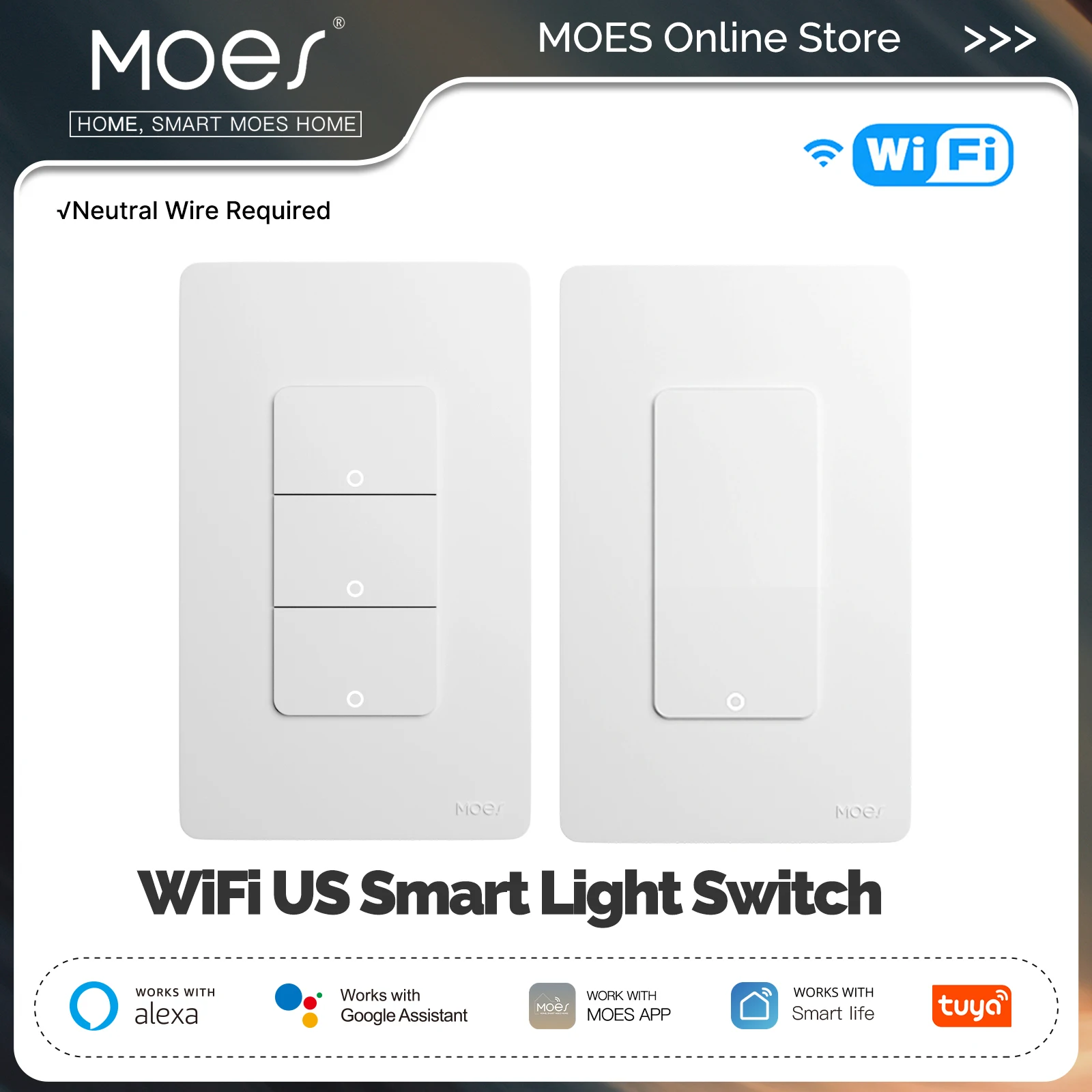
The physical design of the MOES smart switch features a clean, minimalist aesthetic with a matte white finish. This finish not only resists fingerprints and smudges but also provides a subtle, premium feel that integrates well with most modern decor schemes. The push-button mechanism offers a satisfying, crisp tactile feedback, confirming each command with a reassuring click.
When pressed, the button's action is firm and responsive, avoiding the mushy or unresponsive feel sometimes found in lesser quality switches. The compact dimensions of 117.8mm x 71.8mm x 33mm, with approximately 25mm depth behind the wall, ensure it fits comfortably within standard US single-gang wall boxes, minimizing installation headaches. It's a snug fit.
This design philosophy stands in contrast to bulkier smart switches that can be challenging to fit into crowded electrical boxes, or those with glossy finishes that quickly show wear. The MOES switch's thoughtful form factor and durable finish contribute to a seamless integration experience, both visually and physically.
A key advantage of this switch's design is its ability to occupy only a single-gang space while providing intelligent control. In homes where wall space is at a premium, or where multiple switches are clustered, this compact footprint allows for more efficient use of the electrical box. More control, less clutter.
Imagine a scenario where a traditional setup might require a two-gang box for two separate light controls. This MOES single-pole switch can replace one of those, freeing up space or simplifying the overall switch plate aesthetic. Its slim profile behind the wall further aids in installations where wiring can be tight. Every millimeter counts.
This optimized footprint makes it an ideal choice for retrofitting existing installations without needing to expand wall cutouts or replace multi-gang faceplates, a common hurdle with some larger smart home devices. Installation is streamlined.
The MOES Tuya Wi-Fi Smart Light Switch seamlessly integrates with the Tuya Smart Life ecosystem, a widely adopted platform for smart home devices. This broad compatibility means the switch can be controlled via the Tuya or MOES app, allowing for remote operation, scheduling, and scene creation from anywhere with an internet connection. The app provides a centralized hub.
For users already invested in the Tuya ecosystem, this switch becomes another effortlessly integrated component, controllable alongside smart plugs, sensors, and cameras. The ability to create complex automation routines – for instance, having lights turn on when a motion sensor is triggered – is a core strength. Automation possibilities are vast.
Compared to proprietary smart switches that lock users into a single brand's ecosystem, the Tuya platform offers significant flexibility, allowing for a mix-and-match approach to smart home devices. This open approach future-proofs the smart home, providing more choices for expansion and upgrades.
Voice control is a cornerstone of modern smart homes, and this MOES switch delivers, offering compatibility with both Amazon Alexa and Google Home. Once linked through the Tuya Smart Life app, users can issue simple voice commands to control their lighting. "Alexa, turn on the living room light" becomes a natural interaction.
This hands-free operation is particularly convenient in situations where hands are full, or when entering a dark room. The responsiveness of voice commands, mediated by the Wi-Fi connection and cloud services, is generally swift, minimizing perceptible delay between command and action. Instant gratification is key.
Unlike older smart home setups that relied on complex hub configurations or limited voice assistant support, this switch's direct integration with major platforms provides an intuitive and accessible control method for all household members. It simplifies daily routines.
Beyond simple on/off control, the MOES switch offers robust timer and countdown functions through the Tuya Smart Life app. Users can schedule lights to turn on or off at specific times of the day, create countdown timers for temporary lighting needs, or even implement randomized schedules to simulate occupancy. Energy savings are real.
Picture automatically dimming the lights in the evening, or having bedroom lights gently brighten as a morning alarm. These automation capabilities contribute significantly to convenience, energy efficiency, and home security. The app interface makes setting these routines straightforward and intuitive. Set it and forget it.
This level of granular control far surpasses traditional mechanical timers or simple remote controls, providing a dynamic and adaptable lighting system that can respond to daily routines and specific events. It's truly intelligent lighting.
As a Wi-Fi-based device, the MOES smart light switch's performance, particularly its response delay, is inherently tied to the quality of the home network and the responsiveness of the cloud services. A well-configured 2.4GHz network with adequate signal strength ensures minimal latency, typically resulting in near-instantaneous responses to app commands or voice prompts. Speed matters.
When integrated into a Home Assistant setup, the goal is often to achieve local control, bypassing the cloud for improved speed and privacy. While this switch is primarily designed for cloud-based Tuya integration, advanced users may explore flashing alternative firmware (like Tasmota or ESPHome) to enable local control, though this requires technical expertise and voids manufacturer warranty. Local control is preferred.
Compared to Zigbee or Z-Wave switches, which often offer lower latency due to their mesh network architecture and local hub processing, Wi-Fi switches can sometimes introduce a slight, barely perceptible delay if internet connectivity is poor or cloud servers are experiencing high traffic. However, for most users and typical lighting control scenarios, the Wi-Fi performance is more than adequate. It's a minor trade-off.
Engineering for Seamless Connectivity
This smart switch operates exclusively on the 2.4GHz Wi-Fi band. This frequency is a deliberate engineering choice, offering superior penetration through walls and a more stable connection over longer distances compared to the faster but shorter-range 5GHz band. For the intricate mesh of a smart home, where devices are often spread across multiple rooms and floors, this ensures consistent communication.
Imagine automating your outdoor lights to activate at dusk, or scheduling interior illumination to deter potential intruders while away. The 2.4GHz protocol underpins this reliability, minimizing dropped connections that could disrupt critical automation routines. A stable network is paramount.
Unlike many dual-band devices that can sometimes struggle to maintain a consistent connection on the more congested 5GHz spectrum in a home environment, this switch's dedicated 2.4GHz operation simplifies network management and enhances overall system stability. It just works.
The Critical Neutral Wire Requirement
Installation of this MOES switch necessitates a neutral wire. For those unfamiliar, a neutral wire provides a continuous return path for electrical current, essential for powering the smart switch's internal electronics even when the light circuit is off. Many older homes, particularly those built before the 1980s, may lack a neutral wire at the switch box, as traditional mechanical switches do not require one.
This requirement ensures the switch receives a consistent 90-240V AC supply, enabling its Wi-Fi module and control circuitry to remain powered and responsive. Without a neutral wire, smart switches often rely on 'bleeding' a small amount of current through the light bulb, which can lead to flickering or incompatibility with low-wattage LED bulbs. Stable power is crucial.
Compared to 'no-neutral' smart switches, which often introduce complexities like capacitor installation or compatibility issues with certain bulb types, the neutral wire requirement of the MOES switch simplifies its internal design and enhances its long-term reliability. It offers a cleaner power profile.
Tactile Design and Form Factor
The physical design of the MOES smart switch features a clean, minimalist aesthetic with a matte white finish. This finish not only resists fingerprints and smudges but also provides a subtle, premium feel that integrates well with most modern decor schemes. The push-button mechanism offers a satisfying, crisp tactile feedback, confirming each command with a reassuring click.
When pressed, the button's action is firm and responsive, avoiding the mushy or unresponsive feel sometimes found in lesser quality switches. The compact dimensions of 117.8mm x 71.8mm x 33mm, with approximately 25mm depth behind the wall, ensure it fits comfortably within standard US single-gang wall boxes, minimizing installation headaches. It's a snug fit.
This design philosophy stands in contrast to bulkier smart switches that can be challenging to fit into crowded electrical boxes, or those with glossy finishes that quickly show wear. The MOES switch's thoughtful form factor and durable finish contribute to a seamless integration experience, both visually and physically.
Occupying Limited Space
A key advantage of this switch's design is its ability to occupy only a single-gang space while providing intelligent control. In homes where wall space is at a premium, or where multiple switches are clustered, this compact footprint allows for more efficient use of the electrical box. More control, less clutter.
Imagine a scenario where a traditional setup might require a two-gang box for two separate light controls. This MOES single-pole switch can replace one of those, freeing up space or simplifying the overall switch plate aesthetic. Its slim profile behind the wall further aids in installations where wiring can be tight. Every millimeter counts.
This optimized footprint makes it an ideal choice for retrofitting existing installations without needing to expand wall cutouts or replace multi-gang faceplates, a common hurdle with some larger smart home devices. Installation is streamlined.
Smart Control Ecosystem Integration
The MOES Tuya Wi-Fi Smart Light Switch seamlessly integrates with the Tuya Smart Life ecosystem, a widely adopted platform for smart home devices. This broad compatibility means the switch can be controlled via the Tuya or MOES app, allowing for remote operation, scheduling, and scene creation from anywhere with an internet connection. The app provides a centralized hub.
For users already invested in the Tuya ecosystem, this switch becomes another effortlessly integrated component, controllable alongside smart plugs, sensors, and cameras. The ability to create complex automation routines – for instance, having lights turn on when a motion sensor is triggered – is a core strength. Automation possibilities are vast.
Compared to proprietary smart switches that lock users into a single brand's ecosystem, the Tuya platform offers significant flexibility, allowing for a mix-and-match approach to smart home devices. This open approach future-proofs the smart home, providing more choices for expansion and upgrades.
Voice Command Capabilities
Voice control is a cornerstone of modern smart homes, and this MOES switch delivers, offering compatibility with both Amazon Alexa and Google Home. Once linked through the Tuya Smart Life app, users can issue simple voice commands to control their lighting. "Alexa, turn on the living room light" becomes a natural interaction.
This hands-free operation is particularly convenient in situations where hands are full, or when entering a dark room. The responsiveness of voice commands, mediated by the Wi-Fi connection and cloud services, is generally swift, minimizing perceptible delay between command and action. Instant gratification is key.
Unlike older smart home setups that relied on complex hub configurations or limited voice assistant support, this switch's direct integration with major platforms provides an intuitive and accessible control method for all household members. It simplifies daily routines.
Scheduling and Automation Power
Beyond simple on/off control, the MOES switch offers robust timer and countdown functions through the Tuya Smart Life app. Users can schedule lights to turn on or off at specific times of the day, create countdown timers for temporary lighting needs, or even implement randomized schedules to simulate occupancy. Energy savings are real.
Picture automatically dimming the lights in the evening, or having bedroom lights gently brighten as a morning alarm. These automation capabilities contribute significantly to convenience, energy efficiency, and home security. The app interface makes setting these routines straightforward and intuitive. Set it and forget it.
This level of granular control far surpasses traditional mechanical timers or simple remote controls, providing a dynamic and adaptable lighting system that can respond to daily routines and specific events. It's truly intelligent lighting.
Performance and Latency Considerations
As a Wi-Fi-based device, the MOES smart light switch's performance, particularly its response delay, is inherently tied to the quality of the home network and the responsiveness of the cloud services. A well-configured 2.4GHz network with adequate signal strength ensures minimal latency, typically resulting in near-instantaneous responses to app commands or voice prompts. Speed matters.
When integrated into a Home Assistant setup, the goal is often to achieve local control, bypassing the cloud for improved speed and privacy. While this switch is primarily designed for cloud-based Tuya integration, advanced users may explore flashing alternative firmware (like Tasmota or ESPHome) to enable local control, though this requires technical expertise and voids manufacturer warranty. Local control is preferred.
Compared to Zigbee or Z-Wave switches, which often offer lower latency due to their mesh network architecture and local hub processing, Wi-Fi switches can sometimes introduce a slight, barely perceptible delay if internet connectivity is poor or cloud servers are experiencing high traffic. However, for most users and typical lighting control scenarios, the Wi-Fi performance is more than adequate. It's a minor trade-off.