MoesHouse ZigBee RF Curtain Switch Module
Official Store Deal
Expert Analysis Overview
The MoesHouse ZigBee RF Curtain Switch Module is a highly adaptable and robust solution designed for home automation enthusiasts seeking to integrate motorized roller blinds into their smart ecosystems. This device stands out by offering dual-protocol support, leveraging both Zigbee 3.0 for comprehensive smart home integration and RF433MHz for local, direct control. It caters specifically to users who prioritize flexibility, local control capabilities, and seamless integration with platforms like Home Assistant via 2MQTT, alongside mainstream options such as Tuya/Smart Life, Amazon Alexa, and Google Home.
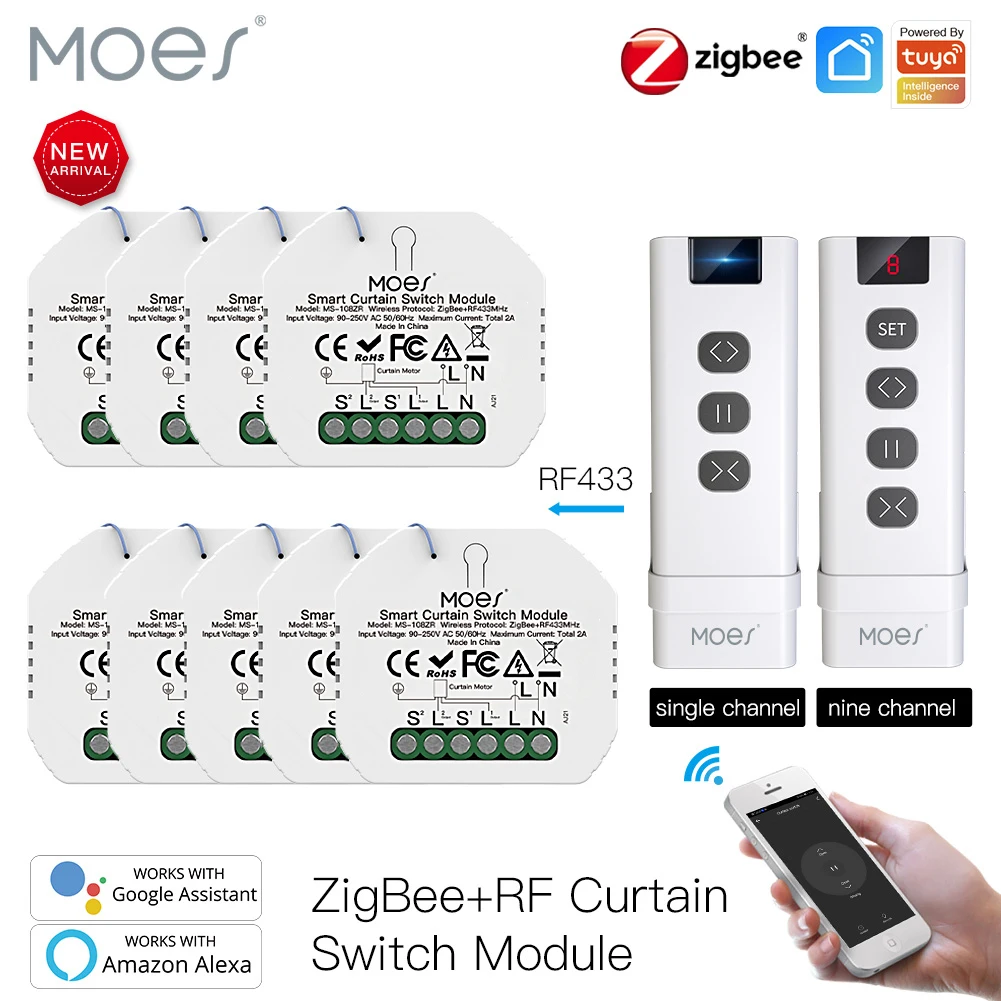
This module employs a dual-protocol architecture, combining Zigbee 3.0 with RF433MHz. The visible components indicate a compact PCB design, optimized for discreet installation behind existing traditional wall switches or directly within the motor housing, provided space permits. The inclusion of both protocols addresses different user needs, offering a resilient and versatile control experience.
Zigbee 3.0 serves as the backbone for smart home integration. This protocol is known for its mesh networking capabilities, which extend the range and reliability of the smart home network. Unlike Wi-Fi devices that can clutter a router's capacity, Zigbee devices create a self-healing network, improving overall system stability. This is a significant advantage for larger homes or installations with numerous smart devices.
The RF433MHz component provides an additional layer of control, primarily through an optional RF remote control operating on the 1527 encoding standard. This means direct, local control is available without relying on the Zigbee hub or internet connectivity. This redundancy is crucial for maintaining functionality during network outages, ensuring blinds can always be operated. It offers immediate tactile feedback.
One of the module's primary design philosophies is to augment existing traditional roller blind switches rather than replace them entirely. The wiring diagrams clearly illustrate how the module can be installed in-line with a conventional mechanical switch. This approach preserves the aesthetic and tactile familiarity of traditional wall controls, which is often preferred by occupants not fully accustomed to smart home interfaces. The module acts as an intelligent intermediary, receiving commands from both the physical switch and the smart home network.
This integration capability is particularly appealing for retrofit projects. Homeowners can upgrade their motorized blinds to smart functionality without needing to purchase new smart switches or modify their wall plates. This significantly reduces installation complexity and cost, making smart blind control more accessible. It's a pragmatic solution.
Compared to standalone smart switches, which often require replacing the entire wall plate, this module's design minimizes disruption. The compact form factor allows it to fit into standard electrical boxes, provided there is adequate depth. This discreet installation ensures the smart technology remains hidden, maintaining a clean interior design.
The module offers a multi-faceted control paradigm, encompassing voice commands, smartphone application control, and traditional physical switch operation. The visual evidence confirms compatibility with major voice assistants, including Amazon Alexa and Google Home. This means users can simply speak commands to open or close their blinds, providing a hands-free and convenient experience.
Smartphone control is facilitated through the Tuya Smart Life app, a widely adopted platform for managing a diverse range of smart home devices. The app interface shown in the images depicts intuitive controls for opening, closing, and setting schedules for the blinds. Remote control via the app allows users to manage their blinds from anywhere with an internet connection. This provides peace of mind, enabling users to adjust blinds while away from home. Scheduling features are robust.
Beyond mainstream options, the module's support for 2MQTT is a critical feature for advanced users. MQTT (Message Queuing Telemetry Transport) is a lightweight messaging protocol commonly used in IoT. 2MQTT is a bridge that allows Zigbee devices to communicate with an MQTT broker, enabling deep integration with powerful home automation platforms like Home Assistant. This level of integration provides granular control, custom automations, and the ability to keep data local, enhancing privacy and reducing reliance on cloud services. It empowers the technically inclined.
For motorized blinds, response delay is a key performance metric. Zigbee, by its nature, offers low latency compared to cloud-dependent Wi-Fi solutions. Commands issued via the Zigbee network typically execute almost instantaneously. This is because commands are processed locally by the Zigbee hub, rather than traversing the internet to a cloud server and back. Minimal lag is expected.
When controlling via the RF433 remote, the response is even more direct, as it bypasses the smart home hub entirely. This ensures immediate physical control. The combination of low-latency Zigbee and direct RF433 control means the blinds react quickly to user input, enhancing the overall user experience. This responsiveness is vital for comfort.
In a complex Home Assistant setup, the module's 2MQTT compatibility ensures that automation routines can trigger blind movements with minimal delay. This is particularly important for time-sensitive automations, such as closing blinds at sunset or opening them with a morning alarm. The system feels snappy.
Installation of the MoesHouse module requires a basic understanding of electrical wiring. The provided wiring diagrams clearly show connections for Live (L), Neutral (N), and the motor's Up and Down lines. The module is designed to operate on AC 100-240V 50/60Hz, making it compatible with most global electrical standards. A reset button is clearly visible on the module, used for pairing with the Zigbee hub. Correct wiring is paramount.
The compact dimensions of approximately 52x47x18mm allow for installation within many standard switch boxes, though verifying available space is always recommended. Users must ensure the power supply is disconnected before commencing any wiring work. The module's maximum load rating of 3A is sufficient for most residential motorized blinds, but it is essential to confirm the motor's current draw does not exceed this limit to prevent overheating. Safety protocols must be followed.
Compared to simpler plug-and-play smart devices, this module requires a more involved installation process. However, this trade-off provides a much cleaner and more integrated solution, avoiding unsightly external smart plugs or bulky adapters. The result is a professional-looking installation that blends seamlessly into the home environment. The DIY aspect is empowering.
At a price point around 20.70 USD, this module offers significant value for upgrading traditional motorized blinds. The cost-effectiveness is particularly evident when considering the alternative of replacing entire smart blind systems. This module transforms existing infrastructure into a smart system without extensive hardware replacement. It's an economical upgrade.
For users already invested in a Zigbee ecosystem, this module is a natural fit. It expands the capabilities of their existing hub and allows for centralized control of all smart devices. The interoperability of Zigbee devices from different manufacturers often means greater choice and flexibility in building a smart home. This avoids vendor lock-in.
When compared to Wi-Fi-only curtain modules, the Zigbee + RF433 combination offers superior network stability, lower power consumption (for the module itself, not the motor), and enhanced local control options. This translates to a more reliable and responsive smart blind system in the long run. The initial setup might involve pairing with a hub, but the subsequent benefits are substantial.
Imagine waking up to natural light as your blinds silently open on a pre-set schedule, or effortlessly adjusting the room's ambiance with a simple voice command. Picture the convenience of closing all blinds from your smartphone while away from home, enhancing security and privacy. This module enables a truly integrated and responsive smart living experience, making daily routines smoother and more efficient.
Advanced Connectivity: Zigbee and RF433 Synergy
This module employs a dual-protocol architecture, combining Zigbee 3.0 with RF433MHz. The visible components indicate a compact PCB design, optimized for discreet installation behind existing traditional wall switches or directly within the motor housing, provided space permits. The inclusion of both protocols addresses different user needs, offering a resilient and versatile control experience.
Zigbee 3.0 serves as the backbone for smart home integration. This protocol is known for its mesh networking capabilities, which extend the range and reliability of the smart home network. Unlike Wi-Fi devices that can clutter a router's capacity, Zigbee devices create a self-healing network, improving overall system stability. This is a significant advantage for larger homes or installations with numerous smart devices.
The RF433MHz component provides an additional layer of control, primarily through an optional RF remote control operating on the 1527 encoding standard. This means direct, local control is available without relying on the Zigbee hub or internet connectivity. This redundancy is crucial for maintaining functionality during network outages, ensuring blinds can always be operated. It offers immediate tactile feedback.
Seamless Integration with Existing Infrastructure
One of the module's primary design philosophies is to augment existing traditional roller blind switches rather than replace them entirely. The wiring diagrams clearly illustrate how the module can be installed in-line with a conventional mechanical switch. This approach preserves the aesthetic and tactile familiarity of traditional wall controls, which is often preferred by occupants not fully accustomed to smart home interfaces. The module acts as an intelligent intermediary, receiving commands from both the physical switch and the smart home network.
This integration capability is particularly appealing for retrofit projects. Homeowners can upgrade their motorized blinds to smart functionality without needing to purchase new smart switches or modify their wall plates. This significantly reduces installation complexity and cost, making smart blind control more accessible. It's a pragmatic solution.
Compared to standalone smart switches, which often require replacing the entire wall plate, this module's design minimizes disruption. The compact form factor allows it to fit into standard electrical boxes, provided there is adequate depth. This discreet installation ensures the smart technology remains hidden, maintaining a clean interior design.
Control Pathways: Voice, App, and Local
The module offers a multi-faceted control paradigm, encompassing voice commands, smartphone application control, and traditional physical switch operation. The visual evidence confirms compatibility with major voice assistants, including Amazon Alexa and Google Home. This means users can simply speak commands to open or close their blinds, providing a hands-free and convenient experience.
Smartphone control is facilitated through the Tuya Smart Life app, a widely adopted platform for managing a diverse range of smart home devices. The app interface shown in the images depicts intuitive controls for opening, closing, and setting schedules for the blinds. Remote control via the app allows users to manage their blinds from anywhere with an internet connection. This provides peace of mind, enabling users to adjust blinds while away from home. Scheduling features are robust.
Beyond mainstream options, the module's support for 2MQTT is a critical feature for advanced users. MQTT (Message Queuing Telemetry Transport) is a lightweight messaging protocol commonly used in IoT. 2MQTT is a bridge that allows Zigbee devices to communicate with an MQTT broker, enabling deep integration with powerful home automation platforms like Home Assistant. This level of integration provides granular control, custom automations, and the ability to keep data local, enhancing privacy and reducing reliance on cloud services. It empowers the technically inclined.
Latency and Responsiveness
For motorized blinds, response delay is a key performance metric. Zigbee, by its nature, offers low latency compared to cloud-dependent Wi-Fi solutions. Commands issued via the Zigbee network typically execute almost instantaneously. This is because commands are processed locally by the Zigbee hub, rather than traversing the internet to a cloud server and back. Minimal lag is expected.
When controlling via the RF433 remote, the response is even more direct, as it bypasses the smart home hub entirely. This ensures immediate physical control. The combination of low-latency Zigbee and direct RF433 control means the blinds react quickly to user input, enhancing the overall user experience. This responsiveness is vital for comfort.
In a complex Home Assistant setup, the module's 2MQTT compatibility ensures that automation routines can trigger blind movements with minimal delay. This is particularly important for time-sensitive automations, such as closing blinds at sunset or opening them with a morning alarm. The system feels snappy.
Installation and Safety Considerations
Installation of the MoesHouse module requires a basic understanding of electrical wiring. The provided wiring diagrams clearly show connections for Live (L), Neutral (N), and the motor's Up and Down lines. The module is designed to operate on AC 100-240V 50/60Hz, making it compatible with most global electrical standards. A reset button is clearly visible on the module, used for pairing with the Zigbee hub. Correct wiring is paramount.
The compact dimensions of approximately 52x47x18mm allow for installation within many standard switch boxes, though verifying available space is always recommended. Users must ensure the power supply is disconnected before commencing any wiring work. The module's maximum load rating of 3A is sufficient for most residential motorized blinds, but it is essential to confirm the motor's current draw does not exceed this limit to prevent overheating. Safety protocols must be followed.
Compared to simpler plug-and-play smart devices, this module requires a more involved installation process. However, this trade-off provides a much cleaner and more integrated solution, avoiding unsightly external smart plugs or bulky adapters. The result is a professional-looking installation that blends seamlessly into the home environment. The DIY aspect is empowering.
Value Proposition and Ecosystem Fit
At a price point around 20.70 USD, this module offers significant value for upgrading traditional motorized blinds. The cost-effectiveness is particularly evident when considering the alternative of replacing entire smart blind systems. This module transforms existing infrastructure into a smart system without extensive hardware replacement. It's an economical upgrade.
For users already invested in a Zigbee ecosystem, this module is a natural fit. It expands the capabilities of their existing hub and allows for centralized control of all smart devices. The interoperability of Zigbee devices from different manufacturers often means greater choice and flexibility in building a smart home. This avoids vendor lock-in.
When compared to Wi-Fi-only curtain modules, the Zigbee + RF433 combination offers superior network stability, lower power consumption (for the module itself, not the motor), and enhanced local control options. This translates to a more reliable and responsive smart blind system in the long run. The initial setup might involve pairing with a hub, but the subsequent benefits are substantial.
Imagine waking up to natural light as your blinds silently open on a pre-set schedule, or effortlessly adjusting the room's ambiance with a simple voice command. Picture the convenience of closing all blinds from your smartphone while away from home, enhancing security and privacy. This module enables a truly integrated and responsive smart living experience, making daily routines smoother and more efficient.