MUCG JG Series Tin-Plated Copper Crimp Terminals
Official Store Deal
Expert Analysis Overview
The MUCG JG Series Tin-Plated Copper Crimp Terminals are robust electrical connectors engineered for secure, long-lasting power and grounding connections in demanding environments. These components are critical for maintaining system integrity, especially where high current transfer and environmental resilience are paramount.
High-purity copper minimizes electrical resistance, ensuring that power transfer experiences minimal loss. This directly translates to cooler operation and reduced energy wastage within any electrical circuit. It is a foundational element for reliable current flow.
Compared to terminals made from brass or aluminum, which often contain impurities or have lower inherent conductivity, the 99.97% copper core offers superior performance. This material choice directly addresses concerns about voltage drop and heat generation in high-current applications.
This protective layer acts as a barrier against oxidation and corrosion, which are common issues for bare copper in various environments. The plating ensures that the terminal maintains its electrical properties over an extended operational lifespan. It prevents the formation of resistive oxides.
Unlike bare copper terminals that can quickly tarnish and degrade when exposed to moisture, humidity, or certain chemicals, the tin-plated surface significantly extends the terminal's service life. This makes the MUCG JG series a more reliable choice for applications in marine, automotive, or industrial settings where environmental factors are a concern.
An integrated die-cast barrel ensures a consistent wall thickness and a smooth internal surface, which is crucial for achieving an optimal crimp. This design promotes maximum wire contact and retention, minimizing the risk of wire pull-out or intermittent connections under vibration or stress. A secure crimp is vital.
This manufacturing approach provides a significant advantage over terminals produced from sheet metal, which can have inconsistent material distribution or weaker crimp zones. The robust barrel design of the MUCG terminals contributes directly to the long-term reliability of the electrical connection, a critical factor in preventing system failures.
This ring lug configuration provides a highly secure and stable connection point when fastened with a bolt and nut. The large contact area around the stud hole minimizes resistance at the connection interface and ensures excellent mechanical stability, even in high-vibration environments. A tight fit is essential.
Unlike spade terminals or quick-disconnects that can become dislodged or lose contact over time, the ring lug design offers superior retention. This makes these terminals ideal for permanent or semi-permanent installations where reliability and safety cannot be compromised, such as battery connections or main power distribution points.
Effective crimping creates a gas-tight connection between the wire and the terminal, preventing oxygen and moisture from reaching the conductors. This process, when executed correctly, results in a connection that is both electrically efficient and mechanically robust, crucial for preventing future faults. It is a precise operation.
While requiring a specialized crimping tool, the crimping method is generally faster and more repeatable than soldering for high-gauge wires, particularly in field installations. The consistency offered by proper crimping tools ensures a uniform quality across multiple connections, reducing installation time and improving overall system reliability.
This versatility means technicians can stock a single series of terminals to address a wide array of connection requirements, simplifying inventory management and ensuring the right component is always on hand. The ability to handle different wire sizes is a significant advantage. It covers many needs.
These terminals are indispensable for applications requiring robust power connections, such as battery bank wiring, inverter installations, solar panel systems, and heavy-duty automotive electrical repairs. Their design and material properties ensure they can withstand the electrical and mechanical stresses inherent in such critical applications.
In environments subject to temperature fluctuations or mechanical vibrations, a well-constructed terminal will maintain its electrical and mechanical integrity. This prevents the connection from loosening, developing high resistance, or failing prematurely, which could lead to equipment downtime or safety hazards. Consistent performance is expected.
Unlike lower-quality terminals that might expand and contract unevenly or succumb to fatigue from vibration, the MUCG JG series is designed to offer sustained performance. This reliability is crucial for systems where intermittent faults are unacceptable, ensuring continuous and safe operation over the long term.
Using durable, high-conductivity terminals like these can significantly reduce the frequency of maintenance and the need for premature component replacement. This translates into lower operational costs and increased uptime for the equipment they connect. Long-term savings are clear.
Compared to the potential cost of repairing damaged equipment due to poor connections or replacing entire assemblies, these terminals offer an excellent return on investment. They provide an affordable yet reliable means to ensure the integrity of critical electrical pathways, safeguarding more expensive components within a system.
Imagine the assurance of knowing your critical electrical connections are built to last, resisting corrosion and maintaining optimal conductivity even under challenging conditions. Visualize seamless power delivery, free from the worries of intermittent faults or premature component failure. These terminals provide the foundation for robust and reliable electrical systems, allowing for sustained performance and peace of mind in any application.
Material Composition and Conductivity
Core Material Integrity
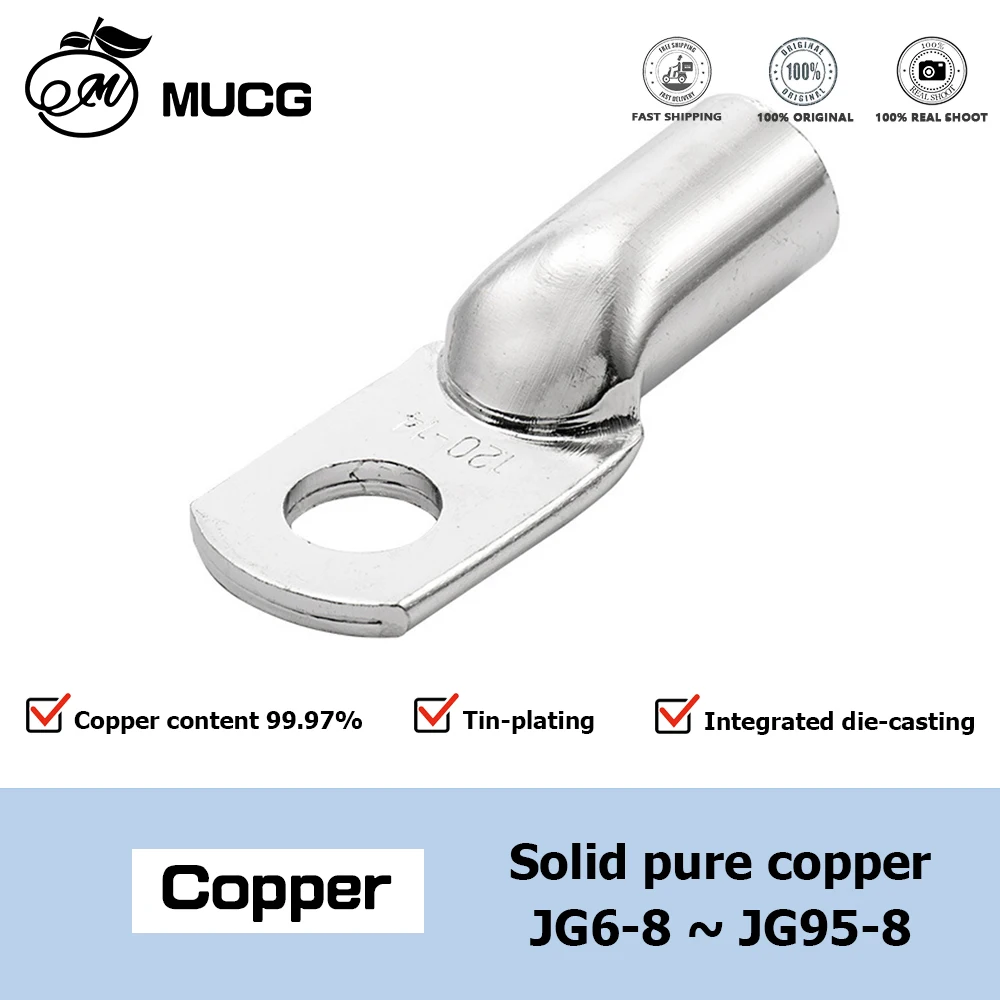
The terminals feature a stated copper content of 99.97%. This high purity level is visually supported by the internal view of the terminal, which reveals the characteristic reddish hue of copper beneath the plating. Such material composition is fundamental for efficient electrical conduction.High-purity copper minimizes electrical resistance, ensuring that power transfer experiences minimal loss. This directly translates to cooler operation and reduced energy wastage within any electrical circuit. It is a foundational element for reliable current flow.
Compared to terminals made from brass or aluminum, which often contain impurities or have lower inherent conductivity, the 99.97% copper core offers superior performance. This material choice directly addresses concerns about voltage drop and heat generation in high-current applications.
Surface Treatment and Corrosion Resistance
Each terminal undergoes a tin-plating process. The uniform, silvery finish visible across all product images confirms this surface treatment. Tin plating is a common and effective method for enhancing connector durability.This protective layer acts as a barrier against oxidation and corrosion, which are common issues for bare copper in various environments. The plating ensures that the terminal maintains its electrical properties over an extended operational lifespan. It prevents the formation of resistive oxides.
Unlike bare copper terminals that can quickly tarnish and degrade when exposed to moisture, humidity, or certain chemicals, the tin-plated surface significantly extends the terminal's service life. This makes the MUCG JG series a more reliable choice for applications in marine, automotive, or industrial settings where environmental factors are a concern.
Mechanical Design and Connection Reliability
Crimp Barrel Engineering
The terminals are manufactured using an integrated die-casting process. This method is evident in the seamless, uniform structure of the crimp barrel, which lacks visible seams or weak points often associated with stamped or folded designs. The solid construction is a key indicator of mechanical strength.An integrated die-cast barrel ensures a consistent wall thickness and a smooth internal surface, which is crucial for achieving an optimal crimp. This design promotes maximum wire contact and retention, minimizing the risk of wire pull-out or intermittent connections under vibration or stress. A secure crimp is vital.
This manufacturing approach provides a significant advantage over terminals produced from sheet metal, which can have inconsistent material distribution or weaker crimp zones. The robust barrel design of the MUCG terminals contributes directly to the long-term reliability of the electrical connection, a critical factor in preventing system failures.
Mounting Hole Configuration
The terminals feature a ring lug design with various stud hole sizes, including M6, M8, M10, and M12. These standard metric sizes are clearly marked on the terminal body in some images, indicating broad compatibility with common fastening Hardware.This ring lug configuration provides a highly secure and stable connection point when fastened with a bolt and nut. The large contact area around the stud hole minimizes resistance at the connection interface and ensures excellent mechanical stability, even in high-vibration environments. A tight fit is essential.
Unlike spade terminals or quick-disconnects that can become dislodged or lose contact over time, the ring lug design offers superior retention. This makes these terminals ideal for permanent or semi-permanent installations where reliability and safety cannot be compromised, such as battery connections or main power distribution points.
Installation Dynamics and Practical Application
Termination Process Efficiency
The product images illustrate a straightforward crimping process, showing the wire being inserted and then crimped. This visual guide suggests that, with the correct tools, achieving a secure termination is a manageable task for technicians. Proper technique ensures optimal performance.Effective crimping creates a gas-tight connection between the wire and the terminal, preventing oxygen and moisture from reaching the conductors. This process, when executed correctly, results in a connection that is both electrically efficient and mechanically robust, crucial for preventing future faults. It is a precise operation.
While requiring a specialized crimping tool, the crimping method is generally faster and more repeatable than soldering for high-gauge wires, particularly in field installations. The consistency offered by proper crimping tools ensures a uniform quality across multiple connections, reducing installation time and improving overall system reliability.
Versatility Across Electrical Systems
The availability of various wire gauge capacities (JG6-8 to JG95-8) and stud hole sizes (M6-M12) indicates a broad application spectrum for these terminals. This range allows for their use in diverse electrical systems, from automotive to industrial power distribution.This versatility means technicians can stock a single series of terminals to address a wide array of connection requirements, simplifying inventory management and ensuring the right component is always on hand. The ability to handle different wire sizes is a significant advantage. It covers many needs.
These terminals are indispensable for applications requiring robust power connections, such as battery bank wiring, inverter installations, solar panel systems, and heavy-duty automotive electrical repairs. Their design and material properties ensure they can withstand the electrical and mechanical stresses inherent in such critical applications.
Longevity and System Integrity
Thermal and Vibrational Stability
The combination of high-purity copper and integrated die-casting inherently contributes to the terminal's thermal and vibrational stability. These material and construction choices are key to preventing connection degradation under operational stress. Stability is paramount.In environments subject to temperature fluctuations or mechanical vibrations, a well-constructed terminal will maintain its electrical and mechanical integrity. This prevents the connection from loosening, developing high resistance, or failing prematurely, which could lead to equipment downtime or safety hazards. Consistent performance is expected.
Unlike lower-quality terminals that might expand and contract unevenly or succumb to fatigue from vibration, the MUCG JG series is designed to offer sustained performance. This reliability is crucial for systems where intermittent faults are unacceptable, ensuring continuous and safe operation over the long term.
Value Proposition in Repair and Maintenance
Given the product's quality indicators and typical pricing for such components, these terminals represent a cost-effective solution for electrical repairs and new installations. Investing in quality terminals can prevent more expensive failures down the line. Preventative measures save money.Using durable, high-conductivity terminals like these can significantly reduce the frequency of maintenance and the need for premature component replacement. This translates into lower operational costs and increased uptime for the equipment they connect. Long-term savings are clear.
Compared to the potential cost of repairing damaged equipment due to poor connections or replacing entire assemblies, these terminals offer an excellent return on investment. They provide an affordable yet reliable means to ensure the integrity of critical electrical pathways, safeguarding more expensive components within a system.
Imagine the assurance of knowing your critical electrical connections are built to last, resisting corrosion and maintaining optimal conductivity even under challenging conditions. Visualize seamless power delivery, free from the worries of intermittent faults or premature component failure. These terminals provide the foundation for robust and reliable electrical systems, allowing for sustained performance and peace of mind in any application.