Multi-Channel Optocoupled Relay Module for Microcontrollers
Official Store Deal
Expert Analysis Overview
The Multi-Channel Optocoupled Relay Module is a critical interface component designed for safely switching higher voltage or current loads using low-power microcontroller signals. This device provides essential isolation between sensitive control electronics and power circuits, a fundamental requirement for reliable and secure automation projects.
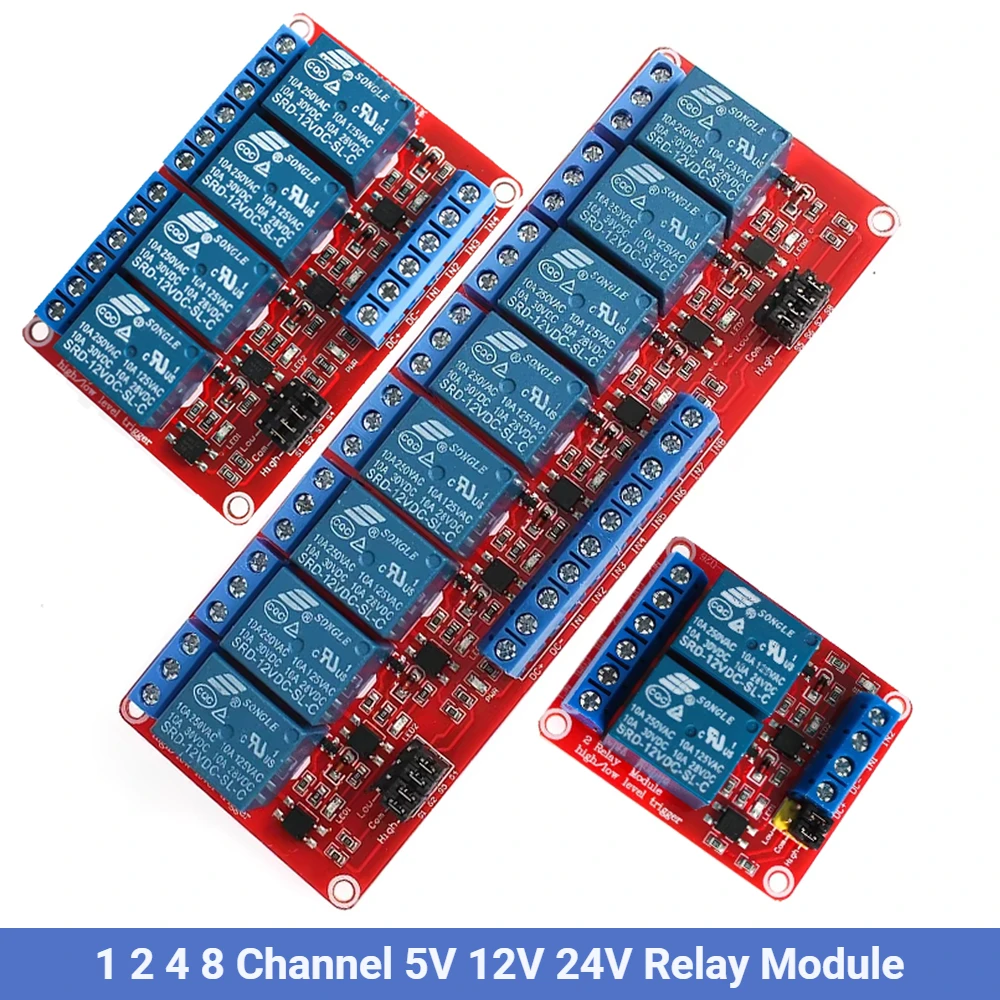
Relay modules, such as these 1, 2, 4, or 8-channel variants, serve as electromechanical switches. They enable low-voltage digital circuits, like those found in Arduino or Raspberry Pi, to control high-voltage AC or high-current DC devices. This capability is paramount for home automation, industrial control, and robotics applications where direct connection would be hazardous or impractical.
The visible Songle SRD-XXVDC-SL-C relays are rated for 10A at 250VAC and 10A at 30VDC. These ratings indicate a substantial switching capacity, suitable for controlling common household appliances, lighting circuits, or moderate DC motor loads. Understanding these limits is crucial for preventing electrical overloads and potential fire hazards.
Unlike direct transistor switching, which can expose microcontrollers to back-EMF or voltage spikes, these relay modules incorporate optocouplers. Optocouplers provide galvanic isolation, meaning there is no direct electrical connection between the control side and the load side. This protects the delicate microcontroller from voltage surges and ground loop issues, significantly enhancing system stability and longevity. It is a robust design choice.
Each relay channel features clearly marked screw terminals for both the control input and the load output. The input side typically includes VCC, GND, and INx pins for connecting to the microcontroller. The output side provides Normally Open (NO), Normally Closed (NC), and Common (COM) terminals, offering flexibility in circuit design.
The blue screw terminals visible in the images appear to be standard terminal blocks. These are designed for secure wire connections, which is vital for maintaining low resistance and preventing loose contacts that could lead to arcing or overheating. Proper termination is non-negotiable.
For optimal performance and safety, the wire gauge selected for the load circuits must match the current rating of the relay and the connected appliance. Using undersized wires can lead to excessive heat generation, insulation breakdown, and fire. Always consult electrical codes and component specifications.
These modules support both high and low-level trigger inputs, a valuable feature for compatibility with various microcontroller logic levels. A jumper cap, often seen near the input pins, allows the user to select the desired trigger mode. This adaptability simplifies integration into existing projects.
Available in 5V, 12V, and 24V versions, these modules cater to different power supply requirements. The 5V version is common for Arduino projects, while 12V and 24V versions are frequently used in industrial control systems or automotive applications. Selecting the correct voltage version is essential for proper operation and to avoid damaging the module or the control circuit.
Powering the module correctly is fundamental. The module's VCC and GND pins require a stable DC power supply matching the module's operating voltage (e.g., 5V for a 5V module). This supply powers the relay coils and the optocouplers. An unstable power source can lead to erratic relay behavior or premature component failure.
Working with mains voltage or high DC currents always carries inherent risks. The clear separation of control and power circuits provided by the optocouplers is a significant safety advantage. However, this does not negate the need for careful wiring and adherence to safety standards.
All connections, especially those to the load terminals, must be tight and properly insulated. Exposed wires are a shock hazard. Double-checking all wiring before applying power is a critical step in any electrical project. A multimeter can verify continuity and prevent short circuits.
Consider the environment where the module will operate. High humidity or dusty conditions can compromise electrical connections and lead to failures. Enclosing the module in a suitable project box offers protection and prevents accidental contact with live terminals. This ensures long-term reliability.
The availability of 1, 2, 4, and 8-channel options allows for scalable solutions. A single-channel module is perfect for simple on/off tasks, while an 8-channel board can manage multiple devices from a centralized controller. This modularity reduces complexity and wiring when several loads need to be controlled.
For projects requiring sequential operations or simultaneous control of multiple devices, the multi-channel modules streamline the design. Instead of individual relay boards, a single multi-channel unit simplifies power distribution and signal routing. This consolidation saves space and reduces potential points of failure.
Compared to solid-state relays (SSRs), these electromechanical relays offer true galvanic isolation and can switch both AC and DC loads without voltage drop concerns across the contacts. While SSRs are faster and silent, these modules are often more cost-effective for general-purpose switching and handle inductive loads well due to their physical contact separation.
The robust design, including the optocouplers and standard Songle relays, suggests a reasonable operational lifespan for these modules. The mechanical life of such relays typically ranges in the millions of operations, making them suitable for applications that do not require extremely high switching frequencies.
These modules are ideal for hobbyists building smart home devices, engineers prototyping industrial automation systems, or educators demonstrating control principles. Their straightforward interface and reliable performance make them a staple in the electronics toolkit. They are a practical choice.
Imagine effortlessly automating your home lighting, controlling irrigation systems based on sensor data, or building complex robotic movements with precise power management. This relay module provides the foundational capability to bridge the gap between your digital logic and the physical world, empowering you to bring sophisticated projects to life with confidence and safety.
The Imperative of Isolated Switching
Relay modules, such as these 1, 2, 4, or 8-channel variants, serve as electromechanical switches. They enable low-voltage digital circuits, like those found in Arduino or Raspberry Pi, to control high-voltage AC or high-current DC devices. This capability is paramount for home automation, industrial control, and robotics applications where direct connection would be hazardous or impractical.
The visible Songle SRD-XXVDC-SL-C relays are rated for 10A at 250VAC and 10A at 30VDC. These ratings indicate a substantial switching capacity, suitable for controlling common household appliances, lighting circuits, or moderate DC motor loads. Understanding these limits is crucial for preventing electrical overloads and potential fire hazards.
Unlike direct transistor switching, which can expose microcontrollers to back-EMF or voltage spikes, these relay modules incorporate optocouplers. Optocouplers provide galvanic isolation, meaning there is no direct electrical connection between the control side and the load side. This protects the delicate microcontroller from voltage surges and ground loop issues, significantly enhancing system stability and longevity. It is a robust design choice.
Engineering for Control: Input and Output Terminals
Each relay channel features clearly marked screw terminals for both the control input and the load output. The input side typically includes VCC, GND, and INx pins for connecting to the microcontroller. The output side provides Normally Open (NO), Normally Closed (NC), and Common (COM) terminals, offering flexibility in circuit design.
The blue screw terminals visible in the images appear to be standard terminal blocks. These are designed for secure wire connections, which is vital for maintaining low resistance and preventing loose contacts that could lead to arcing or overheating. Proper termination is non-negotiable.
For optimal performance and safety, the wire gauge selected for the load circuits must match the current rating of the relay and the connected appliance. Using undersized wires can lead to excessive heat generation, insulation breakdown, and fire. Always consult electrical codes and component specifications.
Versatility in Triggering and Power
These modules support both high and low-level trigger inputs, a valuable feature for compatibility with various microcontroller logic levels. A jumper cap, often seen near the input pins, allows the user to select the desired trigger mode. This adaptability simplifies integration into existing projects.
Available in 5V, 12V, and 24V versions, these modules cater to different power supply requirements. The 5V version is common for Arduino projects, while 12V and 24V versions are frequently used in industrial control systems or automotive applications. Selecting the correct voltage version is essential for proper operation and to avoid damaging the module or the control circuit.
Powering the module correctly is fundamental. The module's VCC and GND pins require a stable DC power supply matching the module's operating voltage (e.g., 5V for a 5V module). This supply powers the relay coils and the optocouplers. An unstable power source can lead to erratic relay behavior or premature component failure.
Safety Protocols and Best Practices
Working with mains voltage or high DC currents always carries inherent risks. The clear separation of control and power circuits provided by the optocouplers is a significant safety advantage. However, this does not negate the need for careful wiring and adherence to safety standards.
All connections, especially those to the load terminals, must be tight and properly insulated. Exposed wires are a shock hazard. Double-checking all wiring before applying power is a critical step in any electrical project. A multimeter can verify continuity and prevent short circuits.
Consider the environment where the module will operate. High humidity or dusty conditions can compromise electrical connections and lead to failures. Enclosing the module in a suitable project box offers protection and prevents accidental contact with live terminals. This ensures long-term reliability.
The Advantage of Multi-Channel Configurations
The availability of 1, 2, 4, and 8-channel options allows for scalable solutions. A single-channel module is perfect for simple on/off tasks, while an 8-channel board can manage multiple devices from a centralized controller. This modularity reduces complexity and wiring when several loads need to be controlled.
For projects requiring sequential operations or simultaneous control of multiple devices, the multi-channel modules streamline the design. Instead of individual relay boards, a single multi-channel unit simplifies power distribution and signal routing. This consolidation saves space and reduces potential points of failure.
Compared to solid-state relays (SSRs), these electromechanical relays offer true galvanic isolation and can switch both AC and DC loads without voltage drop concerns across the contacts. While SSRs are faster and silent, these modules are often more cost-effective for general-purpose switching and handle inductive loads well due to their physical contact separation.
Longevity and Application Scope
The robust design, including the optocouplers and standard Songle relays, suggests a reasonable operational lifespan for these modules. The mechanical life of such relays typically ranges in the millions of operations, making them suitable for applications that do not require extremely high switching frequencies.
These modules are ideal for hobbyists building smart home devices, engineers prototyping industrial automation systems, or educators demonstrating control principles. Their straightforward interface and reliable performance make them a staple in the electronics toolkit. They are a practical choice.
Imagine effortlessly automating your home lighting, controlling irrigation systems based on sensor data, or building complex robotic movements with precise power management. This relay module provides the foundational capability to bridge the gap between your digital logic and the physical world, empowering you to bring sophisticated projects to life with confidence and safety.