Multi-Voltage Solenoid Water Control Valve (1/2" & 3/4" Male Thread)
Official Store Deal
Expert Analysis Overview
The Multi-Voltage Solenoid Water Control Valve (1/2" & 3/4" Male Thread) is a practical, electrically actuated flow control device engineered for automated fluid management in a diverse range of low-to-medium pressure applications. This component provides a robust solution for DIY automation projects, specialized plumbing setups, and small-scale industrial processes demanding precise, remote water regulation. Its inherent flexibility, stemming from broad voltage compatibility and selectable operational modes, positions it as a highly adaptable choice for seamless integration into various existing electrical and fluid systems. This valve simplifies complex control.
In modern plumbing and automation, the ability to control fluid pathways remotely and automatically is no longer a luxury; it is often a necessity. Manual valves, while reliable, demand constant human intervention. This solenoid valve eliminates that requirement, acting as an electrically controlled gate for water lines. This capability is paramount for systems where timing, precision, or remote access are critical. It allows for hands-free operation.
The fundamental distinction between Normally Closed (NC) and Normally Open (NO) configurations dictates a solenoid valve's default state and its behavior during power fluctuations. A Normally Closed valve, as clearly indicated by its designation, maintains a shut position when no electrical power is supplied to its coil. Water flow is effectively blocked. Only upon the application of an electrical current does the coil energize, retracting the internal plunger and thereby opening the valve to permit fluid passage. This configuration is frequently chosen for critical safety applications where a power outage must inherently result in the cessation of flow, thereby preventing potential water damage, overflow, or unnecessary resource waste. Consider an automated irrigation system: if the power fails, the NC valve ensures no unintended watering occurs. This is a fail-safe design.
Conversely, a Normally Open valve operates in the inverse manner, maintaining an open state and allowing unimpeded water flow in the absence of any electrical input. Applying power to the solenoid coil causes it to energize, forcing the valve to close and thereby interrupting the flow. This setup proves invaluable for systems where continuous flow is the default operational requirement, and the valve is only activated to temporarily halt or divert the flow for specific purposes, such as maintenance, system flushing, or during particular operational cycles. An example might be a cooling loop that requires constant water circulation, with the valve only closing during system shutdowns or repairs. The judicious selection between NC and NO is a critical design decision. It directly influences the system's response to power events.
The valve's remarkable capacity to operate on AC 220V, DC 12V, or DC 24V represents a significant engineering advantage. This multi-voltage compatibility ensures that the unit can be seamlessly integrated into an exceptionally wide array of electrical environments without the need for cumbersome or costly external voltage converters. The AC 220V option caters to standard household and industrial mains power grids prevalent in many global regions. It facilitates direct connection to existing electrical infrastructure.
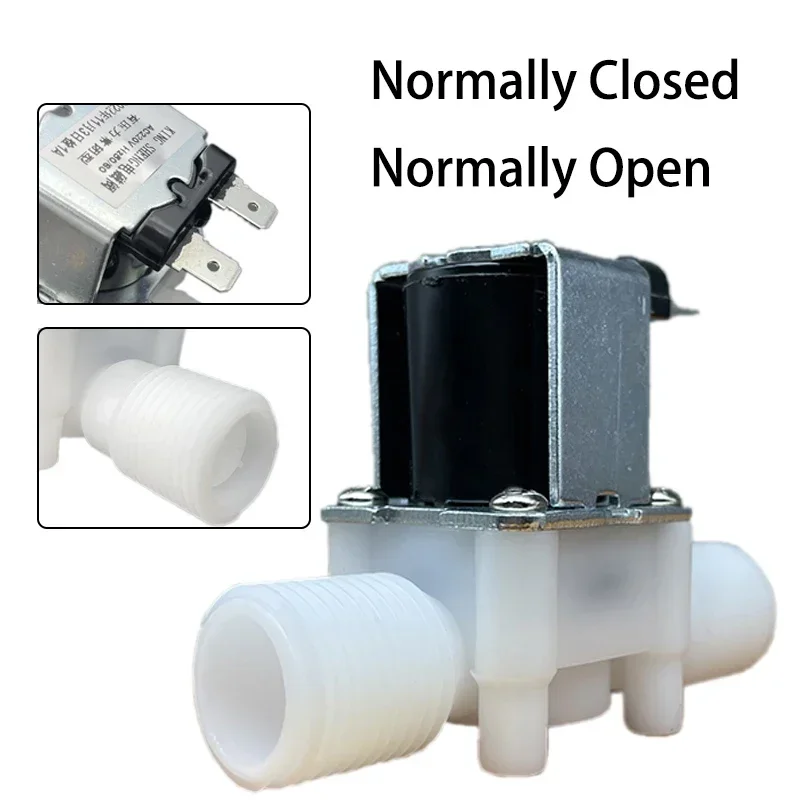
For low-voltage applications, the inclusion of both DC 12V and DC 24V options is particularly valuable. DC 12V is a ubiquitous standard in automotive electrical systems, off-grid solar-powered installations, and countless DIY electronics projects, offering a safe and accessible power source. DC 24V, on the other hand, is a common and robust standard within industrial control systems, building automation, and specialized machinery, providing greater power for longer cable runs. This inherent flexibility means that a single valve design can effectively serve vastly different project requirements. It streamlines procurement for system integrators and offers unparalleled utility for end-users. The visible metal housing encasing the solenoid coil, as depicted in the product images, suggests a deliberate design choice to provide enhanced protection for the critical electrical components against minor physical impacts and environmental exposure.
The physical connection of any valve to existing plumbing infrastructure is a critical point of failure if not executed correctly. This particular unit features 1/2" and 3/4" male threaded connections. These dimensions represent two of the most commonly encountered pipe sizes in both residential and light commercial plumbing applications. A thorough understanding of prevailing thread standards is absolutely essential for achieving a secure, leak-free installation.
While the product title clearly specifies "male thread," it conspicuously omits explicit identification of the thread standard—whether it adheres to National Pipe Taper (NPT) threads, which are the dominant standard in North America, or British Standard Pipe (BSP) threads, which are widely adopted across many other international markets. This distinction is far from trivial; it is a critical factor for successful plumbing integration. NPT threads are characterized by their tapered profile, designed to create a mechanical seal by the wedging action of the threads themselves, typically augmented by a thread sealant such as PTFE tape. Conversely, BSP threads are generally parallel and primarily rely on a gasket, O-ring, or a combination of sealant and a flat face for their sealing integrity. Without definitive confirmation of the thread standard, users operating in regions where NPT is the primary standard should proceed with caution. They should anticipate the potential necessity of employing a generous application of PTFE tape or, in some cases, a compatible adapter to ensure a robust, leak-free connection. A proper seal is non-negotiable. It prevents costly water damage.
Compared to generic, fixed-size plumbing fittings, the provision of both 1/2" and 3/4" sizes directly addresses the variability in common residential and light commercial pipe diameters. This thoughtful inclusion often negates the need for additional, potentially leak-prone reducers or expanders for many standard installations. The male threading configuration further simplifies direct connection into corresponding female threaded pipe fittings, streamlining the installation process.
The valve body's construction from a white engineering plastic is a deliberate material choice that carries both distinct advantages and inherent limitations. Plastic, as a material, offers exceptional resistance to corrosion, making it an ideal candidate for water-based applications where traditional metal components might be susceptible to rust, galvanic corrosion, or chemical degradation over extended periods. Furthermore, plastic components are inherently lighter and generally more economical to manufacture than their brass or stainless steel counterparts. This cost-effectiveness directly contributes to the product's accessible price point, making automated control more attainable.
However, it is crucial to acknowledge that engineering plastics typically exhibit lower pressure and temperature ratings when compared to robust metal valves. This material is less resilient under extreme conditions. Consequently, this valve is most appropriately suited for low-to-medium pressure systems, such as automated garden irrigation, controlled water changes for aquariums, or straightforward drainage automation tasks. For demanding applications involving high-pressure industrial lines, elevated water temperatures, or aggressive chemical environments, a more durable brass or stainless steel valve would undoubtedly represent a more appropriate, albeit significantly more expensive, investment. The visible construction clearly implies a design philosophy prioritizing affordability and functional utility for less demanding operational environments.
The visible components of this solenoid valve suggest a functional and pragmatic design, with a clear emphasis on utility rather than heavy-duty industrial resilience. The metal housing encasing the solenoid coil is a critical design element, providing essential structural integrity and protection for the electrical heart of the valve. This metal shell shields the coil from minor physical impacts, dust, and general environmental exposure, contributing to its operational longevity. The plastic body, while not possessing the sheer ruggedness of cast metal, appears to be cleanly molded, indicating a reasonable level of manufacturing quality for its intended purpose. It is a simple design.
Successful installation mandates meticulous attention to detail. Achieving proper thread engagement is absolutely critical for preventing leaks. The application of several wraps of high-quality PTFE (Teflon) tape to the male threads, applied in the direction of the thread, before carefully tightening into a female fitting, is an indispensable step to ensure a watertight seal. It is equally important to exercise caution against over-tightening plastic threads, as this can easily lead to cracking or stripping, compromising the seal and potentially damaging the valve. A common practice involves hand-tightening until snug, followed by a careful quarter to half turn with an appropriate wrench. Furthermore, ensuring the valve is oriented correctly with respect to the intended flow direction is important, although for a simple on/off valve, this is less critical than for directional control valves or check valves.
This solenoid valve is engineered for reliable, intermittent operation within its specified parameters. Its 1 Ampere current rating, as observed on the 220V variant's label, indicates a relatively modest power draw when the coil is energized. This energy efficiency is a beneficial characteristic for automation tasks that may involve prolonged periods of activation. The inherent rapid response time characteristic of solenoid valves ensures quick opening and closing of the water pathway. This swift action is paramount for precise control in automated sequences, where timing can be critical.
The compelling value proposition of this valve is rooted in its combination of cost-effectiveness and operational versatility. For projects that necessitate automated water control but do not impose requirements for extreme pressure, high temperatures, or corrosive fluid handling, this unit offers an exceptionally economical solution. It empowers users to implement sophisticated fluid control systems at a fraction of the investment typically associated with industrial-grade components. This accessibility democratizes advanced automation, making it attainable for a broader spectrum of users, ranging from dedicated hobbyists and home automation enthusiasts to small businesses seeking efficient operational improvements.
From the seasoned perspective of a master plumber, the paramount concerns with any valve are its ability to prevent leaks and its long-term operational reliability. The plastic construction of this unit immediately flags it for specific, less demanding applications. It is unequivocally not designed as a heavy-duty industrial valve intended for continuous, high-stress environments. For residential irrigation systems, non-potable water transfer, or simple drainage automation, it can certainly perform adequately and reliably. However, for critical potable water lines, high-pressure municipal feeds, or applications involving hot water, a robust brass or stainless steel alternative is not merely recommended, but absolutely essential. Never compromise on critical infrastructure.
The absence of an explicit NPT/BSP thread designation, while common for globally sourced components, is a point of concern that demands user vigilance. When such information is not provided, it is prudent to assume BSP if you are in an NPT region, and prepare to utilize ample, high-quality thread sealant or verify compatibility with your local fittings before installation. A truly skilled plumber installs a component once and ensures it remains leak-free for its operational lifespan. This valve, when installed meticulously and operated strictly within its defined limits, can indeed prove to be a reliable and effective component. Its multi-voltage capability is a significant asset for seamless integration into a wide variety of control schemes, offering genuine practical utility.
Imagine a world where your garden's watering schedule intelligently adapts to real-time weather conditions, or your home's water top-off system for a specialized appliance is precisely managed without any manual intervention. This solenoid valve is the unassuming yet crucial component that makes such automation a tangible reality. It liberates valuable time and significantly mitigates the potential for human error in fluid management tasks. The inherent flexibility to select between Normally Closed and Normally Open configurations, coupled with its broad compatibility across multiple voltage inputs, positions this valve as the vital link in countless custom fluid control projects. It delivers a practical, highly affordable pathway into the realm of automated water management. This valve provides the essential capability to construct smarter, more efficient water systems, ultimately ensuring consistent performance, resource conservation, and invaluable peace of mind for the user.
The Imperative of Automated Flow Control
In modern plumbing and automation, the ability to control fluid pathways remotely and automatically is no longer a luxury; it is often a necessity. Manual valves, while reliable, demand constant human intervention. This solenoid valve eliminates that requirement, acting as an electrically controlled gate for water lines. This capability is paramount for systems where timing, precision, or remote access are critical. It allows for hands-free operation.
Understanding Operational Logic: Normally Closed and Normally Open
The fundamental distinction between Normally Closed (NC) and Normally Open (NO) configurations dictates a solenoid valve's default state and its behavior during power fluctuations. A Normally Closed valve, as clearly indicated by its designation, maintains a shut position when no electrical power is supplied to its coil. Water flow is effectively blocked. Only upon the application of an electrical current does the coil energize, retracting the internal plunger and thereby opening the valve to permit fluid passage. This configuration is frequently chosen for critical safety applications where a power outage must inherently result in the cessation of flow, thereby preventing potential water damage, overflow, or unnecessary resource waste. Consider an automated irrigation system: if the power fails, the NC valve ensures no unintended watering occurs. This is a fail-safe design.
Conversely, a Normally Open valve operates in the inverse manner, maintaining an open state and allowing unimpeded water flow in the absence of any electrical input. Applying power to the solenoid coil causes it to energize, forcing the valve to close and thereby interrupting the flow. This setup proves invaluable for systems where continuous flow is the default operational requirement, and the valve is only activated to temporarily halt or divert the flow for specific purposes, such as maintenance, system flushing, or during particular operational cycles. An example might be a cooling loop that requires constant water circulation, with the valve only closing during system shutdowns or repairs. The judicious selection between NC and NO is a critical design decision. It directly influences the system's response to power events.
Electrical Versatility: Powering Diverse Projects
The valve's remarkable capacity to operate on AC 220V, DC 12V, or DC 24V represents a significant engineering advantage. This multi-voltage compatibility ensures that the unit can be seamlessly integrated into an exceptionally wide array of electrical environments without the need for cumbersome or costly external voltage converters. The AC 220V option caters to standard household and industrial mains power grids prevalent in many global regions. It facilitates direct connection to existing electrical infrastructure.
For low-voltage applications, the inclusion of both DC 12V and DC 24V options is particularly valuable. DC 12V is a ubiquitous standard in automotive electrical systems, off-grid solar-powered installations, and countless DIY electronics projects, offering a safe and accessible power source. DC 24V, on the other hand, is a common and robust standard within industrial control systems, building automation, and specialized machinery, providing greater power for longer cable runs. This inherent flexibility means that a single valve design can effectively serve vastly different project requirements. It streamlines procurement for system integrators and offers unparalleled utility for end-users. The visible metal housing encasing the solenoid coil, as depicted in the product images, suggests a deliberate design choice to provide enhanced protection for the critical electrical components against minor physical impacts and environmental exposure.
Plumbing Interface: Thread Standards and Material Science
The physical connection of any valve to existing plumbing infrastructure is a critical point of failure if not executed correctly. This particular unit features 1/2" and 3/4" male threaded connections. These dimensions represent two of the most commonly encountered pipe sizes in both residential and light commercial plumbing applications. A thorough understanding of prevailing thread standards is absolutely essential for achieving a secure, leak-free installation.
Navigating Thread Standards: NPT vs. BSP
While the product title clearly specifies "male thread," it conspicuously omits explicit identification of the thread standard—whether it adheres to National Pipe Taper (NPT) threads, which are the dominant standard in North America, or British Standard Pipe (BSP) threads, which are widely adopted across many other international markets. This distinction is far from trivial; it is a critical factor for successful plumbing integration. NPT threads are characterized by their tapered profile, designed to create a mechanical seal by the wedging action of the threads themselves, typically augmented by a thread sealant such as PTFE tape. Conversely, BSP threads are generally parallel and primarily rely on a gasket, O-ring, or a combination of sealant and a flat face for their sealing integrity. Without definitive confirmation of the thread standard, users operating in regions where NPT is the primary standard should proceed with caution. They should anticipate the potential necessity of employing a generous application of PTFE tape or, in some cases, a compatible adapter to ensure a robust, leak-free connection. A proper seal is non-negotiable. It prevents costly water damage.
Compared to generic, fixed-size plumbing fittings, the provision of both 1/2" and 3/4" sizes directly addresses the variability in common residential and light commercial pipe diameters. This thoughtful inclusion often negates the need for additional, potentially leak-prone reducers or expanders for many standard installations. The male threading configuration further simplifies direct connection into corresponding female threaded pipe fittings, streamlining the installation process.
Material Selection: The Engineering Plastic Body
The valve body's construction from a white engineering plastic is a deliberate material choice that carries both distinct advantages and inherent limitations. Plastic, as a material, offers exceptional resistance to corrosion, making it an ideal candidate for water-based applications where traditional metal components might be susceptible to rust, galvanic corrosion, or chemical degradation over extended periods. Furthermore, plastic components are inherently lighter and generally more economical to manufacture than their brass or stainless steel counterparts. This cost-effectiveness directly contributes to the product's accessible price point, making automated control more attainable.
However, it is crucial to acknowledge that engineering plastics typically exhibit lower pressure and temperature ratings when compared to robust metal valves. This material is less resilient under extreme conditions. Consequently, this valve is most appropriately suited for low-to-medium pressure systems, such as automated garden irrigation, controlled water changes for aquariums, or straightforward drainage automation tasks. For demanding applications involving high-pressure industrial lines, elevated water temperatures, or aggressive chemical environments, a more durable brass or stainless steel valve would undoubtedly represent a more appropriate, albeit significantly more expensive, investment. The visible construction clearly implies a design philosophy prioritizing affordability and functional utility for less demanding operational environments.
Structural Integrity and Installation Best Practices
The visible components of this solenoid valve suggest a functional and pragmatic design, with a clear emphasis on utility rather than heavy-duty industrial resilience. The metal housing encasing the solenoid coil is a critical design element, providing essential structural integrity and protection for the electrical heart of the valve. This metal shell shields the coil from minor physical impacts, dust, and general environmental exposure, contributing to its operational longevity. The plastic body, while not possessing the sheer ruggedness of cast metal, appears to be cleanly molded, indicating a reasonable level of manufacturing quality for its intended purpose. It is a simple design.
Successful installation mandates meticulous attention to detail. Achieving proper thread engagement is absolutely critical for preventing leaks. The application of several wraps of high-quality PTFE (Teflon) tape to the male threads, applied in the direction of the thread, before carefully tightening into a female fitting, is an indispensable step to ensure a watertight seal. It is equally important to exercise caution against over-tightening plastic threads, as this can easily lead to cracking or stripping, compromising the seal and potentially damaging the valve. A common practice involves hand-tightening until snug, followed by a careful quarter to half turn with an appropriate wrench. Furthermore, ensuring the valve is oriented correctly with respect to the intended flow direction is important, although for a simple on/off valve, this is less critical than for directional control valves or check valves.
Performance Metrics and Overall Value Proposition
This solenoid valve is engineered for reliable, intermittent operation within its specified parameters. Its 1 Ampere current rating, as observed on the 220V variant's label, indicates a relatively modest power draw when the coil is energized. This energy efficiency is a beneficial characteristic for automation tasks that may involve prolonged periods of activation. The inherent rapid response time characteristic of solenoid valves ensures quick opening and closing of the water pathway. This swift action is paramount for precise control in automated sequences, where timing can be critical.
The compelling value proposition of this valve is rooted in its combination of cost-effectiveness and operational versatility. For projects that necessitate automated water control but do not impose requirements for extreme pressure, high temperatures, or corrosive fluid handling, this unit offers an exceptionally economical solution. It empowers users to implement sophisticated fluid control systems at a fraction of the investment typically associated with industrial-grade components. This accessibility democratizes advanced automation, making it attainable for a broader spectrum of users, ranging from dedicated hobbyists and home automation enthusiasts to small businesses seeking efficient operational improvements.
The Master Plumber's Unvarnished Assessment: Avoiding Future Headaches
From the seasoned perspective of a master plumber, the paramount concerns with any valve are its ability to prevent leaks and its long-term operational reliability. The plastic construction of this unit immediately flags it for specific, less demanding applications. It is unequivocally not designed as a heavy-duty industrial valve intended for continuous, high-stress environments. For residential irrigation systems, non-potable water transfer, or simple drainage automation, it can certainly perform adequately and reliably. However, for critical potable water lines, high-pressure municipal feeds, or applications involving hot water, a robust brass or stainless steel alternative is not merely recommended, but absolutely essential. Never compromise on critical infrastructure.
The absence of an explicit NPT/BSP thread designation, while common for globally sourced components, is a point of concern that demands user vigilance. When such information is not provided, it is prudent to assume BSP if you are in an NPT region, and prepare to utilize ample, high-quality thread sealant or verify compatibility with your local fittings before installation. A truly skilled plumber installs a component once and ensures it remains leak-free for its operational lifespan. This valve, when installed meticulously and operated strictly within its defined limits, can indeed prove to be a reliable and effective component. Its multi-voltage capability is a significant asset for seamless integration into a wide variety of control schemes, offering genuine practical utility.
Envisioning Enhanced Water Management
Imagine a world where your garden's watering schedule intelligently adapts to real-time weather conditions, or your home's water top-off system for a specialized appliance is precisely managed without any manual intervention. This solenoid valve is the unassuming yet crucial component that makes such automation a tangible reality. It liberates valuable time and significantly mitigates the potential for human error in fluid management tasks. The inherent flexibility to select between Normally Closed and Normally Open configurations, coupled with its broad compatibility across multiple voltage inputs, positions this valve as the vital link in countless custom fluid control projects. It delivers a practical, highly affordable pathway into the realm of automated water management. This valve provides the essential capability to construct smarter, more efficient water systems, ultimately ensuring consistent performance, resource conservation, and invaluable peace of mind for the user.