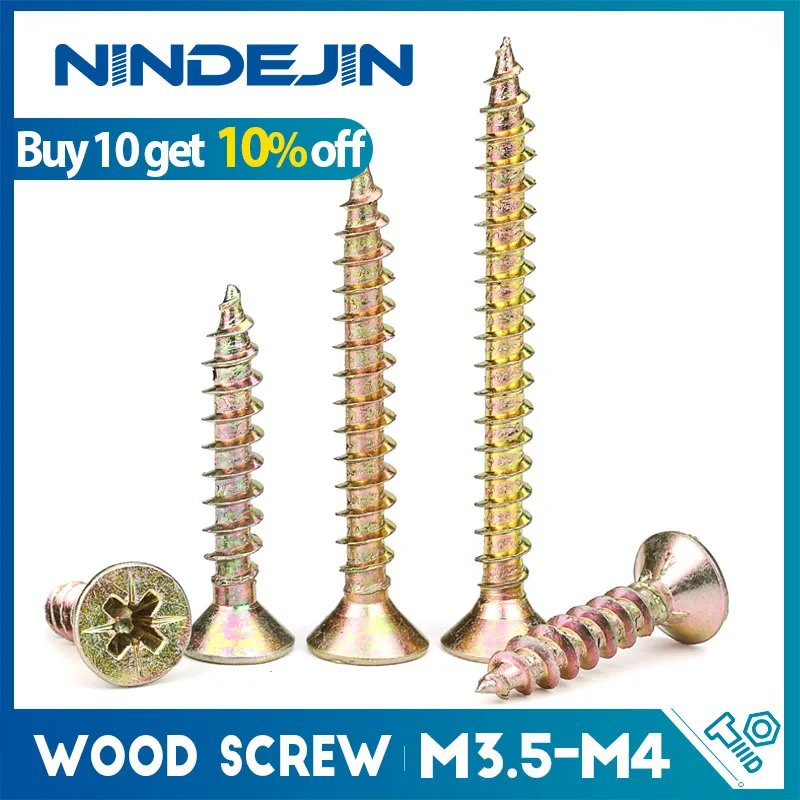
NINDEJIN Cross Flat Head Wood Screws
Official Store Deal
Expert Analysis Overview
NINDEJIN Cross Flat Head Wood Screws are pragmatic fasteners for authentic joinery, offering a period-appropriate aesthetic for discerning restoration projects.
These screws are fabricated from carbon steel, a material chosen for its inherent strength and durability. They feature a yellow zinc plated finish, which serves a dual purpose: enhancing corrosion resistance and providing a visual approximation of brass or aged copper, often found in historical Hardware. The sizes M3.5, M4, and M5 denote the nominal diameter of the screw shaft, offering versatility across different timber thicknesses and joint requirements. Threading is precise. The flat head design allows for a flush finish.
When securing a delicate antique drawer slide or a new cabinet door, the material composition is critical. Carbon steel provides the necessary tensile strength to withstand repeated stresses, preventing shearing that can plague lesser quality fasteners over time. This robust foundation ensures structural integrity for decades. The plating creates a protective barrier, extending the lifespan of the screw even in fluctuating environments. This is crucial for preservation.
Unlike common steel screws that can quickly oxidize, these plated fasteners maintain their structural and aesthetic integrity. Standard unplated steel fasteners, while historically accurate in some contexts, require constant vigilance against rust, particularly in humid climates. The yellow zinc plating acts as a sacrificial layer, significantly slowing down the degradation process, thereby reducing the need for premature replacement during a restoration. This extends the life of the project.
While the yellow zinc plating offers a charming, golden hue reminiscent of aged brass, it is important to note this is a surface treatment, not solid brass. For restoration purists seeking absolute material authenticity, unplated steel or genuine solid brass screws are often preferred, especially where the screw head will be prominently exposed. However, for interior joinery, concealed applications, or projects where cost and long-term corrosion resistance are higher priorities than pure material composition, these screws present a compelling alternative.
The aesthetic appeal of the yellow zinc finish is subtle. It provides a warm, complementary tone against many wood species, from light pine to rich mahogany. This understated elegance allows the natural beauty of the timber to remain the focal point, rather than drawing undue attention to the fastener itself. The finish itself will not develop a true patina like solid brass, but it resists tarnishing and maintains its appearance. This is a practical advantage.
Consider a restored pine chest of drawers. The original screws might have been blackened iron or a simple steel. Replacing them with these yellow zinc plated screws provides a superior hold and a visually harmonious, if not strictly identical, appearance that respects the original craftsmanship without introducing glaring modern elements. The finish holds up well.
These are self-tapping wood screws, specifically engineered for timber applications. The sharp point and aggressive thread geometry allow them to cut their own path into wood, reducing the need for extensive pilot drilling in softer woods. The cross-flat head design (often referred to as a Phillips head in modern terms) provides excellent torque transfer during driving, minimizing cam-out and preserving the screw head's integrity. This ensures a clean installation.
The self-tapping capability significantly streamlines the assembly process, especially for larger projects involving numerous fasteners. Imagine constructing a custom bookshelf from oak; the ability to seat screws quickly and securely without pre-drilling every hole saves considerable time and effort. This efficiency does not compromise holding power. The deep threads bite firmly into the wood fibers, creating a strong, lasting bond that resists loosening over time, even with seasonal wood movement. This is a crucial benefit.
Compared to conventional machine screws, which require a pre-tapped hole or a nut for fastening, these wood screws offer a simpler, more direct method for joining timber components. Their design is optimized for the unique cellular structure of wood, providing superior pull-out resistance and sheer strength when installed correctly. This makes them ideal for structural and aesthetic applications. They just work.
The cross-flat head, a common drive type, ensures broad compatibility with standard Phillips head screwdrivers or power drill bits. The recess is deep, designed to provide a firm grip for the driver, which is vital for preventing stripping, particularly when driving into denser hardwoods. A good bit fits snugly.
During installation, the robust head design minimizes the risk of deformation or cam-out. This is a common frustration with lower-quality screws, where the driver slips out of the recess, damaging both the screw head and potentially the surrounding timber. The precise manufacturing of these heads ensures consistent engagement, allowing for smooth, controlled driving. This maintains the clean aesthetic of the finished piece. Proper technique is key.
For historical reproductions, the availability of a Phillips-style head, while not period-correct for some very early pieces, is a practical concession that simplifies installation without significantly detracting from the overall authenticity. The flat head sits flush. It offers a cleaner look than a pan head, blending seamlessly into the surface of the wood when properly countersunk, a detail that restoration specialists often prioritize for a refined finish. The subtle profile is appreciated.
The combination of carbon steel and yellow zinc plating imbues these screws with excellent resistance to wear and corrosion. This durability is not just about the screw itself but about the longevity of the entire project it supports. A fastener that fails prematurely can compromise the structural integrity of a restored piece, leading to costly and time-consuming repairs.
Consider an outdoor wooden gate or a garden shed. Even though these screws are primarily for indoor wood applications, their corrosion resistance offers an added layer of protection should they be exposed to occasional moisture or humidity. This inherent resilience means the connection remains secure, preventing warping or structural shifts that can occur when fasteners weaken. The plating holds up well.
Unlike unplated steel screws that might begin to show surface rust within months in a damp environment, these plated versions offer a far greater lifespan. This translates directly into reduced maintenance and increased peace of mind for the homeowner or craftsman. The long-term performance makes them a sound investment, ensuring that the restored piece remains stable and beautiful for future generations. They are built to last.
These NINDEJIN wood screws represent a strong value proposition for restoration and new construction projects. The balance of robust material, effective corrosion protection, and a visually appropriate finish at a competitive price point makes them an intelligent choice. They deliver performance.
Framing the investment, these screws prevent the hidden costs associated with inferior fasteners, such as stripped heads, broken shafts, or premature corrosion, all of which necessitate rework. Investing in a quality fastener from the outset saves labor and material costs down the line. It's a smart decision. The subtle visual appeal also enhances the overall perceived value of the finished work, maintaining the high standards expected in quality craftsmanship. This elevates the project.
Unlike generic bulk screws found in local hardware stores, which often sacrifice material quality or plating thickness for price, these NINDEJIN screws maintain a higher standard. The consistency in threading and head formation ensures reliable performance, reducing frustration during assembly and providing confidence in the long-term stability of the structure. They are simply better.
Imagine completing a complex restoration of an antique desk, carefully sanding and refinishing the wood to perfection. The final step involves reassembling the drawers and panels. Using these reliable, visually complementary screws ensures that your meticulous work is held together with fasteners that perform flawlessly and blend harmoniously, contributing to the enduring beauty and integrity of the piece for decades to come. Your craftsmanship deserves this quality.
The Anatomy of a Secure Fastener
These screws are fabricated from carbon steel, a material chosen for its inherent strength and durability. They feature a yellow zinc plated finish, which serves a dual purpose: enhancing corrosion resistance and providing a visual approximation of brass or aged copper, often found in historical Hardware. The sizes M3.5, M4, and M5 denote the nominal diameter of the screw shaft, offering versatility across different timber thicknesses and joint requirements. Threading is precise. The flat head design allows for a flush finish.
When securing a delicate antique drawer slide or a new cabinet door, the material composition is critical. Carbon steel provides the necessary tensile strength to withstand repeated stresses, preventing shearing that can plague lesser quality fasteners over time. This robust foundation ensures structural integrity for decades. The plating creates a protective barrier, extending the lifespan of the screw even in fluctuating environments. This is crucial for preservation.
Unlike common steel screws that can quickly oxidize, these plated fasteners maintain their structural and aesthetic integrity. Standard unplated steel fasteners, while historically accurate in some contexts, require constant vigilance against rust, particularly in humid climates. The yellow zinc plating acts as a sacrificial layer, significantly slowing down the degradation process, thereby reducing the need for premature replacement during a restoration. This extends the life of the project.
Material Authenticity and Patina Potential
While the yellow zinc plating offers a charming, golden hue reminiscent of aged brass, it is important to note this is a surface treatment, not solid brass. For restoration purists seeking absolute material authenticity, unplated steel or genuine solid brass screws are often preferred, especially where the screw head will be prominently exposed. However, for interior joinery, concealed applications, or projects where cost and long-term corrosion resistance are higher priorities than pure material composition, these screws present a compelling alternative.
The aesthetic appeal of the yellow zinc finish is subtle. It provides a warm, complementary tone against many wood species, from light pine to rich mahogany. This understated elegance allows the natural beauty of the timber to remain the focal point, rather than drawing undue attention to the fastener itself. The finish itself will not develop a true patina like solid brass, but it resists tarnishing and maintains its appearance. This is a practical advantage.
Consider a restored pine chest of drawers. The original screws might have been blackened iron or a simple steel. Replacing them with these yellow zinc plated screws provides a superior hold and a visually harmonious, if not strictly identical, appearance that respects the original craftsmanship without introducing glaring modern elements. The finish holds up well.
Engineered for Wood Joinery
These are self-tapping wood screws, specifically engineered for timber applications. The sharp point and aggressive thread geometry allow them to cut their own path into wood, reducing the need for extensive pilot drilling in softer woods. The cross-flat head design (often referred to as a Phillips head in modern terms) provides excellent torque transfer during driving, minimizing cam-out and preserving the screw head's integrity. This ensures a clean installation.
The self-tapping capability significantly streamlines the assembly process, especially for larger projects involving numerous fasteners. Imagine constructing a custom bookshelf from oak; the ability to seat screws quickly and securely without pre-drilling every hole saves considerable time and effort. This efficiency does not compromise holding power. The deep threads bite firmly into the wood fibers, creating a strong, lasting bond that resists loosening over time, even with seasonal wood movement. This is a crucial benefit.
Compared to conventional machine screws, which require a pre-tapped hole or a nut for fastening, these wood screws offer a simpler, more direct method for joining timber components. Their design is optimized for the unique cellular structure of wood, providing superior pull-out resistance and sheer strength when installed correctly. This makes them ideal for structural and aesthetic applications. They just work.
Driving Performance and Head Integrity
The cross-flat head, a common drive type, ensures broad compatibility with standard Phillips head screwdrivers or power drill bits. The recess is deep, designed to provide a firm grip for the driver, which is vital for preventing stripping, particularly when driving into denser hardwoods. A good bit fits snugly.
During installation, the robust head design minimizes the risk of deformation or cam-out. This is a common frustration with lower-quality screws, where the driver slips out of the recess, damaging both the screw head and potentially the surrounding timber. The precise manufacturing of these heads ensures consistent engagement, allowing for smooth, controlled driving. This maintains the clean aesthetic of the finished piece. Proper technique is key.
For historical reproductions, the availability of a Phillips-style head, while not period-correct for some very early pieces, is a practical concession that simplifies installation without significantly detracting from the overall authenticity. The flat head sits flush. It offers a cleaner look than a pan head, blending seamlessly into the surface of the wood when properly countersunk, a detail that restoration specialists often prioritize for a refined finish. The subtle profile is appreciated.
Durability in the Long Term
The combination of carbon steel and yellow zinc plating imbues these screws with excellent resistance to wear and corrosion. This durability is not just about the screw itself but about the longevity of the entire project it supports. A fastener that fails prematurely can compromise the structural integrity of a restored piece, leading to costly and time-consuming repairs.
Consider an outdoor wooden gate or a garden shed. Even though these screws are primarily for indoor wood applications, their corrosion resistance offers an added layer of protection should they be exposed to occasional moisture or humidity. This inherent resilience means the connection remains secure, preventing warping or structural shifts that can occur when fasteners weaken. The plating holds up well.
Unlike unplated steel screws that might begin to show surface rust within months in a damp environment, these plated versions offer a far greater lifespan. This translates directly into reduced maintenance and increased peace of mind for the homeowner or craftsman. The long-term performance makes them a sound investment, ensuring that the restored piece remains stable and beautiful for future generations. They are built to last.
Value Proposition for Restoration
These NINDEJIN wood screws represent a strong value proposition for restoration and new construction projects. The balance of robust material, effective corrosion protection, and a visually appropriate finish at a competitive price point makes them an intelligent choice. They deliver performance.
Framing the investment, these screws prevent the hidden costs associated with inferior fasteners, such as stripped heads, broken shafts, or premature corrosion, all of which necessitate rework. Investing in a quality fastener from the outset saves labor and material costs down the line. It's a smart decision. The subtle visual appeal also enhances the overall perceived value of the finished work, maintaining the high standards expected in quality craftsmanship. This elevates the project.
Unlike generic bulk screws found in local hardware stores, which often sacrifice material quality or plating thickness for price, these NINDEJIN screws maintain a higher standard. The consistency in threading and head formation ensures reliable performance, reducing frustration during assembly and providing confidence in the long-term stability of the structure. They are simply better.
Imagine completing a complex restoration of an antique desk, carefully sanding and refinishing the wood to perfection. The final step involves reassembling the drawers and panels. Using these reliable, visually complementary screws ensures that your meticulous work is held together with fasteners that perform flawlessly and blend harmoniously, contributing to the enduring beauty and integrity of the piece for decades to come. Your craftsmanship deserves this quality.