Parallel Red/Black Tinned Copper Electrical Wire
Official Store Deal
Expert Analysis Overview
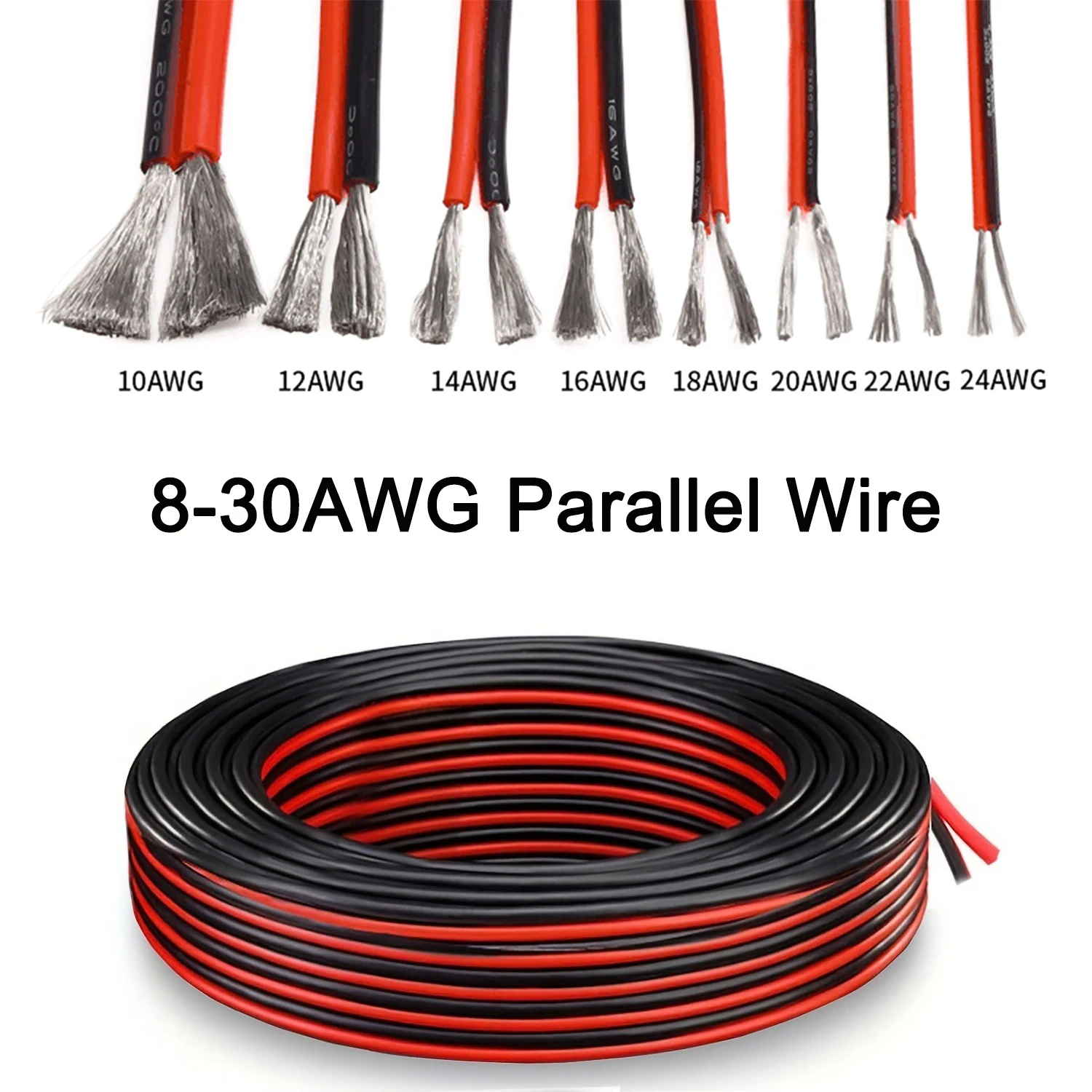
The Parallel Red/Black Tinned Copper Electrical Wire is a versatile cabling solution engineered for a broad spectrum of electrical applications, targeting hobbyists, repair technicians, and DIY enthusiasts. This offering spans a comprehensive range of American Wire Gauges (AWG) from 8 to 30, providing specific current-carrying capacities for diverse project requirements. Its construction emphasizes both conductivity and durability, making it a reliable choice for intricate electronic repairs and robust power connections.
The wire features tinned copper conductors, a critical attribute for long-term electrical stability. Tinned copper resists oxidation and corrosion far more effectively than bare copper. This resistance is particularly beneficial in environments with fluctuating temperatures or humidity, where bare copper would degrade, leading to increased resistance and potential connection failures. The tinning also facilitates easier soldering, ensuring more secure and reliable electrical joints. This is a significant advantage for precise repair work where clean, strong connections are paramount.
Consider a scenario involving the repair of sensitive audio equipment or a drone's power distribution board. The ability to achieve a quick, clean solder joint reduces heat exposure to surrounding components, minimizing the risk of collateral damage. Unlike standard untinned copper wires that can become brittle or difficult to solder after exposure, these tinned conductors maintain their integrity. The range of gauges, from heavy-duty 8 AWG capable of handling substantial current loads to fine 30 AWG suitable for delicate signal paths, ensures a precise match for almost any electrical task. This selection prevents under-gauging, which can lead to overheating, or over-gauging, which adds unnecessary bulk and cost.
Insulation is provided by either silicone or premium PVC, depending on the specific gauge and application. Silicone insulation, visible on some variants like the 16 AWG, offers exceptional flexibility and a high temperature rating, often up to 200°C. This flexibility is crucial for applications where the wire needs to bend repeatedly or fit into confined spaces without stressing the conductor or compromising the insulation. For instance, in robotics or RC models, where wires are constantly in motion, silicone insulation prevents premature wear and short circuits. Its high temperature resistance also makes it ideal for use near heat-generating components, such as power supplies or motor controllers.
Conversely, the premium PVC insulation, also highlighted, provides excellent mechanical strength and good resistance to abrasion, oils, and chemicals, albeit with a typically lower temperature rating than silicone. PVC is a cost-effective and widely accepted insulator for general-purpose wiring. The choice between silicone and PVC allows users to select the optimal balance of flexibility, temperature resistance, and cost for their specific project. For general household wiring or internal chassis connections where extreme temperatures are not a factor, PVC insulated wire offers robust protection. The clear labeling of AWG and temperature ratings on the insulation itself (e.g., "200°C") aids in correct application and safety compliance.
The parallel twin-lead configuration of these wires, featuring distinct red and black insulation, simplifies polarity identification. This is a fundamental aspect of electrical work, preventing incorrect connections that could damage sensitive electronics or cause system malfunctions. The ability to easily distinguish positive and negative leads streamlines assembly and troubleshooting processes, particularly in complex wiring harnesses or when working in low-light conditions. The parallel design also allows for easy separation into individual conductors if a single wire is needed, without requiring specialized tools.
This design contrasts sharply with bundled multi-conductor cables where individual wires might be color-coded but require stripping back an outer jacket, adding an extra step to preparation. For quick prototyping or field repairs, the parallel wire's immediate visual distinction saves valuable time and reduces the likelihood of errors. The availability in various lengths (1m, 3m, 5m, 10m) further enhances its utility, allowing users to purchase only the required amount, minimizing waste and optimizing project costs. This modular approach is particularly beneficial for small-scale projects or when specific lengths are needed for a clean installation.
The broad range of AWG sizes ensures that this wire can effectively serve numerous applications, from low-current signal transmission to high-current power delivery. A 10 AWG wire, for example, is suitable for connecting solar panels to charge controllers or for automotive power circuits, where significant current flows are expected. Its robust construction minimizes voltage drop over reasonable distances, preserving power efficiency. In contrast, a 24 AWG wire is perfect for internal wiring of electronic devices, LED lighting, or small motor connections, where space is at a premium and current demands are lower. The fine strands within each conductor, as indicated by "252 Strands 0.08mm X 2" for 16 AWG, contribute to the wire's overall flexibility and resistance to fatigue. More strands mean greater flexibility and less likelihood of breakage when bent repeatedly.
This multi-strand construction is a significant upgrade over solid core wires for most dynamic applications. Solid core wires are rigid and prone to breaking when flexed, making them unsuitable for anything but permanent, static installations. The high strand count of these tinned copper wires ensures that they can withstand vibrations and movement, making them ideal for vehicles, drones, and portable electronics. The consistent quality across various gauges, from the conductor material to the insulation, provides a reliable foundation for any electrical project, reducing the risk of intermittent faults or premature component failure. This consistency allows technicians to trust the material properties across their entire range of projects.
Investing in quality wiring like this offers significant long-term value, extending beyond the initial purchase price. The enhanced durability of tinned copper and high-grade insulation reduces the need for frequent replacements or re-wiring, saving both time and material costs over the lifespan of a project. For those engaged in repairing expensive equipment, using reliable, high-performance wire ensures that the repair itself is robust and lasting, preventing recurrent issues that could otherwise lead to further damage or frustration. This wire acts as a foundational component for ensuring clean signal transmission and reliable power delivery, critical for the optimal functioning of any electronic system. The ability to choose specific lengths and gauges means less waste and more precise project execution, further enhancing its economic appeal.
Imagine completing a complex electronics project, confident that every connection is solid, every wire is correctly identified, and the entire system operates with optimal efficiency. This wire provides the peace of mind that comes from using components designed for performance and longevity. It allows for precise repairs, robust power solutions, and flexible installations, ensuring that electrical projects are not just functional, but also reliable and durable for years to come. This selection empowers users to tackle intricate wiring tasks with professional-grade materials, transforming ambitious concepts into tangible, dependable realities.
Conductor Craftsmanship and Current Capacity
The wire features tinned copper conductors, a critical attribute for long-term electrical stability. Tinned copper resists oxidation and corrosion far more effectively than bare copper. This resistance is particularly beneficial in environments with fluctuating temperatures or humidity, where bare copper would degrade, leading to increased resistance and potential connection failures. The tinning also facilitates easier soldering, ensuring more secure and reliable electrical joints. This is a significant advantage for precise repair work where clean, strong connections are paramount.
Consider a scenario involving the repair of sensitive audio equipment or a drone's power distribution board. The ability to achieve a quick, clean solder joint reduces heat exposure to surrounding components, minimizing the risk of collateral damage. Unlike standard untinned copper wires that can become brittle or difficult to solder after exposure, these tinned conductors maintain their integrity. The range of gauges, from heavy-duty 8 AWG capable of handling substantial current loads to fine 30 AWG suitable for delicate signal paths, ensures a precise match for almost any electrical task. This selection prevents under-gauging, which can lead to overheating, or over-gauging, which adds unnecessary bulk and cost.
Insulation Integrity and Environmental Resilience
Insulation is provided by either silicone or premium PVC, depending on the specific gauge and application. Silicone insulation, visible on some variants like the 16 AWG, offers exceptional flexibility and a high temperature rating, often up to 200°C. This flexibility is crucial for applications where the wire needs to bend repeatedly or fit into confined spaces without stressing the conductor or compromising the insulation. For instance, in robotics or RC models, where wires are constantly in motion, silicone insulation prevents premature wear and short circuits. Its high temperature resistance also makes it ideal for use near heat-generating components, such as power supplies or motor controllers.
Conversely, the premium PVC insulation, also highlighted, provides excellent mechanical strength and good resistance to abrasion, oils, and chemicals, albeit with a typically lower temperature rating than silicone. PVC is a cost-effective and widely accepted insulator for general-purpose wiring. The choice between silicone and PVC allows users to select the optimal balance of flexibility, temperature resistance, and cost for their specific project. For general household wiring or internal chassis connections where extreme temperatures are not a factor, PVC insulated wire offers robust protection. The clear labeling of AWG and temperature ratings on the insulation itself (e.g., "200°C") aids in correct application and safety compliance.
Parallel Configuration and Ease of Use
The parallel twin-lead configuration of these wires, featuring distinct red and black insulation, simplifies polarity identification. This is a fundamental aspect of electrical work, preventing incorrect connections that could damage sensitive electronics or cause system malfunctions. The ability to easily distinguish positive and negative leads streamlines assembly and troubleshooting processes, particularly in complex wiring harnesses or when working in low-light conditions. The parallel design also allows for easy separation into individual conductors if a single wire is needed, without requiring specialized tools.
This design contrasts sharply with bundled multi-conductor cables where individual wires might be color-coded but require stripping back an outer jacket, adding an extra step to preparation. For quick prototyping or field repairs, the parallel wire's immediate visual distinction saves valuable time and reduces the likelihood of errors. The availability in various lengths (1m, 3m, 5m, 10m) further enhances its utility, allowing users to purchase only the required amount, minimizing waste and optimizing project costs. This modular approach is particularly beneficial for small-scale projects or when specific lengths are needed for a clean installation.
Performance in Diverse Applications
The broad range of AWG sizes ensures that this wire can effectively serve numerous applications, from low-current signal transmission to high-current power delivery. A 10 AWG wire, for example, is suitable for connecting solar panels to charge controllers or for automotive power circuits, where significant current flows are expected. Its robust construction minimizes voltage drop over reasonable distances, preserving power efficiency. In contrast, a 24 AWG wire is perfect for internal wiring of electronic devices, LED lighting, or small motor connections, where space is at a premium and current demands are lower. The fine strands within each conductor, as indicated by "252 Strands 0.08mm X 2" for 16 AWG, contribute to the wire's overall flexibility and resistance to fatigue. More strands mean greater flexibility and less likelihood of breakage when bent repeatedly.
This multi-strand construction is a significant upgrade over solid core wires for most dynamic applications. Solid core wires are rigid and prone to breaking when flexed, making them unsuitable for anything but permanent, static installations. The high strand count of these tinned copper wires ensures that they can withstand vibrations and movement, making them ideal for vehicles, drones, and portable electronics. The consistent quality across various gauges, from the conductor material to the insulation, provides a reliable foundation for any electrical project, reducing the risk of intermittent faults or premature component failure. This consistency allows technicians to trust the material properties across their entire range of projects.
Value Proposition for the Electronics Enthusiast
Investing in quality wiring like this offers significant long-term value, extending beyond the initial purchase price. The enhanced durability of tinned copper and high-grade insulation reduces the need for frequent replacements or re-wiring, saving both time and material costs over the lifespan of a project. For those engaged in repairing expensive equipment, using reliable, high-performance wire ensures that the repair itself is robust and lasting, preventing recurrent issues that could otherwise lead to further damage or frustration. This wire acts as a foundational component for ensuring clean signal transmission and reliable power delivery, critical for the optimal functioning of any electronic system. The ability to choose specific lengths and gauges means less waste and more precise project execution, further enhancing its economic appeal.
Imagine completing a complex electronics project, confident that every connection is solid, every wire is correctly identified, and the entire system operates with optimal efficiency. This wire provides the peace of mind that comes from using components designed for performance and longevity. It allows for precise repairs, robust power solutions, and flexible installations, ensuring that electrical projects are not just functional, but also reliable and durable for years to come. This selection empowers users to tackle intricate wiring tasks with professional-grade materials, transforming ambitious concepts into tangible, dependable realities.