PCB Screw Terminal Blocks
Official Store Deal
Expert Analysis Overview
Precision Interconnects for Reliable Circuits
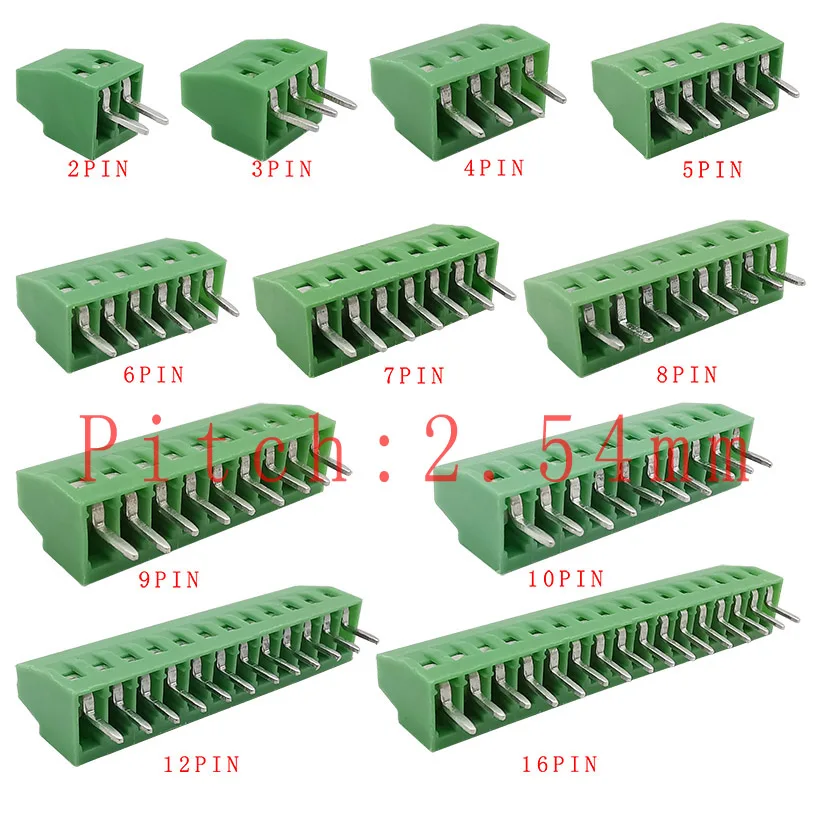
The 2.54mm pitch PCB screw terminal blocks represent a fundamental component for secure and maintainable electrical connections within printed circuit board designs. This range of connectors, spanning from 2-pin to 16-pin configurations, is engineered for applications demanding robust wire termination for low-voltage, low-current circuits. The design prioritizes connection integrity, a critical factor in preventing electrical faults and ensuring long-term system stability. These blocks are indispensable for prototyping, industrial control, and various embedded systems where direct wire-to-board interfaces are required.
Terminal Block Anatomy: A Closer Look at Construction
The visible construction of these PCB screw terminal blocks reveals a green insulating plastic housing. This material choice is critical for electrical isolation. It prevents unintended current paths between adjacent terminals and the surrounding environment. The housing likely consists of a polyamide (PA66) or similar engineering thermoplastic. Such materials offer a balance of mechanical strength, dielectric properties, and moderate heat resistance. This ensures the block maintains structural integrity under typical operating conditions. Unlike simpler, uninsulated connection points, these blocks provide a dedicated, protected pathway for each conductor. This design significantly reduces the risk of accidental short circuits. It enhances overall circuit safety and reliability.
Wiring Integrity: Securing Connections
Each terminal block features a screw-clamp mechanism for wire termination. This method provides a highly secure and re-usable connection. The screw compresses a metal plate against the inserted wire, creating a strong mechanical and electrical bond. This is a robust connection. The specified compatibility for 26-18 AWG cable highlights its suitability for smaller gauge wiring commonly found in signal and low-power applications. Using the correct wire gauge is paramount. Improperly sized wires can lead to loose connections, increased resistance, and potential overheating. Unlike spring-clamp terminals that rely on internal spring tension, screw terminals allow for visual confirmation of wire insertion and adjustable clamping force, offering a tangible sense of security for the installer. This direct mechanical engagement minimizes the risk of wire pull-out, a common failure point in less secure connection methods.
Electrical Performance: Voltage and Amperage Considerations
These terminal blocks are rated for 150V and 6A. These specifications define the maximum electrical parameters under which the component can safely operate. The 150V rating indicates the maximum potential difference that can be applied across the terminals without risking dielectric breakdown of the insulating material. The 6A rating specifies the maximum continuous current the terminal can carry without excessive heat generation. Exceeding these limits can lead to component degradation. It poses a significant risk of overheating, insulation failure, and potential fire hazards. For comparison, standard household wiring often handles much higher currents, making these blocks suitable for control circuits, sensor interfaces, and low-power DC distribution rather than mains power applications. Adhering strictly to these ratings is not merely a recommendation; it is a fundamental safety requirement for any electrical installation.
Installation Dynamics: PCB Integration
The 2.54mm (0.1-inch) pin pitch is a standard dimension for through-hole components. This ensures broad compatibility with a vast array of printed circuit board layouts. The pins are designed for soldering directly onto the PCB. This creates a permanent and stable mechanical and electrical connection. The precision of this pitch is crucial. Misalignment can lead to difficult insertion, bent pins, or compromised solder joints. Unlike surface-mount components that require specialized reflow soldering, these through-hole blocks can be easily integrated using manual soldering techniques, making them accessible for hobbyists and small-batch production. The robust physical attachment to the PCB ensures that the terminal block can withstand the stresses of repeated wire insertions and removals without compromising the integrity of the board connection.
Versatility in Application: Pin Count Options
The availability of configurations from 2-pin to 16-pin offers exceptional versatility. This wide range allows designers to select the exact number of connections needed for a specific circuit. This minimizes wasted board space and optimizes component usage. A 2-pin block might be used for a simple power input, while a 16-pin block could manage multiple sensor inputs or control lines. This modularity is a significant advantage. It eliminates the need to cut down larger blocks or combine multiple smaller ones, streamlining the assembly process. Unlike fixed-size connectors, this variety ensures that the right tool is available for every job, from simple power distribution to complex multi-channel data acquisition systems. The ability to precisely match pin count to application requirements contributes to a cleaner, more efficient circuit design.
Longevity and Durability: Material Science in Practice
The choice of materials for both the housing and the metal contacts directly impacts the long-term durability of these terminal blocks. The insulating plastic, likely a robust engineering polymer, resists common environmental factors such as moisture and moderate temperature fluctuations. The metal contacts, typically brass or phosphor bronze with tin or nickel plating, are selected for their conductivity and corrosion resistance. This plating is essential. It prevents oxidation that could degrade electrical performance over time. Compared to bare copper, plated contacts maintain lower contact resistance over extended periods, ensuring consistent signal integrity. This attention to material science means the terminal blocks are not merely functional upon installation but are designed to maintain their performance characteristics throughout the operational life of the electronic device. Such components are built to last.
The Professional's Edge: Why This Matters
For electrical professionals, the reliability of every component is paramount. These terminal blocks offer a significant upgrade over less secure or temporary wiring solutions. Unlike generic push-in connectors that can loosen over time with vibration or temperature cycling, the screw-clamp mechanism provides a consistently firm grip on the conductor. This ensures stable electrical continuity. The clear pin pitch and robust through-hole design facilitate straightforward integration into new and existing PCB designs, reducing assembly errors and rework. This translates directly into time savings and enhanced project efficiency. The ability to confidently terminate wires without concern for intermittent connections or premature failure allows engineers to focus on circuit functionality rather than connection integrity issues.
Ensuring System Stability: A Critical Component
Imagine a scenario where intermittent connections plague a critical control system, leading to unpredictable behavior and costly downtime. These 2.54mm pitch PCB screw terminal blocks are the engineered solution to such frustrations. By providing a secure, verifiable, and robust interface between discrete wiring and the PCB, they eliminate a common source of electrical instability. The investment in quality terminal blocks like these is not merely a purchase; it is an investment in the long-term reliability and safety of your electronic projects. They ensure that your circuits perform exactly as designed, without the hidden costs of troubleshooting unreliable connections. This component is a foundational element for any stable electrical system.
These terminal blocks offer a dependable solution for integrating discrete wiring into printed circuit board designs, prioritizing connection integrity. The secure screw-clamp mechanism and standard pitch ensure compatibility and ease of use, making them a valuable asset for any electrical project requiring reliable wire-to-board connections. Envision your next project operating flawlessly, with every connection solid and secure, thanks to these meticulously designed components. This level of reliability allows for greater focus on innovation and functionality, knowing the foundational electrical connections are uncompromised.