PHONEPACE Smart Wi-Fi Video Doorbell
Official Store Deal
Expert Analysis Overview
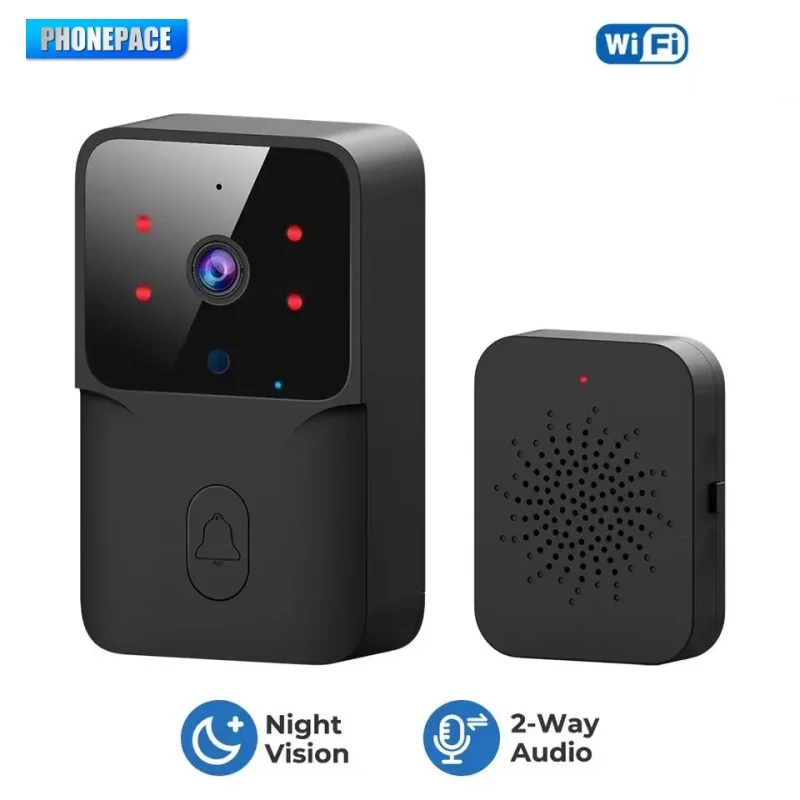
The PHONEPACE Smart Wi-Fi Video Doorbell is a pragmatic entry-level solution designed for basic front-door surveillance and communication. It targets users seeking an accessible, battery-powered security option without the complexities of wired installations or recurring cloud storage fees. This device leverages common wireless protocols to deliver essential smart home functionality.
The device operates on the 2.4GHz 802.11b/g WiFi standard, supplemented by Bluetooth for initial pairing. Its input voltage is DC5V 2A, indicating standard USB power delivery. This configuration relies on the prevalent 2.4GHz spectrum for data transmission, offering a balance of range and wall penetration within a typical residential environment. Bluetooth streamlines the initial setup process, simplifying device discovery and connection to the home network. This is a pragmatic choice.
Unlike higher-frequency 5GHz WiFi, which provides greater bandwidth but reduced penetration, 2.4GHz is a common choice for smart home devices due to its extended reach and compatibility with older routers. Many entry-level devices omit Bluetooth, making initial configuration more cumbersome. The inclusion of Bluetooth here enhances user convenience. The 2.4GHz band can sometimes experience congestion in dense urban areas, potentially leading to minor latency in video streams. However, for a doorbell application, this is often acceptable.
From a home automation engineering perspective, the reliance on 2.4GHz WiFi suggests a cloud-centric operational model. Direct local API access, typical of Zigbee or Z-Wave devices, is unlikely without significant reverse engineering or manufacturer-provided SDKs. Users aiming for deep, local Home Assistant integration without cloud dependency should manage expectations. The device's primary interaction will likely be through its dedicated mobile application, which handles the communication between the doorbell and the user's smartphone. This simplifies user experience for many. The 150-meter receiving distance in open areas indicates decent wireless range. Signal strength indoors will vary.
Powering the doorbell is an integrated 800mAh Lithium Battery, rechargeable via the DC5V 2A input. This rechargeable design eliminates the need for constant battery replacements, offering a more sustainable and cost-effective long-term solution. The low-power operation is a key design aspect for battery-powered devices. The compact battery capacity is suitable for intermittent use.
An 800mAh battery in a low-power WiFi device implies a design focus on efficiency, crucial for minimizing charging frequency. Actual battery life will depend heavily on motion detection frequency and live view activations. Users with high traffic at their door might find themselves recharging more often than those in quieter environments. This is a common trade-off for compact, wireless units.
Compared to wired doorbells, which offer continuous power and eliminate battery concerns, this unit provides installation flexibility. Other battery-powered doorbells often feature larger battery packs (e.g., 5000mAh+) for extended periods between charges, but these come with increased bulk and cost. The 800mAh capacity positions this device as a solution for users prioritizing a smaller form factor and simpler, less demanding usage patterns. It fits a specific niche.
The doorbell integrates Night Vision capabilities and captures video in HD resolution. It features a 75-degree viewing angle. Night vision extends the doorbell's utility into low-light conditions, ensuring visitors are visible even after dark. The HD resolution provides sufficient detail for identification purposes. A 75-degree angle offers a focused view.
While HD resolution is standard for many entry-level security cameras, the 75-degree viewing angle is a more focused field than many premium doorbells, which often boast 120-degree or even 180-degree fisheye lenses. This narrower perspective means placement is critical to capture the desired area without blind spots. Users should consider mounting height and angle carefully to maximize coverage. The night vision functionality, likely achieved through infrared LEDs, is a crucial security feature. It ensures round-the-clock monitoring capability.
In contrast to doorbells lacking night vision, this unit provides essential visibility during nighttime hours, a non-negotiable feature for any security device. The focused viewing angle, while a limitation compared to wider lenses, can be advantageous in specific scenarios where privacy or targeted monitoring is preferred. It avoids capturing excessive peripheral activity. This design choice prioritizes clarity within a defined zone. Image quality appears adequate for identification.
The device supports 2-Way Audio and functions as a 1-to-1 Home Intercom. This allows for direct, real-time communication between the person at the door and the user via their smartphone. Two-way audio is a fundamental feature. The intercom functionality is straightforward.
This immediate communication capability enhances both security and convenience. Users can verbally engage with delivery personnel, guests, or even deter suspicious individuals from anywhere with an internet connection. The 1-to-1 nature signifies a direct link between the doorbell and the paired mobile device, rather than a multi-user or multi-chime system. This simplifies the interaction model. The included indoor chime provides an audible alert within the home.
Unlike traditional doorbells that only provide an audible ring, or basic video doorbells without two-way audio, this system enables comprehensive interaction. The ability to speak to visitors remotely is a significant upgrade in home management and security. It offers peace of mind. The system ensures you never miss a caller.
A notable feature is the provision of Free Cloud Storage, offering 30 days of service. This eliminates the immediate need for a local storage solution like an SD card. Free cloud storage is a significant value proposition. It simplifies data management.
This cloud-centric storage model means recorded footage is accessible remotely without physical interaction with the device. The 30-day retention period is generous for a free service, as many competitors charge monthly subscriptions for similar or even shorter periods. The absence of an SD card slot, however, means users are entirely dependent on the cloud service for video archives. If the cloud service were to cease or change its terms, local recording would not be an option. This is a critical dependency for users.
Compared to systems requiring a paid subscription for cloud access or those relying solely on local SD card storage, this doorbell offers a convenient, no-cost entry into video archiving. For users wary of ongoing subscription fees, the 30 days of free cloud storage presents a compelling argument. It provides ample time to review events. The cloud also protects footage from physical tampering with the doorbell itself. Offline notification is also a useful feature.
The doorbell unit measures 8.5cm x 5.3cm x 2.06cm, and the indoor chime is 5.5cm x 4.2cm x 2.17cm. These compact dimensions indicate a discreet design. The small size facilitates flexible placement. Installation should be straightforward.
The compact form factor allows for unobtrusive placement near the doorframe without drawing excessive attention. Its small footprint is advantageous for homes where space is limited or a less conspicuous security device is preferred. The wireless nature further simplifies installation, bypassing the need for complex wiring or drilling. Users can mount it easily.
Larger, more feature-rich video doorbells can sometimes be bulky and visually prominent. This compact design contrasts with those, appealing to users who prefer a minimalist aesthetic. The light weight also means less robust mounting solutions might be acceptable, potentially using adhesive options in addition to screws. This enhances installation versatility. It is a subtle addition to the home exterior.
For the home automation engineer, this device presents a common challenge: a WiFi-only smart home component without explicit mentions of open APIs or local control protocols like MQTT. The primary interface for control and monitoring will be the manufacturer's mobile application. This typically implies cloud communication for all functionality. The 2.4GHz WiFi band is prone to congestion, which can introduce latency, especially when initiating live video feeds. Response delay is a key concern.
Integrating such a device into a complex Home Assistant setup usually requires either a manufacturer-provided integration (which relies on their cloud API) or reverse-engineering efforts. The latter can be time-consuming and may break with firmware updates. The lack of Zigbee or Z-Wave means it won't directly join a mesh network for local control. This limits advanced automation scenarios. For example, triggering local lighting based on doorbell presses might require cloud-to-cloud integrations. Offline notifications are a good start.
Unlike devices with documented local APIs or standard protocols, this doorbell's integration capabilities are constrained by its proprietary cloud ecosystem. While functional for its intended standalone purpose, users seeking granular control, ultra-low latency, or complete data privacy within a local Home Assistant environment may find it restrictive. The free cloud storage is a benefit, but it reinforces the cloud dependency. This is a common trade-off for budget-friendly WiFi devices. Its simplicity is its strength and its limitation.
Imagine the peace of mind knowing you can see and speak to anyone at your door, whether you're upstairs or halfway across the globe. Picture the convenience of a rechargeable unit that sidesteps complicated wiring, offering essential security with minimal fuss. This doorbell is a gateway to a more connected and secure home, making everyday interactions simpler and more controlled, all while keeping a watchful eye on your entryway.
Network Architecture and Wireless Protocols
The device operates on the 2.4GHz 802.11b/g WiFi standard, supplemented by Bluetooth for initial pairing. Its input voltage is DC5V 2A, indicating standard USB power delivery. This configuration relies on the prevalent 2.4GHz spectrum for data transmission, offering a balance of range and wall penetration within a typical residential environment. Bluetooth streamlines the initial setup process, simplifying device discovery and connection to the home network. This is a pragmatic choice.
Unlike higher-frequency 5GHz WiFi, which provides greater bandwidth but reduced penetration, 2.4GHz is a common choice for smart home devices due to its extended reach and compatibility with older routers. Many entry-level devices omit Bluetooth, making initial configuration more cumbersome. The inclusion of Bluetooth here enhances user convenience. The 2.4GHz band can sometimes experience congestion in dense urban areas, potentially leading to minor latency in video streams. However, for a doorbell application, this is often acceptable.
From a home automation engineering perspective, the reliance on 2.4GHz WiFi suggests a cloud-centric operational model. Direct local API access, typical of Zigbee or Z-Wave devices, is unlikely without significant reverse engineering or manufacturer-provided SDKs. Users aiming for deep, local Home Assistant integration without cloud dependency should manage expectations. The device's primary interaction will likely be through its dedicated mobile application, which handles the communication between the doorbell and the user's smartphone. This simplifies user experience for many. The 150-meter receiving distance in open areas indicates decent wireless range. Signal strength indoors will vary.
Power Management and Operational Endurance
Powering the doorbell is an integrated 800mAh Lithium Battery, rechargeable via the DC5V 2A input. This rechargeable design eliminates the need for constant battery replacements, offering a more sustainable and cost-effective long-term solution. The low-power operation is a key design aspect for battery-powered devices. The compact battery capacity is suitable for intermittent use.
An 800mAh battery in a low-power WiFi device implies a design focus on efficiency, crucial for minimizing charging frequency. Actual battery life will depend heavily on motion detection frequency and live view activations. Users with high traffic at their door might find themselves recharging more often than those in quieter environments. This is a common trade-off for compact, wireless units.
Compared to wired doorbells, which offer continuous power and eliminate battery concerns, this unit provides installation flexibility. Other battery-powered doorbells often feature larger battery packs (e.g., 5000mAh+) for extended periods between charges, but these come with increased bulk and cost. The 800mAh capacity positions this device as a solution for users prioritizing a smaller form factor and simpler, less demanding usage patterns. It fits a specific niche.
Visual Fidelity and Environmental Adaptation
The doorbell integrates Night Vision capabilities and captures video in HD resolution. It features a 75-degree viewing angle. Night vision extends the doorbell's utility into low-light conditions, ensuring visitors are visible even after dark. The HD resolution provides sufficient detail for identification purposes. A 75-degree angle offers a focused view.
While HD resolution is standard for many entry-level security cameras, the 75-degree viewing angle is a more focused field than many premium doorbells, which often boast 120-degree or even 180-degree fisheye lenses. This narrower perspective means placement is critical to capture the desired area without blind spots. Users should consider mounting height and angle carefully to maximize coverage. The night vision functionality, likely achieved through infrared LEDs, is a crucial security feature. It ensures round-the-clock monitoring capability.
In contrast to doorbells lacking night vision, this unit provides essential visibility during nighttime hours, a non-negotiable feature for any security device. The focused viewing angle, while a limitation compared to wider lenses, can be advantageous in specific scenarios where privacy or targeted monitoring is preferred. It avoids capturing excessive peripheral activity. This design choice prioritizes clarity within a defined zone. Image quality appears adequate for identification.
Communication and User Interaction
The device supports 2-Way Audio and functions as a 1-to-1 Home Intercom. This allows for direct, real-time communication between the person at the door and the user via their smartphone. Two-way audio is a fundamental feature. The intercom functionality is straightforward.
This immediate communication capability enhances both security and convenience. Users can verbally engage with delivery personnel, guests, or even deter suspicious individuals from anywhere with an internet connection. The 1-to-1 nature signifies a direct link between the doorbell and the paired mobile device, rather than a multi-user or multi-chime system. This simplifies the interaction model. The included indoor chime provides an audible alert within the home.
Unlike traditional doorbells that only provide an audible ring, or basic video doorbells without two-way audio, this system enables comprehensive interaction. The ability to speak to visitors remotely is a significant upgrade in home management and security. It offers peace of mind. The system ensures you never miss a caller.
Data Retention and Accessibility
A notable feature is the provision of Free Cloud Storage, offering 30 days of service. This eliminates the immediate need for a local storage solution like an SD card. Free cloud storage is a significant value proposition. It simplifies data management.
This cloud-centric storage model means recorded footage is accessible remotely without physical interaction with the device. The 30-day retention period is generous for a free service, as many competitors charge monthly subscriptions for similar or even shorter periods. The absence of an SD card slot, however, means users are entirely dependent on the cloud service for video archives. If the cloud service were to cease or change its terms, local recording would not be an option. This is a critical dependency for users.
Compared to systems requiring a paid subscription for cloud access or those relying solely on local SD card storage, this doorbell offers a convenient, no-cost entry into video archiving. For users wary of ongoing subscription fees, the 30 days of free cloud storage presents a compelling argument. It provides ample time to review events. The cloud also protects footage from physical tampering with the doorbell itself. Offline notification is also a useful feature.
Physical Footprint and Installation Considerations
The doorbell unit measures 8.5cm x 5.3cm x 2.06cm, and the indoor chime is 5.5cm x 4.2cm x 2.17cm. These compact dimensions indicate a discreet design. The small size facilitates flexible placement. Installation should be straightforward.
The compact form factor allows for unobtrusive placement near the doorframe without drawing excessive attention. Its small footprint is advantageous for homes where space is limited or a less conspicuous security device is preferred. The wireless nature further simplifies installation, bypassing the need for complex wiring or drilling. Users can mount it easily.
Larger, more feature-rich video doorbells can sometimes be bulky and visually prominent. This compact design contrasts with those, appealing to users who prefer a minimalist aesthetic. The light weight also means less robust mounting solutions might be acceptable, potentially using adhesive options in addition to screws. This enhances installation versatility. It is a subtle addition to the home exterior.
Integration Potential for Home Automation Engineers
For the home automation engineer, this device presents a common challenge: a WiFi-only smart home component without explicit mentions of open APIs or local control protocols like MQTT. The primary interface for control and monitoring will be the manufacturer's mobile application. This typically implies cloud communication for all functionality. The 2.4GHz WiFi band is prone to congestion, which can introduce latency, especially when initiating live video feeds. Response delay is a key concern.
Integrating such a device into a complex Home Assistant setup usually requires either a manufacturer-provided integration (which relies on their cloud API) or reverse-engineering efforts. The latter can be time-consuming and may break with firmware updates. The lack of Zigbee or Z-Wave means it won't directly join a mesh network for local control. This limits advanced automation scenarios. For example, triggering local lighting based on doorbell presses might require cloud-to-cloud integrations. Offline notifications are a good start.
Unlike devices with documented local APIs or standard protocols, this doorbell's integration capabilities are constrained by its proprietary cloud ecosystem. While functional for its intended standalone purpose, users seeking granular control, ultra-low latency, or complete data privacy within a local Home Assistant environment may find it restrictive. The free cloud storage is a benefit, but it reinforces the cloud dependency. This is a common trade-off for budget-friendly WiFi devices. Its simplicity is its strength and its limitation.
Imagine the peace of mind knowing you can see and speak to anyone at your door, whether you're upstairs or halfway across the globe. Picture the convenience of a rechargeable unit that sidesteps complicated wiring, offering essential security with minimal fuss. This doorbell is a gateway to a more connected and secure home, making everyday interactions simpler and more controlled, all while keeping a watchful eye on your entryway.