PowMr 2KW 12V Hybrid Solar Inverter
Official Store Deal
Expert Analysis Overview
Core Power Architecture and Conversion Efficiency
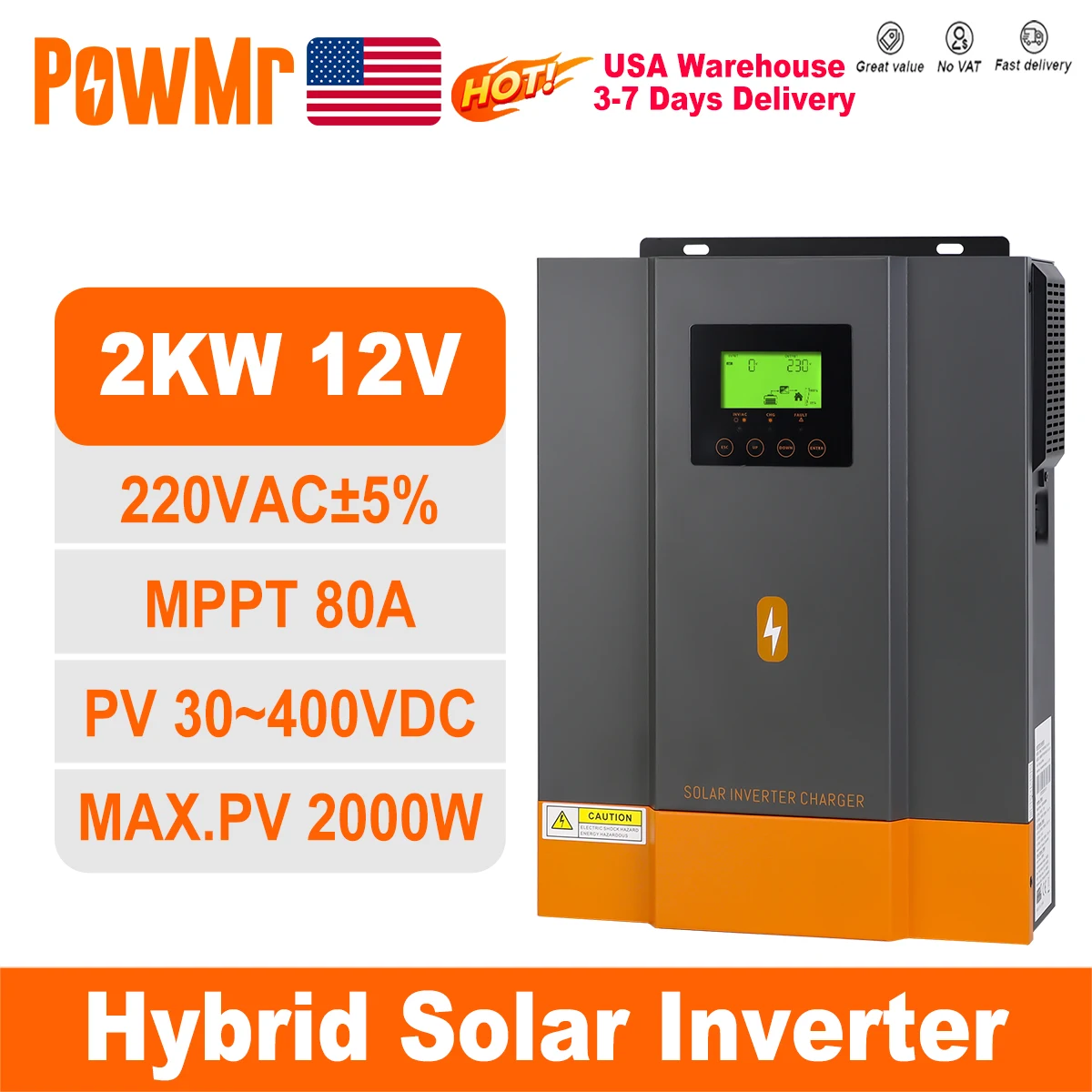
The PowMr 2KW 12V Hybrid Solar Inverter is a compact power management unit designed for small to medium-scale off-grid or backup solar applications. This device targets users seeking energy independence and stable power delivery. Its integrated 80A MPPT solar charge controller is a significant feature. This ensures maximum power extraction from photovoltaic arrays.
The inverter's primary function is to convert direct current (DC) from solar panels and batteries into alternating current (AC) for household appliances. The 220VAC±5% output specification indicates a tightly regulated voltage. This stability is crucial for sensitive electronics. Many generic inverters exhibit wider voltage swings. Such fluctuations can shorten the lifespan of connected devices. The pure sine wave output further enhances compatibility. It mirrors grid-quality power, unlike modified sine wave inverters that can cause humming or damage to certain motors and inductive loads.
Solar Input and Charge Management
The unit supports a wide PV input voltage range of 30-400VDC. This flexibility allows for various solar panel configurations. A maximum PV array power of 2000W is supported. This capacity is ample for charging a 12V battery bank efficiently. The 80A MPPT charge controller actively tracks the maximum power point of the solar array. This optimizes energy harvest. Compared to older PWM (Pulse Width Modulation) controllers, MPPT technology can increase charging efficiency by 10-30%. This translates directly into more usable power from the same solar setup. It's a critical distinction for system performance.
Output Stability and Load Handling
The 2KW continuous power rating provides sufficient capacity for essential home appliances. This includes refrigerators, lights, and entertainment systems. The 220VAC output is standard for many regions. The ±5% tolerance ensures consistent power quality. This prevents brownouts or overvoltage conditions. The inverter maintains a clean signal. This is vital for sensitive electronics. Many cheaper units struggle with maintaining stable output under varying loads. This inverter aims to mitigate those issues.
Battery System Integration
Compatibility with both lithium and lead-acid batteries offers installation flexibility. This allows users to select battery technology based on budget and performance requirements. The 12V battery system is a common standard for smaller off-grid setups. It simplifies wiring and component selection. The integrated charging functionality means a separate charge controller is not needed. This streamlines the system architecture. It reduces overall complexity and potential points of failure. The unit manages charge cycles. This extends battery life.
Operational Modes and System Flexibility
This hybrid inverter offers four distinct charging modes. These include Solar First, Utility First, Solar and Utility, and Only Solar. These modes allow users to prioritize solar energy, grid power, or a combination. This adaptability is crucial for optimizing energy costs and ensuring power availability. For instance, Solar First mode prioritizes renewable energy. This reduces reliance on the grid. Utility First ensures batteries are always topped up. This provides reliable backup power.
Additionally, three load output working modes are available: Utility First, Solar First, and SBU First (Solar-Battery-Utility). These modes dictate how loads are powered. SBU First is particularly useful for maximizing self-consumption of solar energy. It draws power from solar, then battery, then the utility grid. This minimizes electricity bills. These configurable modes provide a sophisticated level of energy management. They allow tailoring the system to specific energy consumption patterns. This flexibility is a significant advantage. Basic inverters often lack such granular control.
Physical Design and Connectivity
The inverter's physical construction appears robust, featuring a metal enclosure with a prominent LCD display. The display provides real-time operational data. Status indicators offer quick visual diagnostics. The unit's dimensions (approximately 14.05 inches high, 10.75 inches wide) suggest a relatively compact footprint. This facilitates installation in various locations. The weight of 4.6kg indicates a substantial internal build. This implies durable components. The integrated cooling fans are visible. Proper thermal management is critical for inverter longevity. Inadequate cooling is a common failure point in power electronics.
Input and Output Terminals
Clearly labeled terminals for AC Input, AC Output, PV Input, Battery Input, and a Communication Port simplify wiring. The quality of these connection points is paramount for long-term reliability. Secure, well-designed terminals prevent loose connections. Loose connections can lead to arcing, overheating, and system failure. The communication port suggests potential for remote monitoring or integration with other smart home systems. This expands its utility beyond basic power conversion. It offers a pathway for future upgrades. This is a forward-thinking design choice.
User Interface and Diagnostics
The LCD display provides critical information at a glance. It shows voltage, current, and operational status. Status, charging, and fault indicators offer immediate feedback. Function buttons allow for easy configuration of the various operating modes. This user-friendly interface is essential for troubleshooting and daily management. A clear display reduces reliance on complex manuals. It empowers users to understand their system's performance. This transparency is a key benefit. Many systems require external meters for this data.
Durability and Long-Term Reliability Considerations
The visible exterior suggests a durable construction. The metal casing protects internal components from environmental factors. The integrated cooling system, with visible fan vents, is crucial for dissipating heat. Sustained high temperatures degrade electronic components rapidly. The robust design implies a focus on operational longevity. This is critical for an outdoor or semi-outdoor installation. The component selection for power electronics directly impacts reliability. The unit's weight suggests adequate heatsinking. This is a good sign for thermal performance. The orange and grey aesthetic is functional. It doesn't detract from its industrial purpose.
Component Quality and Signal Integrity
While internal component quality cannot be assessed visually, the pure sine wave output specification implies a sophisticated inverter stage. This requires quality filtering capacitors and robust switching transistors. These components are vital for clean signal transmission. The 80A MPPT controller also points to substantial power handling capabilities. This requires well-engineered power semiconductors. The design must minimize electromagnetic interference (EMI). EMI can affect nearby sensitive equipment. A clean output waveform is a hallmark of quality. It protects connected loads. This is a core benefit of this inverter.
Installation and Maintenance Implications
The clear labeling of ports simplifies initial setup. Proper wiring practices are essential for safety and performance. The inclusion of a communication port suggests potential for firmware updates. This could enhance functionality over time. Regular inspection of connections is recommended. Dust accumulation on cooling fins can reduce efficiency. Periodic cleaning ensures optimal thermal performance. This proactive maintenance extends the unit's operational life. It prevents unexpected failures. The design appears to facilitate such routine checks.
Value Proposition and Target Audience
This PowMr inverter offers a compelling value proposition for specific applications. Its 2KW capacity and 12V battery compatibility make it ideal for RVs, small cabins, workshops, or emergency backup systems. The advanced MPPT charge controller maximizes solar harvest. The pure sine wave output protects sensitive electronics. The multiple operating modes provide unparalleled flexibility in energy management. This allows users to optimize for cost savings or power security. The unit's robust build and comprehensive features position it as a reliable choice. It offers significant advantages over basic inverter-charger combinations. This inverter provides a comprehensive solution for energy independence. It delivers stable, high-quality power. Imagine a scenario where grid outages no longer disrupt your essential services. This inverter provides that peace of mind. It ensures your critical appliances remain operational. You gain control over your energy consumption. This leads to long-term savings and increased self-reliance.