PowMr 60A MPPT Solar Charge Controller
Official Store Deal
Expert Analysis Overview
The PowMr 60A MPPT Solar Charge Controller is a robust power management unit engineered for off-grid solar installations requiring efficient energy harvesting and flexible battery compatibility. This device represents a significant upgrade over conventional PWM controllers, offering advanced Maximum Power Point Tracking technology to optimize solar panel output under diverse environmental conditions. Its design prioritizes system scalability and long-term battery health, making it a critical component for reliable standalone power systems.
This controller integrates Maximum Power Point Tracking (MPPT) technology, a crucial feature for maximizing energy harvest from solar panels. Unlike simpler Pulse Width Modulation (PWM) controllers that essentially clip excess voltage, MPPT algorithms continuously adjust the operating point of the solar array. This dynamic optimization ensures that the panels always operate at their peak power output, regardless of temperature, shading, or battery voltage fluctuations. More power is delivered to the battery.
The practical implication of MPPT is a tangible increase in system efficiency, particularly in scenarios with fluctuating sunlight or when the solar panel voltage significantly exceeds the battery voltage. Users can expect up to a 30% improvement in charging efficiency compared to non-MPPT alternatives. This translates directly into faster battery charging and more usable energy throughout the day.
Compared to standard PWM controllers, which are often less expensive but less efficient, the PowMr 60A MPPT controller offers a superior return on investment through enhanced energy capture. It is a smart choice for serious solar applications.
The unit employs a 4-stage PWM charging process: Bulk, Boost, Float, and Equalization. This sophisticated charging profile is fundamental for extending battery lifespan and ensuring optimal performance. Bulk charging delivers maximum current until the battery reaches a set voltage. Boost charging then applies a higher voltage for a controlled period to ensure a full charge.
Float charging maintains the battery at a safe voltage, preventing overcharging and self-discharge. The Equalization stage, typically performed periodically, helps to balance the voltage of individual cells within a battery bank, preventing sulfation and prolonging overall battery health. This comprehensive approach safeguards the battery investment.
Controlling the charging current and voltage effectively prevents both battery overcharging and over-discharging. This significantly extends the battery's operational life. Generic charge controllers often lack these nuanced charging stages, leading to premature battery failure.
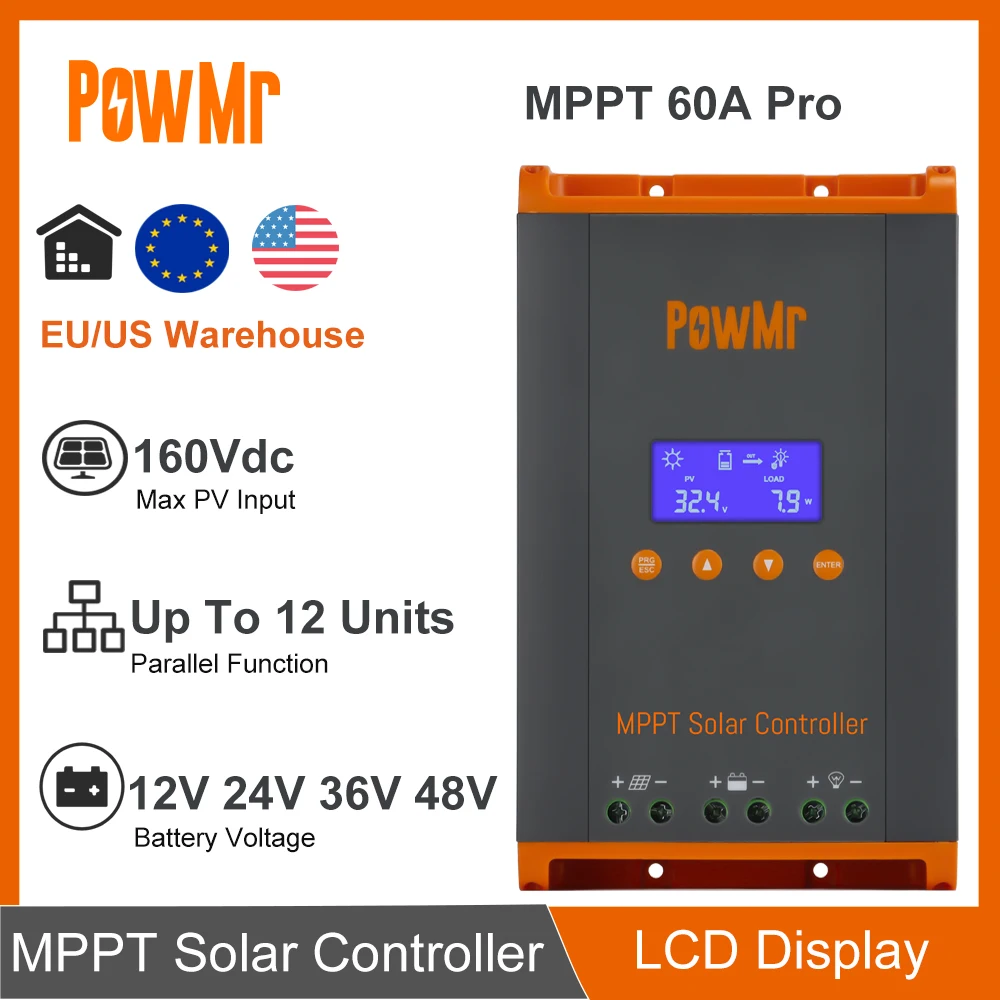
One of the standout features of this PowMr controller is its broad battery voltage compatibility, supporting 12V, 24V, 36V, and 48V battery systems. This flexibility allows the controller to be integrated into a wide range of existing or new off-grid setups. The automatic detection of battery voltage simplifies initial setup and reduces potential configuration errors.
Furthermore, the controller boasts an impressive Max PV input of 160Vdc. This high voltage input capability allows for longer series strings of solar panels, reducing the need for complex parallel wiring and minimizing voltage drop over longer cable runs. Fewer cables mean less complexity.
This high PV input is a critical advantage for larger installations or systems where panels are located far from the battery bank. It enables more efficient system design and reduces installation costs associated with thicker gauge wiring. Many entry-level controllers are limited to much lower PV input voltages.
The PowMr 60A Pro supports a parallel function, allowing up to 12 units to operate concurrently. This feature is invaluable for expanding system capacity as energy demands grow. Users can incrementally add controllers to scale their solar array and charging capability without replacing the entire system.
This parallel capability ensures that a solar power system can evolve with changing energy requirements. It provides a modular approach to system design. This avoids the costly overhaul often required with single-unit systems.
Unlike controllers that are limited to standalone operation, this parallel function offers a future-proof solution for growing energy needs. It provides significant flexibility for system designers.
The integrated LCD display provides real-time operational data, including battery voltage, charging current, and PV input voltage. This immediate feedback is essential for monitoring system performance and diagnosing potential issues. Clear data is always available.
Intuitive buttons allow for easy navigation through menus and adjustment of charging parameters. This user interface ensures that system status is always transparent. The display is bright and easy to read.
Many basic controllers offer only rudimentary LED indicators, making detailed system monitoring difficult. The comprehensive LCD display on this unit provides a superior user experience and greater control.
A temperature sensor port is included, with the sensor provided in the package. This allows the controller to accurately measure battery temperature and adjust charging parameters accordingly. Temperature compensation is vital for battery health, as charging voltages need to be adjusted based on ambient temperature to prevent overcharging or undercharging.
Accurate temperature compensation prevents thermal runaway in hot environments and ensures full charging in cold conditions. This directly contributes to the longevity and safety of the battery bank. Neglecting temperature compensation can severely shorten battery life.
This feature elevates the controller above those that rely on fixed charging voltages, offering a more intelligent and protective charging solution. It is a critical safety and performance enhancement.
The controller features a compact design, making it easier to install in various locations, including RVs, cabins, or small off-grid homes. Its dimensions (8.46in x 5.12in x 3.35in) indicate a thoughtful balance between power handling and physical footprint. A smaller footprint simplifies integration.
The visible heat sink fins on the back suggest efficient thermal management, crucial for a 60A controller. Proper heat dissipation prevents internal component damage and ensures stable operation, especially under heavy loads. Overheating is a common failure point for lesser units.
When installing, proper wire gauge selection is paramount. For a 60A charge controller, the wiring connecting the solar panels to the controller and the controller to the battery bank must be appropriately sized to handle the maximum current without excessive voltage drop or overheating. Consult NEC tables for correct sizing. The terminal quality appears robust, designed for secure connections, which is essential for preventing electrical fires and ensuring efficient power transfer. Loose terminals can cause significant resistance and heat buildup.
This unit is designed to be smaller and smarter than many last-generation 60A controllers. Its streamlined profile allows for more flexible mounting options. This compact form factor does not compromise on performance or safety features.
Imagine a scenario where your off-grid cabin consistently receives optimal power, your batteries last years longer than expected, and expanding your solar array is a straightforward process. This controller provides the foundational reliability for such a system, offering peace of mind and genuine energy independence. It is an investment in a stable, efficient, and scalable power future, ensuring your critical systems remain operational and your energy needs are met with consistent performance.
Unlocking Solar Potential: MPPT Efficiency
This controller integrates Maximum Power Point Tracking (MPPT) technology, a crucial feature for maximizing energy harvest from solar panels. Unlike simpler Pulse Width Modulation (PWM) controllers that essentially clip excess voltage, MPPT algorithms continuously adjust the operating point of the solar array. This dynamic optimization ensures that the panels always operate at their peak power output, regardless of temperature, shading, or battery voltage fluctuations. More power is delivered to the battery.
The practical implication of MPPT is a tangible increase in system efficiency, particularly in scenarios with fluctuating sunlight or when the solar panel voltage significantly exceeds the battery voltage. Users can expect up to a 30% improvement in charging efficiency compared to non-MPPT alternatives. This translates directly into faster battery charging and more usable energy throughout the day.
Compared to standard PWM controllers, which are often less expensive but less efficient, the PowMr 60A MPPT controller offers a superior return on investment through enhanced energy capture. It is a smart choice for serious solar applications.
Advanced Charging Protocols
The unit employs a 4-stage PWM charging process: Bulk, Boost, Float, and Equalization. This sophisticated charging profile is fundamental for extending battery lifespan and ensuring optimal performance. Bulk charging delivers maximum current until the battery reaches a set voltage. Boost charging then applies a higher voltage for a controlled period to ensure a full charge.
Float charging maintains the battery at a safe voltage, preventing overcharging and self-discharge. The Equalization stage, typically performed periodically, helps to balance the voltage of individual cells within a battery bank, preventing sulfation and prolonging overall battery health. This comprehensive approach safeguards the battery investment.
Controlling the charging current and voltage effectively prevents both battery overcharging and over-discharging. This significantly extends the battery's operational life. Generic charge controllers often lack these nuanced charging stages, leading to premature battery failure.
System Versatility and Scalability
One of the standout features of this PowMr controller is its broad battery voltage compatibility, supporting 12V, 24V, 36V, and 48V battery systems. This flexibility allows the controller to be integrated into a wide range of existing or new off-grid setups. The automatic detection of battery voltage simplifies initial setup and reduces potential configuration errors.
Furthermore, the controller boasts an impressive Max PV input of 160Vdc. This high voltage input capability allows for longer series strings of solar panels, reducing the need for complex parallel wiring and minimizing voltage drop over longer cable runs. Fewer cables mean less complexity.
This high PV input is a critical advantage for larger installations or systems where panels are located far from the battery bank. It enables more efficient system design and reduces installation costs associated with thicker gauge wiring. Many entry-level controllers are limited to much lower PV input voltages.
Parallel Functionality for Expansion
The PowMr 60A Pro supports a parallel function, allowing up to 12 units to operate concurrently. This feature is invaluable for expanding system capacity as energy demands grow. Users can incrementally add controllers to scale their solar array and charging capability without replacing the entire system.
This parallel capability ensures that a solar power system can evolve with changing energy requirements. It provides a modular approach to system design. This avoids the costly overhaul often required with single-unit systems.
Unlike controllers that are limited to standalone operation, this parallel function offers a future-proof solution for growing energy needs. It provides significant flexibility for system designers.
Operational Visibility and Safety
The integrated LCD display provides real-time operational data, including battery voltage, charging current, and PV input voltage. This immediate feedback is essential for monitoring system performance and diagnosing potential issues. Clear data is always available.
Intuitive buttons allow for easy navigation through menus and adjustment of charging parameters. This user interface ensures that system status is always transparent. The display is bright and easy to read.
Many basic controllers offer only rudimentary LED indicators, making detailed system monitoring difficult. The comprehensive LCD display on this unit provides a superior user experience and greater control.
Integrated Temperature Sensing
A temperature sensor port is included, with the sensor provided in the package. This allows the controller to accurately measure battery temperature and adjust charging parameters accordingly. Temperature compensation is vital for battery health, as charging voltages need to be adjusted based on ambient temperature to prevent overcharging or undercharging.
Accurate temperature compensation prevents thermal runaway in hot environments and ensures full charging in cold conditions. This directly contributes to the longevity and safety of the battery bank. Neglecting temperature compensation can severely shorten battery life.
This feature elevates the controller above those that rely on fixed charging voltages, offering a more intelligent and protective charging solution. It is a critical safety and performance enhancement.
Build Quality and Installation Considerations
The controller features a compact design, making it easier to install in various locations, including RVs, cabins, or small off-grid homes. Its dimensions (8.46in x 5.12in x 3.35in) indicate a thoughtful balance between power handling and physical footprint. A smaller footprint simplifies integration.
The visible heat sink fins on the back suggest efficient thermal management, crucial for a 60A controller. Proper heat dissipation prevents internal component damage and ensures stable operation, especially under heavy loads. Overheating is a common failure point for lesser units.
When installing, proper wire gauge selection is paramount. For a 60A charge controller, the wiring connecting the solar panels to the controller and the controller to the battery bank must be appropriately sized to handle the maximum current without excessive voltage drop or overheating. Consult NEC tables for correct sizing. The terminal quality appears robust, designed for secure connections, which is essential for preventing electrical fires and ensuring efficient power transfer. Loose terminals can cause significant resistance and heat buildup.
This unit is designed to be smaller and smarter than many last-generation 60A controllers. Its streamlined profile allows for more flexible mounting options. This compact form factor does not compromise on performance or safety features.
Imagine a scenario where your off-grid cabin consistently receives optimal power, your batteries last years longer than expected, and expanding your solar array is a straightforward process. This controller provides the foundational reliability for such a system, offering peace of mind and genuine energy independence. It is an investment in a stable, efficient, and scalable power future, ensuring your critical systems remain operational and your energy needs are met with consistent performance.