PowMr Hybrid Solar Inverter Series
Official Store Deal
Expert Analysis Overview
The PowMr Hybrid Solar Inverter Series represents a robust and adaptable power conversion solution, meticulously engineered for both off-grid independence and grid-tied optimization, targeting users who demand reliable, clean energy for diverse applications. From an electronics repair perspective, the inherent design choices, particularly the integration of advanced MPPT charge controllers and pure sine wave output, suggest a focus on component longevity and system stability, crucial for minimizing future maintenance interventions.
This series encompasses a range of power outputs, including 1.6KW, 3KW, 4.2KW, 4.5KW, 6.2KW, and 10KW models, operating with 24V or 48V DC battery inputs and delivering a consistent 230Vac output. Such a broad spectrum allows for precise system sizing, preventing oversizing that leads to inefficiency or undersizing that risks overloading. Each unit is designed to handle significant power demands.
Imagine a remote cabin or a small business requiring uninterrupted power. The scalable wattage options ensure that whether the load is minimal or substantial, a suitable inverter exists to manage it without undue stress on its internal components. This modularity is a key advantage.
Compared to basic string inverters that merely convert DC to AC for grid injection, these hybrid models offer bidirectional power flow, managing battery charging, grid interaction, and direct load supply. This integrated approach reduces the complexity and potential failure points associated with multiple discrete components, presenting a more cohesive and inherently reliable system architecture.
Central to the efficiency of these inverters is the Maximum Power Point Tracking (MPPT) charge controller, with capacities ranging from 80A to 160A. MPPT technology dynamically adjusts the electrical load presented to the solar panels, ensuring they operate at their peak power output regardless of temperature or irradiance conditions. This is a critical feature.
For systems relying heavily on solar input, the high-amperage MPPT controllers translate directly into faster battery charging and greater energy harvest from the photovoltaic array. This means more usable power throughout the day and quicker recovery after periods of low sunlight. The system maximizes every ray.
Traditional Pulse Width Modulation (PWM) controllers, while simpler, are inherently less efficient, often leaving 10-30% of potential solar energy unharvested. The inclusion of advanced MPPT in the PowMr series positions these units as superior for long-term energy yield and battery health, a significant upgrade for any serious solar installation. This is a clear efficiency gain.
All PowMr hybrid inverters in this series provide a pure sine wave output. This waveform precisely mimics the electricity supplied by the utility grid, characterized by its smooth, continuous oscillation. It is the gold standard for power quality.
This clean power is vital for the longevity and proper functioning of sensitive electronics, such as computers, medical equipment, and variable-speed motors. Unlike modified sine wave inverters, which produce a stepped approximation of a sine wave, pure sine wave output prevents overheating, buzzing, and potential damage to connected appliances. Appliances run cooler and quieter.
From a repair technician's standpoint, the consistent pure sine wave output significantly reduces the electrical stress on connected devices. This translates to fewer appliance failures and a longer operational lifespan for sensitive loads, a direct benefit that mitigates future repair costs for the end-user. It's about protecting investments.
The inverters are designed to be compatible with 24V and 48V battery systems, specifically optimized to fit LiFePO4 (Lithium Iron Phosphate) batteries. LiFePO4 chemistry is renowned for its high energy density, long cycle life, and inherent safety compared to other lithium-ion variants. This is a modern battery solution.
Optimized charging algorithms within the inverter ensure that LiFePO4 batteries are charged efficiently and safely, extending their operational lifespan. The ability to precisely manage charge and discharge cycles is paramount for maximizing the return on investment in a high-capacity battery bank. Battery health is prioritized.
Compared to older lead-acid battery systems, LiFePO4 offers superior performance, lighter weight, and significantly more charge cycles. The PowMr inverter's explicit compatibility and optimized charging profiles for LiFePO4 demonstrate a forward-thinking design, aligning with modern energy storage trends and offering enhanced system reliability. This choice reflects modern demands.
These hybrid inverters support both on-grid and off-grid operations, with some models featuring dual PV input and second output capabilities. The availability of local fast delivery from EU stock further enhances their appeal for rapid deployment. Flexibility is a core design principle.
For homeowners, this means the system can function as a backup power source during grid outages, feed excess solar energy back into the grid (where regulations permit), or operate completely independently in remote locations. The dual PV input allows for connecting solar arrays with different orientations or characteristics, maximizing overall energy capture. This adaptability is crucial for diverse user needs.
The evolution of hybrid inverter technology, exemplified by features like dual PV input, moves beyond simple power conversion to intelligent energy management. This level of integration provides users with greater control over their energy consumption and generation, offering resilience against grid instability and reducing reliance on traditional energy sources. It's a comprehensive energy hub.
The visual presentation suggests a robust, industrial-grade metal casing with a practical matte finish, designed to withstand the rigors of installation in various environments. The visible cooling fins and ventilation grilles indicate a deliberate focus on thermal dissipation, a critical factor for the longevity of power electronics. Build quality appears substantial.
Effective thermal management is paramount for high-power inverters. Overheating is a primary cause of component degradation and premature failure in power electronics. The substantial heatsinks and active cooling mechanisms inferred from the design suggest that the internal components, such as MOSFETs and capacitors, are maintained within optimal operating temperatures, ensuring stable performance over extended periods. Components stay cool under load.
Unlike lower-cost inverters that often skimp on thermal design, leading to reduced efficiency and reliability, the PowMr series appears to prioritize robust cooling. This design choice directly contributes to the inverter's long-term operational stability and reduces the likelihood of heat-induced component failures, a common repair issue in inadequately cooled systems. This is an investment in reliability.
Each inverter features a clear LCD display and a straightforward button interface, providing real-time operational data. This includes battery voltage, PV input, AC output, and charging/discharging status. User interaction is intuitive.
This comprehensive display allows users to easily monitor system performance, troubleshoot minor issues, and configure operational parameters without needing external diagnostic tools. The immediate feedback provided by the screen is invaluable for system management and optimization. Data is readily accessible.
Compared to older inverter models that relied on cryptic LED indicators, the modern LCD interface offers a significant improvement in user experience. It empowers users with detailed information, reducing the need for technical support and simplifying the overall management of the solar power system. This enhances user autonomy.
Imagine a scenario where a power outage occurs in the middle of a critical task. With a PowMr Hybrid Inverter, the transition to battery power is seamless, and the pure sine wave output ensures all sensitive electronics continue to operate without interruption. The robust MPPT charge controller efficiently replenishes the battery bank from solar panels, providing peace of mind and energy independence. This system offers a tangible sense of security, allowing users to maintain productivity and comfort regardless of external grid conditions. It's a reliable partner for energy resilience.
Power Conversion Architecture
This series encompasses a range of power outputs, including 1.6KW, 3KW, 4.2KW, 4.5KW, 6.2KW, and 10KW models, operating with 24V or 48V DC battery inputs and delivering a consistent 230Vac output. Such a broad spectrum allows for precise system sizing, preventing oversizing that leads to inefficiency or undersizing that risks overloading. Each unit is designed to handle significant power demands.
Imagine a remote cabin or a small business requiring uninterrupted power. The scalable wattage options ensure that whether the load is minimal or substantial, a suitable inverter exists to manage it without undue stress on its internal components. This modularity is a key advantage.
Compared to basic string inverters that merely convert DC to AC for grid injection, these hybrid models offer bidirectional power flow, managing battery charging, grid interaction, and direct load supply. This integrated approach reduces the complexity and potential failure points associated with multiple discrete components, presenting a more cohesive and inherently reliable system architecture.
MPPT Charge Control Precision
Central to the efficiency of these inverters is the Maximum Power Point Tracking (MPPT) charge controller, with capacities ranging from 80A to 160A. MPPT technology dynamically adjusts the electrical load presented to the solar panels, ensuring they operate at their peak power output regardless of temperature or irradiance conditions. This is a critical feature.
For systems relying heavily on solar input, the high-amperage MPPT controllers translate directly into faster battery charging and greater energy harvest from the photovoltaic array. This means more usable power throughout the day and quicker recovery after periods of low sunlight. The system maximizes every ray.
Traditional Pulse Width Modulation (PWM) controllers, while simpler, are inherently less efficient, often leaving 10-30% of potential solar energy unharvested. The inclusion of advanced MPPT in the PowMr series positions these units as superior for long-term energy yield and battery health, a significant upgrade for any serious solar installation. This is a clear efficiency gain.
Output Waveform Integrity
All PowMr hybrid inverters in this series provide a pure sine wave output. This waveform precisely mimics the electricity supplied by the utility grid, characterized by its smooth, continuous oscillation. It is the gold standard for power quality.
This clean power is vital for the longevity and proper functioning of sensitive electronics, such as computers, medical equipment, and variable-speed motors. Unlike modified sine wave inverters, which produce a stepped approximation of a sine wave, pure sine wave output prevents overheating, buzzing, and potential damage to connected appliances. Appliances run cooler and quieter.
From a repair technician's standpoint, the consistent pure sine wave output significantly reduces the electrical stress on connected devices. This translates to fewer appliance failures and a longer operational lifespan for sensitive loads, a direct benefit that mitigates future repair costs for the end-user. It's about protecting investments.
Battery Management and Compatibility
The inverters are designed to be compatible with 24V and 48V battery systems, specifically optimized to fit LiFePO4 (Lithium Iron Phosphate) batteries. LiFePO4 chemistry is renowned for its high energy density, long cycle life, and inherent safety compared to other lithium-ion variants. This is a modern battery solution.
Optimized charging algorithms within the inverter ensure that LiFePO4 batteries are charged efficiently and safely, extending their operational lifespan. The ability to precisely manage charge and discharge cycles is paramount for maximizing the return on investment in a high-capacity battery bank. Battery health is prioritized.
Compared to older lead-acid battery systems, LiFePO4 offers superior performance, lighter weight, and significantly more charge cycles. The PowMr inverter's explicit compatibility and optimized charging profiles for LiFePO4 demonstrate a forward-thinking design, aligning with modern energy storage trends and offering enhanced system reliability. This choice reflects modern demands.
System Integration and Operational Modes
These hybrid inverters support both on-grid and off-grid operations, with some models featuring dual PV input and second output capabilities. The availability of local fast delivery from EU stock further enhances their appeal for rapid deployment. Flexibility is a core design principle.
For homeowners, this means the system can function as a backup power source during grid outages, feed excess solar energy back into the grid (where regulations permit), or operate completely independently in remote locations. The dual PV input allows for connecting solar arrays with different orientations or characteristics, maximizing overall energy capture. This adaptability is crucial for diverse user needs.
The evolution of hybrid inverter technology, exemplified by features like dual PV input, moves beyond simple power conversion to intelligent energy management. This level of integration provides users with greater control over their energy consumption and generation, offering resilience against grid instability and reducing reliance on traditional energy sources. It's a comprehensive energy hub.
Enclosure Durability and Thermal Management
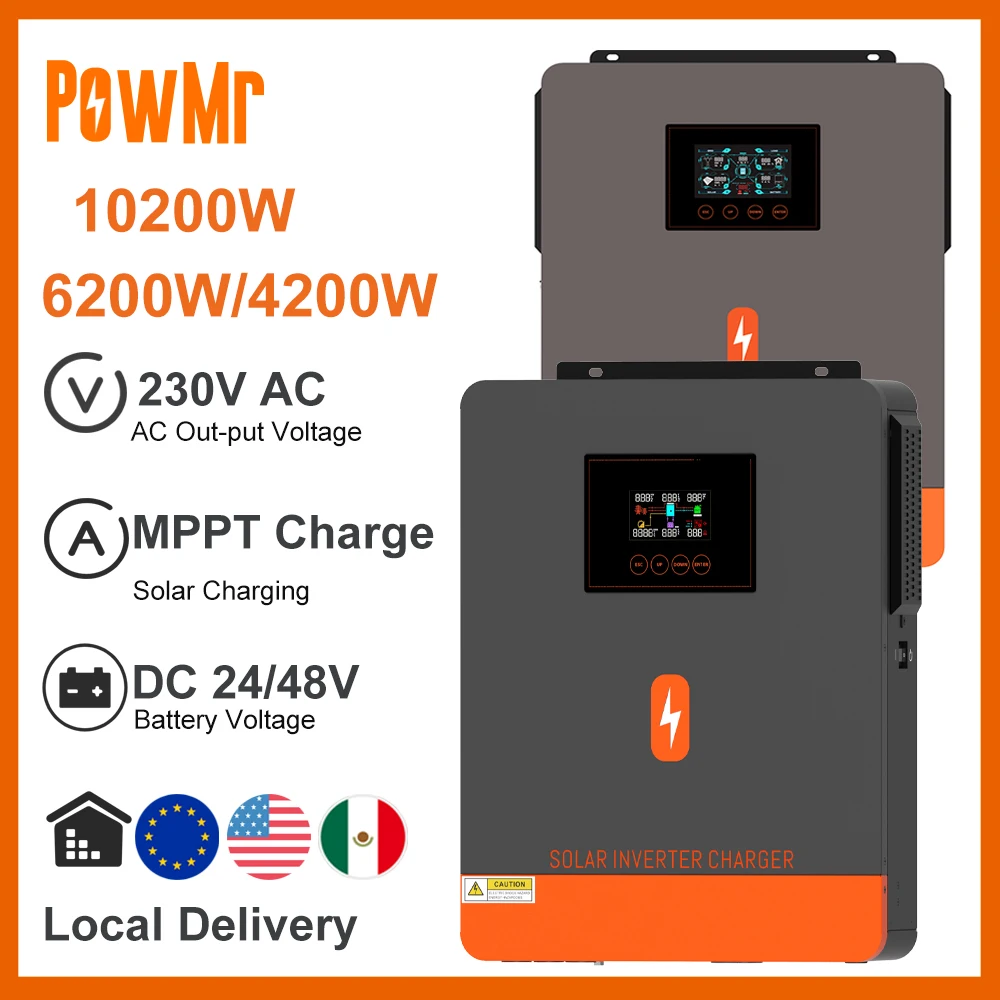
The visual presentation suggests a robust, industrial-grade metal casing with a practical matte finish, designed to withstand the rigors of installation in various environments. The visible cooling fins and ventilation grilles indicate a deliberate focus on thermal dissipation, a critical factor for the longevity of power electronics. Build quality appears substantial.
Effective thermal management is paramount for high-power inverters. Overheating is a primary cause of component degradation and premature failure in power electronics. The substantial heatsinks and active cooling mechanisms inferred from the design suggest that the internal components, such as MOSFETs and capacitors, are maintained within optimal operating temperatures, ensuring stable performance over extended periods. Components stay cool under load.
Unlike lower-cost inverters that often skimp on thermal design, leading to reduced efficiency and reliability, the PowMr series appears to prioritize robust cooling. This design choice directly contributes to the inverter's long-term operational stability and reduces the likelihood of heat-induced component failures, a common repair issue in inadequately cooled systems. This is an investment in reliability.
User Interface and Monitoring
Each inverter features a clear LCD display and a straightforward button interface, providing real-time operational data. This includes battery voltage, PV input, AC output, and charging/discharging status. User interaction is intuitive.
This comprehensive display allows users to easily monitor system performance, troubleshoot minor issues, and configure operational parameters without needing external diagnostic tools. The immediate feedback provided by the screen is invaluable for system management and optimization. Data is readily accessible.
Compared to older inverter models that relied on cryptic LED indicators, the modern LCD interface offers a significant improvement in user experience. It empowers users with detailed information, reducing the need for technical support and simplifying the overall management of the solar power system. This enhances user autonomy.
Imagine a scenario where a power outage occurs in the middle of a critical task. With a PowMr Hybrid Inverter, the transition to battery power is seamless, and the pure sine wave output ensures all sensitive electronics continue to operate without interruption. The robust MPPT charge controller efficiently replenishes the battery bank from solar panels, providing peace of mind and energy independence. This system offers a tangible sense of security, allowing users to maintain productivity and comfort regardless of external grid conditions. It's a reliable partner for energy resilience.