Precision Brass Threaded Inserts for Thermoplastics
Official Store Deal
Expert Analysis Overview
Engineering Reliable Connections
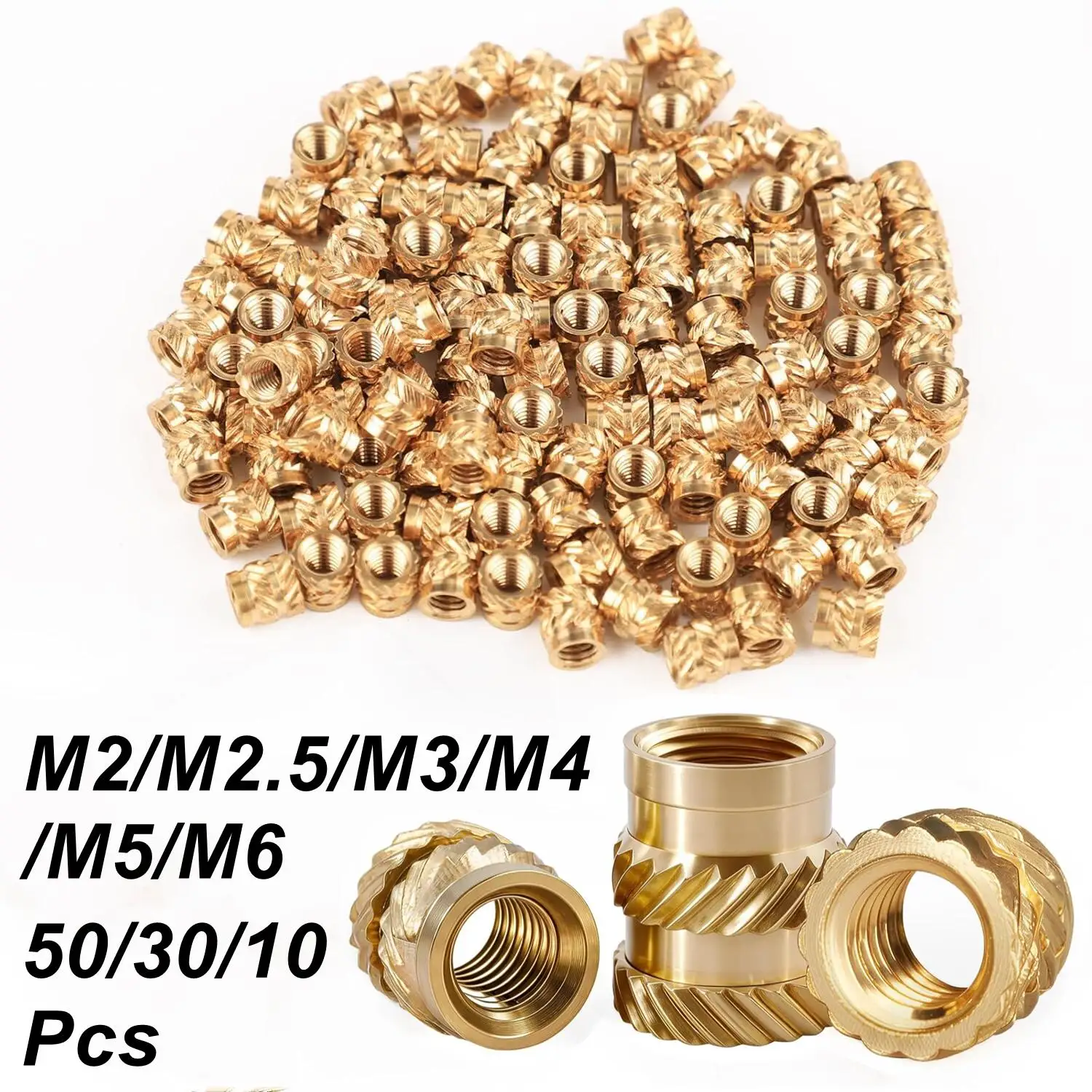
The Precision Brass Threaded Inserts for Thermoplastics are a critical fastening solution designed for robust, repeatable thread creation in 3D printed parts and injection-molded components. The visible collection clearly displays these brass knurled inserts, ranging in size from M2 to M6. These small, cylindrical components feature a distinctive double twill pattern on their outer surface.
This visual presentation immediately signals a product engineered for embedding into softer materials, where a strong, permanent thread is required. Such inserts prevent the common wear and tear associated with direct screw engagement in plastic. A secure bond is fundamental.
Unlike simply tapping threads into a plastic component, which often leads to stripped threads after a few cycles, these inserts provide a metallic anchor point. This represents a significant upgrade over the inherent fragility of plastic threads, ensuring long-term structural integrity.
The Foundation of Material Choice
The inserts are consistently depicted in a bright, golden brass finish. The raw material tubes shown in product details further confirm the brass composition. This material choice is deliberate.
Brass, as an alloy, offers an optimal balance of strength, machinability, and corrosion resistance. Its thermal conductivity is also highly beneficial for heat-set applications, allowing for controlled melting and precise embedding into thermoplastic substrates. Heat transfer is efficient.
Compared to steel inserts, brass is generally softer, making it less prone to damaging the surrounding plastic during installation if slight misalignment occurs. It also resists rust and galvanic corrosion better than untreated steel in certain environments, a common concern for embedded hardware in diverse applications.
Precision in Form: Knurling's Role
Each insert prominently features a double twill knurling pattern, clearly visible on its exterior. This pattern creates a series of interlocking ridges designed for maximum grip.
This specific knurling is engineered to maximize surface area contact and mechanical interlock with the surrounding plastic. When the plastic cools and solidifies around these intricate ridges, it creates a formidable barrier against both axial pull-out forces and rotational torque. A steadfast grip is essential.
Simple straight knurling or a smooth surface would offer significantly less resistance to extraction or loosening under stress. The double twill pattern represents a design optimization, far superior to a basic friction fit, ensuring enduring connections.
Sizing Up the Task: Versatile Thread Options
The product explicitly lists compatibility for M2, M2.5, M3, M4, M5, and M6 threads. This covers a broad spectrum of common fastener sizes. Project versatility is key.
Such a comprehensive range allows designers and fabricators to select the appropriate insert for tasks ranging from delicate electronic enclosures to more structural components in 3D prints. Small fasteners often require precise solutions.
Many generic insert kits offer only a limited selection of sizes, forcing compromises in design and execution. This broader offering enables precise engineering choices, avoiding the need for adapters or makeshift solutions that can compromise structural integrity.
Crafting the Bond: Installation Methodologies
The images illustrate heat-setting with a soldering iron and mention ultrasonic and injection molding methods. The process involves heating the insert and pressing it into a pre-drilled hole. Proper technique is vital.
The heat-set method, particularly, allows for clean, precise embedment. The localized heat from the insert briefly melts the plastic, which then flows into the knurls and around the insert's body. This creates a strong, stress-free bond as it cools and solidifies.
Tapping directly into plastic or using cold-press inserts can induce internal stress fractures in the material or result in significantly weaker connections. These thermal methods ensure superior plastic integrity and a more reliable fastening point. The bond is robust.
Beyond the Bench: Real-World Applications
The "Wide Application" image showcases diverse uses: automotive plastic parts, 3D printed objects, plastic toys and models, and laptop plastic accessories. Another image shows them used with a 3D printer and circuit boards. Their utility is broad.
This versatility highlights the inserts' ability to upgrade the structural integrity of a vast array of plastic components. From securing a motherboard in a custom case to assembling intricate model parts, the threads remain reliable and reusable. These are truly adaptable components.
Relying solely on plastic's inherent threading capabilities in these demanding applications would inevitably lead to premature failure and user frustration. The brass inserts provide a professional-grade solution, significantly extending the lifespan and functionality of the end product.
Durability Under Duress
The product details emphasize "stable connections" and "premium craftsmanship," suggesting a focus on long-term performance. The smooth, burr-free threads are also visible upon close inspection. Quality is evident.
The combination of brass material and the double twill knurling ensures that these inserts will withstand repeated assembly and disassembly cycles without degradation. This is crucial for components requiring regular maintenance, upgrades, or modular designs. The connections will hold.
Unlike self-tapping screws that cut into and degrade plastic with each turn, these inserts create a permanent metal thread. This makes them significantly more durable for any application requiring frequent access, maintaining thread integrity over time.
The Craftsman's Edge: Efficiency and Repeatability
The text in one image explicitly states, "The thread is deep, the surface is smooth and burr-free... greatly improve your work efficiency!" The clear, well-formed threads are evident. Smooth operation is guaranteed.
Precision-machined threads mean that fasteners engage smoothly, without binding, cross-threading, or requiring excessive force. This reduces assembly time, minimizes the risk of component damage, and enhances the overall user experience. Every turn counts.
Inferior inserts with rough, inconsistent threads can strip easily or make assembly a frustrating, time-consuming process. These inserts are designed to integrate seamlessly into a professional workflow, ensuring consistent, high-quality results with every use.
A Lasting Impression
Imagine the satisfaction of assembling your next 3D printed project or custom enclosure, knowing each connection is rock-solid and engineered for longevity. Visualize the crisp, positive feel as a bolt threads smoothly into place, securing components with unwavering stability. These brass inserts eliminate the common frustrations of stripped plastic threads, transforming your creations into robust, reliable structures that stand the test of time and repeated handling. The peace of mind from knowing your work is built to last is invaluable.