Precision Darning Mini Loom for Fabric Repair
Official Store Deal
Expert Analysis Overview
The Art of Fabric Restoration: A DIY Pro's Perspective
The Precision Darning Mini Loom is a specialized textile repair tool designed for individuals seeking to extend the life of garments and embark on small-scale weaving projects. This compact device offers a methodical approach to mending, transforming what might typically be a discarded item into a renewed piece. It is a practical solution for common fabric wear and tear, providing a structured framework for intricate repairs.
Engineering for Durability: Material Selection
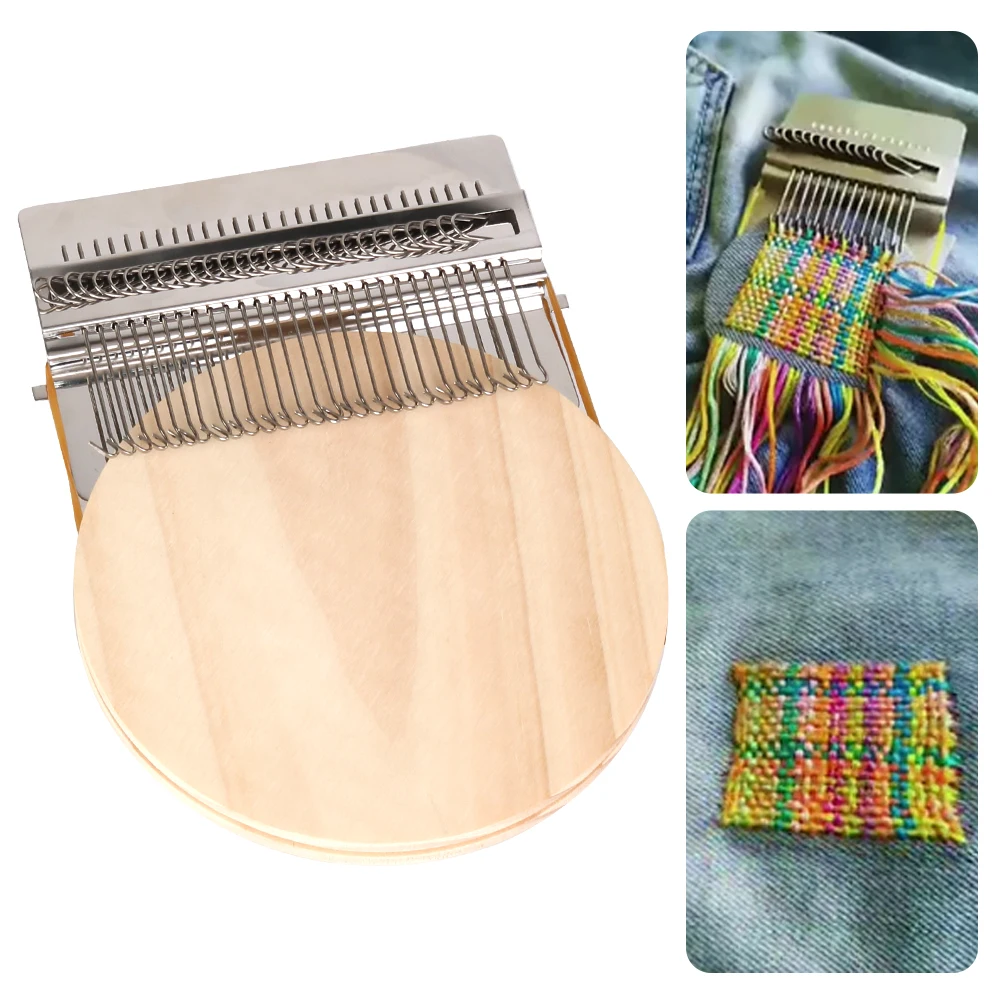
The visible construction of this darning loom highlights a combination of materials chosen for both function and longevity. The primary weaving mechanism, featuring a series of hooks or pins, appears to be crafted from a polished metal, likely stainless steel. This material choice is critical for resisting corrosion and maintaining structural integrity under repeated tension from various yarn types. The metal components exhibit smooth finishes, minimizing friction on delicate threads and preventing snagging during the weaving process. This ensures a consistent and even weave. The base of the loom, which serves as the working surface, is a circular piece of light-toned wood. Wood offers a stable, non-slip foundation for fabric, and its natural properties make it comfortable to handle during extended use. The combination of metal and wood suggests a design focused on both performance and user comfort.
When compared to simpler darning methods, such as freehand needlework, the structured metal hooks provide a significant advantage. The consistent spacing of these hooks dictates the warp threads, ensuring uniform tension and alignment. This precision is difficult to achieve manually, especially for those new to fabric repair. The wooden disc, unlike a simple darning egg, offers a larger, flatter surface that can accommodate a broader range of fabric sizes and shapes, enhancing its versatility for various mending tasks. This design choice elevates the repair process from a basic patch to a more integrated and durable mend, often blending seamlessly with the original fabric texture.
Operational Precision: Pin Configurations and Weave Consistency
This darning loom is available in multiple pin configurations, specifically 10-pin, 14-pin, and 28-pin variants, corresponding to widths of 55mm, 70mm, and 126mm respectively. Each configuration dictates the density and size of the weave that can be achieved. A higher pin count allows for wider repairs and potentially finer, more intricate patterns, while a lower pin count is ideal for smaller holes or tighter weaves. The consistent spacing of the metal pins is paramount for creating uniform fabric repairs. This consistency ensures that each thread of the warp is held at an equal distance, which is fundamental for producing a flat, even woven patch. The pin design facilitates the easy looping and manipulation of yarn, streamlining the darning process.
For users tackling a variety of textile repairs, the availability of different pin counts is a distinct advantage. A 10-pin loom is suitable for small snags or reinforcing delicate areas, while the 28-pin model can address larger tears in denim or upholstery. The ability to choose the appropriate tool for the job directly impacts the quality and efficiency of the repair. This modularity allows for greater control over the final appearance of the mend. The system simplifies the creation of a new fabric matrix. It makes professional results achievable at home. Unlike improvised darning techniques, which often result in uneven or bulky patches, this loom provides a controlled environment for weaving. The fixed pin structure eliminates guesswork, guiding the user to produce a neat, integrated repair that can withstand subsequent wear and washing. This is a significant upgrade from basic hand-darning. It ensures durability under repetitive use.
Ergonomics and User Experience: Handling and Setup
The design of the darning loom emphasizes ease of use, particularly in its ergonomic considerations. The wooden disc, which forms the base, is smooth and rounded, fitting comfortably in the hand. This allows for stable manipulation of the fabric during the weaving process. The metal loom head attaches securely to the wooden disc, typically with a rubber band, ensuring that the fabric remains taut and in place. This secure attachment is vital for maintaining tension, which is a critical factor in achieving a tight, durable weave. The compact size of the tool further enhances its portability and ease of storage, making it a convenient addition to any crafting kit.
Setting up the loom involves stretching the damaged fabric over the wooden disc and securing it with the provided rubber band. The metal loom head is then positioned over the fabric, allowing the hooks to catch the warp threads. This straightforward setup minimizes preparation time, enabling users to quickly transition to the mending phase. The included instructions, visible in one of the images, provide clear visual guidance, simplifying the learning curve for beginners. This accessibility means that even those with limited weaving experience can achieve satisfactory results. The tool's intuitive design reduces frustration. It encourages more frequent fabric repair. Compared to traditional large weaving looms, which require significant space and setup, this mini loom is a practical, grab-and-go solution for everyday mending. Its small footprint makes it ideal for apartment dwellers or those with limited workspace, democratizing the art of fabric repair.
Comprehensive Toolset: Accessories and Support
The product includes several essential accessories that complement the main loom unit. A small, thin metal hook or needle is provided, specifically designed for manipulating individual threads through the loom's pins. This tool is indispensable for precise weaving, allowing for the intricate over-and-under motions required to build the fabric patch. A brush-like tool is also visible, which could be used for cleaning the loom or perhaps for pushing down threads. The inclusion of a rubber band ensures the fabric is held taut on the wooden disc, a simple yet effective method for maintaining tension. The detailed instruction sheet, complete with illustrative diagrams, offers a clear guide to operating the loom, making it accessible even for novice users. These supplementary items ensure that the user has everything necessary to begin mending immediately.
Each accessory plays a crucial role in the overall functionality and user experience. The specialized needle, for instance, is far more effective for weaving through the tight spaces of the loom pins than a standard sewing needle. Its slim profile and hooked end facilitate quick and accurate thread placement. The visual instructions eliminate ambiguity, providing a step-by-step process that builds confidence in the user. This comprehensive approach to providing tools and guidance sets a higher standard for home repair kits. It ensures a smoother workflow. Unlike purchasing a loom that requires separate acquisition of essential tools, this kit provides a complete ecosystem. This integrated approach saves time and effort, allowing users to focus on the craft rather than sourcing individual components. It verifies durability under repetitive use by providing the right tools for the job, reducing wear on the loom itself.
Value Proposition: Sustainability and Skill Development
The value of this darning loom extends beyond its immediate utility in repairing clothes; it fosters a sense of sustainability and encourages skill development. By mending worn items, users actively participate in reducing textile waste, contributing to a more environmentally conscious lifestyle. The process of darning itself is a meditative and rewarding craft, offering a tangible sense of accomplishment with each completed repair. This tool provides an entry point into textile arts, potentially inspiring users to explore more complex weaving or mending techniques. The relatively low price point makes it an accessible investment for anyone interested in sustainable fashion or DIY projects.
Investing in a darning loom like this represents a long-term saving. Instead of replacing damaged garments, users can extend their lifespan, reducing the need for new purchases. This cost-per-use benefit quickly outweighs the initial investment. The skills acquired through using this loom are transferable and can be applied to various textile projects, enhancing one's overall crafting repertoire. This tool is not merely a repair device; it is an educational instrument. It allows for creative expression. Compared to the disposable nature of fast fashion, this loom promotes a mindful approach to clothing consumption. It empowers individuals to take control of their wardrobe's longevity. Imagine the satisfaction of transforming a beloved, worn-out garment into a renewed favorite, ready for many more years of wear, all thanks to a simple, effective tool. The ability to perform professional-grade repairs at home offers significant economic and environmental benefits, making this loom a smart addition to any household.