Precision Spring Ball Plunger Set Screws
Official Store Deal
Expert Analysis Overview
The Precision Spring Ball Plunger Set Screws represent a meticulously engineered fastening solution designed for precise positioning, indexing, and holding applications. These components are essential for restoration projects where both mechanical integrity and functional accuracy are paramount. Available in both corrosion-resistant 304 stainless steel and high-strength 12.9 grade black alloy steel, the range offers material suitability for diverse environmental and load requirements. The headless design, coupled with an internal hex socket, allows for flush installation, maintaining clean lines in restored assemblies while providing reliable, repeatable spring tension.
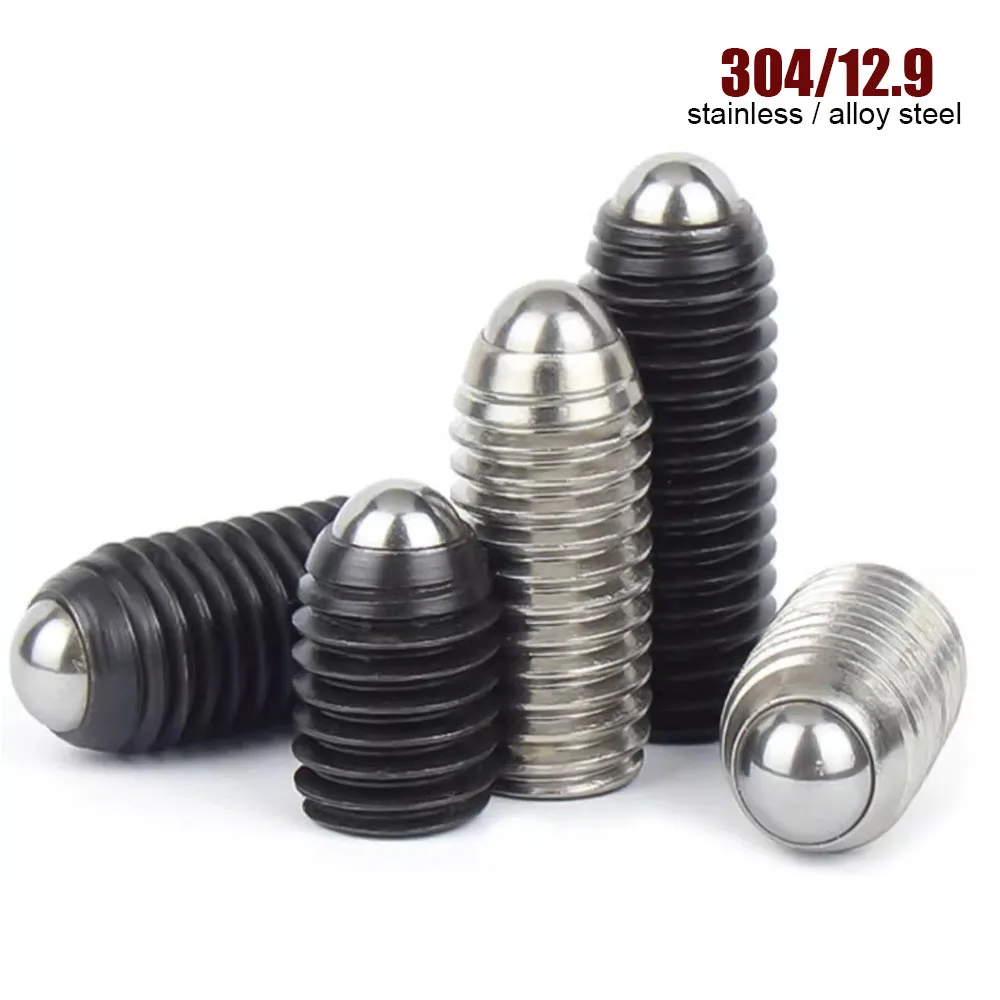
The visible materials for these spring ball plungers are specified as 304 Stainless Steel and 12.9 Black Steel. This dual-material offering addresses a broad spectrum of restoration and manufacturing needs, catering to environments demanding either superior corrosion resistance or exceptional mechanical strength.
304 stainless steel, visible in its characteristic bright, silvery finish, contains a significant chromium content. This composition forms a passive layer on its surface, inherently resisting rust and various corrosive agents. It is a material often selected for exterior applications, marine components, or machinery exposed to moisture and chemicals, ensuring the longevity of a restored item even in challenging conditions.
Conversely, the 12.9 black alloy steel option provides extreme tensile strength and hardness. This material is typically heat-treated carbon alloy steel with a black oxide finish, providing a degree of corrosion resistance but primarily chosen for its robust mechanical properties. It excels in high-stress applications such as tooling, jigs, and heavy machinery, where the component must withstand considerable force without deforming or failing. The selection of either 304 stainless or 12.9 black steel allows for precise material matching to the original specifications or an upgrade for enhanced performance in renovated equipment.
Unlike fasteners made from lesser grades of steel or those without specific protective coatings, these materials are chosen for their intrinsic capabilities to endure. Generic mild steel components often suffer from rapid corrosion or insufficient strength, leading to premature failure in critical applications. The use of either 304 stainless or 12.9 alloy steel ensures that the functional lifespan of the restored assembly is significantly extended, reducing the frequency of maintenance or replacement.
Each spring ball plunger features a robust internal spring mechanism that applies consistent pressure through a hardened ball tip. This design is crucial for applications requiring exact positioning or repeatable indexing. The spring provides a controlled force, allowing components to be held securely in place, yet permitting movement when sufficient opposing force is applied.
The headless design is a significant advantage, enabling the plunger to be fully recessed within a threaded hole. This means no part of the fastener protrudes beyond the surface of the component. Such a flush installation is vital for aesthetic considerations in finished products and for preventing snagging or interference in moving parts within machinery. It allows for a streamlined appearance, often preferred in precision instruments or custom fixtures where external projections are undesirable.
An internal hex socket facilitates installation and removal using standard hex keys. This method provides a secure grip for tightening, minimizing the risk of cam-out or damage to the fastener head, especially when working with smaller sizes or in confined spaces. The precision of the hex socket ensures that the plunger can be installed and adjusted with accuracy, which is a hallmark of quality restoration work.
Compared to simple set screws without a spring mechanism, these plungers offer dynamic functionality. A standard set screw simply locks a component in place, but a spring ball plunger provides a constant, adjustable force. This makes it invaluable for detent applications, workholding, or creating a controlled resistance. The ability to precisely adjust this force by tightening or loosening the plunger allows for fine-tuning of mechanical actions, a critical aspect in the restoration of complex mechanisms.
These spring ball plungers are exceptionally versatile components, finding application across a broad spectrum of restoration projects, from vintage machinery to modern bespoke fixtures. Their design lends itself to situations demanding both robust holding power and precise, repeatable engagement.
In the restoration of antique tools or industrial machinery, these plungers can serve as authentic replacements for worn original detents or indexing pins. For instance, a milling machine's indexing head or a lathe's tool post might utilize such a mechanism for accurate positioning. The choice between stainless and alloy steel allows restorers to match the material properties to the original component's function, ensuring that the repaired part not only fits but also performs as intended, or even exceeds original specifications in terms of durability.
Furthermore, these plungers are indispensable in fabricating custom jigs and fixtures for restoration workshops. When creating a fixture to hold a delicate part during machining or assembly, a spring-loaded ball can gently yet firmly secure the component without marring its surface. This controlled pressure is vital when working with refurbished items that cannot withstand aggressive clamping. The various sizes, from M2.5 to M16, ensure that a suitable plunger is available for almost any scale of project.
Consider a scenario where a custom enclosure requires a discreet latching mechanism. A small spring ball plunger can be threaded into the frame, providing a positive detent when the door closes, yet allowing for easy opening. This subtle integration maintains the aesthetic integrity of the restoration while adding essential functionality. Unlike bulky external latches, the headless design keeps the mechanism hidden, preserving the period-correct appearance of a vintage cabinet or instrument case while improving its practical use.
The provided specifications detail a comprehensive range of sizes, from M3*L up to M12*L, with corresponding dimensions for B (ball diameter), pitch, A, D, E, and crucially, minimum and maximum load capacities in Newtons (N). This detailed information is invaluable for restoration specialists to select the exact component required for a given application.
For instance, an M3 plunger features a 3mm ball diameter and offers a load range of 1-5 N. This is ideal for light-duty applications such as small detents in delicate instruments or securing lightweight covers. An M12 plunger, on the other hand, boasts a 12mm ball and a substantial load range of 50-70 N, making it suitable for heavy-duty workholding in larger machinery or as a robust indexing component in industrial settings. Understanding these load specifications prevents over-stressing smaller plungers or under-utilizing larger ones, ensuring optimal performance and safety.
The precise pitch measurements for each size are critical for ensuring proper thread engagement with corresponding tapped holes. Incorrect pitch selection can lead to stripped threads or loose fittings, compromising the entire assembly. The availability of these exact dimensions eliminates guesswork during the planning and execution phases of a restoration project, guaranteeing a secure and reliable installation. This level of detail is a clear indicator of the product's suitability for precision work, where tolerances are often tight.
Unlike generic hardware offerings that might only provide nominal diameters, the comprehensive data table allows for informed decision-making. Restorers can cross-reference these dimensions with original component specifications or design new applications with confidence, knowing the exact mechanical properties of each plunger. This transparency in specification is a significant advantage, minimizing trial-and-error and ensuring that the selected plunger not only fits physically but also meets the required functional performance criteria. This capability is especially important when restoring complex mechanisms where component interactions are critical.
The choice between 304 stainless steel and 12.9 black steel also carries aesthetic implications for restoration projects. The bright, polished finish of the stainless steel offers a clean, modern, and often industrial look, suitable for visible applications where a reflective, corrosion-free surface is desired. This can complement the brushed or polished metallic components found in many mid-20th-century and contemporary designs.
Conversely, the black finish of the 12.9 alloy steel provides a darker, more subdued appearance. This can be advantageous in applications where the fastener needs to blend into a darker background or when a less reflective surface is preferred for functional reasons, such as reducing glare. For certain period restorations, especially those involving older machinery or components with a darker, oil-stained patina, the black finish might integrate more seamlessly than a bright metallic one. The aesthetic decision should always align with the overall design intent of the restored item.
The headless design ensures that once installed, the plunger does not protrude. This is critical for achieving a flush surface, which is often a requirement for both functionality and aesthetic purity in restored items. For example, in a control panel, a recessed plunger prevents accidental engagement or interference with other components, contributing to a cleaner, more professional finish.
Installation requires a hex key, which simplifies the process compared to slotted or Phillips head screws that can be difficult to drive and prone to stripping. The hex socket provides ample torque transmission, allowing for secure tightening without damaging the fastener. This ease of installation and adjustment is a practical benefit, particularly when working in tight spaces or repeatedly installing and removing components during the restoration process, ensuring efficiency and preventing damage to the surrounding material.
These spring ball plungers provide an optimal balance of robust materials, precise engineering, and versatile design. They are indispensable for restoration specialists seeking reliable, high-performance components that integrate seamlessly into a wide array of projects. The meticulous attention to material choice and functional detail ensures that any restored item benefits from enhanced durability and operational precision. The ability to select between corrosion-resistant stainless steel and high-strength alloy steel, coupled with a comprehensive range of sizes and load capacities, means these components offer solutions for almost any mechanical challenge. Imagine the satisfaction of completing a restoration knowing every component, even the hidden ones, contributes to the overall integrity and longevity of the piece, allowing it to function flawlessly for years to come.
Material Integrity and Durability
The visible materials for these spring ball plungers are specified as 304 Stainless Steel and 12.9 Black Steel. This dual-material offering addresses a broad spectrum of restoration and manufacturing needs, catering to environments demanding either superior corrosion resistance or exceptional mechanical strength.
304 stainless steel, visible in its characteristic bright, silvery finish, contains a significant chromium content. This composition forms a passive layer on its surface, inherently resisting rust and various corrosive agents. It is a material often selected for exterior applications, marine components, or machinery exposed to moisture and chemicals, ensuring the longevity of a restored item even in challenging conditions.
Conversely, the 12.9 black alloy steel option provides extreme tensile strength and hardness. This material is typically heat-treated carbon alloy steel with a black oxide finish, providing a degree of corrosion resistance but primarily chosen for its robust mechanical properties. It excels in high-stress applications such as tooling, jigs, and heavy machinery, where the component must withstand considerable force without deforming or failing. The selection of either 304 stainless or 12.9 black steel allows for precise material matching to the original specifications or an upgrade for enhanced performance in renovated equipment.
Unlike fasteners made from lesser grades of steel or those without specific protective coatings, these materials are chosen for their intrinsic capabilities to endure. Generic mild steel components often suffer from rapid corrosion or insufficient strength, leading to premature failure in critical applications. The use of either 304 stainless or 12.9 alloy steel ensures that the functional lifespan of the restored assembly is significantly extended, reducing the frequency of maintenance or replacement.
Precision Engineering and Functional Design
Each spring ball plunger features a robust internal spring mechanism that applies consistent pressure through a hardened ball tip. This design is crucial for applications requiring exact positioning or repeatable indexing. The spring provides a controlled force, allowing components to be held securely in place, yet permitting movement when sufficient opposing force is applied.
The headless design is a significant advantage, enabling the plunger to be fully recessed within a threaded hole. This means no part of the fastener protrudes beyond the surface of the component. Such a flush installation is vital for aesthetic considerations in finished products and for preventing snagging or interference in moving parts within machinery. It allows for a streamlined appearance, often preferred in precision instruments or custom fixtures where external projections are undesirable.
An internal hex socket facilitates installation and removal using standard hex keys. This method provides a secure grip for tightening, minimizing the risk of cam-out or damage to the fastener head, especially when working with smaller sizes or in confined spaces. The precision of the hex socket ensures that the plunger can be installed and adjusted with accuracy, which is a hallmark of quality restoration work.
Compared to simple set screws without a spring mechanism, these plungers offer dynamic functionality. A standard set screw simply locks a component in place, but a spring ball plunger provides a constant, adjustable force. This makes it invaluable for detent applications, workholding, or creating a controlled resistance. The ability to precisely adjust this force by tightening or loosening the plunger allows for fine-tuning of mechanical actions, a critical aspect in the restoration of complex mechanisms.
Application Versatility in Restoration
These spring ball plungers are exceptionally versatile components, finding application across a broad spectrum of restoration projects, from vintage machinery to modern bespoke fixtures. Their design lends itself to situations demanding both robust holding power and precise, repeatable engagement.
In the restoration of antique tools or industrial machinery, these plungers can serve as authentic replacements for worn original detents or indexing pins. For instance, a milling machine's indexing head or a lathe's tool post might utilize such a mechanism for accurate positioning. The choice between stainless and alloy steel allows restorers to match the material properties to the original component's function, ensuring that the repaired part not only fits but also performs as intended, or even exceeds original specifications in terms of durability.
Furthermore, these plungers are indispensable in fabricating custom jigs and fixtures for restoration workshops. When creating a fixture to hold a delicate part during machining or assembly, a spring-loaded ball can gently yet firmly secure the component without marring its surface. This controlled pressure is vital when working with refurbished items that cannot withstand aggressive clamping. The various sizes, from M2.5 to M16, ensure that a suitable plunger is available for almost any scale of project.
Consider a scenario where a custom enclosure requires a discreet latching mechanism. A small spring ball plunger can be threaded into the frame, providing a positive detent when the door closes, yet allowing for easy opening. This subtle integration maintains the aesthetic integrity of the restoration while adding essential functionality. Unlike bulky external latches, the headless design keeps the mechanism hidden, preserving the period-correct appearance of a vintage cabinet or instrument case while improving its practical use.
Sizing and Load Specifications
The provided specifications detail a comprehensive range of sizes, from M3*L up to M12*L, with corresponding dimensions for B (ball diameter), pitch, A, D, E, and crucially, minimum and maximum load capacities in Newtons (N). This detailed information is invaluable for restoration specialists to select the exact component required for a given application.
For instance, an M3 plunger features a 3mm ball diameter and offers a load range of 1-5 N. This is ideal for light-duty applications such as small detents in delicate instruments or securing lightweight covers. An M12 plunger, on the other hand, boasts a 12mm ball and a substantial load range of 50-70 N, making it suitable for heavy-duty workholding in larger machinery or as a robust indexing component in industrial settings. Understanding these load specifications prevents over-stressing smaller plungers or under-utilizing larger ones, ensuring optimal performance and safety.
The precise pitch measurements for each size are critical for ensuring proper thread engagement with corresponding tapped holes. Incorrect pitch selection can lead to stripped threads or loose fittings, compromising the entire assembly. The availability of these exact dimensions eliminates guesswork during the planning and execution phases of a restoration project, guaranteeing a secure and reliable installation. This level of detail is a clear indicator of the product's suitability for precision work, where tolerances are often tight.
Unlike generic hardware offerings that might only provide nominal diameters, the comprehensive data table allows for informed decision-making. Restorers can cross-reference these dimensions with original component specifications or design new applications with confidence, knowing the exact mechanical properties of each plunger. This transparency in specification is a significant advantage, minimizing trial-and-error and ensuring that the selected plunger not only fits physically but also meets the required functional performance criteria. This capability is especially important when restoring complex mechanisms where component interactions are critical.
Aesthetic and Installation Considerations
The choice between 304 stainless steel and 12.9 black steel also carries aesthetic implications for restoration projects. The bright, polished finish of the stainless steel offers a clean, modern, and often industrial look, suitable for visible applications where a reflective, corrosion-free surface is desired. This can complement the brushed or polished metallic components found in many mid-20th-century and contemporary designs.
Conversely, the black finish of the 12.9 alloy steel provides a darker, more subdued appearance. This can be advantageous in applications where the fastener needs to blend into a darker background or when a less reflective surface is preferred for functional reasons, such as reducing glare. For certain period restorations, especially those involving older machinery or components with a darker, oil-stained patina, the black finish might integrate more seamlessly than a bright metallic one. The aesthetic decision should always align with the overall design intent of the restored item.
The headless design ensures that once installed, the plunger does not protrude. This is critical for achieving a flush surface, which is often a requirement for both functionality and aesthetic purity in restored items. For example, in a control panel, a recessed plunger prevents accidental engagement or interference with other components, contributing to a cleaner, more professional finish.
Installation requires a hex key, which simplifies the process compared to slotted or Phillips head screws that can be difficult to drive and prone to stripping. The hex socket provides ample torque transmission, allowing for secure tightening without damaging the fastener. This ease of installation and adjustment is a practical benefit, particularly when working in tight spaces or repeatedly installing and removing components during the restoration process, ensuring efficiency and preventing damage to the surrounding material.
These spring ball plungers provide an optimal balance of robust materials, precise engineering, and versatile design. They are indispensable for restoration specialists seeking reliable, high-performance components that integrate seamlessly into a wide array of projects. The meticulous attention to material choice and functional detail ensures that any restored item benefits from enhanced durability and operational precision. The ability to select between corrosion-resistant stainless steel and high-strength alloy steel, coupled with a comprehensive range of sizes and load capacities, means these components offer solutions for almost any mechanical challenge. Imagine the satisfaction of completing a restoration knowing every component, even the hidden ones, contributes to the overall integrity and longevity of the piece, allowing it to function flawlessly for years to come.