PULAND Plastic Inline One-Way Check Valve for Fluid Systems
Official Store Deal
Expert Analysis Overview
The PULAND Plastic Inline One-Way Check Valve is a functional, cost-effective solution for managing unidirectional fluid flow in light-duty applications. This component is critical for preventing backflow, a common issue that can lead to system contamination, pump damage, or inefficient operation in various fluid transfer setups. Its design caters specifically to systems utilizing flexible tubing, offering a straightforward and reliable method for maintaining flow integrity without the complexities of threaded metal alternatives. A good check valve is a silent guardian. It keeps things moving in the right direction.
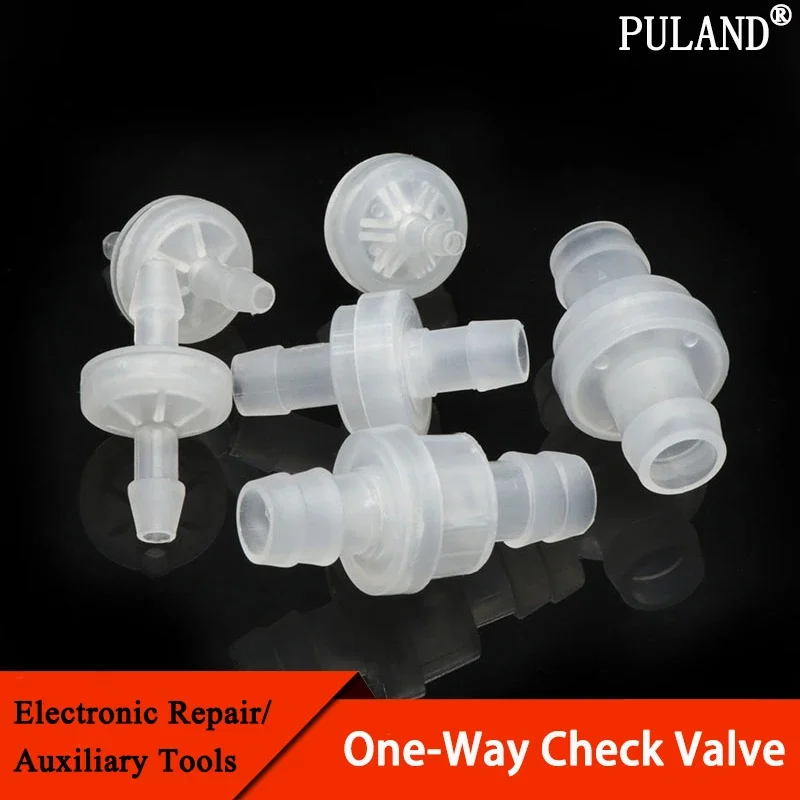
These valves are constructed from translucent plastic, a material choice that immediately signals their intended application and inherent properties. The visible material suggests a polymer such as polypropylene (PP), polyvinyl chloride (PVC), or polyethylene (PE), selected for its chemical resistance and cost-effectiveness. Each of these plastics brings specific advantages: PP offers good chemical and heat resistance, PVC is known for its broad chemical compatibility and rigidity, while PE provides excellent flexibility and impact strength. The translucent nature of the body is not merely aesthetic; it provides a practical advantage by allowing for immediate visual inspection of fluid flow and potential internal blockages or sediment accumulation. This transparency is a simple but effective diagnostic tool, often overlooked in opaque metal valves. You can see the problem before it becomes a disaster.
The construction features prominent "pagoda" style barbed ends. These barbs are engineered with multiple ridges, designed to create a secure, friction-fit seal with the interior wall of a flexible hose. This multi-ridge design significantly increases the surface area contact and grip, making the connection more resistant to accidental dislodgement or pressure-induced leaks compared to single-ridge barbs. This design is crucial for establishing a leak-resistant connection in systems where quick assembly and disassembly might be required, or where the use of rigid piping is impractical. The range of sizes, from 3mm to 12mm internal diameter compatibility, indicates a broad applicability across various small-bore fluid lines, from automotive vacuum systems to laboratory setups and small engine fuel lines. This covers a lot of ground.
Unlike the heavy-duty brass or stainless steel check valves found in main plumbing lines, these plastic units prioritize specific chemical resistance and a significantly lower cost profile over extreme pressure tolerance. They represent a direct functional alternative to more rigid, threaded connections, offering a degree of flexibility in system design and installation that metal components cannot. This makes them particularly suitable for applications where the fluid itself might be corrosive to metals, such as certain chemical dosing systems or marine applications, or where weight and ease of installation are primary concerns. The material choice, while not as robust as metal, is a deliberate trade-off for specific environmental and cost benefits, ensuring the right tool for the right job.
At its core, this product is a one-way check valve. Its fundamental purpose is to permit fluid flow in a single, predetermined direction while actively preventing any reverse flow. This mechanism is vital for maintaining system integrity and preventing a host of operational problems, from contamination to equipment damage. The internal mechanism, though not explicitly detailed or fully visible, operates on a simple principle, likely involving a spring-loaded disc, ball, or a simple diaphragm that opens under forward pressure and closes under back pressure or gravity. This simplicity is a strength, reducing potential points of failure and ensuring reliable operation with minimal moving parts. Less to break means less to fix.
The prevention of backflow is a critical function across numerous applications. In a fuel delivery system, for example, a check valve stops fuel from siphoning back to the tank when the engine is off, ensuring quick starts and preventing airlocks in the line. In a pump system, it maintains prime, preventing the pump from having to re-establish suction every time it starts, which reduces wear and tear on the pump and improves efficiency. Without this control, contamination from reverse flow can compromise sensitive fluids or introduce air into lines, leading to system malfunction, damage to delicate components, or even complete system failure. This is a simple device. It does a crucial job.
Standard plumbing often employs more complex swing check valves or spring-loaded piston checks, typically made of metal and designed for higher pressures and larger volumes in residential or commercial water lines. These inline plastic versions, however, offer a simpler, more compact, and often more chemically resistant solution for smaller diameter lines. Their design is generally less prone to jamming from sediment or debris compared to some intricate metal designs, making them reliable in environments where fluid purity might not be absolute, such as bilge pumps or agricultural sprayers. The operational principle is straightforward, ensuring consistent performance without complex maintenance.
Proper installation is paramount for the effective and leak-free operation of these check valves. The "pagoda" style barbs, with their distinct ridges, are designed for a secure fit with flexible tubing. The key to success lies in accurately matching the internal diameter (ID) of the hose to the specified barb size of the valve. Using a hose with an ID that is too large will result in a loose, leaky connection, while a hose that is too small will be difficult to install and may stress the plastic, leading to cracks. A snug fit is non-negotiable; a loose connection will inevitably lead to leaks, compromising the entire system. This is not rocket science. It's basic plumbing.
While the barbed design offers a good friction fit, relying solely on this friction for a leak-free seal in any pressurized or critical application is a mistake. Hose clamps are not optional; they are a mandatory component for ensuring long-term reliability and preventing catastrophic failures. Stainless steel worm-drive clamps are typically recommended due to their corrosion resistance and ability to provide consistent, adjustable pressure around the hose-barb interface. Without proper clamping, even minor pressure fluctuations, vibrations, or temperature changes can cause the hose to slip off or develop persistent leaks, leading to fluid loss, environmental contamination, and potential damage to surrounding equipment. Don't skimp on the clamps.
Unlike threaded NPT (National Pipe Taper) or BSP (British Standard Pipe) connections that demand specific thread sealants or PTFE tape for a watertight seal, these barb fittings rely on mechanical compression and friction. This simplifies the installation process significantly for flexible tubing systems, often requiring no specialized tools beyond a screwdriver for the hose clamps and perhaps a heat gun to slightly soften stubborn hoses for easier fitting. However, this ease of installation should not lead to complacency regarding security. The integrity of the connection is entirely dependent on the quality of the hose, the precision of the fit, and the clamping force applied. Always double-check your work.
The product description highlights "Ozone-Resistant" as a key material property, a feature that significantly broadens the application scope and enhances the longevity of these valves in specific environments. Ozone (O3) is a powerful oxidant commonly used in water purification, air treatment, and industrial processes. It is notoriously aggressive towards many common plastics, causing them to embrittle, crack, and degrade rapidly through a process known as ozone cracking. The inherent ozone resistance of these valves is therefore a critical differentiator, ensuring they maintain their structural integrity and sealing capabilities over time.
This specific resistance is vital for applications involving ozone generators, UV sterilization systems, or any setup where ozone might be present in the fluid or surrounding atmosphere. Without it, standard plastic components would quickly fail, leading to leaks, system downtime, and the need for frequent replacements. The ozone-resistant material extends the valve's service life considerably, offering a reliable solution where conventional plastics simply cannot perform. This is a smart material choice. It saves headaches down the line.
Many generic plastic components on the market are not formulated to withstand ozone exposure, leading to premature failure and frustration for users who expect long-term performance. This explicit mention of ozone resistance sets these PULAND valves apart, positioning them as a superior choice for specialized applications. It offers a significant advantage over cheaper, non-resistant alternatives that might initially seem similar but will ultimately prove to be a false economy due to their short operational lifespan in ozone-rich environments. Beyond ozone, the plastic construction also offers good resistance to many fuels, oils, and mild chemicals, making them versatile for various fluid types encountered in automotive, marine, and laboratory settings.
Priced at approximately $0.87 per piece, these check valves represent an exceptionally low-cost solution for fluid control. This aggressive price point makes them highly accessible for a wide range of users, from hobbyists building custom systems to DIY enthusiasts tackling small repairs, or even industrial applications requiring numerous individual valves for complex manifold systems. The individual sale model allows for precise purchasing, avoiding unnecessary bulk and ensuring users only buy what they need.
This low cost significantly reduces the financial barrier to implementing essential flow control in various projects. It enables users to add critical backflow prevention without incurring substantial expenses, making complex fluid management more attainable for budget-conscious applications. The value here is in providing core functionality at a fraction of the cost of more elaborate alternatives, allowing for greater flexibility in project budgeting and design. It's about getting the job done without overspending.
Compared to metal check valves, which can easily cost several dollars or even tens of dollars per unit, these plastic units offer the same fundamental unidirectional flow control at a vastly reduced price. While they may not match the pressure ratings or sheer physical robustness of their metal counterparts, they provide the essential functionality for their intended low-pressure, flexible tubing applications. This makes them an intelligent choice for non-critical systems, corrosive fluid handling where metal is unsuitable, or situations where the cost-per-unit is a primary driver. It's about getting the job done without overspending. For many applications, the extra cost of metal is simply unnecessary.
Ensuring a system runs without leaks is the primary concern for any plumber worth his salt. These valves, when installed correctly with proper clamping, are designed to hold their seal. The material's resistance to ozone and various fluids means less degradation over time. This translates directly into fewer maintenance calls and a more stable system. A valve that fails prematurely is a waste of time and money, leading to costly repairs and potential damage to other components. These are built to last in their specific niche, provided they are used within their design parameters.
The compatibility with standard hose internal diameters (3mm to 12mm) means these valves integrate easily into existing setups. No need for specialized adapters or complex modifications. This ease of integration reduces installation time and potential points of failure, as fewer connections mean fewer opportunities for leaks. It's about making the job simpler, not harder, and ensuring that components fit seamlessly into a broader system design. This broad compatibility is a significant advantage for users working with diverse tubing sizes.
The PULAND Plastic Inline One-Way Check Valve is a straightforward, purpose-built component. It excels in applications where flexible tubing, chemical resistance, and cost-effectiveness are key considerations. The translucent body provides a practical advantage for monitoring, and the ozone resistance ensures longevity in demanding environments. While not designed for high-pressure or heavy-duty industrial piping, for the right low-pressure fluid, fuel, or gas system, these valves offer dependable backflow prevention. They are a smart investment for maintaining system integrity without breaking the bank.
Imagine a fluid system running smoothly, without unexpected backflow or siphoning. These valves provide that peace of mind. They ensure your pumps only push fluid one way. Your lines stay primed. Your system operates as intended, day in and day out. This is reliable, straightforward flow control. It's about setting up a system once and trusting it to perform, preventing those frustrating, time-consuming issues that arise from uncontrolled fluid movement. This is the kind of small component that makes a big difference in system stability, allowing you to focus on the bigger picture of your project or operation.
Material and Construction: The Backbone of Reliability
These valves are constructed from translucent plastic, a material choice that immediately signals their intended application and inherent properties. The visible material suggests a polymer such as polypropylene (PP), polyvinyl chloride (PVC), or polyethylene (PE), selected for its chemical resistance and cost-effectiveness. Each of these plastics brings specific advantages: PP offers good chemical and heat resistance, PVC is known for its broad chemical compatibility and rigidity, while PE provides excellent flexibility and impact strength. The translucent nature of the body is not merely aesthetic; it provides a practical advantage by allowing for immediate visual inspection of fluid flow and potential internal blockages or sediment accumulation. This transparency is a simple but effective diagnostic tool, often overlooked in opaque metal valves. You can see the problem before it becomes a disaster.
The construction features prominent "pagoda" style barbed ends. These barbs are engineered with multiple ridges, designed to create a secure, friction-fit seal with the interior wall of a flexible hose. This multi-ridge design significantly increases the surface area contact and grip, making the connection more resistant to accidental dislodgement or pressure-induced leaks compared to single-ridge barbs. This design is crucial for establishing a leak-resistant connection in systems where quick assembly and disassembly might be required, or where the use of rigid piping is impractical. The range of sizes, from 3mm to 12mm internal diameter compatibility, indicates a broad applicability across various small-bore fluid lines, from automotive vacuum systems to laboratory setups and small engine fuel lines. This covers a lot of ground.
Unlike the heavy-duty brass or stainless steel check valves found in main plumbing lines, these plastic units prioritize specific chemical resistance and a significantly lower cost profile over extreme pressure tolerance. They represent a direct functional alternative to more rigid, threaded connections, offering a degree of flexibility in system design and installation that metal components cannot. This makes them particularly suitable for applications where the fluid itself might be corrosive to metals, such as certain chemical dosing systems or marine applications, or where weight and ease of installation are primary concerns. The material choice, while not as robust as metal, is a deliberate trade-off for specific environmental and cost benefits, ensuring the right tool for the right job.
Unidirectional Flow: The Core Function
At its core, this product is a one-way check valve. Its fundamental purpose is to permit fluid flow in a single, predetermined direction while actively preventing any reverse flow. This mechanism is vital for maintaining system integrity and preventing a host of operational problems, from contamination to equipment damage. The internal mechanism, though not explicitly detailed or fully visible, operates on a simple principle, likely involving a spring-loaded disc, ball, or a simple diaphragm that opens under forward pressure and closes under back pressure or gravity. This simplicity is a strength, reducing potential points of failure and ensuring reliable operation with minimal moving parts. Less to break means less to fix.
The prevention of backflow is a critical function across numerous applications. In a fuel delivery system, for example, a check valve stops fuel from siphoning back to the tank when the engine is off, ensuring quick starts and preventing airlocks in the line. In a pump system, it maintains prime, preventing the pump from having to re-establish suction every time it starts, which reduces wear and tear on the pump and improves efficiency. Without this control, contamination from reverse flow can compromise sensitive fluids or introduce air into lines, leading to system malfunction, damage to delicate components, or even complete system failure. This is a simple device. It does a crucial job.
Standard plumbing often employs more complex swing check valves or spring-loaded piston checks, typically made of metal and designed for higher pressures and larger volumes in residential or commercial water lines. These inline plastic versions, however, offer a simpler, more compact, and often more chemically resistant solution for smaller diameter lines. Their design is generally less prone to jamming from sediment or debris compared to some intricate metal designs, making them reliable in environments where fluid purity might not be absolute, such as bilge pumps or agricultural sprayers. The operational principle is straightforward, ensuring consistent performance without complex maintenance.
Installation and System Integration: Getting It Right
Proper installation is paramount for the effective and leak-free operation of these check valves. The "pagoda" style barbs, with their distinct ridges, are designed for a secure fit with flexible tubing. The key to success lies in accurately matching the internal diameter (ID) of the hose to the specified barb size of the valve. Using a hose with an ID that is too large will result in a loose, leaky connection, while a hose that is too small will be difficult to install and may stress the plastic, leading to cracks. A snug fit is non-negotiable; a loose connection will inevitably lead to leaks, compromising the entire system. This is not rocket science. It's basic plumbing.
While the barbed design offers a good friction fit, relying solely on this friction for a leak-free seal in any pressurized or critical application is a mistake. Hose clamps are not optional; they are a mandatory component for ensuring long-term reliability and preventing catastrophic failures. Stainless steel worm-drive clamps are typically recommended due to their corrosion resistance and ability to provide consistent, adjustable pressure around the hose-barb interface. Without proper clamping, even minor pressure fluctuations, vibrations, or temperature changes can cause the hose to slip off or develop persistent leaks, leading to fluid loss, environmental contamination, and potential damage to surrounding equipment. Don't skimp on the clamps.
Unlike threaded NPT (National Pipe Taper) or BSP (British Standard Pipe) connections that demand specific thread sealants or PTFE tape for a watertight seal, these barb fittings rely on mechanical compression and friction. This simplifies the installation process significantly for flexible tubing systems, often requiring no specialized tools beyond a screwdriver for the hose clamps and perhaps a heat gun to slightly soften stubborn hoses for easier fitting. However, this ease of installation should not lead to complacency regarding security. The integrity of the connection is entirely dependent on the quality of the hose, the precision of the fit, and the clamping force applied. Always double-check your work.
Durability and Resistance: Built for Specific Environments
The product description highlights "Ozone-Resistant" as a key material property, a feature that significantly broadens the application scope and enhances the longevity of these valves in specific environments. Ozone (O3) is a powerful oxidant commonly used in water purification, air treatment, and industrial processes. It is notoriously aggressive towards many common plastics, causing them to embrittle, crack, and degrade rapidly through a process known as ozone cracking. The inherent ozone resistance of these valves is therefore a critical differentiator, ensuring they maintain their structural integrity and sealing capabilities over time.
This specific resistance is vital for applications involving ozone generators, UV sterilization systems, or any setup where ozone might be present in the fluid or surrounding atmosphere. Without it, standard plastic components would quickly fail, leading to leaks, system downtime, and the need for frequent replacements. The ozone-resistant material extends the valve's service life considerably, offering a reliable solution where conventional plastics simply cannot perform. This is a smart material choice. It saves headaches down the line.
Many generic plastic components on the market are not formulated to withstand ozone exposure, leading to premature failure and frustration for users who expect long-term performance. This explicit mention of ozone resistance sets these PULAND valves apart, positioning them as a superior choice for specialized applications. It offers a significant advantage over cheaper, non-resistant alternatives that might initially seem similar but will ultimately prove to be a false economy due to their short operational lifespan in ozone-rich environments. Beyond ozone, the plastic construction also offers good resistance to many fuels, oils, and mild chemicals, making them versatile for various fluid types encountered in automotive, marine, and laboratory settings.
Value Proposition: Cost-Effectiveness Meets Functionality
Priced at approximately $0.87 per piece, these check valves represent an exceptionally low-cost solution for fluid control. This aggressive price point makes them highly accessible for a wide range of users, from hobbyists building custom systems to DIY enthusiasts tackling small repairs, or even industrial applications requiring numerous individual valves for complex manifold systems. The individual sale model allows for precise purchasing, avoiding unnecessary bulk and ensuring users only buy what they need.
This low cost significantly reduces the financial barrier to implementing essential flow control in various projects. It enables users to add critical backflow prevention without incurring substantial expenses, making complex fluid management more attainable for budget-conscious applications. The value here is in providing core functionality at a fraction of the cost of more elaborate alternatives, allowing for greater flexibility in project budgeting and design. It's about getting the job done without overspending.
Compared to metal check valves, which can easily cost several dollars or even tens of dollars per unit, these plastic units offer the same fundamental unidirectional flow control at a vastly reduced price. While they may not match the pressure ratings or sheer physical robustness of their metal counterparts, they provide the essential functionality for their intended low-pressure, flexible tubing applications. This makes them an intelligent choice for non-critical systems, corrosive fluid handling where metal is unsuitable, or situations where the cost-per-unit is a primary driver. It's about getting the job done without overspending. For many applications, the extra cost of metal is simply unnecessary.
Operational Longevity and System Health
Ensuring a system runs without leaks is the primary concern for any plumber worth his salt. These valves, when installed correctly with proper clamping, are designed to hold their seal. The material's resistance to ozone and various fluids means less degradation over time. This translates directly into fewer maintenance calls and a more stable system. A valve that fails prematurely is a waste of time and money, leading to costly repairs and potential damage to other components. These are built to last in their specific niche, provided they are used within their design parameters.
The compatibility with standard hose internal diameters (3mm to 12mm) means these valves integrate easily into existing setups. No need for specialized adapters or complex modifications. This ease of integration reduces installation time and potential points of failure, as fewer connections mean fewer opportunities for leaks. It's about making the job simpler, not harder, and ensuring that components fit seamlessly into a broader system design. This broad compatibility is a significant advantage for users working with diverse tubing sizes.
Final Assessment: Reliable Control for the Right Application
The PULAND Plastic Inline One-Way Check Valve is a straightforward, purpose-built component. It excels in applications where flexible tubing, chemical resistance, and cost-effectiveness are key considerations. The translucent body provides a practical advantage for monitoring, and the ozone resistance ensures longevity in demanding environments. While not designed for high-pressure or heavy-duty industrial piping, for the right low-pressure fluid, fuel, or gas system, these valves offer dependable backflow prevention. They are a smart investment for maintaining system integrity without breaking the bank.
Imagine a fluid system running smoothly, without unexpected backflow or siphoning. These valves provide that peace of mind. They ensure your pumps only push fluid one way. Your lines stay primed. Your system operates as intended, day in and day out. This is reliable, straightforward flow control. It's about setting up a system once and trusting it to perform, preventing those frustrating, time-consuming issues that arise from uncontrolled fluid movement. This is the kind of small component that makes a big difference in system stability, allowing you to focus on the bigger picture of your project or operation.