Push-In Electrical Wire Quick Connectors (20-14 AWG)
Official Store Deal
Expert Analysis Overview
The Push-In Electrical Wire Quick Connectors are a pragmatic wiring solution designed for rapid, secure electrical connections in residential and light commercial applications. This product represents a significant upgrade from traditional twist-on wire nuts, offering enhanced reliability and installation efficiency.
These connectors utilize a sophisticated push-in spring clamp mechanism. This design eliminates the need for twisting, soldering, or crimping, streamlining the wiring process considerably. Each connector features multiple ports, allowing for parallel connections from a single input.
Unlike older methods, the push-in system ensures consistent contact pressure. This is a critical factor for long-term electrical stability. The transparent housing is a thoughtful addition.
It allows for immediate visual verification of proper wire insertion and strip length, mitigating common installation errors that can lead to intermittent connections or electrical hazards. This visual confirmation is invaluable.
At the heart of these connectors lies a robust internal architecture. Each wire corresponds to two clamp springs, a design choice that significantly enhances connection integrity. This dual-spring arrangement provides double locking strength.
The drawing force, a measure of how much force is required to pull a wire out, is rated up to 80N. This is a substantial improvement over many entry-level connectors. Such a high retention force ensures that connections remain secure even under vibration or accidental tugs.
Consider a scenario in a busy junction box where wires might be jostled. The 80N drawing force minimizes the risk of disconnection. This engineering detail directly translates to greater safety and reduced maintenance calls.
For electricians and DIY enthusiasts alike, time is a valuable commodity. These quick connectors drastically cut down installation time. The process is simple: strip the wire, then push it in.
There are no screws to tighten, no twisting motions, and no need for specialized crimping tools. This ease of use accelerates project completion. Imagine wiring an entire room with dozens of connections.
The cumulative time savings become immense. Compared to traditional screw terminals, which require careful tightening and often re-tightening, these connectors offer a 'set-it-and-forget-it' reliability. Installation is fast.
The connector housing is constructed from a flame-retardant PC (Polycarbonate) material. This choice of material is crucial for electrical safety, providing protection against potential fire hazards in the event of an electrical fault.
The internal conductors are made of copper, a material renowned for its excellent electrical conductivity and corrosion resistance. Copper ensures minimal resistance in the connection. This combination of materials guarantees both performance and safety.
It also contributes to the longevity of the connection, resisting degradation over time. The material selection is not arbitrary; it's engineered for demanding electrical environments.
Electrical connections generate heat, especially under load. The design of these connectors, with their robust copper contacts, facilitates efficient heat dissipation. This prevents localized hotspots that can degrade insulation or compromise connection integrity.
Rated for up to 20A for 14 AWG wires, these connectors are suitable for most standard residential and light commercial circuits. Proper current handling is paramount. Exceeding these limits can lead to dangerous overheating.
Compared to undersized or poorly designed connectors, which can become significant points of failure, these units maintain thermal stability. They are designed to operate reliably within their specified current range.
Modern electrical installations often face constraints in terms of available space within junction boxes or enclosures. The compact dimensions of these push-in connectors are a significant advantage. They are small.
Measuring approximately 16.6mm x 13.8mm x 5.5mm for a 2-port variant, they occupy minimal volume. This allows for more organized wiring and easier closure of junction box covers.
Picture a crowded electrical panel; every millimeter saved contributes to a cleaner, safer installation. This compact design is particularly beneficial when retrofitting older installations with limited space. It frees up space.
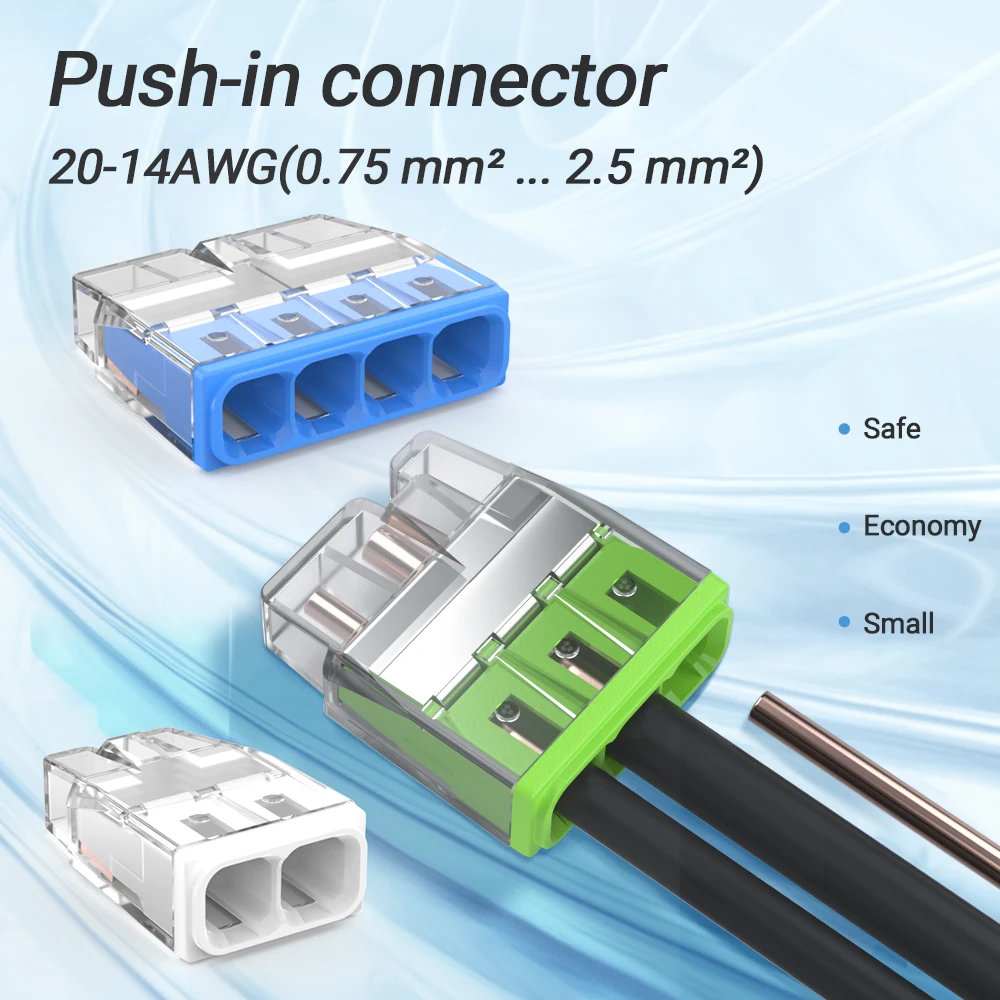
These connectors are designed to accommodate a wide range of wire types and gauges. They are compatible with both solid and stranded copper conductors, ranging from 20 AWG to 14 AWG (0.75 mm² to 2.5 mm²).
This broad compatibility makes them highly versatile for various wiring tasks, from lighting circuits to power outlets. The spring clamp mechanism adapts effectively to different conductor types. This adaptability reduces the need for multiple connector types.
Unlike some screw terminals that can damage finer stranded wires, the spring mechanism provides gentle yet firm contact. It handles diverse wiring needs efficiently.
The long-term performance of any electrical connector is paramount. These push-in connectors are engineered for sustained reliability. The double clamp springs maintain consistent pressure over time, resisting the effects of thermal cycling and vibration.
This ensures a stable electrical path, minimizing the risk of intermittent connections or voltage drops. A stable connection is a safe connection. The robust construction and material choices contribute to this longevity.
Compared to older methods where connections could loosen over years, these connectors offer a more enduring solution. They are built for the long haul.
While the initial cost per connector might be slightly higher than a basic wire nut, the overall value proposition is compelling. The time saved during installation translates directly into labor cost reductions for professionals.
For DIYers, it means less frustration and a higher quality, safer installation. The reduced likelihood of faults or call-backs also adds to the long-term savings. This is an investment in efficiency.
Considering the enhanced safety and reliability, the economic benefits extend beyond the purchase price. It's a cost-effective choice for quality work.
Proper installation is key to maximizing the safety benefits of these connectors. Always ensure the power is off before making any connections. Strip wires cleanly to the recommended length.
Avoid over-stripping, which exposes bare wire, or under-stripping, which leads to poor contact. The transparent housing helps verify this. Use the correct wire gauge.
Never force oversized wires into the ports. Adhering to these simple practices ensures a safe and reliable electrical system. Safety first.
These push-in connectors represent a modern approach to electrical wiring, emphasizing speed, safety, and reliability. They simplify complex tasks and provide a professional finish.
For anyone involved in electrical installations, from hobbyists to seasoned professionals, these connectors offer a compelling alternative to outdated methods. They are an essential tool.
Imagine completing wiring projects with greater confidence and efficiency, knowing each connection is secure and visually verifiable. These connectors deliver that peace of mind, making electrical work faster, safer, and more precise. They streamline your workflow.
Streamlined Connectivity: The Core Design
These connectors utilize a sophisticated push-in spring clamp mechanism. This design eliminates the need for twisting, soldering, or crimping, streamlining the wiring process considerably. Each connector features multiple ports, allowing for parallel connections from a single input.
Unlike older methods, the push-in system ensures consistent contact pressure. This is a critical factor for long-term electrical stability. The transparent housing is a thoughtful addition.
It allows for immediate visual verification of proper wire insertion and strip length, mitigating common installation errors that can lead to intermittent connections or electrical hazards. This visual confirmation is invaluable.
Engineering for Reliability: Beyond the Snap
At the heart of these connectors lies a robust internal architecture. Each wire corresponds to two clamp springs, a design choice that significantly enhances connection integrity. This dual-spring arrangement provides double locking strength.
The drawing force, a measure of how much force is required to pull a wire out, is rated up to 80N. This is a substantial improvement over many entry-level connectors. Such a high retention force ensures that connections remain secure even under vibration or accidental tugs.
Consider a scenario in a busy junction box where wires might be jostled. The 80N drawing force minimizes the risk of disconnection. This engineering detail directly translates to greater safety and reduced maintenance calls.
Installation Efficiency: Time is Current
For electricians and DIY enthusiasts alike, time is a valuable commodity. These quick connectors drastically cut down installation time. The process is simple: strip the wire, then push it in.
There are no screws to tighten, no twisting motions, and no need for specialized crimping tools. This ease of use accelerates project completion. Imagine wiring an entire room with dozens of connections.
The cumulative time savings become immense. Compared to traditional screw terminals, which require careful tightening and often re-tightening, these connectors offer a 'set-it-and-forget-it' reliability. Installation is fast.
Material Science: Durability Under Load
The connector housing is constructed from a flame-retardant PC (Polycarbonate) material. This choice of material is crucial for electrical safety, providing protection against potential fire hazards in the event of an electrical fault.
The internal conductors are made of copper, a material renowned for its excellent electrical conductivity and corrosion resistance. Copper ensures minimal resistance in the connection. This combination of materials guarantees both performance and safety.
It also contributes to the longevity of the connection, resisting degradation over time. The material selection is not arbitrary; it's engineered for demanding electrical environments.
Thermal Management and Current Handling
Electrical connections generate heat, especially under load. The design of these connectors, with their robust copper contacts, facilitates efficient heat dissipation. This prevents localized hotspots that can degrade insulation or compromise connection integrity.
Rated for up to 20A for 14 AWG wires, these connectors are suitable for most standard residential and light commercial circuits. Proper current handling is paramount. Exceeding these limits can lead to dangerous overheating.
Compared to undersized or poorly designed connectors, which can become significant points of failure, these units maintain thermal stability. They are designed to operate reliably within their specified current range.
Space Optimization: Compact Footprint
Modern electrical installations often face constraints in terms of available space within junction boxes or enclosures. The compact dimensions of these push-in connectors are a significant advantage. They are small.
Measuring approximately 16.6mm x 13.8mm x 5.5mm for a 2-port variant, they occupy minimal volume. This allows for more organized wiring and easier closure of junction box covers.
Picture a crowded electrical panel; every millimeter saved contributes to a cleaner, safer installation. This compact design is particularly beneficial when retrofitting older installations with limited space. It frees up space.
Versatility Across Wire Types
These connectors are designed to accommodate a wide range of wire types and gauges. They are compatible with both solid and stranded copper conductors, ranging from 20 AWG to 14 AWG (0.75 mm² to 2.5 mm²).
This broad compatibility makes them highly versatile for various wiring tasks, from lighting circuits to power outlets. The spring clamp mechanism adapts effectively to different conductor types. This adaptability reduces the need for multiple connector types.
Unlike some screw terminals that can damage finer stranded wires, the spring mechanism provides gentle yet firm contact. It handles diverse wiring needs efficiently.
Long-Term Integrity: A Critical Assessment
The long-term performance of any electrical connector is paramount. These push-in connectors are engineered for sustained reliability. The double clamp springs maintain consistent pressure over time, resisting the effects of thermal cycling and vibration.
This ensures a stable electrical path, minimizing the risk of intermittent connections or voltage drops. A stable connection is a safe connection. The robust construction and material choices contribute to this longevity.
Compared to older methods where connections could loosen over years, these connectors offer a more enduring solution. They are built for the long haul.
The Economic Advantage: Value in Volume
While the initial cost per connector might be slightly higher than a basic wire nut, the overall value proposition is compelling. The time saved during installation translates directly into labor cost reductions for professionals.
For DIYers, it means less frustration and a higher quality, safer installation. The reduced likelihood of faults or call-backs also adds to the long-term savings. This is an investment in efficiency.
Considering the enhanced safety and reliability, the economic benefits extend beyond the purchase price. It's a cost-effective choice for quality work.
Safety Protocols and Best Practices
Proper installation is key to maximizing the safety benefits of these connectors. Always ensure the power is off before making any connections. Strip wires cleanly to the recommended length.
Avoid over-stripping, which exposes bare wire, or under-stripping, which leads to poor contact. The transparent housing helps verify this. Use the correct wire gauge.
Never force oversized wires into the ports. Adhering to these simple practices ensures a safe and reliable electrical system. Safety first.
The Future of Wiring: A Seamless Transition
These push-in connectors represent a modern approach to electrical wiring, emphasizing speed, safety, and reliability. They simplify complex tasks and provide a professional finish.
For anyone involved in electrical installations, from hobbyists to seasoned professionals, these connectors offer a compelling alternative to outdated methods. They are an essential tool.
Imagine completing wiring projects with greater confidence and efficiency, knowing each connection is secure and visually verifiable. These connectors deliver that peace of mind, making electrical work faster, safer, and more precise. They streamline your workflow.