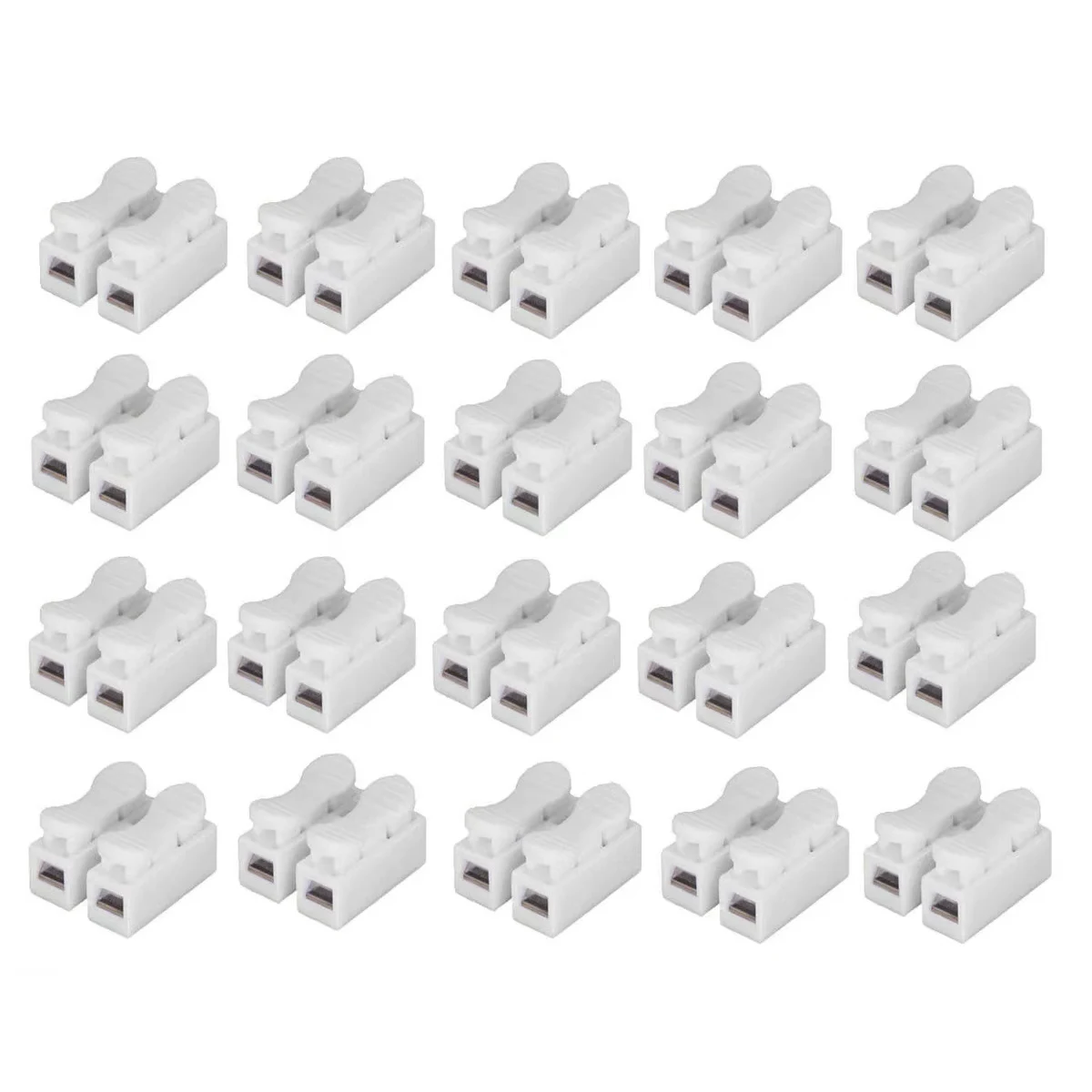
Quick-Connect 2-Way Spring Wire Connectors (20-Pack)
Official Store Deal
Expert Analysis Overview
Precision in Low-Voltage Connections: The CH2 Spring Quick Wire Connector
The Quick-Connect 2-Way Spring Wire Connector is a convenient, albeit specialized, electrical terminal designed for rapid, low-voltage circuit assembly. This component streamlines the process of joining two conductors, primarily within DC applications where speed and ease of installation are prioritized over heavy-duty load requirements. As a certified electrician, the utility of such connectors is clear for specific tasks, but their limitations demand careful consideration for safety and long-term reliability.
Connection Integrity and Safety Considerations
The CH2 connectors utilize a spring-loaded clamping mechanism, designed to secure a stripped wire end against a conductive metal plate. This internal architecture relies on the consistent tension of a spring to maintain electrical contact. The housing, typically constructed from a thermoplastic polymer, provides the necessary insulation. This plastic enclosure is crucial for preventing accidental contact with live conductors, a fundamental safety principle in any electrical work. The material's dielectric strength must be sufficient for the intended voltage.
When a wire is inserted, the lever is depressed, opening the clamp. Releasing the lever allows the spring to exert pressure, gripping the conductor. A proper connection feels firm; any looseness indicates potential resistance and heat generation. Visual inspection through the translucent plastic confirms full wire insertion, ensuring no bare wire is exposed beyond the terminal block. This visual confirmation is a critical safety check, preventing potential short circuits or arcing.
Unlike traditional screw terminals, which require a screwdriver and torque specification, these spring connectors offer a tool-free alternative. This significantly reduces installation time, especially in repetitive wiring tasks. However, screw terminals generally provide a more robust, vibration-resistant connection for higher current applications, a critical distinction for long-term reliability. The spring mechanism, while convenient, does not offer the same mechanical clamping force as a properly torqued screw terminal, making it less suitable for environments with significant vibration or thermal cycling.
Wire Gauge Compatibility and Application Scope
These connectors are typically engineered to accommodate solid or stranded copper wires within a specific gauge range, commonly 18-24 AWG (approximately 0.5-1.5mm²). This range is critical for ensuring both a secure mechanical grip and adequate electrical contact. Using wires outside this specification can lead to significant issues. Too thin, and the spring may not exert enough pressure, resulting in a high-resistance connection. Too thick, and the wire may not fit, or forcing it could damage the internal spring mechanism, compromising the connector's integrity.
Consider a scenario where an installer attempts to use an undersized wire. The spring's grip would be insufficient, leading to an intermittent connection or, worse, localized heating due to increased resistance at the contact point. This heating can degrade the plastic insulation over time, potentially leading to an electrical fire. Conversely, an oversized wire might deform the internal contacts, permanently weakening the connector for future use or even preventing a proper connection from the outset. Proper wire preparation is paramount.
This narrow compatibility range distinguishes these connectors from more industrial-grade terminals that often feature adjustable clamping mechanisms or multiple port sizes. For instance, larger lever-nut connectors can often handle a broader spectrum of gauges and are typically rated for higher currents and voltages. The CH2's design firmly places it in the realm of low-power, small-gauge applications, such as LED strip lighting, small DC motors, or hobby electronics. It is not a universal solution for all wiring needs.
Durability and Longevity in Practical Use
The physical construction of the CH2 connector involves a plastic housing and internal metal contacts. The quality of the plastic dictates its resistance to heat, UV degradation, and mechanical stress. A brittle plastic can crack under pressure or become fragile over time, especially in environments with fluctuating temperatures. The metal contacts, usually copper or a copper alloy, are responsible for electrical conductivity. Their resistance to corrosion and their spring temper are crucial for maintaining a low-resistance connection over the connector's lifespan.
In practical use, these connectors are best suited for static installations where they are not subjected to frequent manipulation or extreme environmental conditions. Imagine a series of LED lights installed under a cabinet. Once connected, these terminals remain undisturbed, performing their function reliably. However, if used in an application requiring frequent disconnection and reconnection, the spring mechanism can fatigue. This fatigue reduces the clamping force, leading to increased contact resistance and potential failure. The plastic levers themselves can also become brittle or break with repeated stress.
Compared to soldered connections, which offer superior mechanical strength and electrical conductivity for permanent installations, the CH2 connectors prioritize convenience. While soldering requires skill and specialized tools, it creates a metallurgically bonded joint that is highly resistant to vibration and corrosion. The CH2, by contrast, provides a mechanical connection that, while adequate for its intended purpose, does not offer the same level of permanence or robustness. For critical circuits, the trade-off in long-term durability must be carefully weighed against the ease of installation.
Installation Efficiency and Time Savings
The primary advantage of the CH2 spring connector lies in its installation efficiency. The tool-free design eliminates the need for screwdrivers, crimping tools, or soldering irons, significantly speeding up the wiring process. For projects involving numerous connections, such as installing extensive LED lighting systems or assembling complex electronic prototypes, the time savings can be substantial. This ease of use also lowers the barrier to entry for DIY enthusiasts, allowing them to complete electrical tasks with greater confidence.
Consider a large-scale LED lighting project in a commercial space. Manually stripping, twisting, and taping, or even crimping, hundreds of connections would be incredibly time-consuming. With these quick connectors, an installer can rapidly terminate each wire, moving quickly from one fixture to the next. The tactile feedback of the lever and the visual confirmation of the wire seating contribute to a sense of efficiency and accuracy. This speed translates directly into reduced labor costs for professionals.
This method represents a significant upgrade from older, more labor-intensive wiring techniques. Unlike simply twisting wires together and insulating them with electrical tape, which is prone to loosening, corrosion, and inconsistent contact, the CH2 provides a structured and insulated connection point. The internal metal contacts are designed to maintain consistent pressure, offering a more reliable electrical path than a hand-twisted joint. This structured approach minimizes the risk of human error inherent in less formal connection methods.
The Verdict on Value and Appropriate Use
At its price point, the 20-pack of CH2 connectors offers considerable value for specific low-voltage applications. The cost-effectiveness per connection is high, making them an attractive option for projects where budget and speed are key drivers. Their compact size also allows for discreet installations, an important aesthetic consideration for many lighting or electronic projects. The ability to quickly modify or troubleshoot circuits without extensive re-wiring is another practical benefit.
These connectors truly shine in applications like LED strip lighting, where low current and relatively small wire gauges are common. They are ideal for hobbyists, DIYers, and even professional installers working on non-critical, low-power circuits. The ease of use means less time spent on each connection, allowing for faster project completion. They are a practical solution for quickly prototyping circuits or making temporary connections that might need to be adjusted later. This capability allows for rapid iteration and testing.
This product serves as a clear upgrade from makeshift wiring solutions, offering a safer and more reliable alternative to twisting wires or using inadequate terminal blocks. Imagine completing a complex LED installation in half the time, with each connection feeling secure and professionally finished. The peace of mind that comes from knowing your low-voltage connections are both efficient and properly insulated is invaluable. These connectors empower users to tackle wiring tasks with confidence, ensuring a clean, functional, and safe outcome for their low-power electrical projects.