RG174 Coaxial Antenna Extension Cable with SMA/RP-SMA Connectors
Official Store Deal
Expert Analysis Overview
The RG174 Coaxial Antenna Extension Cable with SMA/RP-SMA Connectors is a critical connectivity solution for optimizing wireless communication in solar energy systems, particularly for remote monitoring and off-grid internet access. This specialized cable assembly provides the necessary links for ensuring robust signal integrity, a fundamental requirement for any self-sustaining energy infrastructure. Its design addresses the specific demands of solar hobbyists and professionals who require reliable data transmission for system oversight and operational efficiency.
This cable system features the RG174 coaxial cable specification, maintaining a standard 50 Ohm impedance. The specific impedance rating is crucial for minimizing signal reflections and ensuring maximum power transfer between the antenna and the connected device, such as a cellular modem or Wi-Fi router. The selection of RG174 indicates a design choice prioritizing flexibility and compactness over extreme long-distance performance, making it ideal for shorter runs within an enclosure or between a device and a nearby antenna.
In a real-world solar energy context, this directly impacts the reliability of remote monitoring capabilities. Imagine an off-grid solar array located kilometers from the nearest grid connection. A stable 3G or 4G signal is paramount for transmitting critical performance data, battery status, and fault alerts back to a central monitoring station. Unreliable data due to poor cable quality can lead to delayed maintenance, reduced system uptime, and ultimately, a less efficient energy harvest. These cables provide the essential link.
Compared to generic, unshielded wires or poorly terminated alternatives, these coaxial cables offer proper impedance matching. This prevents signal degradation that would otherwise occur with mismatched lines, which can manifest as reduced data rates or intermittent connectivity. For a solar hobbyist, this translates directly into more accurate, timely information about their system's health, preventing small issues from escalating into significant problems.
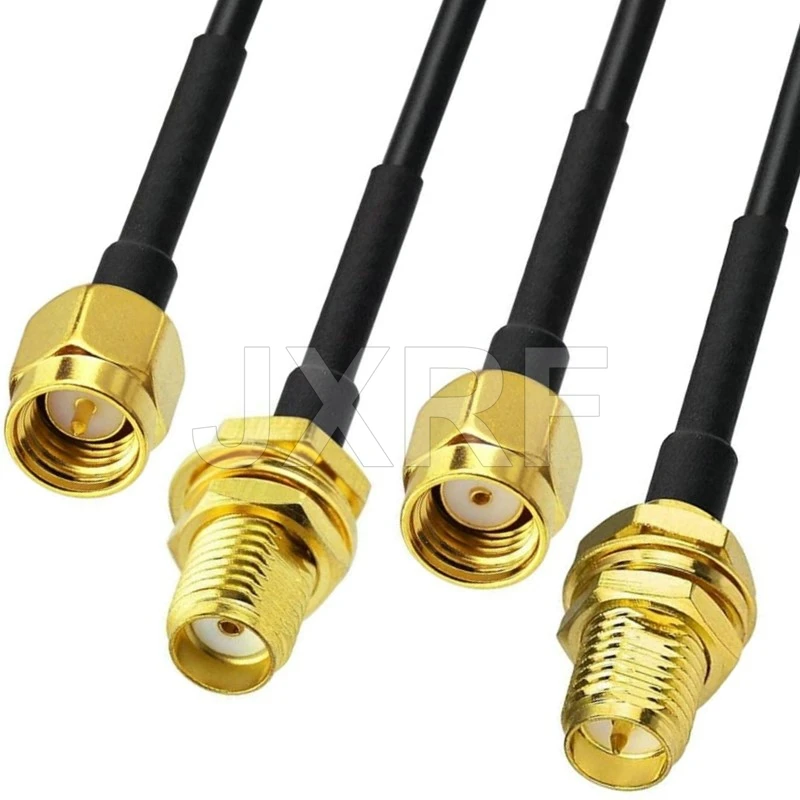
This product offers a comprehensive range of SMA and RP-SMA connector types, including SMA Male, RP-SMA Male, SMA Female, and RP-SMA Female. Each connector type is meticulously gold-plated, a critical feature for both signal integrity and long-term durability. Gold plating significantly reduces oxidation and corrosion, especially in environments where temperature fluctuations and humidity are common, such as outdoor solar installations or unconditioned equipment sheds.
These diverse connector options ensure broad compatibility with a wide array of wireless communication devices commonly found in solar setups. Picture a scenario where a solar charge controller includes a built-in cellular modem for remote access, but its antenna port is an RP-SMA Female. Simultaneously, a high-gain external antenna might use an SMA Male connector. This cable variety allows for direct, secure connections without the need for multiple adapters, each introducing potential signal loss and mechanical weakness. It simplifies complex integrations.
In contrast, cheaper, unplated connectors are prone to oxidation. Over time, this oxidation creates a resistive layer that impedes signal flow, leading to increased signal loss and intermittent connectivity. The gold plating on these connectors acts as a superior barrier against environmental degradation, ensuring that the electrical contact remains pristine for years, a vital consideration for the longevity of a solar monitoring system.
The core of this product is its RG174 cable type, characterized by its small diameter and inherent flexibility. The internal conductor is described as copper feeder wire, indicating a commitment to optimal electrical conductivity. While RG174 is known for its flexibility, it also exhibits higher signal attenuation (loss) per unit length compared to thicker cables like RG58 or LMR-400, especially at higher frequencies.
Its flexibility is a significant advantage during installation, allowing for easy routing through conduits, around tight corners, or within crowded equipment enclosures without kinking. This ease of installation is crucial for hobbyists who may not have specialized tools or extensive experience with rigid coaxial cables. However, users must be aware of the signal loss characteristics. For Wi-Fi (2.4 GHz/5 GHz), 3G, and 4G (various bands up to 2.7 GHz) applications, RG174 is best suited for shorter runs, typically under 5 meters, to maintain acceptable signal strength and data rates. Longer runs will inevitably incur significant signal degradation, potentially negating the benefits of a high-gain antenna.
The choice of RG174 over thicker, lower-loss cables is often a trade-off. Thicker cables are more expensive, less flexible, and harder to terminate. For applications where the cable length is minimal, such as connecting an external antenna directly to a modem mounted on a pole or within a short distance, the RG174 provides a cost-effective and practical solution. It handles specific needs. This approach minimizes overall system cost and complexity without sacrificing performance for short-distance links.
These cables play a critical role in establishing and maintaining robust communication links for off-grid solar energy systems. Many modern solar inverters and charge controllers offer remote monitoring capabilities via Wi-Fi or cellular networks. For a truly self-sustaining off-grid setup, reliable internet access is not just a convenience; it is a necessity for accessing weather forecasts, receiving critical system alerts, and performing remote diagnostics and firmware updates. This cable facilitates that connection.
Imagine a remote hunting cabin powered entirely by solar, where system performance needs to be monitored from a distant home office. A stable 4G connection, facilitated by these reliable antenna cables, ensures that data flows continuously. This allows the owner to track energy production, battery state of charge, and consumption patterns, enabling proactive management and troubleshooting without needing to physically visit the site. It ensures peace of mind.
The benefit of stable communication extends to proactive maintenance and efficiency in isolated environments. Without reliable data, minor issues like a partially shaded panel or a misconfigured charge setting might go unnoticed for weeks, leading to suboptimal energy harvest or even system damage. These cables provide the foundational stability for such remote oversight, making off-grid living more manageable and efficient. It is a small but vital component.
The installation process for these RG174 coaxial cables is straightforward, primarily due to their inherent flexibility. However, proper handling and connection techniques are crucial to maximize their performance and longevity. The small diameter of the cable allows for discreet routing, which can be advantageous in aesthetic-sensitive installations or when minimizing visible cable runs is desired. Proper routing prevents damage.
It is imperative to avoid sharp bends or kinks in the RG174 cable during installation. A tight bend radius can physically damage the internal conductor and dielectric, leading to impedance mismatches and significant signal loss. While flexible, the cable still has limits. Users should also ensure that all connections are finger-tightened securely but not overtightened, which can strip threads or damage the delicate center pin of the connectors. A firm, snug connection is sufficient.
Correct installation directly prevents signal degradation that would otherwise plague haphazard setups. Unlike installations where cables are left exposed to mechanical stress or improperly connected, a carefully installed RG174 cable ensures that the signal path remains clear and efficient. This attention to detail during installation safeguards the performance of the entire wireless communication link, ensuring that the investment in a reliable antenna and modem is not undermined by poor cabling practices. It makes a real difference.
Imagine your off-grid solar array, seamlessly monitored from anywhere, with real-time data flowing uninterrupted. Picture a remote cabin, powered by the sun, now connected to the world with robust internet access. This cable system provides the reliable backbone for such integrated, intelligent energy management, ensuring your solar investment operates at peak efficiency and remains a truly self-sustaining power source for years to come.
Enhancing Signal Integrity for Remote Solar Monitoring
This cable system features the RG174 coaxial cable specification, maintaining a standard 50 Ohm impedance. The specific impedance rating is crucial for minimizing signal reflections and ensuring maximum power transfer between the antenna and the connected device, such as a cellular modem or Wi-Fi router. The selection of RG174 indicates a design choice prioritizing flexibility and compactness over extreme long-distance performance, making it ideal for shorter runs within an enclosure or between a device and a nearby antenna.
In a real-world solar energy context, this directly impacts the reliability of remote monitoring capabilities. Imagine an off-grid solar array located kilometers from the nearest grid connection. A stable 3G or 4G signal is paramount for transmitting critical performance data, battery status, and fault alerts back to a central monitoring station. Unreliable data due to poor cable quality can lead to delayed maintenance, reduced system uptime, and ultimately, a less efficient energy harvest. These cables provide the essential link.
Compared to generic, unshielded wires or poorly terminated alternatives, these coaxial cables offer proper impedance matching. This prevents signal degradation that would otherwise occur with mismatched lines, which can manifest as reduced data rates or intermittent connectivity. For a solar hobbyist, this translates directly into more accurate, timely information about their system's health, preventing small issues from escalating into significant problems.
Connector Versatility and Durability
This product offers a comprehensive range of SMA and RP-SMA connector types, including SMA Male, RP-SMA Male, SMA Female, and RP-SMA Female. Each connector type is meticulously gold-plated, a critical feature for both signal integrity and long-term durability. Gold plating significantly reduces oxidation and corrosion, especially in environments where temperature fluctuations and humidity are common, such as outdoor solar installations or unconditioned equipment sheds.
These diverse connector options ensure broad compatibility with a wide array of wireless communication devices commonly found in solar setups. Picture a scenario where a solar charge controller includes a built-in cellular modem for remote access, but its antenna port is an RP-SMA Female. Simultaneously, a high-gain external antenna might use an SMA Male connector. This cable variety allows for direct, secure connections without the need for multiple adapters, each introducing potential signal loss and mechanical weakness. It simplifies complex integrations.
In contrast, cheaper, unplated connectors are prone to oxidation. Over time, this oxidation creates a resistive layer that impedes signal flow, leading to increased signal loss and intermittent connectivity. The gold plating on these connectors acts as a superior barrier against environmental degradation, ensuring that the electrical contact remains pristine for years, a vital consideration for the longevity of a solar monitoring system.
Cable Construction and Performance Metrics
The core of this product is its RG174 cable type, characterized by its small diameter and inherent flexibility. The internal conductor is described as copper feeder wire, indicating a commitment to optimal electrical conductivity. While RG174 is known for its flexibility, it also exhibits higher signal attenuation (loss) per unit length compared to thicker cables like RG58 or LMR-400, especially at higher frequencies.
Its flexibility is a significant advantage during installation, allowing for easy routing through conduits, around tight corners, or within crowded equipment enclosures without kinking. This ease of installation is crucial for hobbyists who may not have specialized tools or extensive experience with rigid coaxial cables. However, users must be aware of the signal loss characteristics. For Wi-Fi (2.4 GHz/5 GHz), 3G, and 4G (various bands up to 2.7 GHz) applications, RG174 is best suited for shorter runs, typically under 5 meters, to maintain acceptable signal strength and data rates. Longer runs will inevitably incur significant signal degradation, potentially negating the benefits of a high-gain antenna.
The choice of RG174 over thicker, lower-loss cables is often a trade-off. Thicker cables are more expensive, less flexible, and harder to terminate. For applications where the cable length is minimal, such as connecting an external antenna directly to a modem mounted on a pole or within a short distance, the RG174 provides a cost-effective and practical solution. It handles specific needs. This approach minimizes overall system cost and complexity without sacrificing performance for short-distance links.
Optimizing Off-Grid Communication Reliability
These cables play a critical role in establishing and maintaining robust communication links for off-grid solar energy systems. Many modern solar inverters and charge controllers offer remote monitoring capabilities via Wi-Fi or cellular networks. For a truly self-sustaining off-grid setup, reliable internet access is not just a convenience; it is a necessity for accessing weather forecasts, receiving critical system alerts, and performing remote diagnostics and firmware updates. This cable facilitates that connection.
Imagine a remote hunting cabin powered entirely by solar, where system performance needs to be monitored from a distant home office. A stable 4G connection, facilitated by these reliable antenna cables, ensures that data flows continuously. This allows the owner to track energy production, battery state of charge, and consumption patterns, enabling proactive management and troubleshooting without needing to physically visit the site. It ensures peace of mind.
The benefit of stable communication extends to proactive maintenance and efficiency in isolated environments. Without reliable data, minor issues like a partially shaded panel or a misconfigured charge setting might go unnoticed for weeks, leading to suboptimal energy harvest or even system damage. These cables provide the foundational stability for such remote oversight, making off-grid living more manageable and efficient. It is a small but vital component.
Installation Considerations for Peak Performance
The installation process for these RG174 coaxial cables is straightforward, primarily due to their inherent flexibility. However, proper handling and connection techniques are crucial to maximize their performance and longevity. The small diameter of the cable allows for discreet routing, which can be advantageous in aesthetic-sensitive installations or when minimizing visible cable runs is desired. Proper routing prevents damage.
It is imperative to avoid sharp bends or kinks in the RG174 cable during installation. A tight bend radius can physically damage the internal conductor and dielectric, leading to impedance mismatches and significant signal loss. While flexible, the cable still has limits. Users should also ensure that all connections are finger-tightened securely but not overtightened, which can strip threads or damage the delicate center pin of the connectors. A firm, snug connection is sufficient.
Correct installation directly prevents signal degradation that would otherwise plague haphazard setups. Unlike installations where cables are left exposed to mechanical stress or improperly connected, a carefully installed RG174 cable ensures that the signal path remains clear and efficient. This attention to detail during installation safeguards the performance of the entire wireless communication link, ensuring that the investment in a reliable antenna and modem is not undermined by poor cabling practices. It makes a real difference.
Imagine your off-grid solar array, seamlessly monitored from anywhere, with real-time data flowing uninterrupted. Picture a remote cabin, powered by the sun, now connected to the world with robust internet access. This cable system provides the reliable backbone for such integrated, intelligent energy management, ensuring your solar investment operates at peak efficiency and remains a truly self-sustaining power source for years to come.