RG316 SMA Male to SMA Male RF Jumper Cable
Official Store Deal
Expert Analysis Overview
The RG316 SMA Male to SMA Male RF Jumper Cable is a critical interconnect component engineered for reliable signal transmission in diverse radio frequency applications. This assembly is designed for electronics repair technicians and hobbyists who require robust, low-loss connections for their projects and equipment.
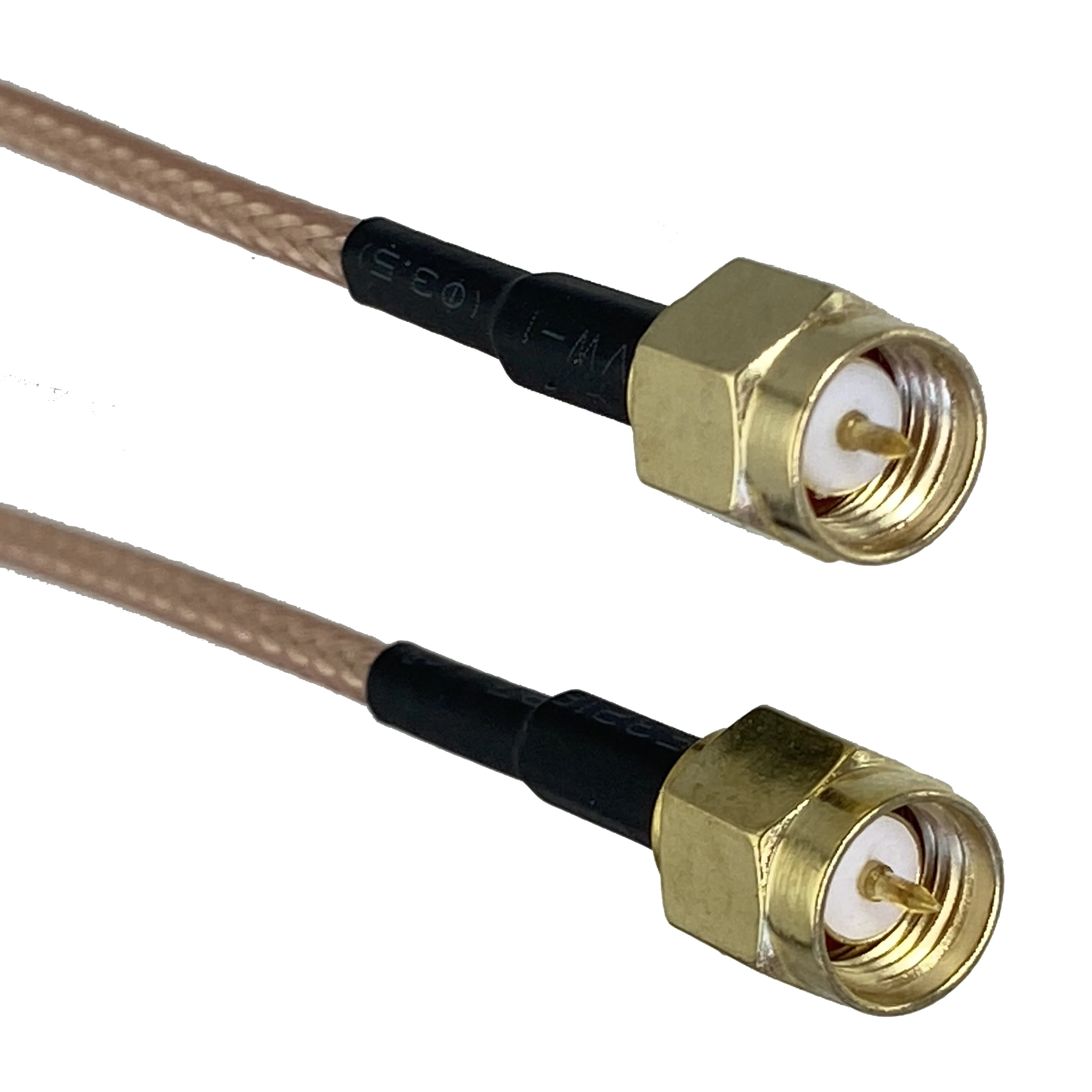
The visible cable exhibits a slender, flexible profile, indicative of its RG316 coaxial construction. This particular cable type is known for its relatively small diameter and tan-colored PTFE (Polytetrafluoroethylene) jacket, which is less prone to kinking than PVC alternatives.
This construction implies a specific set of performance characteristics. RG316 cable typically features a silver-plated copper clad steel center conductor, a PTFE dielectric, a silver-plated copper shield, and a PTFE jacket. This combination offers excellent high-frequency performance, a characteristic impedance of 50 ohms, and a wide operating temperature range, often up to 200°C. Such properties are crucial for maintaining signal integrity in environments where temperature fluctuations or tight bending radii are common.
Compared to larger diameter coaxial cables like RG58, RG316 offers superior flexibility and a smaller footprint, making it ideal for internal wiring, tight enclosures, or applications requiring frequent movement. While it may exhibit slightly higher attenuation over very long runs compared to thicker cables, its advantages in maneuverability and thermal stability make it a preferred choice for short-to-medium length jumper applications where space is at a premium.
Each end of the cable is terminated with a gold-plated SMA male plug connector. The images clearly show the characteristic hexagonal coupling nut, the threaded barrel, and the prominent central pin, which is a hallmark of the male SMA configuration. The gold plating is visually evident, suggesting a commitment to signal quality.
These connectors are designed for secure, threaded coupling, ensuring a mechanically stable and electrically consistent connection. The SMA (SubMiniature version A) connector is a semi-precision coaxial RF connector developed in the 1960s, widely used for frequencies up to 18 GHz, though some variants can operate higher. Its small size and robust design make it ubiquitous in microwave systems, handheld radios, Wi-Fi antennas, and various test equipment. The central pin makes the connection. The threaded coupling mechanism provides a reliable mating interface that resists vibration and accidental disconnection, a significant upgrade over push-on or friction-fit connectors that can suffer from intermittent contact or signal dropouts under stress.
Unlike lower-grade connectors that might use nickel plating or less durable base metals, the visible gold plating on these SMA connectors serves a critical function. Gold is highly resistant to oxidation and provides excellent electrical conductivity, minimizing contact resistance and ensuring a stable impedance match. This translates directly into reduced signal loss and improved long-term reliability, especially in applications where connections may be frequently made and broken, or exposed to varying environmental conditions. This material choice directly addresses the common pain point of intermittent connections and signal degradation often encountered with cheaper, less robust alternatives.
The combination of RG316 cable and gold-plated SMA connectors forms a signal path optimized for fidelity. The 50-ohm impedance is standard for most RF and wireless communication systems, ensuring compatibility and minimizing signal reflections when connected to matching components. Proper impedance matching is paramount in RF circuits; mismatches can lead to standing waves, power loss, and reduced system performance.
In a scenario where a technician is replacing a damaged antenna pigtail in a wireless router or building a custom test fixture for a software-defined radio (SDR) project, the quality of this cable assembly directly impacts the system's performance. The low dielectric constant of PTFE in the RG316 cable contributes to lower signal attenuation, meaning more of the transmitted power reaches its destination. This is particularly important for higher frequencies where even small losses can significantly impact range or data rates. The cable's construction helps to maintain a consistent impedance along its length, which is crucial for minimizing return loss and ensuring clean signal delivery.
The importance of a clean signal path cannot be overstated in electronics repair and development. A poorly constructed cable or connector can introduce noise, increase insertion loss, and degrade the overall signal-to-noise ratio of a system. This RG316 assembly, with its specified components, aims to provide a reliable conduit for RF energy, allowing connected devices to operate at their intended performance levels without being hampered by substandard interconnects. It's a fundamental building block for ensuring the integrity of wireless communication links or RF measurement setups.
The availability of this cable in lengths ranging from 4 inches to 10 feet provides significant versatility for various applications. Short jumpers are essential for internal device connections, such as linking a Wi-Fi module to an internal antenna, or for benchtop prototyping where minimal cable length is desired to reduce signal loss. Longer cables, up to 10 feet, facilitate connections between external antennas and devices, or for routing signals across a larger workspace.
For the electronics repair technician, this cable directly addresses the common need to replace damaged or worn-out RF pigtails within devices. Instead of sourcing specialized, often expensive, OEM parts, a technician can utilize this standardized component to restore functionality to a wide array of equipment, from amateur radio transceivers to industrial IoT devices. This capability allows for cost-effective repairs, extending the lifespan of valuable electronic assets. The ability to choose specific lengths also eliminates excess cable, which can cause clutter and potentially introduce unwanted signal interference or attenuation.
From a value perspective, investing in quality, standardized components like this cable assembly is a strategic decision. The cost-per-use becomes exceptionally low when considering its role in enabling the repair or enhancement of more expensive equipment. Rather than facing the high cost of replacing an entire device due to a single faulty internal cable, this affordable component offers a precise, engineered fix. This approach maximizes the return on investment for both the repair professional and the end-user, transforming a potential write-off into a functional asset.
Imagine the satisfaction of restoring a critical piece of wireless equipment to full operation, knowing that the internal RF connections are robust and reliable. This cable assembly provides the foundational integrity needed for clear, uninterrupted signal transmission, empowering users to achieve optimal performance from their electronic devices and projects.
The RG316 Coaxial Foundation: A Closer Look at Signal Pathways
The visible cable exhibits a slender, flexible profile, indicative of its RG316 coaxial construction. This particular cable type is known for its relatively small diameter and tan-colored PTFE (Polytetrafluoroethylene) jacket, which is less prone to kinking than PVC alternatives.
This construction implies a specific set of performance characteristics. RG316 cable typically features a silver-plated copper clad steel center conductor, a PTFE dielectric, a silver-plated copper shield, and a PTFE jacket. This combination offers excellent high-frequency performance, a characteristic impedance of 50 ohms, and a wide operating temperature range, often up to 200°C. Such properties are crucial for maintaining signal integrity in environments where temperature fluctuations or tight bending radii are common.
Compared to larger diameter coaxial cables like RG58, RG316 offers superior flexibility and a smaller footprint, making it ideal for internal wiring, tight enclosures, or applications requiring frequent movement. While it may exhibit slightly higher attenuation over very long runs compared to thicker cables, its advantages in maneuverability and thermal stability make it a preferred choice for short-to-medium length jumper applications where space is at a premium.
Precision in RF Interconnection: The SMA Male Connectors
Each end of the cable is terminated with a gold-plated SMA male plug connector. The images clearly show the characteristic hexagonal coupling nut, the threaded barrel, and the prominent central pin, which is a hallmark of the male SMA configuration. The gold plating is visually evident, suggesting a commitment to signal quality.
These connectors are designed for secure, threaded coupling, ensuring a mechanically stable and electrically consistent connection. The SMA (SubMiniature version A) connector is a semi-precision coaxial RF connector developed in the 1960s, widely used for frequencies up to 18 GHz, though some variants can operate higher. Its small size and robust design make it ubiquitous in microwave systems, handheld radios, Wi-Fi antennas, and various test equipment. The central pin makes the connection. The threaded coupling mechanism provides a reliable mating interface that resists vibration and accidental disconnection, a significant upgrade over push-on or friction-fit connectors that can suffer from intermittent contact or signal dropouts under stress.
Unlike lower-grade connectors that might use nickel plating or less durable base metals, the visible gold plating on these SMA connectors serves a critical function. Gold is highly resistant to oxidation and provides excellent electrical conductivity, minimizing contact resistance and ensuring a stable impedance match. This translates directly into reduced signal loss and improved long-term reliability, especially in applications where connections may be frequently made and broken, or exposed to varying environmental conditions. This material choice directly addresses the common pain point of intermittent connections and signal degradation often encountered with cheaper, less robust alternatives.
Signal Transmission Fidelity and Loss Management
The combination of RG316 cable and gold-plated SMA connectors forms a signal path optimized for fidelity. The 50-ohm impedance is standard for most RF and wireless communication systems, ensuring compatibility and minimizing signal reflections when connected to matching components. Proper impedance matching is paramount in RF circuits; mismatches can lead to standing waves, power loss, and reduced system performance.
In a scenario where a technician is replacing a damaged antenna pigtail in a wireless router or building a custom test fixture for a software-defined radio (SDR) project, the quality of this cable assembly directly impacts the system's performance. The low dielectric constant of PTFE in the RG316 cable contributes to lower signal attenuation, meaning more of the transmitted power reaches its destination. This is particularly important for higher frequencies where even small losses can significantly impact range or data rates. The cable's construction helps to maintain a consistent impedance along its length, which is crucial for minimizing return loss and ensuring clean signal delivery.
The importance of a clean signal path cannot be overstated in electronics repair and development. A poorly constructed cable or connector can introduce noise, increase insertion loss, and degrade the overall signal-to-noise ratio of a system. This RG316 assembly, with its specified components, aims to provide a reliable conduit for RF energy, allowing connected devices to operate at their intended performance levels without being hampered by substandard interconnects. It's a fundamental building block for ensuring the integrity of wireless communication links or RF measurement setups.
Application Versatility and Repair Integration
The availability of this cable in lengths ranging from 4 inches to 10 feet provides significant versatility for various applications. Short jumpers are essential for internal device connections, such as linking a Wi-Fi module to an internal antenna, or for benchtop prototyping where minimal cable length is desired to reduce signal loss. Longer cables, up to 10 feet, facilitate connections between external antennas and devices, or for routing signals across a larger workspace.
For the electronics repair technician, this cable directly addresses the common need to replace damaged or worn-out RF pigtails within devices. Instead of sourcing specialized, often expensive, OEM parts, a technician can utilize this standardized component to restore functionality to a wide array of equipment, from amateur radio transceivers to industrial IoT devices. This capability allows for cost-effective repairs, extending the lifespan of valuable electronic assets. The ability to choose specific lengths also eliminates excess cable, which can cause clutter and potentially introduce unwanted signal interference or attenuation.
From a value perspective, investing in quality, standardized components like this cable assembly is a strategic decision. The cost-per-use becomes exceptionally low when considering its role in enabling the repair or enhancement of more expensive equipment. Rather than facing the high cost of replacing an entire device due to a single faulty internal cable, this affordable component offers a precise, engineered fix. This approach maximizes the return on investment for both the repair professional and the end-user, transforming a potential write-off into a functional asset.
Imagine the satisfaction of restoring a critical piece of wireless equipment to full operation, knowing that the internal RF connections are robust and reliable. This cable assembly provides the foundational integrity needed for clear, uninterrupted signal transmission, empowering users to achieve optimal performance from their electronic devices and projects.