RP-SMA to U.FL IPX MHF4 Pigtail Antenna Cables
Official Store Deal
Expert Analysis Overview
Precision RF Interconnects for Wireless Modules
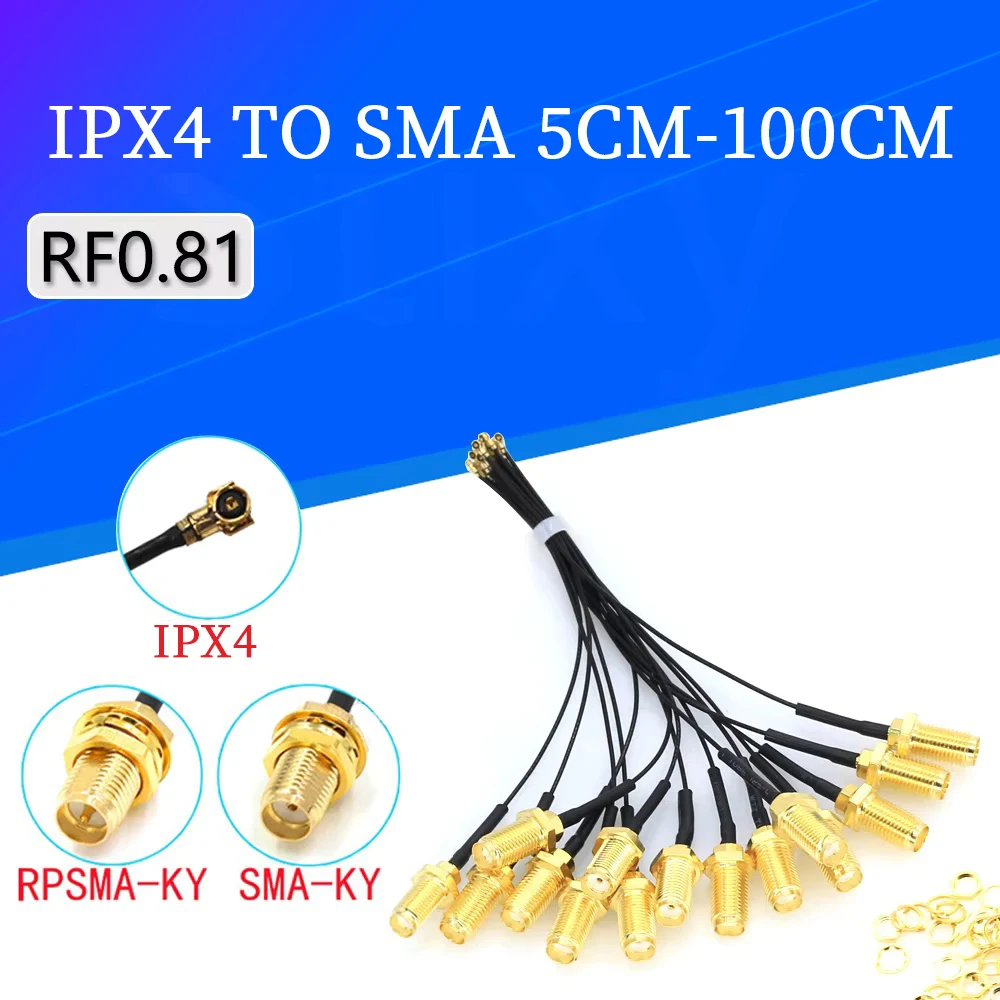
The RP-SMA to U.FL IPX MHF4 Pigtail Antenna Cables are essential RF interconnects designed for upgrading or repairing wireless communication modules, particularly those utilizing the compact M.2 form factor. This product targets users seeking to enhance the external antenna capabilities of devices like WiFi wireless cards and routers, ensuring stable and efficient signal transmission. The visible construction emphasizes a focus on reliable connectivity for critical wireless applications.
Interconnect Architecture and Material Integrity
These pigtail cables feature RF0.81 coaxial cable, a common choice for miniature RF applications due to its small diameter and flexibility. The cable's thin profile allows for easy routing within confined spaces, a significant advantage in compact electronic enclosures. The visible gold-plated connectors, including RP-SMA, SMA, and U.FL (IPX/MHF4) types, indicate a commitment to superior conductivity and corrosion resistance. Gold plating ensures a stable electrical interface over time.
The choice of RF0.81 cable implies specific electrical characteristics. This cable type is typically designed for high-frequency signals, minimizing signal loss across its length. The small gauge of the RF0.81 cable, while flexible, requires careful handling during installation to prevent damage to the internal conductor or dielectric. Proper installation is crucial.
Compared to generic, unbranded cables, the explicit mention of RF0.81 suggests a standardized component. Many off-the-shelf wireless modules come with basic, often unidentifiable pigtail cables. These specified cables offer a known baseline for performance, which is vital for maintaining signal integrity in sensitive RF environments. This is a clear upgrade.
Connector Quality and Compatibility Assurance
The product offers a range of connector options, specifically RP-SMA-KY and SMA-KY on one end, and IPX4 (U.FL/MHF4) on the other. This versatility ensures broad compatibility with various wireless modules and external antennas. The 'KY' designation typically refers to a female jack connector, which is standard for antenna ports on many devices.
Examining the gold-plated terminals, the quality appears consistent across the batch. High-quality terminals are paramount for preventing signal degradation and ensuring a secure mechanical connection. Loose or corroded connections can lead to intermittent signal loss, significantly impacting wireless performance. A secure fit is non-negotiable.
Unlike lower-grade connectors that may use nickel or tin plating, the gold-plated brass construction visible on these connectors offers superior electrical contact and resistance to oxidation. This directly translates to a more reliable and longer-lasting connection, reducing the need for frequent replacements or troubleshooting. This material choice extends component lifespan.
Signal Integrity and Transmission Performance
Effective signal transmission is the primary function of these pigtail cables. The RF0.81 cable, combined with 50-ohm impedance-matched connectors, is engineered to minimize signal reflection and insertion loss. This ensures that the maximum possible RF power is transferred between the wireless module and the antenna. Low loss is critical.
In practical terms, this means a stronger, more stable wireless signal. For applications like high-speed Wi-Fi or IoT devices, maintaining signal integrity is crucial for achieving advertised data rates and reliable network connectivity. Poor cable quality can severely bottleneck wireless performance, even with high-end modules. Every milliwatt counts.
Standard wireless setups often suffer from suboptimal cable choices, leading to reduced range and throughput. These specialized pigtail cables, by adhering to proper RF engineering principles, offer a tangible improvement over generic alternatives. They provide a foundational element for a robust wireless system, allowing the module and antenna to perform at their peak. This enhances overall system efficiency.
Durability and Installation Considerations
The visible construction of the cables, particularly the strain relief where the cable meets the connector, suggests a reasonable level of durability for their intended use. While the RF0.81 cable is thin, the overall assembly appears designed to withstand typical installation stresses. Proper handling remains essential.
Installation requires careful attention to detail, especially when connecting the delicate U.FL/IPX/MHF4 connector to the module. These connectors are small and can be easily damaged if not aligned correctly. The RP-SMA/SMA end, being more robust, allows for easier connection to external antennas or bulkheads. Precision is key.
Compared to permanently attached antenna solutions, these pigtail cables offer modularity. This allows for antenna upgrades or replacements without needing to replace the entire wireless module. This modular approach extends the lifespan of the core hardware and provides flexibility for different deployment scenarios. This is a significant advantage.
Value Proposition and Application Scenarios
These pigtail cables represent a cost-effective solution for improving or repairing wireless connectivity. Given the relatively low price point, they offer significant value by enabling the use of external antennas, which often outperform integrated PCB antennas found on many M.2 modules. The investment is minimal for the potential gain.
Consider a scenario where a user experiences poor Wi-Fi signal strength from a laptop's internal M.2 card. By installing these pigtail cables and connecting external antennas, the user can dramatically improve signal reception and transmission, leading to faster speeds and fewer dropped connections. This directly addresses performance issues.
Unlike relying solely on internal antennas, which are often limited by device chassis and orientation, these cables facilitate a direct, low-loss path to external antennas. This allows for optimal antenna placement and selection, tailoring the wireless performance to specific environmental needs. This flexibility is invaluable. The ability to choose the right antenna for the job makes a substantial difference.
Imagine a home network where a router's internal antennas struggle to cover distant rooms. By upgrading the router's M.2 wireless card with these pigtail cables and higher-gain external antennas, the user will experience extended range and improved signal penetration. This translates to seamless streaming, faster downloads, and a more reliable smart home ecosystem throughout the entire property. The frustration of dead zones becomes a distant memory, replaced by consistent, high-speed connectivity for all devices. This small upgrade unlocks the full potential of your wireless infrastructure, ensuring every corner of your space enjoys robust network access without compromise. It's about empowering your devices to communicate effectively, transforming a patchy connection into a powerhouse of digital interaction. This ensures a truly connected experience.