Self-Closing Braided Cable Sleeve for Wire Management
Official Store Deal
Expert Analysis Overview
Optimizing Solar Setups with Advanced Cable Management
The Self-Closing Braided Cable Sleeve is an essential organizational tool designed for enthusiasts and professionals building robust, aesthetically pleasing, and protected electrical systems, particularly relevant for solar energy installations. This product offers a practical solution to the persistent challenge of managing disparate wiring, ensuring both operational efficiency and long-term system integrity. Its design directly addresses common frustrations associated with traditional cable management, providing a superior alternative.Engineered for Durability and Accessibility
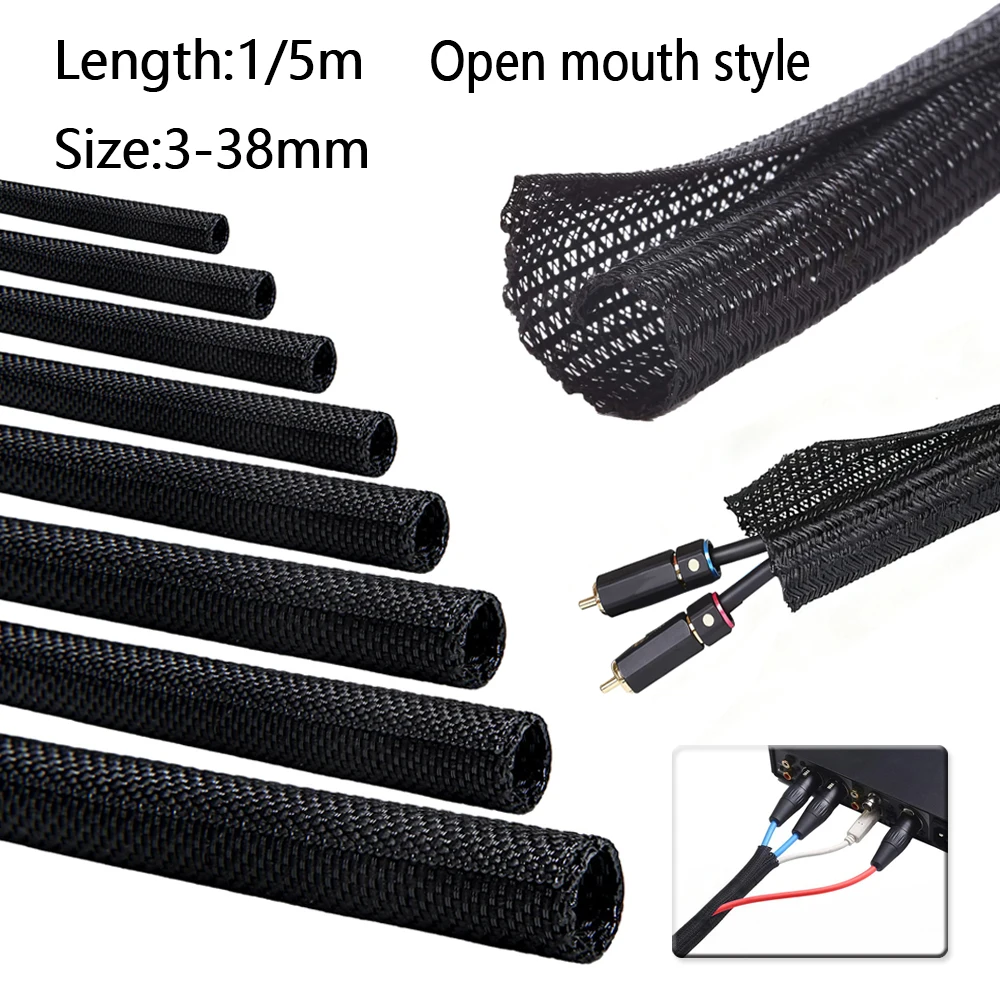
Visible in the product imagery, these sleeves feature a braided construction, typically from PET (Polyethylene Terephthalate) monofilament. This material choice is not arbitrary; it provides significant abrasion resistance, a critical factor for cables routed through tight spaces, near sharp edges, or in environments where they might experience friction. The open-weave structure also contributes to heat dissipation, an often-overlooked aspect in high-current DC solar applications where thermal management can impact conductor longevity and efficiency.This braided composition implies a high degree of flexibility. Unlike rigid conduits that demand precise bending and permanent routing, these sleeves conform easily to various cable paths. This adaptability is invaluable in dynamic solar setups, such as those in RVs or portable systems, where component layouts may change. The material's inherent resilience helps maintain the sleeve's form, ensuring cables remain bundled and protected even after repeated handling.
Compared to simple plastic spiral wraps or zip ties, the braided sleeve offers a more professional and integrated appearance. It consolidates multiple cables into a single, cohesive bundle, reducing visual clutter and improving the overall aesthetic of an installation. This upgrade in cable management translates directly to a cleaner, more organized workspace or energy station, reflecting a commitment to quality in the entire system.
Versatility Across Diverse Applications
The product's availability in a wide range of diameters, from 3mm to 38mm, and lengths of 1m or 5m, underscores its versatility. This extensive sizing ensures compatibility with virtually any cable management requirement, from delicate sensor wires to heavy-gauge DC power cables connecting solar panels to charge controllers or inverters. The ability to select precise lengths minimizes waste and allows for tailored solutions.For solar energy hobbyists, this means a single product line can manage diverse wiring needs. Small diameters are ideal for low-voltage signal cables or Ethernet runs for system monitoring, while larger diameters can comfortably enclose multiple PV wires, battery interconnects, or inverter output cables. This adaptability is crucial for scaling solar projects, from small residential arrays to more complex off-grid systems.
Generic cable management solutions often force compromises, requiring multiple types of products for different cable sizes. This integrated approach, offering a broad spectrum of dimensions, streamlines procurement and simplifies inventory for builders. The visual evidence suggests a comprehensive solution, eliminating the need to source disparate components for varying cable bundle sizes.
Streamlined Installation and Maintenance
A defining characteristic of this product is its self-closing, open-mouth style. This innovative design eliminates the need to thread cables through a closed tube, a tedious and often impossible task with pre-terminated connectors. Instead, the sleeve opens longitudinally, allowing cables to be laid in and then automatically closing around them. This feature drastically reduces installation time and effort.In a solar energy system, where troubleshooting or upgrading components is a periodic necessity, easy access to wiring is paramount. The self-closing design allows for quick inspection, addition, or removal of individual cables without dismantling the entire cable run. This significantly reduces downtime and simplifies maintenance procedures, a major advantage over heat shrink or fully enclosed conduits that require cutting and re-installation.
Unlike traditional split loom tubing which can gape open, exposing wires, the self-closing mechanism maintains a secure enclosure around the cables. This provides continuous protection against abrasion and minor impacts. The ease of modification and robust closure represent a significant upgrade in user experience compared to less sophisticated cable management options.
Enhancing System Performance and Safety
Effective cable management with these sleeves contributes directly to the performance and safety of an electrical system. By bundling cables neatly, they are less prone to tangling, which can lead to kinks, insulation damage, and potential short circuits. An organized system also facilitates better airflow around conductors, helping to dissipate heat, particularly important for DC circuits where resistive losses can generate significant warmth.For solar installations, preventing overheating in DC cables is vital for maintaining system efficiency and preventing voltage drop. Organized cables are also easier to inspect for signs of wear or damage, allowing for proactive maintenance before minor issues escalate into major failures. This proactive approach safeguards the longevity of expensive solar equipment and ensures consistent power output.
Compared to chaotic, unmanaged wiring, a system utilizing these sleeves presents fewer trip hazards and a reduced risk of accidental disconnections. This attention to detail in cable routing not only improves the reliability of the electrical connections but also enhances the safety profile for anyone interacting with the system. The sleeves offer a simple yet effective means to elevate the operational integrity of any electrical setup.
Long-Term Value and Aesthetic Integration
The durable PET material, combined with the practical self-closing design, offers significant long-term value. Investing in quality cable management like this helps protect the underlying wiring infrastructure, extending the lifespan of expensive cables and reducing the need for premature replacements. This translates into a lower total cost of ownership for any electrical system, particularly complex solar arrays.Beyond functionality, the sleek black finish of these sleeves integrates seamlessly into most environments, providing a clean and professional appearance. This aesthetic consistency is particularly desirable for visible cable runs in homes, offices, or integrated solar systems where visual appeal is important. A well-managed cable system reflects attention to detail and a commitment to quality in the entire installation.
This product stands as a cost-effective method to upgrade the resilience and visual appeal of any wiring project. It prevents the common pitfalls of neglected cable management, offering a solution that is both practical and enduring. The initial investment is minimal, especially when weighed against the potential costs of damaged cables or system inefficiencies caused by poor organization.
Frequently Asked Questions
Can these sleeves be used in outdoor solar panel installations?
While offering good abrasion resistance, these sleeves are not waterproof. For outdoor solar wiring directly exposed to elements, additional waterproof conduit or UV-rated, waterproof cable is recommended. They can protect cables within an enclosed solar shed or under a panel where direct rain is not a constant factor, offering protection against physical damage.How do I install cables into the sleeve?
The self-closing design allows for straightforward installation. Simply open the sleeve along its length, lay your cables inside the channel, and the sleeve will automatically spring back to enclose them. This method is much faster than traditional threading.Is it possible to cut these sleeves to custom lengths?
Yes, the sleeve can be cut to any desired length using sharp scissors. To prevent the ends from fraying over time, it is advisable to lightly heat-seal the cut edges with a lighter or hot knife, though this step is optional depending on the application and desired finish.Do these sleeves provide any EMI/RFI shielding for sensitive cables?
No, these braided sleeves are primarily designed for physical protection and organizational purposes. They do not offer significant electromagnetic interference (EMI) or radio-frequency interference (RFI) shielding. For applications requiring EMI/RFI protection, specialized shielded cables or conductive sleeves would be necessary.What material are these cable sleeves typically made from?
These types of cable sleeves are most commonly manufactured from durable PET (Polyethylene Terephthalate) monofilament. This material is chosen for its excellent flexibility, high abrasion resistance, and a broad operating temperature range, making it suitable for various electrical applications.Specifications
Troubleshooting Common Issues
Imagine the satisfaction of a solar energy system where every wire is meticulously organized, protected, and easily accessible for future modifications. These braided cable sleeves deliver that vision, transforming chaotic tangles into streamlined, professional installations that perform optimally and look exceptional. This is an investment in the longevity and efficiency of any electrical setup, ensuring a cleaner, safer, and more reliable power infrastructure for years to come.