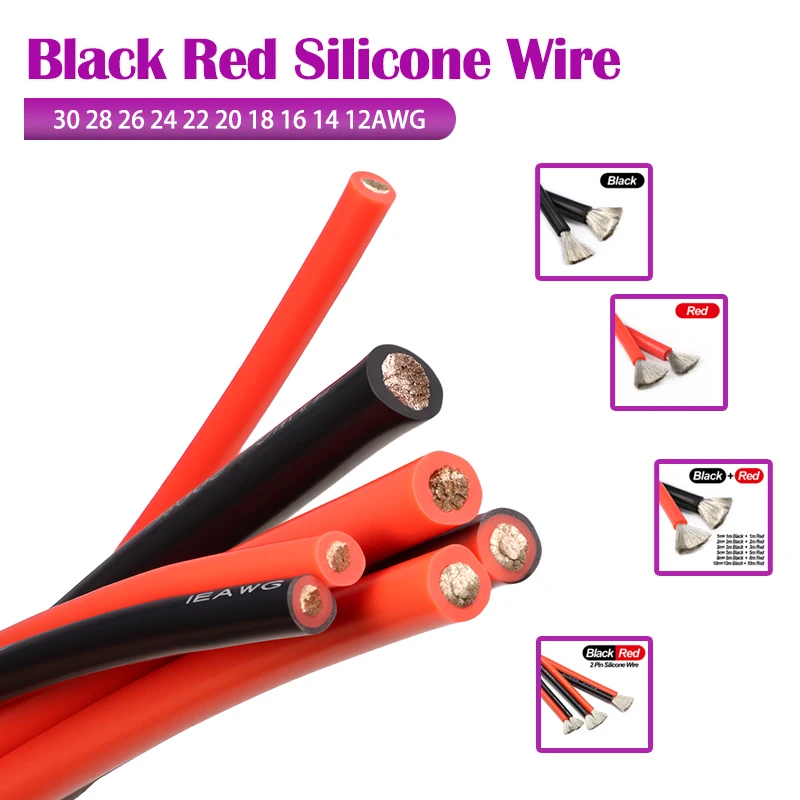
Silicone Tinned Copper Wire (Black/Red)
Official Store Deal
Expert Analysis Overview
Precision Engineering for Electrical Connections
The Silicone Tinned Copper Wire is a highly adaptable electrical conductor designed for a broad spectrum of applications, from intricate electronics repair to robust power delivery in automotive and solar systems. Its construction prioritizes both electrical integrity and physical durability, making it a reliable choice for demanding environments. This wire offers a superior alternative to standard PVC-insulated options, particularly where flexibility and temperature resistance are critical. It's a foundational component for reliable power transmission.
Conductor Core Integrity
The wire features a multi-strand fine copper core, specifically stranded by 0.08mm copper filaments. This fine stranding significantly enhances flexibility. Good conductivity is a direct result of this design. The conductor is tinned copper, an Oxygen-Free Copper (OFC) variant.
This tinned copper construction provides several key advantages. The tin coating acts as a protective barrier against oxidation, which is a common issue with bare copper over time, especially in humid or corrosive environments. This ensures that the wire maintains its low resistance and excellent conductivity throughout its service life, reducing the risk of signal degradation or power loss. It also facilitates easier soldering, as the tin coating readily accepts solder, creating strong, reliable electrical joints without extensive preparation.
Compared to untinned copper wires, the tinned variant offers enhanced longevity and improved solderability, which is particularly beneficial for hobbyists and professionals who frequently make soldered connections. Standard copper can corrode. This wire resists that. The OFC designation further indicates a high purity level, minimizing impurities that could impede electron flow and ensuring consistent performance across various loads. This is a significant upgrade over generic, lower-grade copper wires that might suffer from rapid performance degradation due to internal corrosion or inconsistent material quality.
Insulation Resilience and Flexibility
Insulation for this wire is provided by silicone, a material known for its exceptional properties. The silicone insulation is soft and highly resistant to bending, allowing for tight routing and repeated flexing without cracking or compromising the dielectric strength. High temperature resistance is a core benefit.
This material choice directly translates to practical benefits in real-world applications. In scenarios where wires are subjected to constant movement, vibration, or extreme temperatures, such as within engine compartments, robotic arms, or solar panel installations, the silicone insulation maintains its integrity. Its inherent flexibility prevents insulation fatigue and cracking, which are common failure modes for less resilient materials like PVC, especially in cold conditions or after prolonged exposure to heat. The insulation provides a robust protective layer.
Unlike conventional PVC insulation, which can become brittle and crack over time, particularly when exposed to UV light or temperature fluctuations, silicone insulation retains its elasticity and protective qualities across a wide thermal range, from -60°C to +200°C. This broad operating temperature range makes the wire suitable for both very cold and very hot environments, offering a level of reliability that standard insulations cannot match. This is a clear advantage for long-term installations.
Electrical Performance Under Load
The wire is rated for a voltage of 600V and has a test voltage of 2000V, indicating a substantial safety margin. This high rating ensures the wire can handle significant electrical loads without insulation breakdown. Excellent conductivity is a primary feature.
In practical terms, these specifications mean the wire is capable of safely transmitting power in a wide array of demanding applications, from powering high-current devices in industrial settings to managing battery connections in electric vehicles or solar arrays. The robust insulation and conductor quality minimize voltage drop and heat generation, ensuring efficient power transfer. This prevents overheating and potential fire hazards, which is paramount for electrical safety. The wire performs reliably under stress.
Many generic wires on the market often feature lower voltage ratings or thinner insulation, which can lead to premature failure or safety risks when pushed to their limits. The higher test voltage of 2000V signifies that the insulation can withstand transient voltage spikes well beyond its operational rating, providing an additional layer of protection against unexpected electrical events. This is a critical factor for long-term system stability and safety, particularly in systems prone to electrical noise or surges. This wire offers enhanced protection.
Versatility in Application
The product is available in a wide range of American Wire Gauge (AWG) sizes, from 30 AWG to 12 AWG, and lengths from 1 to 10 meters. This extensive selection caters to diverse current requirements and physical space constraints. Multiple gauges are available.
This broad availability of gauges means that users can select the precise wire size needed for their specific application, optimizing for current capacity, voltage drop, and physical fit. For instance, smaller gauges like 30 AWG are ideal for delicate signal wiring or low-current circuits in compact electronics, while larger gauges like 12 AWG are suitable for high-current applications such as main power leads for car batteries, solar panels, or high-power motors. This adaptability reduces waste and ensures optimal performance.
Unlike single-gauge offerings that force users to compromise on either capacity or size, this product line provides a tailored solution for nearly any electrical wiring task. The availability in various lengths further enhances its utility, allowing for precise cuts and minimizing scrap material, which is a cost-effective approach for both hobbyists and professional installers. This range supports diverse projects. The wire is suitable for car batteries, lithium batteries, inverters, model airplanes, audio equipment, industrial robot arms, LED lights, spotlights, and high-speed motors.
Long-Term Value Proposition
The combination of tinned copper conductors, high-quality silicone insulation, and a robust construction process contributes to a long service life. Anti-oxidation properties and good toughness are key attributes. The intertwist winding process for the copper core wire precision stranding reduces signal interference and improves conductivity.
This focus on durability and performance translates into significant long-term value. Users can expect fewer failures, reduced maintenance, and consistent electrical performance over many years, even in challenging conditions. The initial investment in a higher-quality wire like this is often offset by the avoidance of costly repairs or replacements associated with inferior products. This wire minimizes future expenses.
Many cheaper wires on the market often cut corners on material quality or manufacturing processes, leading to premature insulation degradation, conductor corrosion, or unreliable connections. These issues can result in intermittent faults, power losses, or even safety hazards. The engineering behind this silicone wire, with its emphasis on anti-oxidation, high temperature resistance, and mechanical toughness, positions it as a more economical choice in the long run, providing peace of mind and operational reliability. This product offers enduring performance.
Imagine completing a complex wiring project, knowing that every connection is secured by a wire engineered for longevity and resilience. Picture your solar setup consistently delivering power, unhindered by environmental stressors, or your RC model performing flawlessly, its internal electronics reliably powered. This wire provides the confidence that your electrical systems will function as intended, day after day, year after year, without compromise. It ensures your projects stand the test of time, reducing the need for constant vigilance or premature replacements. This is the foundation for dependable electrical systems.