Small Stainless Steel L-Brace Corner Brackets
Official Store Deal
Expert Analysis Overview
The Small Stainless Steel L-Brace Corner Brackets are meticulously crafted fasteners designed for delicate reinforcement in period-appropriate furniture and cabinetry. These components are not merely functional; they represent a commitment to durable, unobtrusive repair, specifically catering to the discerning restoration specialist or enthusiast. This offering stands apart from generic alternatives by prioritizing material integrity and a precise form factor essential for maintaining the aesthetic and structural veracity of older pieces. The inherent properties of the stainless steel, combined with their thoughtful dimensions, position these brackets as an indispensable asset for subtle yet robust structural stabilization.
Each L-bracket is fashioned from stainless steel, exhibiting a uniform thickness of 2.0mm (0.08 inches). This material choice is fundamental, offering superior resistance to corrosion and tarnishing, which is critical for the longevity of a repair. The surface presents a clean, unadorned finish, capable of integrating subtly into various wood types and existing Hardware.
Upon handling, the brackets convey a sense of density and precision. The edges are smooth, free from burrs or sharp points, indicative of careful manufacturing processes. This attention to detail ensures that handling and installation are safe, minimizing the risk of splintering delicate timber or snagging fabric. The accurate 90-degree bend is fundamental. Imagine reinforcing a wobbly antique drawer: a precisely angled bracket ensures the joint is genuinely squared, preventing further strain and wear. This level of dimensional accuracy is often overlooked in mass-produced, lower-cost alternatives, which frequently present angles that are slightly off, compromising the integrity of the repair before it even begins. Compared to standard stamped sheet metal brackets, which often feel flimsy and deform under minimal pressure, the 2.0mm stainless steel provides a reassuring rigidity that is immediately apparent.
Generic hardware frequently utilizes plated mild steel, which, while initially shiny, quickly succumbs to moisture and abrasion, leading to unsightly rust and a compromised aesthetic. The solid stainless steel composition of these brackets means that their inherent resistance to environmental factors is consistent throughout the material, not just a surface coating. This distinction is paramount in restoration work, where the goal is to create repairs that last for decades, not just years. The subtle sheen of the stainless steel is often preferable, providing a clean counterpoint to aged wood, or it can be easily dulled or patinated to blend more seamlessly.
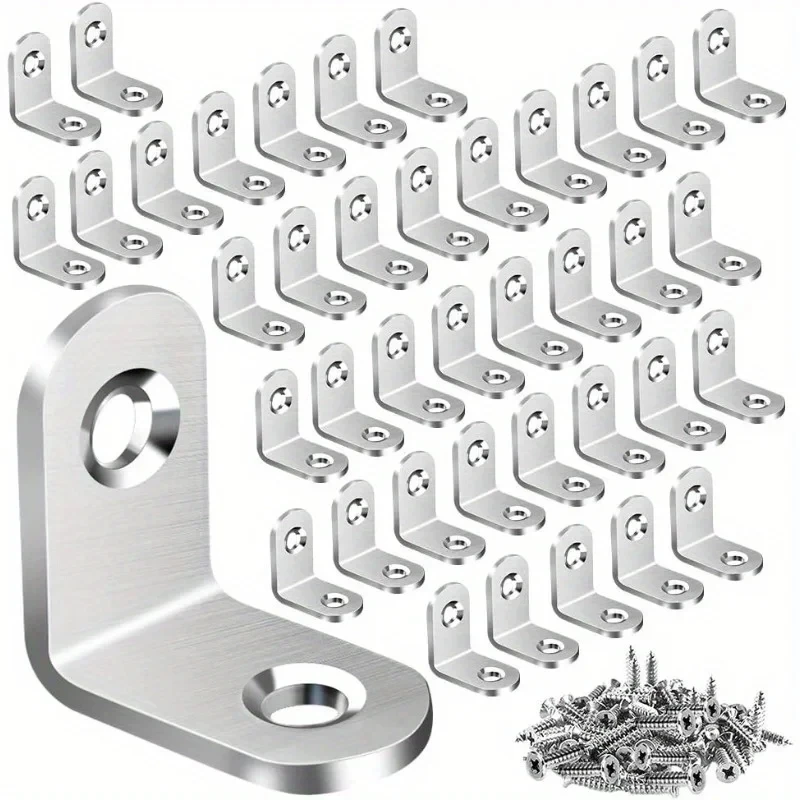
These brackets feature compact dimensions, measuring 20mm (0.79 inches) in length and width, with a vertical extension of 20mm (0.79 inches) and a horizontal base of 16mm (0.63 inches). Each arm of the L-shape includes a pre-drilled, countersunk hole, designed to accommodate the included 16mm (0.63 inches) mounting screws for a flush finish. The hole diameter is approximately 5mm (0.2 inches), providing ample purchase for the screw head.
In practical application, these dimensions prove invaluable for discreet reinforcement. Picture a period chair with a slightly loose leg joint; a bulky modern bracket would be an eyesore, disrupting the historical accuracy. These small L-brackets can be strategically placed on the interior of the joint, providing robust support without being overtly visible. They are also ideal for securing the bottoms of antique drawers that have come loose, or for adding stability to small, decorative shelves. The countersunk holes are a critical design element. They allow the screw heads to sit flush with the bracket's surface, preventing any protrusion that could snag on clothing, scratch adjacent surfaces, or simply detract from the finished appearance. This level of finish is rarely found in cheaper, more utilitarian hardware, which often leaves screw heads proud of the surface.
When contrasting these with larger, more industrial corner braces, the specialized role of these smaller units becomes clear. Heavy-duty brackets are designed for substantial load-bearing applications, such as framing or large shelving units. Their size and often thicker gauge metal are overkill, and indeed counterproductive, for fine furniture work. The smaller form factor of these stainless steel brackets allows for precision placement in confined spaces, enabling repairs that are both effective and aesthetically sympathetic. Their design truly supports the philosophy of minimal intervention in restoration, providing necessary strength without overwhelming the original design. The inclusion of compatible screws further simplifies the process, eliminating the need to source matching hardware, a common frustration in restoration projects.
Stainless steel's primary advantage in a restoration context is its inherent corrosion resistance. This characteristic means the brackets will not rust or degrade over time, a common failure point for steel hardware, particularly in environments with fluctuating humidity or incidental moisture exposure. This material choice ensures the structural integrity of the repair remains uncompromised for the foreseeable future, preserving the effort invested in the restoration.
While stainless steel does not typically develop a rich, earthy patina like bronze or untreated steel, it ages gracefully, acquiring a subtle, muted luster over decades. This natural aging process means the brackets will continue to blend with the natural wear of an antique piece without introducing jarring contrasts or requiring frequent maintenance. For those desiring a closer match to existing antique finishes, the clean surface of stainless steel can be prepared for specialized metal paints or patinas, offering flexibility for a truly bespoke restoration. This adaptability is key for any restorer.
In direct comparison to plated steel or brass-coated items, the advantages are profound. Plated finishes are prone to chipping, scratching, and ultimately, the underlying base metal is exposed, leading to rust or discoloration. Brass-coated items often lack the structural rigidity required for effective reinforcement and can quickly wear through to a different metal underneath. The uniform composition of these stainless steel brackets eliminates these concerns, ensuring that the integrity and appearance are maintained consistently. This offers peace of mind to the restorer, knowing that the repair will endure the test of time, just like the original piece it is supporting. This material choice underscores a commitment to true permanence in repair.
The most defining characteristic of these brackets is their precise 90-degree right angle. This seemingly simple feature is critical for effective structural support, ensuring that two joined pieces of wood are held at an exact perpendicular, thereby maximizing load distribution and minimizing stress points. The countersunk screw holes further enhance this precision, allowing the screws to sit flush and engage fully with the material without creating uneven pressure points.
This exact angling is crucial for distributing stress evenly across a joint. If a bracket is slightly off-kilter, it can introduce torsional forces or uneven pressure, which might, over time, actually exacerbate the very structural weakness it was intended to fix. The robust 2.0mm thickness of the stainless steel provides sufficient material to resist bending or deformation, even when subjected to the tightening forces of screws. This ensures the structural integrity of the joint is maintained without compromise. The bracket holds its shape.
Consider the engineering behind such a small component. The goal is to provide maximum strength with minimal visual impact. The choice of material and thickness reflects a balance between these two objectives. Compared to thinner gauge metals that might flex, or overly thick materials that would be difficult to conceal, the 2.0mm stainless steel strikes an optimal balance. This thoughtful engineering means the brackets can effectively reinforce delicate joinery, such as mortise and tenon joints in antique furniture, without detracting from the original craftsmanship. This is not a brute-force solution but a precise, supportive intervention.
This offering includes a generous quantity of 50 individual L-brackets, along with the necessary mounting screws. Such a substantial pack provides ample supply for numerous small projects, making it a highly economical choice for both professional restorers and dedicated hobbyists who frequently encounter minor furniture repairs or custom builds requiring discreet reinforcement. Having a ready supply of these versatile brackets minimizes delays.
For a restoration specialist, the economic advantage of acquiring these brackets in bulk is considerable. Rather than sourcing individual, often overpriced, specialty hardware pieces that may not match in quality or material, this pack provides a consistent, high-quality solution. This allows for greater efficiency in project planning and execution, reducing the overall cost per repair. The inclusion of screws, while seemingly minor, further streamlines the workflow, as compatible fasteners are immediately at hand, eliminating the need for separate purchases.
Compared to purchasing bespoke or antique-replicating hardware, which can be prohibitively expensive and often requires significant lead times, these stainless steel brackets offer a practical and durable alternative. While they might not carry the same aged aesthetic as a true antique piece upon installation, their quality and discreet nature allow them to integrate seamlessly, with the potential for deliberate aging if desired. This balance of cost-effectiveness, quality, and quantity makes them a pragmatic choice for any workshop focused on preserving historical items. The value proposition is clear.
Imagine the satisfaction of completing a challenging furniture restoration, knowing that every joint is secure, every wobble eliminated, and the piece stands ready to serve for another century. These small stainless steel L-brackets provide that underlying confidence, quietly reinforcing the beauty and history of each item. They allow for the revival of cherished heirlooms and the creation of lasting custom pieces, ensuring that structural integrity is never a compromise. The legacy of craftsmanship continues, supported by these unassuming yet essential components.
The Unassuming Strength of Form
Each L-bracket is fashioned from stainless steel, exhibiting a uniform thickness of 2.0mm (0.08 inches). This material choice is fundamental, offering superior resistance to corrosion and tarnishing, which is critical for the longevity of a repair. The surface presents a clean, unadorned finish, capable of integrating subtly into various wood types and existing Hardware.
Upon handling, the brackets convey a sense of density and precision. The edges are smooth, free from burrs or sharp points, indicative of careful manufacturing processes. This attention to detail ensures that handling and installation are safe, minimizing the risk of splintering delicate timber or snagging fabric. The accurate 90-degree bend is fundamental. Imagine reinforcing a wobbly antique drawer: a precisely angled bracket ensures the joint is genuinely squared, preventing further strain and wear. This level of dimensional accuracy is often overlooked in mass-produced, lower-cost alternatives, which frequently present angles that are slightly off, compromising the integrity of the repair before it even begins. Compared to standard stamped sheet metal brackets, which often feel flimsy and deform under minimal pressure, the 2.0mm stainless steel provides a reassuring rigidity that is immediately apparent.
Generic hardware frequently utilizes plated mild steel, which, while initially shiny, quickly succumbs to moisture and abrasion, leading to unsightly rust and a compromised aesthetic. The solid stainless steel composition of these brackets means that their inherent resistance to environmental factors is consistent throughout the material, not just a surface coating. This distinction is paramount in restoration work, where the goal is to create repairs that last for decades, not just years. The subtle sheen of the stainless steel is often preferable, providing a clean counterpoint to aged wood, or it can be easily dulled or patinated to blend more seamlessly.
Anchoring the Ages: Installation and Application
These brackets feature compact dimensions, measuring 20mm (0.79 inches) in length and width, with a vertical extension of 20mm (0.79 inches) and a horizontal base of 16mm (0.63 inches). Each arm of the L-shape includes a pre-drilled, countersunk hole, designed to accommodate the included 16mm (0.63 inches) mounting screws for a flush finish. The hole diameter is approximately 5mm (0.2 inches), providing ample purchase for the screw head.
In practical application, these dimensions prove invaluable for discreet reinforcement. Picture a period chair with a slightly loose leg joint; a bulky modern bracket would be an eyesore, disrupting the historical accuracy. These small L-brackets can be strategically placed on the interior of the joint, providing robust support without being overtly visible. They are also ideal for securing the bottoms of antique drawers that have come loose, or for adding stability to small, decorative shelves. The countersunk holes are a critical design element. They allow the screw heads to sit flush with the bracket's surface, preventing any protrusion that could snag on clothing, scratch adjacent surfaces, or simply detract from the finished appearance. This level of finish is rarely found in cheaper, more utilitarian hardware, which often leaves screw heads proud of the surface.
When contrasting these with larger, more industrial corner braces, the specialized role of these smaller units becomes clear. Heavy-duty brackets are designed for substantial load-bearing applications, such as framing or large shelving units. Their size and often thicker gauge metal are overkill, and indeed counterproductive, for fine furniture work. The smaller form factor of these stainless steel brackets allows for precision placement in confined spaces, enabling repairs that are both effective and aesthetically sympathetic. Their design truly supports the philosophy of minimal intervention in restoration, providing necessary strength without overwhelming the original design. The inclusion of compatible screws further simplifies the process, eliminating the need to source matching hardware, a common frustration in restoration projects.
The Patina of Preservation: Longevity and Aesthetics
Stainless steel's primary advantage in a restoration context is its inherent corrosion resistance. This characteristic means the brackets will not rust or degrade over time, a common failure point for steel hardware, particularly in environments with fluctuating humidity or incidental moisture exposure. This material choice ensures the structural integrity of the repair remains uncompromised for the foreseeable future, preserving the effort invested in the restoration.
While stainless steel does not typically develop a rich, earthy patina like bronze or untreated steel, it ages gracefully, acquiring a subtle, muted luster over decades. This natural aging process means the brackets will continue to blend with the natural wear of an antique piece without introducing jarring contrasts or requiring frequent maintenance. For those desiring a closer match to existing antique finishes, the clean surface of stainless steel can be prepared for specialized metal paints or patinas, offering flexibility for a truly bespoke restoration. This adaptability is key for any restorer.
In direct comparison to plated steel or brass-coated items, the advantages are profound. Plated finishes are prone to chipping, scratching, and ultimately, the underlying base metal is exposed, leading to rust or discoloration. Brass-coated items often lack the structural rigidity required for effective reinforcement and can quickly wear through to a different metal underneath. The uniform composition of these stainless steel brackets eliminates these concerns, ensuring that the integrity and appearance are maintained consistently. This offers peace of mind to the restorer, knowing that the repair will endure the test of time, just like the original piece it is supporting. This material choice underscores a commitment to true permanence in repair.
Precision in Miniature: Engineering for Subtle Support
The most defining characteristic of these brackets is their precise 90-degree right angle. This seemingly simple feature is critical for effective structural support, ensuring that two joined pieces of wood are held at an exact perpendicular, thereby maximizing load distribution and minimizing stress points. The countersunk screw holes further enhance this precision, allowing the screws to sit flush and engage fully with the material without creating uneven pressure points.
This exact angling is crucial for distributing stress evenly across a joint. If a bracket is slightly off-kilter, it can introduce torsional forces or uneven pressure, which might, over time, actually exacerbate the very structural weakness it was intended to fix. The robust 2.0mm thickness of the stainless steel provides sufficient material to resist bending or deformation, even when subjected to the tightening forces of screws. This ensures the structural integrity of the joint is maintained without compromise. The bracket holds its shape.
Consider the engineering behind such a small component. The goal is to provide maximum strength with minimal visual impact. The choice of material and thickness reflects a balance between these two objectives. Compared to thinner gauge metals that might flex, or overly thick materials that would be difficult to conceal, the 2.0mm stainless steel strikes an optimal balance. This thoughtful engineering means the brackets can effectively reinforce delicate joinery, such as mortise and tenon joints in antique furniture, without detracting from the original craftsmanship. This is not a brute-force solution but a precise, supportive intervention.
The Restorationist's Ally: Aiding in Structural Revival
This offering includes a generous quantity of 50 individual L-brackets, along with the necessary mounting screws. Such a substantial pack provides ample supply for numerous small projects, making it a highly economical choice for both professional restorers and dedicated hobbyists who frequently encounter minor furniture repairs or custom builds requiring discreet reinforcement. Having a ready supply of these versatile brackets minimizes delays.
For a restoration specialist, the economic advantage of acquiring these brackets in bulk is considerable. Rather than sourcing individual, often overpriced, specialty hardware pieces that may not match in quality or material, this pack provides a consistent, high-quality solution. This allows for greater efficiency in project planning and execution, reducing the overall cost per repair. The inclusion of screws, while seemingly minor, further streamlines the workflow, as compatible fasteners are immediately at hand, eliminating the need for separate purchases.
Compared to purchasing bespoke or antique-replicating hardware, which can be prohibitively expensive and often requires significant lead times, these stainless steel brackets offer a practical and durable alternative. While they might not carry the same aged aesthetic as a true antique piece upon installation, their quality and discreet nature allow them to integrate seamlessly, with the potential for deliberate aging if desired. This balance of cost-effectiveness, quality, and quantity makes them a pragmatic choice for any workshop focused on preserving historical items. The value proposition is clear.
Imagine the satisfaction of completing a challenging furniture restoration, knowing that every joint is secure, every wobble eliminated, and the piece stands ready to serve for another century. These small stainless steel L-brackets provide that underlying confidence, quietly reinforcing the beauty and history of each item. They allow for the revival of cherished heirlooms and the creation of lasting custom pieces, ensuring that structural integrity is never a compromise. The legacy of craftsmanship continues, supported by these unassuming yet essential components.