Snap-On Ferrite Core Noise Filters
Official Store Deal
Expert Analysis Overview
Ferrite core noise filters are essential components designed for mitigating electromagnetic interference (EMI) and radio-frequency interference (RFI) in electrical circuits, particularly vital for maintaining signal integrity in sensitive solar energy installations. These clip-on suppressors offer a practical, non-invasive solution for enhancing the stability and longevity of various electronic systems. Their widespread application extends from consumer electronics to critical industrial controls, including the increasingly complex setups found in modern solar power generation. The product's design emphasizes ease of installation and broad compatibility, making it an accessible upgrade for both hobbyists and professional installers. It's a simple, effective tool.
Electromagnetic interference, or EMI, is a pervasive challenge in any electrical system. It manifests as unwanted electrical signals that can disrupt the normal operation of electronic devices. These signals can originate from various sources, including power lines, electric motors, switching power supplies, and even radio transmissions. In a solar energy context, sources like inverters, charge controllers, and even the rapid switching of power optimizers can generate significant noise. This interference often travels along power and data cables, acting as miniature antennas that pick up and re-radiate noise. Unchecked EMI can lead to erratic system behavior, inaccurate sensor readings, and even premature component failure. Protecting signal integrity is paramount.
The core function of these magnetic clips is to introduce impedance to common-mode noise currents. Unlike differential-mode noise, which travels between two conductors in opposite directions, common-mode noise travels in the same direction on all conductors relative to ground. Ferrite materials, which are ceramic compounds made from iron oxide and other metals, possess unique magnetic properties. When a cable passes through a ferrite core, the core effectively increases the inductive reactance of the cable to high-frequency common-mode currents. This increased impedance acts as a choke, attenuating the unwanted noise signals while allowing the desired lower-frequency power or data signals to pass through largely unimpeded. It's a clever passive solution.
Compared to complex active filtering circuits, which can be costly and require specific design expertise, these snap-on ferrite cores represent a straightforward and cost-effective method for noise suppression. They don't require external power or intricate wiring. The passive nature of ferrite cores means they are inherently reliable and do not introduce additional failure points into a system. This simplicity makes them an ideal choice for quick deployments or retrofitting existing installations where space or budget constraints might preclude more elaborate solutions. Their effectiveness lies in their material science.
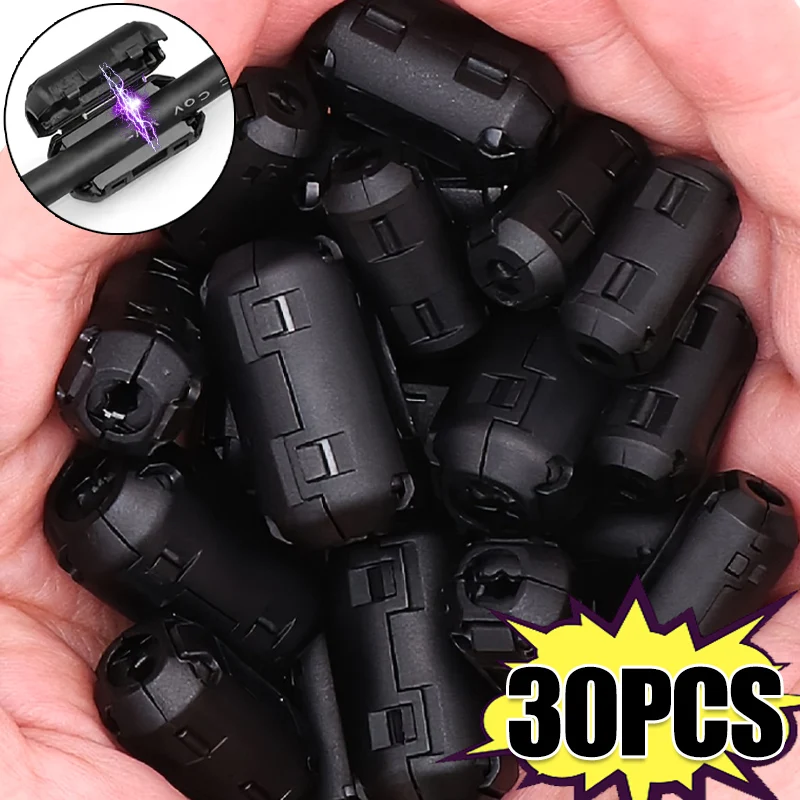
These noise filter clips feature a robust, hinged plastic casing designed for easy, tool-free installation. The casing securely encloses a ferrite core, typically made of a high-permeability material optimized for attenuating noise in the megahertz range, where much of the problematic EMI often resides. The snap-on mechanism allows users to quickly attach the filter to an existing cable without cutting or modifying the wiring, preserving the integrity of the original cable. This design is highly practical. The visible plastic housing appears to be a durable polymer, capable of withstanding typical indoor environments and potentially sheltered outdoor applications. Its matte finish suggests a non-reflective surface, which can be advantageous in certain installations.
Different sizes of these clips are evident in the product images, indicating compatibility with a range of cable diameters. This versatility is crucial for solar energy hobbyists who work with various cable gauges, from thin data lines connecting monitoring equipment to thicker DC power cables running from solar panels to charge controllers or inverters. Selecting the appropriate size ensures a snug fit around the cable, maximizing the contact with the ferrite material and thus optimizing the noise suppression capabilities. A loose fit diminishes effectiveness. The hinged design also allows for multiple wraps of thinner cables through a single core, further increasing the impedance and enhancing filtering performance for particularly noisy circuits. This adaptability is a key benefit.
Unlike generic, un-cased ferrite rings that can be brittle and difficult to integrate cleanly, these clip-on units offer a protected and aesthetically pleasing solution. The plastic housing not only safeguards the fragile ferrite material from physical damage but also provides electrical insulation, preventing accidental short circuits or contact with live wires. This integrated design streamlines installation and improves overall system neatness. The clips are designed for longevity. The combination of a durable casing and effective ferrite core makes these filters a superior choice for long-term noise management in demanding environments. This thoughtful engineering contributes significantly to the product's overall utility and safety profile.
In the realm of solar energy, these ferrite clips find numerous critical applications. DC power cables running from solar panels to charge controllers or directly to inverters can be susceptible to noise, especially over longer runs or when routed near other electrical equipment. High-frequency switching within MPPT charge controllers and grid-tie inverters generates harmonics that can propagate through the DC and AC wiring. Applying ferrite filters to these cables can significantly reduce this conducted noise, leading to a cleaner power delivery and potentially improving the perceived efficiency of the entire system. Cleaner power means better performance.
Consider a scenario where a solar inverter is generating high-frequency noise that interferes with a nearby Wi-Fi router or a sensitive home automation system. This is a common frustration. Placing ferrite clips on the AC output cables from the inverter can effectively suppress this radiated noise, restoring proper functionality to other electronic devices in the vicinity. For off-grid systems, where every watt of power and every bit of data integrity counts, these filters become even more critical. They help ensure accurate battery monitoring, prevent false trips in protection circuits, and maintain stable communication with system management units. System reliability improves dramatically.
Furthermore, data cables used for monitoring solar system performance, such as those connecting a charge controller to a display unit or a remote monitoring gateway, are highly vulnerable to EMI. Inaccurate data can lead to incorrect operational decisions or misrepresentation of system output. Attaching ferrite clips to these communication lines can shield them from interference, ensuring that the data transmitted is clean and reliable. This is crucial for calculating efficiency losses accurately and verifying compatibility with existing solar setups. The ability to filter noise on these critical lines directly impacts the user's ability to manage and optimize their self-sustaining energy system effectively. These clips offer peace of mind.
The impact of noise suppression extends beyond immediate operational stability; it also plays a significant role in the long-term health and efficiency of solar components. Constant exposure to high-frequency noise can stress sensitive electronic circuits within inverters, charge controllers, and battery management systems. This stress can manifest as increased heat, premature aging of components, and ultimately, a reduced operational lifespan for expensive equipment. By attenuating these harmful signals, ferrite filters act as a protective barrier, extending the service life of critical solar infrastructure. This is a wise investment.
From an efficiency standpoint, while ferrite cores do not directly increase power generation, they prevent efficiency *losses* caused by system instability or inaccurate readings. For example, if EMI causes a charge controller to misread battery voltage or panel output, it might operate sub-optimally, failing to extract maximum power from the solar array or overcharging/undercharging batteries. By ensuring clean signals, these filters enable components to operate according to their designed parameters, indirectly contributing to overall system efficiency. Accurate data is vital.
Moreover, in complex solar installations, especially those involving multiple inverters, battery banks, and grid connections, transient voltage spikes and surges can occur. While dedicated surge protectors handle major events, ferrite cores offer a first line of defense against smaller, high-frequency transients that can still degrade performance or damage components over time. Their ability to damp these high-frequency components helps to smooth out the electrical environment, creating a more stable and resilient system. This proactive protection is invaluable. The cost of these small components pales in comparison to replacing a damaged inverter or battery bank. They are a small price to pay for significant protection.
The value proposition of these snap-on ferrite core filters is compelling. At a modest price point, especially when purchased in bulk, they offer a high return on investment by protecting expensive solar equipment and ensuring reliable system operation. The ease of installation means that even those with minimal electrical experience can quickly deploy them, making advanced noise suppression accessible to a broader audience. This accessibility democratizes system optimization. The ability to quickly diagnose and mitigate noise issues without complex tools or expert intervention saves time and money. They are a practical addition to any solar toolkit.
These filters are not just for troubleshooting existing problems; they are an excellent preventative measure for new installations. Integrating them from the outset can prevent future headaches, ensuring a clean electrical environment from day one. For the solar energy hobbyist focused on building a self-sustaining energy system, these filters are an indispensable tool for maximizing reliability and performance. They contribute to a robust and dependable power infrastructure. This small investment yields significant long-term benefits.
Imagine a solar setup that consistently delivers clean power, with monitoring data you can trust, and components that operate reliably for years. These ferrite clips contribute directly to that vision. They ensure your hard-earned solar energy is delivered efficiently and your investment is protected, allowing you to focus on the benefits of renewable power without the nagging concerns of electrical interference. Your system will run smoother, and your data will be more accurate, empowering you to truly master your energy independence.
The Silent Guardian of Electrons: Understanding EMI Suppression
Electromagnetic interference, or EMI, is a pervasive challenge in any electrical system. It manifests as unwanted electrical signals that can disrupt the normal operation of electronic devices. These signals can originate from various sources, including power lines, electric motors, switching power supplies, and even radio transmissions. In a solar energy context, sources like inverters, charge controllers, and even the rapid switching of power optimizers can generate significant noise. This interference often travels along power and data cables, acting as miniature antennas that pick up and re-radiate noise. Unchecked EMI can lead to erratic system behavior, inaccurate sensor readings, and even premature component failure. Protecting signal integrity is paramount.
The core function of these magnetic clips is to introduce impedance to common-mode noise currents. Unlike differential-mode noise, which travels between two conductors in opposite directions, common-mode noise travels in the same direction on all conductors relative to ground. Ferrite materials, which are ceramic compounds made from iron oxide and other metals, possess unique magnetic properties. When a cable passes through a ferrite core, the core effectively increases the inductive reactance of the cable to high-frequency common-mode currents. This increased impedance acts as a choke, attenuating the unwanted noise signals while allowing the desired lower-frequency power or data signals to pass through largely unimpeded. It's a clever passive solution.
Compared to complex active filtering circuits, which can be costly and require specific design expertise, these snap-on ferrite cores represent a straightforward and cost-effective method for noise suppression. They don't require external power or intricate wiring. The passive nature of ferrite cores means they are inherently reliable and do not introduce additional failure points into a system. This simplicity makes them an ideal choice for quick deployments or retrofitting existing installations where space or budget constraints might preclude more elaborate solutions. Their effectiveness lies in their material science.
Engineered for Integration: Design and Material Considerations
These noise filter clips feature a robust, hinged plastic casing designed for easy, tool-free installation. The casing securely encloses a ferrite core, typically made of a high-permeability material optimized for attenuating noise in the megahertz range, where much of the problematic EMI often resides. The snap-on mechanism allows users to quickly attach the filter to an existing cable without cutting or modifying the wiring, preserving the integrity of the original cable. This design is highly practical. The visible plastic housing appears to be a durable polymer, capable of withstanding typical indoor environments and potentially sheltered outdoor applications. Its matte finish suggests a non-reflective surface, which can be advantageous in certain installations.
Different sizes of these clips are evident in the product images, indicating compatibility with a range of cable diameters. This versatility is crucial for solar energy hobbyists who work with various cable gauges, from thin data lines connecting monitoring equipment to thicker DC power cables running from solar panels to charge controllers or inverters. Selecting the appropriate size ensures a snug fit around the cable, maximizing the contact with the ferrite material and thus optimizing the noise suppression capabilities. A loose fit diminishes effectiveness. The hinged design also allows for multiple wraps of thinner cables through a single core, further increasing the impedance and enhancing filtering performance for particularly noisy circuits. This adaptability is a key benefit.
Unlike generic, un-cased ferrite rings that can be brittle and difficult to integrate cleanly, these clip-on units offer a protected and aesthetically pleasing solution. The plastic housing not only safeguards the fragile ferrite material from physical damage but also provides electrical insulation, preventing accidental short circuits or contact with live wires. This integrated design streamlines installation and improves overall system neatness. The clips are designed for longevity. The combination of a durable casing and effective ferrite core makes these filters a superior choice for long-term noise management in demanding environments. This thoughtful engineering contributes significantly to the product's overall utility and safety profile.
Harmonizing the Solar Grid: Application in Renewable Systems
In the realm of solar energy, these ferrite clips find numerous critical applications. DC power cables running from solar panels to charge controllers or directly to inverters can be susceptible to noise, especially over longer runs or when routed near other electrical equipment. High-frequency switching within MPPT charge controllers and grid-tie inverters generates harmonics that can propagate through the DC and AC wiring. Applying ferrite filters to these cables can significantly reduce this conducted noise, leading to a cleaner power delivery and potentially improving the perceived efficiency of the entire system. Cleaner power means better performance.
Consider a scenario where a solar inverter is generating high-frequency noise that interferes with a nearby Wi-Fi router or a sensitive home automation system. This is a common frustration. Placing ferrite clips on the AC output cables from the inverter can effectively suppress this radiated noise, restoring proper functionality to other electronic devices in the vicinity. For off-grid systems, where every watt of power and every bit of data integrity counts, these filters become even more critical. They help ensure accurate battery monitoring, prevent false trips in protection circuits, and maintain stable communication with system management units. System reliability improves dramatically.
Furthermore, data cables used for monitoring solar system performance, such as those connecting a charge controller to a display unit or a remote monitoring gateway, are highly vulnerable to EMI. Inaccurate data can lead to incorrect operational decisions or misrepresentation of system output. Attaching ferrite clips to these communication lines can shield them from interference, ensuring that the data transmitted is clean and reliable. This is crucial for calculating efficiency losses accurately and verifying compatibility with existing solar setups. The ability to filter noise on these critical lines directly impacts the user's ability to manage and optimize their self-sustaining energy system effectively. These clips offer peace of mind.
Safeguarding System Longevity: Efficiency and Protection
The impact of noise suppression extends beyond immediate operational stability; it also plays a significant role in the long-term health and efficiency of solar components. Constant exposure to high-frequency noise can stress sensitive electronic circuits within inverters, charge controllers, and battery management systems. This stress can manifest as increased heat, premature aging of components, and ultimately, a reduced operational lifespan for expensive equipment. By attenuating these harmful signals, ferrite filters act as a protective barrier, extending the service life of critical solar infrastructure. This is a wise investment.
From an efficiency standpoint, while ferrite cores do not directly increase power generation, they prevent efficiency *losses* caused by system instability or inaccurate readings. For example, if EMI causes a charge controller to misread battery voltage or panel output, it might operate sub-optimally, failing to extract maximum power from the solar array or overcharging/undercharging batteries. By ensuring clean signals, these filters enable components to operate according to their designed parameters, indirectly contributing to overall system efficiency. Accurate data is vital.
Moreover, in complex solar installations, especially those involving multiple inverters, battery banks, and grid connections, transient voltage spikes and surges can occur. While dedicated surge protectors handle major events, ferrite cores offer a first line of defense against smaller, high-frequency transients that can still degrade performance or damage components over time. Their ability to damp these high-frequency components helps to smooth out the electrical environment, creating a more stable and resilient system. This proactive protection is invaluable. The cost of these small components pales in comparison to replacing a damaged inverter or battery bank. They are a small price to pay for significant protection.
The Strategic Investment: Value and Accessibility
The value proposition of these snap-on ferrite core filters is compelling. At a modest price point, especially when purchased in bulk, they offer a high return on investment by protecting expensive solar equipment and ensuring reliable system operation. The ease of installation means that even those with minimal electrical experience can quickly deploy them, making advanced noise suppression accessible to a broader audience. This accessibility democratizes system optimization. The ability to quickly diagnose and mitigate noise issues without complex tools or expert intervention saves time and money. They are a practical addition to any solar toolkit.
These filters are not just for troubleshooting existing problems; they are an excellent preventative measure for new installations. Integrating them from the outset can prevent future headaches, ensuring a clean electrical environment from day one. For the solar energy hobbyist focused on building a self-sustaining energy system, these filters are an indispensable tool for maximizing reliability and performance. They contribute to a robust and dependable power infrastructure. This small investment yields significant long-term benefits.
Imagine a solar setup that consistently delivers clean power, with monitoring data you can trust, and components that operate reliably for years. These ferrite clips contribute directly to that vision. They ensure your hard-earned solar energy is delivered efficiently and your investment is protected, allowing you to focus on the benefits of renewable power without the nagging concerns of electrical interference. Your system will run smoother, and your data will be more accurate, empowering you to truly master your energy independence.