Spade Crimp Terminals with Insulating Sleeves (2.8/4.8/6.3mm)
Official Store Deal
Expert Analysis Overview
Precision in Connection: Understanding Terminal Dimensions
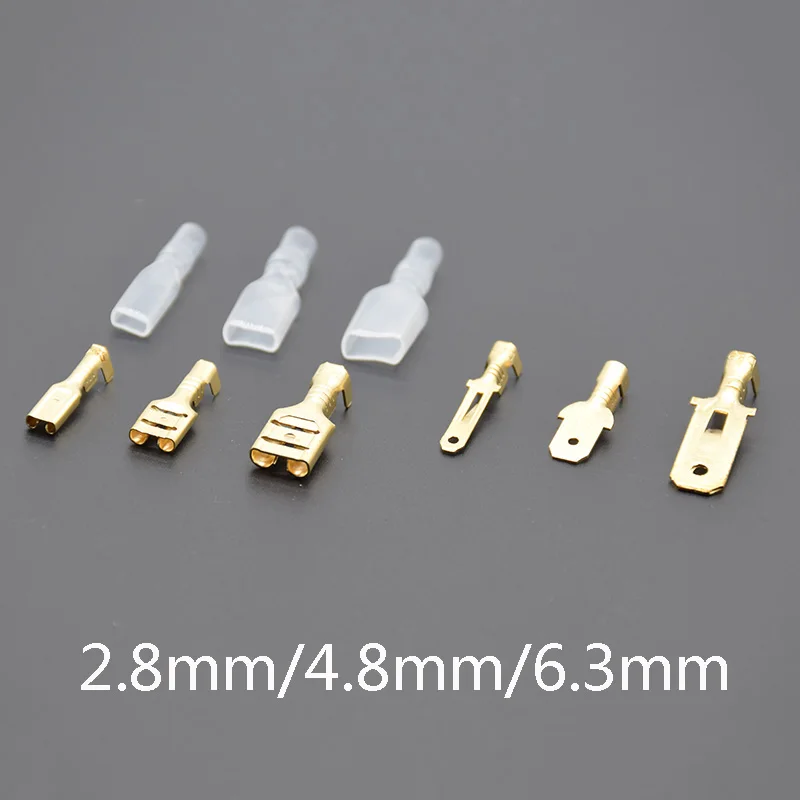
The 2.8/4.8/6.3mm Spade Crimp Terminals are essential electrical connectors designed for secure, low-resistance wire terminations in various low-voltage applications. This kit provides a critical assortment for any electrical professional or enthusiast. The product explicitly offers a selection of 2.8mm, 4.8mm, and 6.3mm spade terminals. These measurements are not arbitrary; they denote the precise width of the male tab component, which is designed to insert into a corresponding female receptacle. This dimensional variety is clearly depicted across the product imagery, showcasing distinct sizes for different connection requirements. Each size is visually distinguishable.The availability of multiple sizes is critical for ensuring a mechanically sound and electrically efficient connection. An undersized terminal, forced into a larger receptacle, will inevitably result in a loose fit. This looseness creates an air gap, increasing electrical resistance and generating heat, which can lead to premature failure or even arcing. Conversely, an oversized terminal simply cannot be inserted, rendering it useless for the intended application. Precision in sizing directly translates to optimal current flow and connection longevity. It prevents costly rework.
Many generic connector kits often provide a limited range or poorly toleranced dimensions, forcing technicians to compromise on fit. This specific offering, by contrast, provides distinct, standard sizes. This range directly addresses the common requirements found in diverse low-voltage DC and AC circuits, including automotive electrical systems, household appliances, and various industrial control panels. Proper sizing is not merely a convenience; it is a fundamental aspect of electrical safety and system reliability. This selection eliminates guesswork.
The Foundation of Conductivity: Material and Construction
The terminals appear to be constructed from brass, indicated by their consistent golden hue across all depicted sizes. Brass is a widely recognized and utilized material in the manufacturing of electrical terminals due to its inherent properties. Its composition typically includes copper and zinc, providing a balance of conductivity and mechanical strength. The visual consistency suggests a uniform manufacturing process. This material choice is fundamental.Brass offers good electrical conductivity, allowing current to pass through with minimal resistance, which is crucial for maintaining circuit efficiency and preventing excessive heat buildup. Furthermore, brass exhibits reasonable corrosion resistance, particularly in dry or moderately humid environments. This property helps to maintain the integrity of the electrical connection over time, reducing the likelihood of intermittent faults or complete circuit failure due to oxidation. It supports efficient power transfer.
Unlike many lower-grade alloys or thinly plated steel terminals found in some budget alternatives, these brass terminals provide a more reliable foundation. While not offering the superior corrosion resistance of tinned copper, they strike an excellent balance between performance, durability, and cost-effectiveness for their intended applications. They represent a practical and dependable choice for general electrical work. This is a solid material.
Securing the Circuit: Insulation and Wire Compatibility
The kit includes clear insulating sleeves, prominently featured in the product images alongside the metal terminals. These sleeves are designed to fit snugly over the crimped terminals, providing a protective barrier. The product description explicitly specifies compatibility with 22-16 AWG (0.5mm²-1.5mm²) wire, a common range for many low-current applications. This range is clearly stated.The insulating sleeves are critical for preventing accidental short circuits, which can lead to equipment damage, electrical fires, or personal injury. They also offer a degree of protection against environmental contaminants like dust and incidental moisture, which can degrade connection quality over time. Proper insulation is a safety imperative. The specified wire gauge range ensures that the terminal can be correctly crimped onto the conductor, creating both a strong mechanical bond and an efficient electrical connection. Using a wire outside this range can compromise both safety and performance. It protects the circuit.
Unlike bare terminals, which require additional insulation steps, these included sleeves offer an immediate and convenient safety barrier. This represents a significant upgrade over uninsulated options, streamlining the installation process and enhancing overall safety. The 22-16 AWG range covers a vast array of common low-current applications, from automotive accessories to small appliance repairs, making these terminals highly versatile for various projects. They simplify installation.
Installation Integrity: Achieving Reliable Crimp Connections
The terminals feature distinct wings or tabs designed specifically for crimping onto both the wire conductor and its insulation. The images clearly show the structure of both male and female spade connectors, illustrating the areas intended for mechanical deformation during the crimping process. This design is standard for spade terminals. Proper crimping is paramount.A proper crimp is not merely about holding the wire in place; it is about creating a gas-tight connection. This means the terminal material flows around the wire strands, excluding oxygen and preventing corrosion at the contact point. An incorrect or weak crimp can lead to increased electrical resistance, generating excessive heat, which can melt insulation, damage components, or even ignite surrounding materials, posing a significant fire hazard. The design facilitates a secure attachment. Achieving a mechanically strong and electrically efficient crimp is a fundamental skill for any electrician.
Unlike soldering, which can create brittle connections susceptible to vibration and fatigue, crimping provides a resilient and durable bond when executed correctly. While these terminals are designed for ease of crimping, achieving optimal results requires a dedicated crimping tool specifically designed for insulated or uninsulated terminals of this type. Using pliers or incorrect tools will compromise the connection's integrity and safety. This tool is essential.
Longevity in Service: Durability and Environmental Factors
The terminals appear robust for their relatively small size, suggesting they can withstand typical handling and installation stresses. The insulating sleeves are clear, indicating a flexible polymer material such as PVC, which offers good dielectric properties and some resistance to abrasion. The overall construction implies a reasonable service life. They are built for purpose.However, the durability of these connectors directly impacts the long-term reliability of the electrical system they serve. Environmental factors play a significant role. While the brass offers some inherent corrosion resistance, prolonged exposure to high moisture, corrosive chemicals, or extreme temperatures can degrade both the metal and the insulating sleeves over time. The clear sleeves allow for visual inspection, which is a benefit for maintenance checks. Regular inspection is advised.
While suitable for many indoor, protected, or automotive interior applications, these terminals are not inherently rated for harsh outdoor or high-vibration environments without additional protective measures. For such demanding conditions, specialized connectors with heat-shrinkable, adhesive-lined insulation or sealed enclosures would be a superior choice, offering enhanced environmental sealing and strain relief. These are ideal for internal wiring. They serve their intended environment well.
The Value Proposition: Investing in Electrical Reliability
The product is offered in practical quantities of either 50 or 100 pieces, providing flexibility for different project scales. The listed price point is exceptionally competitive, especially when considering the inclusion of multiple terminal sizes and insulating sleeves. This bulk offering presents a clear economic advantage. It offers significant savings.Stocking a variety of these essential terminals ensures that the correct connector is always readily available for immediate repair work or new electrical installations. This proactive approach prevents costly project delays, reduces downtime, and ensures continuity in electrical work. The exceptionally low cost-per-unit, particularly in the 100-piece pack, makes this an attractive option for professionals and hobbyists alike. This value framing shifts focus from the initial outlay to the long-term efficiency and convenience gained.
Compared to purchasing individual terminals from a local hardware store, which often come at a premium price, this bulk pack offers substantial cost savings. This makes it a smart investment for any technician, workshop, or individual who frequently performs electrical work. The ability to have the right part on hand, without overspending, directly contributes to project profitability and efficiency. It's a smart investment for any technician. This kit provides excellent utility.
Imagine completing electrical repairs or custom wiring projects with absolute confidence. The frustration of loose connections or unreliable power delivery becomes a distant memory. Each crimp feels secure, each circuit operates flawlessly, and the peace of mind from knowing your electrical work is sound is invaluable. This kit empowers precise, durable connections, ensuring your systems run safely and efficiently for years to come.