SRD Series 5-Pin Power Relays (3V-48V, 10A)
Official Store Deal
Expert Analysis Overview
Operational Core and Structural Integrity
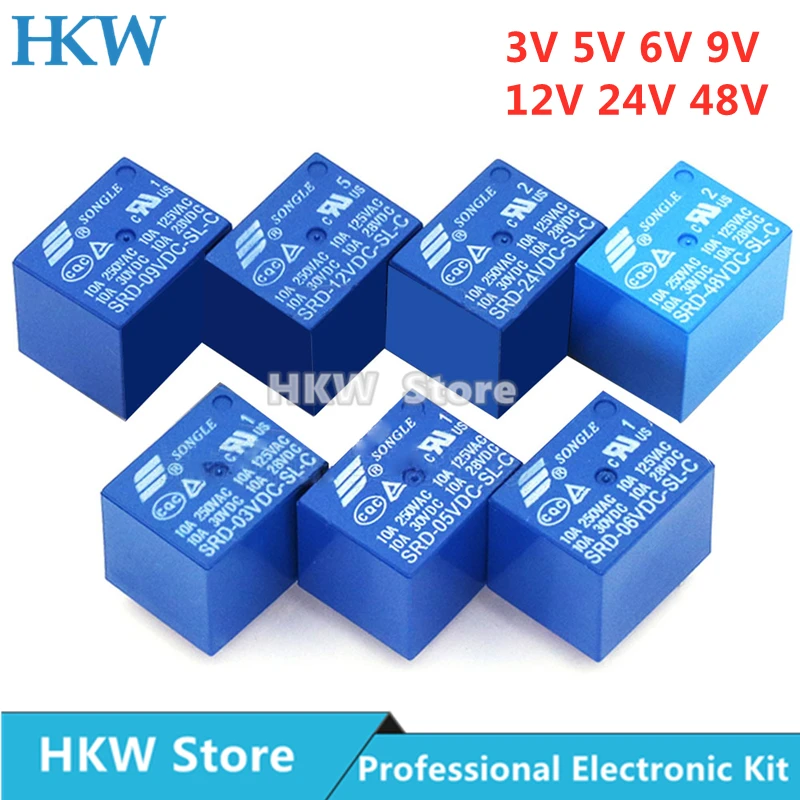
The SRD series of 5-pin power relays represents a foundational, cost-effective solution for switching moderate power loads in various electronic circuits. These components are critical for isolating control circuits from power circuits, a fundamental principle in robust electronic design. The visible blue plastic casing suggests a standard industrial aesthetic, common for electromechanical relays of this type.Each relay features a compact, cube-like form factor, designed for efficient integration onto printed circuit boards (PCBs). The five pins are clearly visible, indicating a standard single-pole, double-throw (SPDT) configuration. This allows for both normally open (NO) and normally closed (NC) contact options, providing flexibility in circuit design.
Compared to more complex integrated switching solutions, these individual relays offer a straightforward, repairable component. Their discrete nature simplifies troubleshooting in a system. This modularity is a distinct advantage for maintenance.
Switching Capabilities Across Diverse Loads
This collection offers a wide range of coil activation voltages, including 3V, 5V, 6V, 9V, 12V, 24V, and 48V. This extensive selection ensures compatibility with nearly any common low-voltage control system, from microcontroller-based projects to industrial control panels. The specific coil voltage is clearly marked on each unit, preventing installation errors.The contact rating of 10A at 250VAC signifies a substantial switching capability for AC loads. This allows the relays to manage typical household appliances, lighting circuits, or small motor controls without requiring additional power stages. The robust current handling capacity is a key specification.
Unlike many smaller signal relays, these units are engineered for power switching. Their ability to handle 10 amperes means they can reliably control devices that draw significant current, making them suitable for applications where direct microcontroller output would be insufficient or unsafe. This capability extends their utility considerably.
Integrating into Electronic Ecosystems
These relays are frequently employed in scenarios requiring isolation between a low-voltage control signal and a higher-voltage or higher-current load. For instance, a 5V microcontroller can safely switch a 230V AC appliance using one of these relays. This isolation protects sensitive control electronics from power spikes and noise.In home automation projects, these relays are indispensable for controlling lights, fans, or smart outlets. Their electromechanical action provides clear audible feedback when switching, which can be useful for diagnostics. They are simple to integrate.
Compared to solid-state relays (SSRs), these electromechanical relays offer true galvanic isolation and typically lower 'on' resistance, which can be advantageous in certain high-current DC applications or where zero-cross switching is not strictly required. The mechanical contacts ensure a clean break.
Durability and Connection Integrity
The visible pin structure indicates through-hole mounting, which provides a mechanically strong connection to a PCB. Proper soldering techniques ensure a reliable electrical and physical bond. The pins are robust enough to withstand typical handling during assembly.Long-term reliability of connections is paramount in any electronic assembly. The substantial pin diameter visible in the images suggests good mechanical stability once soldered. This reduces the risk of intermittent connections due to vibration or thermal cycling.
Unlike surface-mount components that rely on smaller solder pads, through-hole relays offer superior mechanical anchoring. This makes them particularly well-suited for applications where the relay might experience physical stress or where ease of replacement is a factor. They are built to last.
Repair and Maintenance Utility
For electronics repair technicians, having a stock of these common SRD series relays is essential. They are frequently found in consumer electronics, automotive control modules, and industrial equipment. Replacing a faulty relay can often revive an expensive piece of equipment at a fraction of the cost of a new board.The affordability of these components makes them an attractive option for both repair and prototyping. Engineers can experiment with different switching configurations without incurring significant material costs. This low barrier to entry encourages innovation.
Unlike proprietary or custom-designed switching modules, these standard relays are widely available and interchangeable. This ensures that repairs can be performed using readily accessible parts, extending the lifespan of devices and reducing electronic waste. Their widespread use is a benefit.
Signal Purity and Noise Mitigation
Electromechanical relays inherently provide excellent isolation between the control circuit and the load circuit. This physical separation prevents electrical noise from the load side from interfering with sensitive control electronics. A clean signal path is maintained.In environments with significant electromagnetic interference (EMI), the physical air gap in an open relay contact offers superior noise immunity compared to semiconductor switches. This makes them a preferred choice in certain industrial control applications. They offer robust performance.
Compared to semiconductor-based switches that can generate their own switching noise or suffer from leakage currents, electromechanical relays offer a definitive open or closed state. This characteristic is crucial for applications where absolute isolation or zero leakage is required. The switching action is precise.
Installation and Compatibility Considerations
Installation typically involves soldering the relay onto a PCB. Careful attention to pin orientation and proper soldering temperatures is necessary to ensure optimal performance and longevity. The clear pinout markings on the relay body assist in correct placement. This simplifies assembly.These relays are compatible with a vast array of microcontrollers, including Arduino, ESP32, Raspberry Pi, and other development boards. A simple transistor driver circuit is usually sufficient to interface the microcontroller's low-current output with the relay's coil. This broad compatibility makes them highly versatile.
Unlike integrated relay modules that include driver circuitry, these bare relays offer maximum flexibility for custom circuit design. Users can choose their preferred driver components and protection diodes, tailoring the circuit to specific application requirements. This allows for customization.
Imagine the satisfaction of restoring a critical appliance or completing a complex automation project with reliable, cost-effective components. These relays provide the foundational switching capability needed to bring your electronic designs and repairs to life, ensuring stable operation and extending the utility of your devices.