Stainless Steel Precision Shims
Official Store Deal
Expert Analysis Overview
The Unseen Foundation of Mechanical Integrity
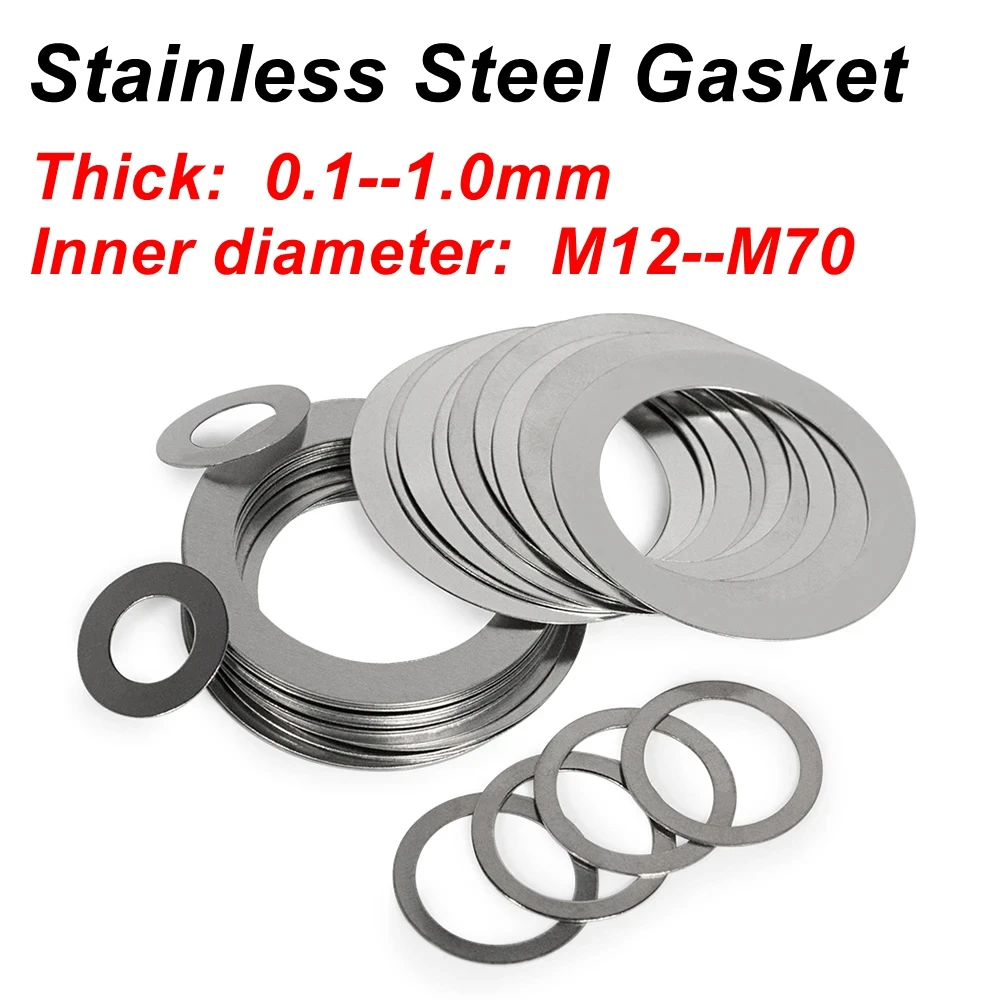
The Stainless Steel Precision Shim is a critical component for maintaining exacting tolerances in mechanical assemblies, often overlooked but vital for the longevity and reliability of complex systems. This product is designed for professionals who demand meticulous control over clearances and spacing, particularly in applications where standard washers fall short. Its primary function is to eliminate play, reduce friction, and ensure components operate within their intended parameters, directly contributing to the overall robustness of any mechanical setup. The inherent properties of stainless steel, combined with the ultra-thin, high-precision manufacturing, position these shims as an essential element for preventing premature wear and system failure.These shims are not merely spacers; they are precision instruments. The visual evidence confirms a range of thicknesses from 0.1mm to 1.0mm, with inner diameters spanning M12 to M70. This broad spectrum of dimensions allows for an incredibly fine degree of adjustment, a capability that generic hardware cannot match. The material, stainless steel, immediately signals superior resistance to corrosion and enhanced durability compared to standard carbon steel or softer metals. This choice of material is non-negotiable for environments exposed to moisture, chemicals, or extreme temperatures, where material degradation could compromise the integrity of the entire assembly. The flat washer design ensures an even distribution of load, preventing localized stress points that could lead to material fatigue or deformation over time. Precision is paramount.
Unlike typical stamped washers that often exhibit inconsistent thickness and rough edges, these shims are engineered for uniformity. The manufacturing process for such ultra-thin, high-precision components involves advanced techniques like laser cutting or fine blanking, ensuring each shim meets stringent dimensional accuracy. This level of consistency is crucial for applications such as axle bearings, where even a slight deviation in spacing can lead to misalignment, increased friction, and ultimately, catastrophic failure. For locksmiths and security professionals, this translates to the ability to precisely fit components within locking mechanisms, door frames, or safe construction, ensuring smooth operation and preventing vulnerabilities that arise from loose or ill-fitting parts. The difference is tangible.
Engineering for Endurance: Material and Build Quality
The selection of stainless steel for these shims is a deliberate choice, prioritizing long-term performance and resistance to environmental stressors. Stainless steel alloys, particularly those commonly used for precision hardware, offer excellent resistance to rust, oxidation, and various corrosive agents. This characteristic is indispensable in outdoor installations, marine environments, or industrial settings where exposure to harsh elements is a constant. The material's inherent hardness also contributes to its wear resistance, allowing the shims to maintain their precise thickness and structural integrity even under repetitive compressive loads. This material choice is a significant upgrade.In a scenario where a security gate mechanism or an access control system relies on precisely aligned moving parts, the durability of internal components like shims directly impacts the system's operational lifespan and reliability. A shim that corrodes or deforms prematurely can introduce play into the system, leading to increased wear on more expensive components, compromised functionality, or even complete system failure. The stainless steel construction mitigates these risks, ensuring that the foundational spacing remains consistent throughout the operational life of the equipment. This prevents costly downtime and maintenance. It is a smart investment.
Compared to shims made from softer metals like brass or aluminum, or even lower-grade steel, these stainless steel variants offer a superior strength-to-weight ratio and significantly enhanced resistance to deformation under pressure. While brass shims might be preferred for non-sparking applications, and aluminum for weight reduction, neither offers the same combination of corrosion resistance and mechanical strength as stainless steel for general precision spacing. This makes them a more robust and reliable option for critical applications where structural integrity and longevity are paramount. The material stands up to scrutiny.
The Critical Role in Precision Assemblies
The application of these ultra-thin, high-precision shims extends across a multitude of mechanical and security-related fields. In automotive or industrial machinery, they are indispensable for adjusting clearances in gearboxes, differentials, and axle bearings, ensuring optimal meshing and reducing backlash. This precision directly translates to smoother operation, reduced noise, and significantly extended component life. The ability to fine-tune these clearances prevents premature wear on expensive bearings and gears, offering a substantial return on investment through reduced maintenance and replacement costs. Every millimeter counts.For security professionals, these shims can be instrumental in the installation and maintenance of high-security locking mechanisms, safe doors, and reinforced entry points. Achieving precise alignment of strike plates, hinges, and locking bolts is crucial for preventing vulnerabilities that could be exploited during a forced entry attempt. A door that sags due to worn hinges, or a lock mechanism with excessive play, presents a significant security risk. These shims provide the means to correct such issues, restoring the structural integrity and operational precision of security hardware. They enhance overall security.
In contrast to relying on trial-and-error with generic washers or attempting to compensate for manufacturing imperfections with less precise methods, these specialized shims offer a systematic and reliable solution. The availability of multiple thicknesses allows for incremental adjustments, ensuring that the desired tolerance is met with accuracy. This level of control is not merely a convenience; it is a necessity for achieving optimal performance and durability in any mechanical system where precision is a design requirement. The exact fit is achievable.
Operational Reliability and Longevity
The high precision of these shims directly impacts the operational reliability of any assembly they are part of. When components are spaced correctly, friction is minimized, heat generation is reduced, and the load is distributed evenly. This creates an environment where mechanical parts can perform at their peak efficiency for longer periods, delaying the onset of wear and fatigue. For critical infrastructure or continuous operation machinery, this translates to fewer breakdowns and more consistent performance. Reliability is key.Consider a scenario in a high-traffic access control system where door closers and hinges are constantly under stress. Over time, wear can introduce slight misalignments, causing doors to bind or not close properly, compromising security. Utilizing these precision shims during installation or maintenance allows for the exact adjustment of hinge pins or closer mounting plates, ensuring smooth, consistent operation and proper sealing. This proactive approach to precision maintenance significantly extends the lifespan of expensive door hardware and maintains the intended level of security. It saves money over time.
This product offers a distinct advantage over makeshift solutions or relying on components that are