Stainless Steel Self-Drilling Truss Head Screw Assortment
Official Store Deal
Expert Analysis Overview
The Enduring Fastener: Stainless Steel Self-Drilling Truss Head Screws
The Stainless Steel Self-Drilling Truss Head Screw Assortment is a practical and resilient fastening solution, particularly well-suited for restoration specialists and general contractors seeking robust, efficient, and corrosion-resistant Hardware. These fasteners are engineered for rapid deployment across various materials, offering a significant advantage where structural integrity and longevity are paramount. The inclusion of SUS 410 stainless steel positions this kit as a durable choice against the relentless march of corrosion, a common foe in preservation and new construction alike.
Material Science for Lasting Repairs
The core strength of these screws lies in their SUS 410 stainless steel composition. This martensitic stainless steel offers a commendable balance of hardness and corrosion resistance, making it a distinct upgrade from standard carbon steel fasteners. Unlike common steel screws that succumb quickly to rust and degradation, especially in damp or fluctuating environments, SUS 410 provides a reliable barrier. This material choice ensures that critical connections, whether in a century-old structure's hidden framing or a newly renovated utility space, maintain their integrity for extended periods.
Consider a historical building undergoing restoration. The existing fasteners might be heavily corroded, their structural capacity compromised. Replacing these with traditional steel screws only delays the inevitable return of rust. However, introducing SUS 410 stainless steel fasteners into non-visible structural applications offers a significant upgrade. The material's inherent resistance to oxidation means it will not readily pit or weaken, preserving the structural connections that support the building's historical elements.
Compared to softer stainless steel grades like 304, SUS 410 can be heat-treated to achieve higher hardness, which is crucial for its self-drilling capabilities. This enhanced hardness allows the screw to effectively cut through metal without deforming its tip. While 304 or 316 stainless steels offer superior corrosion resistance, particularly in highly saline or acidic environments, 410 strikes a balance, providing ample protection for most indoor and moderately exposed outdoor applications without the higher cost or reduced hardness of its austenitic counterparts. Its magnetic properties, unlike 304/316, also make it easier to pick up with magnetic tools, a small but appreciated convenience on a busy job site.
The Efficiency of Self-Drilling Design
A defining characteristic of these fasteners is their self-drilling point. This innovative design integrates a drill bit directly into the screw tip, eliminating the need for pre-drilling pilot holes in many applications. This feature is not merely a convenience; it represents a substantial time-saving mechanism on any project, particularly when working with repetitive fastening tasks.
Picture a restoration crew working to secure new framing or backing material behind historic plasterwork. Each traditional screw would require a separate drilling step, followed by the insertion and driving of the fastener. This two-step process, multiplied across dozens or hundreds of screws, accumulates into significant labor time. With self-drilling screws, the process becomes a single, fluid action: position the screw, apply pressure, and drive. The image shows these screws can penetrate 2.5mm steel plate in approximately 3 seconds and easily pass through 4mm steel pipe. This speed translates directly into reduced project timelines and labor costs, allowing more focus on the intricate, time-consuming details of historical preservation.
In contrast to conventional screws that demand a precise pilot hole to avoid material splitting or fastener breakage, these self-drilling variants offer greater forgiveness. The integrated drill point creates its own pathway, reducing the likelihood of errors and material damage. For instance, when attaching sheet metal to a wooden frame, a standard screw might wander or split the wood if the pilot hole is misaligned or absent. The self-drilling tip, however, guides itself, ensuring a straighter, more secure fastening. This is a critical advantage when working with delicate or aged materials where minimizing stress and potential damage is paramount. The efficiency gain is undeniable, making the installation process far smoother and more reliable.
The Broad Bearing of a Truss Head
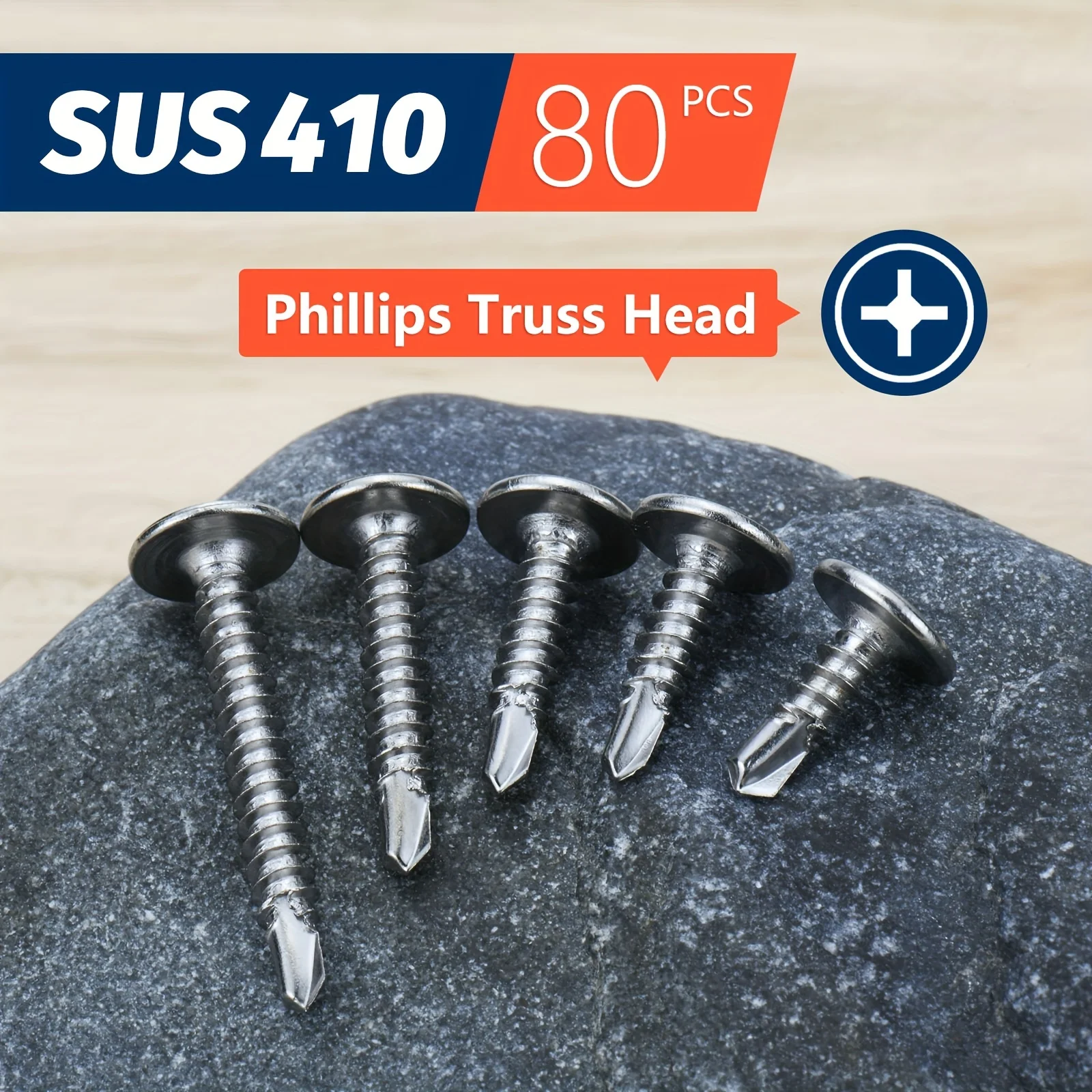
The Phillips truss head design further enhances the utility of this screw assortment. A truss head is characterized by its broad, low-profile, and slightly domed shape, offering a larger bearing surface compared to standard pan or flat heads. This wider surface area distributes the clamping force over a greater region of the material, which is particularly beneficial when working with softer materials like wood, plastic, or thin sheet metal.
Imagine fastening a delicate piece of trim or a thin metal flashing during a repair. A smaller head might concentrate pressure too intensely, potentially crushing or deforming the material around the fastener. The truss head, by spreading this load, significantly reduces the risk of such damage. It also provides a more secure hold, resisting pull-through in applications where the material might be prone to tearing. The Phillips drive, a common and easily accessible drive type, ensures broad compatibility with existing tools, a practical consideration for any toolbox. This head type, while not necessarily period-accurate for exposed use in a historical context, is invaluable for hidden structural work or when securing components that are later covered, where its functional advantages outweigh aesthetic considerations.
Compared to a pan head screw, which has a more cylindrical side and a slightly smaller bearing surface, the truss head's flatter, wider profile offers superior resistance to pull-through. This makes it ideal for securing ceiling tiles, wall panels, or any material where a large, stable clamping surface is desired without a protruding head. The low profile also ensures that the fastener remains unobtrusive, a crucial factor when installing components that need to sit flush or be easily concealed. This design minimizes material distortion, ensuring a cleaner finish and a stronger, more reliable joint. Its utility in securing thin or composite materials without causing damage is a significant benefit in diverse construction and restoration scenarios.
A Comprehensive Assortment for Varied Needs
This assortment kit includes 80 pieces across five common sizes: #8 x 1-1/4