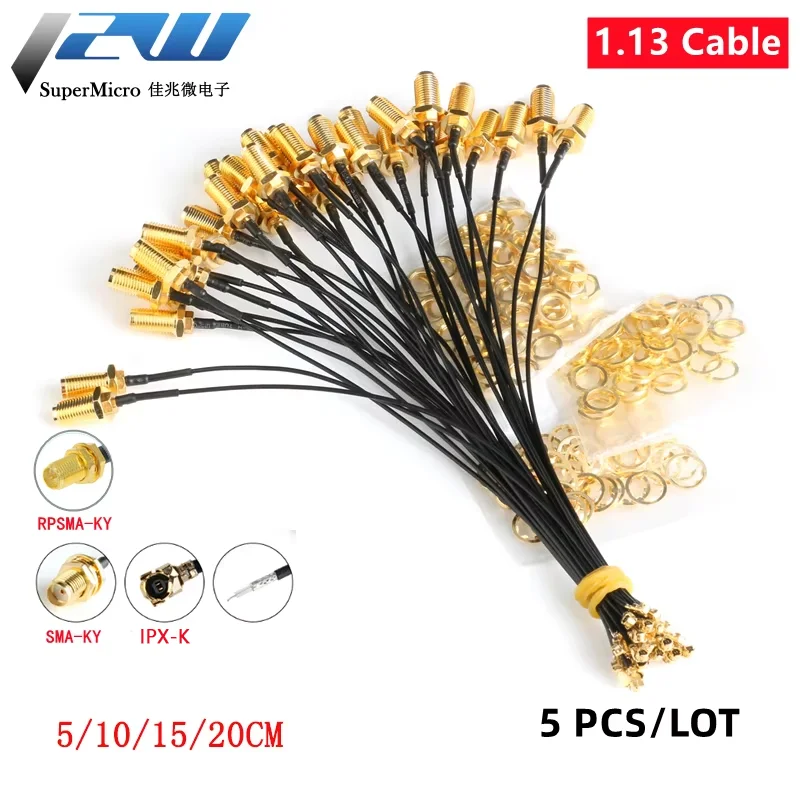
SuperMicro RF113 Coaxial Adapter Pigtail Cables
Official Store Deal
Expert Analysis Overview
The SuperMicro RF113 Coaxial Adapter Pigtail Cables are an essential, high-utility component for electronics technicians and hobbyists requiring reliable RF signal routing in compact enclosures. These assemblies bridge the gap between common PCB-mounted IPX/U.FL connectors and the more robust, external SMA or RP-SMA antenna ports. This capability is critical for repairing, upgrading, or custom-building devices where space is at a premium and signal integrity cannot be compromised. The choice of RF113 cable, known for its consistent 50-ohm impedance, ensures that radio frequency signals transmit with minimal reflection and loss, a fundamental requirement for optimal wireless performance.
These pigtail cables are designed with a specific purpose: to provide a stable, low-loss connection for radio frequency signals. The primary function involves adapting from a miniature IPX/U.FL connector, commonly found on Wi-Fi modules, Bluetooth transceivers, and GPS receivers embedded on circuit Boards, to a standard SMA or RP-SMA connector. This allows for the attachment of external antennas, which often offer superior gain and placement flexibility compared to integrated PCB antennas. The gold plating on the connectors is not merely aesthetic; it significantly enhances conductivity and provides robust corrosion resistance, crucial for maintaining signal quality over the operational lifespan of the device.
Imagine upgrading a drone's stock Wi-Fi antenna for extended range. Without a reliable pigtail, this upgrade becomes impossible. The 5-piece lot offers excellent value.
Compared to generic, unbranded pigtails that often use inferior cable jackets and plating, these SuperMicro assemblies feature the RF113 cable, known for its consistent impedance and robust insulation. This ensures a more predictable and stable RF link, which is paramount in sensitive wireless applications. The precise machining of the connectors, particularly the SMA outer screw with inner pin, guarantees a secure and repeatable connection, minimizing the risk of intermittent signal drops that plague lesser quality alternatives.
The core of these adapter cables is the 1.13mm RF113 coaxial cable. This ultra-thin cable is specifically engineered for flexibility and minimal space requirements, making it ideal for routing within tight enclosures. While its thin profile aids in installation, it also demands careful handling to prevent damage to the internal conductor or shield. The cable's 50-ohm impedance is a standard for most RF communication systems, ensuring compatibility with a vast array of antennas and transceivers. Any mismatch in impedance can lead to signal reflections, quantified by Voltage Standing Wave Ratio (VSWR), which reduces effective radiated power and can degrade wireless performance.
When integrated into a compact IoT sensor, for instance, the cable's consistent impedance ensures that the low-power radio signal reaches the external antenna efficiently. This directly translates to improved range and reliability for the sensor. The cable's construction, while thin, is designed to maintain its electrical characteristics even when bent within reasonable limits, a common necessity in crowded device interiors.
Unlike thicker RG-series coaxial cables, the 1.13mm RF113 is not intended for high-power transmission or extremely long runs where signal loss would become prohibitive. Its strength lies in short-distance, internal connections where space and flexibility are paramount. This specialization allows it to excel in its intended role, providing a critical link without adding bulk or rigidity to the system. The cable jacket feels smooth and pliable.
The connectors themselves are a critical aspect of overall reliability. The SMA (SubMiniature A) connector is a widely adopted standard for RF connections, known for its threaded coupling mechanism that provides a secure and vibration-resistant connection. The RP-SMA-KY variant, specifically mentioned, indicates a reverse polarity configuration, which is common in many Wi-Fi devices. The IPX/U.FL connector, on the other hand, is a miniature snap-on type, designed for quick assembly and disassembly on PCBs. Its small footprint is invaluable in miniaturized electronics.
During repeated connections and disconnections, the gold plating on both connector types significantly reduces wear and tear on the contact surfaces. This resistance to oxidation and abrasion ensures that the electrical contact remains clean and stable over time, preventing intermittent signal issues that can be notoriously difficult to diagnose. The tactile feedback of the IPX/U.FL snapping into place provides confidence in the connection.
While the IPX/U.FL connector offers convenience and a small form factor, it is inherently less mechanically robust than a threaded SMA connector. This is a deliberate design trade-off for miniaturization. Technicians must exercise care when mating and unmating these connectors to avoid bending the delicate center pin or damaging the receptacle on the PCB. The SMA side, with its brass construction and threaded collar, offers a much higher degree of mechanical stability, capable of withstanding more physical stress.
Proper installation of these pigtail cables is crucial for optimal performance and longevity. When connecting the IPX/U.FL end, precise alignment is key. The connector should be gently pressed straight down onto the mating receptacle until a distinct click is felt, indicating a secure connection. Twisting or applying uneven pressure can damage the delicate contacts. For the SMA/RP-SMA end, the threaded collar should be finger-tightened first, then gently snugged with a wrench if necessary, taking care not to overtighten, which can strip the threads or damage the internal conductor.
Routing the 1.13mm cable within a device requires attention to detail. While flexible, sharp bends should be avoided as they can compromise the cable's internal structure and lead to increased signal loss. Using small cable ties or adhesive clips to secure the cable can prevent strain on the connectors and ensure that the cable does not interfere with other components or moving parts within the enclosure. Proper cable management extends the life of the assembly.
Compared to soldering a direct wire, which introduces variables like solder joint quality and impedance matching, these pre-assembled pigtails offer a standardized and reliable solution. They eliminate the need for specialized tools for coaxial cable termination, making repairs and modifications more accessible and consistent. This pre-fabricated nature significantly reduces assembly time and the potential for human error in critical RF paths.
The versatility of these IPX to SMA/RP-SMA pigtail cables extends across a wide spectrum of electronic devices. They are indispensable for repairing damaged Wi-Fi antennas in laptops, tablets, or embedded systems. For hobbyists, they enable the integration of external antennas onto single-board computers like Raspberry Pi or ESP32 development boards, enhancing wireless range and stability for IoT projects. Drone enthusiasts frequently use these cables to upgrade or replace antennas for improved signal reception and control.
Picture a scenario where a technician needs to replace a faulty Wi-Fi module in a compact industrial controller. The new module has an IPX connector, but the enclosure requires an external SMA antenna. These pigtails provide the exact interface needed, allowing for a quick and efficient repair without extensive modifications to the casing or the need for custom cable fabrication. The various lengths available (5cm, 10cm, 15cm, 20cm) ensure a suitable fit for almost any enclosure size.
This type of adapter cable is a staple in any electronics repair kit, offering a ready solution for common RF connectivity challenges. Its availability in a multi-pack further enhances its utility, providing spares for future projects or for cases where a cable might be accidentally damaged during installation. The cost-effectiveness of these components makes them an attractive alternative to replacing entire modules or seeking specialized, often expensive, custom cable solutions.
SuperMicro, as a brand, positions itself in the market by offering components that meet specific technical requirements at a competitive price point. This 5-piece lot of RF113 pigtail cables exemplifies that approach. The combination of a reliable cable type, gold-plated connectors, and multiple length options provides significant value for professionals and enthusiasts alike. The ability to source these specialized components readily ensures that projects and repairs are not delayed due to lack of specific interconnects.
For a technician, having a stock of these cables means being prepared for a range of common repairs, from consumer electronics to industrial equipment. The consistent quality across the batch ensures that performance is predictable, reducing the need for extensive testing and troubleshooting after installation. This reliability translates directly into saved time and increased efficiency in the workshop.
Unlike purchasing individual, often more expensive, pigtails from specialized electronics distributors, this multi-pack offers a more economical solution for those with ongoing needs. The focus on standardized connector types and cable specifications means these components integrate seamlessly into existing ecosystems, requiring no proprietary tools or complex configurations. This ease of integration is a significant advantage in a field where compatibility can often be a hurdle.
These SuperMicro RF113 Coaxial Adapter Pigtail Cables are a fundamental component for anyone working with modern wireless electronics. They provide the necessary bridge between miniature PCB-mounted RF modules and external antennas, ensuring signal integrity and mechanical stability in compact designs. Their gold-plated connectors and consistent 50-ohm impedance cable make them a reliable choice for repairs, upgrades, and new builds. While the delicate nature of the 1.13mm cable and IPX/U.FL connector demands careful handling, these are inherent trade-offs for miniaturization and flexibility. The overall value offered by this 5-piece lot makes it an indispensable addition to any electronics workbench.
Imagine completing your latest IoT project, knowing that the wireless communication is rock-solid thanks to these precise interconnects. Picture effortlessly replacing a damaged Wi-Fi antenna in a client's device, restoring full functionality with confidence. These cables empower reliable connections, project after project.
Precision Interconnects for RF Systems
These pigtail cables are designed with a specific purpose: to provide a stable, low-loss connection for radio frequency signals. The primary function involves adapting from a miniature IPX/U.FL connector, commonly found on Wi-Fi modules, Bluetooth transceivers, and GPS receivers embedded on circuit Boards, to a standard SMA or RP-SMA connector. This allows for the attachment of external antennas, which often offer superior gain and placement flexibility compared to integrated PCB antennas. The gold plating on the connectors is not merely aesthetic; it significantly enhances conductivity and provides robust corrosion resistance, crucial for maintaining signal quality over the operational lifespan of the device.
Imagine upgrading a drone's stock Wi-Fi antenna for extended range. Without a reliable pigtail, this upgrade becomes impossible. The 5-piece lot offers excellent value.
Compared to generic, unbranded pigtails that often use inferior cable jackets and plating, these SuperMicro assemblies feature the RF113 cable, known for its consistent impedance and robust insulation. This ensures a more predictable and stable RF link, which is paramount in sensitive wireless applications. The precise machining of the connectors, particularly the SMA outer screw with inner pin, guarantees a secure and repeatable connection, minimizing the risk of intermittent signal drops that plague lesser quality alternatives.
Engineering for Signal Integrity
The core of these adapter cables is the 1.13mm RF113 coaxial cable. This ultra-thin cable is specifically engineered for flexibility and minimal space requirements, making it ideal for routing within tight enclosures. While its thin profile aids in installation, it also demands careful handling to prevent damage to the internal conductor or shield. The cable's 50-ohm impedance is a standard for most RF communication systems, ensuring compatibility with a vast array of antennas and transceivers. Any mismatch in impedance can lead to signal reflections, quantified by Voltage Standing Wave Ratio (VSWR), which reduces effective radiated power and can degrade wireless performance.
When integrated into a compact IoT sensor, for instance, the cable's consistent impedance ensures that the low-power radio signal reaches the external antenna efficiently. This directly translates to improved range and reliability for the sensor. The cable's construction, while thin, is designed to maintain its electrical characteristics even when bent within reasonable limits, a common necessity in crowded device interiors.
Unlike thicker RG-series coaxial cables, the 1.13mm RF113 is not intended for high-power transmission or extremely long runs where signal loss would become prohibitive. Its strength lies in short-distance, internal connections where space and flexibility are paramount. This specialization allows it to excel in its intended role, providing a critical link without adding bulk or rigidity to the system. The cable jacket feels smooth and pliable.
Durability in Miniature Form
The connectors themselves are a critical aspect of overall reliability. The SMA (SubMiniature A) connector is a widely adopted standard for RF connections, known for its threaded coupling mechanism that provides a secure and vibration-resistant connection. The RP-SMA-KY variant, specifically mentioned, indicates a reverse polarity configuration, which is common in many Wi-Fi devices. The IPX/U.FL connector, on the other hand, is a miniature snap-on type, designed for quick assembly and disassembly on PCBs. Its small footprint is invaluable in miniaturized electronics.
During repeated connections and disconnections, the gold plating on both connector types significantly reduces wear and tear on the contact surfaces. This resistance to oxidation and abrasion ensures that the electrical contact remains clean and stable over time, preventing intermittent signal issues that can be notoriously difficult to diagnose. The tactile feedback of the IPX/U.FL snapping into place provides confidence in the connection.
While the IPX/U.FL connector offers convenience and a small form factor, it is inherently less mechanically robust than a threaded SMA connector. This is a deliberate design trade-off for miniaturization. Technicians must exercise care when mating and unmating these connectors to avoid bending the delicate center pin or damaging the receptacle on the PCB. The SMA side, with its brass construction and threaded collar, offers a much higher degree of mechanical stability, capable of withstanding more physical stress.
Installation and Integration Considerations
Proper installation of these pigtail cables is crucial for optimal performance and longevity. When connecting the IPX/U.FL end, precise alignment is key. The connector should be gently pressed straight down onto the mating receptacle until a distinct click is felt, indicating a secure connection. Twisting or applying uneven pressure can damage the delicate contacts. For the SMA/RP-SMA end, the threaded collar should be finger-tightened first, then gently snugged with a wrench if necessary, taking care not to overtighten, which can strip the threads or damage the internal conductor.
Routing the 1.13mm cable within a device requires attention to detail. While flexible, sharp bends should be avoided as they can compromise the cable's internal structure and lead to increased signal loss. Using small cable ties or adhesive clips to secure the cable can prevent strain on the connectors and ensure that the cable does not interfere with other components or moving parts within the enclosure. Proper cable management extends the life of the assembly.
Compared to soldering a direct wire, which introduces variables like solder joint quality and impedance matching, these pre-assembled pigtails offer a standardized and reliable solution. They eliminate the need for specialized tools for coaxial cable termination, making repairs and modifications more accessible and consistent. This pre-fabricated nature significantly reduces assembly time and the potential for human error in critical RF paths.
Beyond the Bench: Real-World Applications
The versatility of these IPX to SMA/RP-SMA pigtail cables extends across a wide spectrum of electronic devices. They are indispensable for repairing damaged Wi-Fi antennas in laptops, tablets, or embedded systems. For hobbyists, they enable the integration of external antennas onto single-board computers like Raspberry Pi or ESP32 development boards, enhancing wireless range and stability for IoT projects. Drone enthusiasts frequently use these cables to upgrade or replace antennas for improved signal reception and control.
Picture a scenario where a technician needs to replace a faulty Wi-Fi module in a compact industrial controller. The new module has an IPX connector, but the enclosure requires an external SMA antenna. These pigtails provide the exact interface needed, allowing for a quick and efficient repair without extensive modifications to the casing or the need for custom cable fabrication. The various lengths available (5cm, 10cm, 15cm, 20cm) ensure a suitable fit for almost any enclosure size.
This type of adapter cable is a staple in any electronics repair kit, offering a ready solution for common RF connectivity challenges. Its availability in a multi-pack further enhances its utility, providing spares for future projects or for cases where a cable might be accidentally damaged during installation. The cost-effectiveness of these components makes them an attractive alternative to replacing entire modules or seeking specialized, often expensive, custom cable solutions.
The SuperMicro Advantage: Value and Versatility
SuperMicro, as a brand, positions itself in the market by offering components that meet specific technical requirements at a competitive price point. This 5-piece lot of RF113 pigtail cables exemplifies that approach. The combination of a reliable cable type, gold-plated connectors, and multiple length options provides significant value for professionals and enthusiasts alike. The ability to source these specialized components readily ensures that projects and repairs are not delayed due to lack of specific interconnects.
For a technician, having a stock of these cables means being prepared for a range of common repairs, from consumer electronics to industrial equipment. The consistent quality across the batch ensures that performance is predictable, reducing the need for extensive testing and troubleshooting after installation. This reliability translates directly into saved time and increased efficiency in the workshop.
Unlike purchasing individual, often more expensive, pigtails from specialized electronics distributors, this multi-pack offers a more economical solution for those with ongoing needs. The focus on standardized connector types and cable specifications means these components integrate seamlessly into existing ecosystems, requiring no proprietary tools or complex configurations. This ease of integration is a significant advantage in a field where compatibility can often be a hurdle.
Final Assessment: A Critical Link
These SuperMicro RF113 Coaxial Adapter Pigtail Cables are a fundamental component for anyone working with modern wireless electronics. They provide the necessary bridge between miniature PCB-mounted RF modules and external antennas, ensuring signal integrity and mechanical stability in compact designs. Their gold-plated connectors and consistent 50-ohm impedance cable make them a reliable choice for repairs, upgrades, and new builds. While the delicate nature of the 1.13mm cable and IPX/U.FL connector demands careful handling, these are inherent trade-offs for miniaturization and flexibility. The overall value offered by this 5-piece lot makes it an indispensable addition to any electronics workbench.
Imagine completing your latest IoT project, knowing that the wireless communication is rock-solid thanks to these precise interconnects. Picture effortlessly replacing a damaged Wi-Fi antenna in a client's device, restoring full functionality with confidence. These cables empower reliable connections, project after project.