T-Tap Quick Splice Wire Connectors (22-20 AWG)
Official Store Deal
Expert Analysis Overview
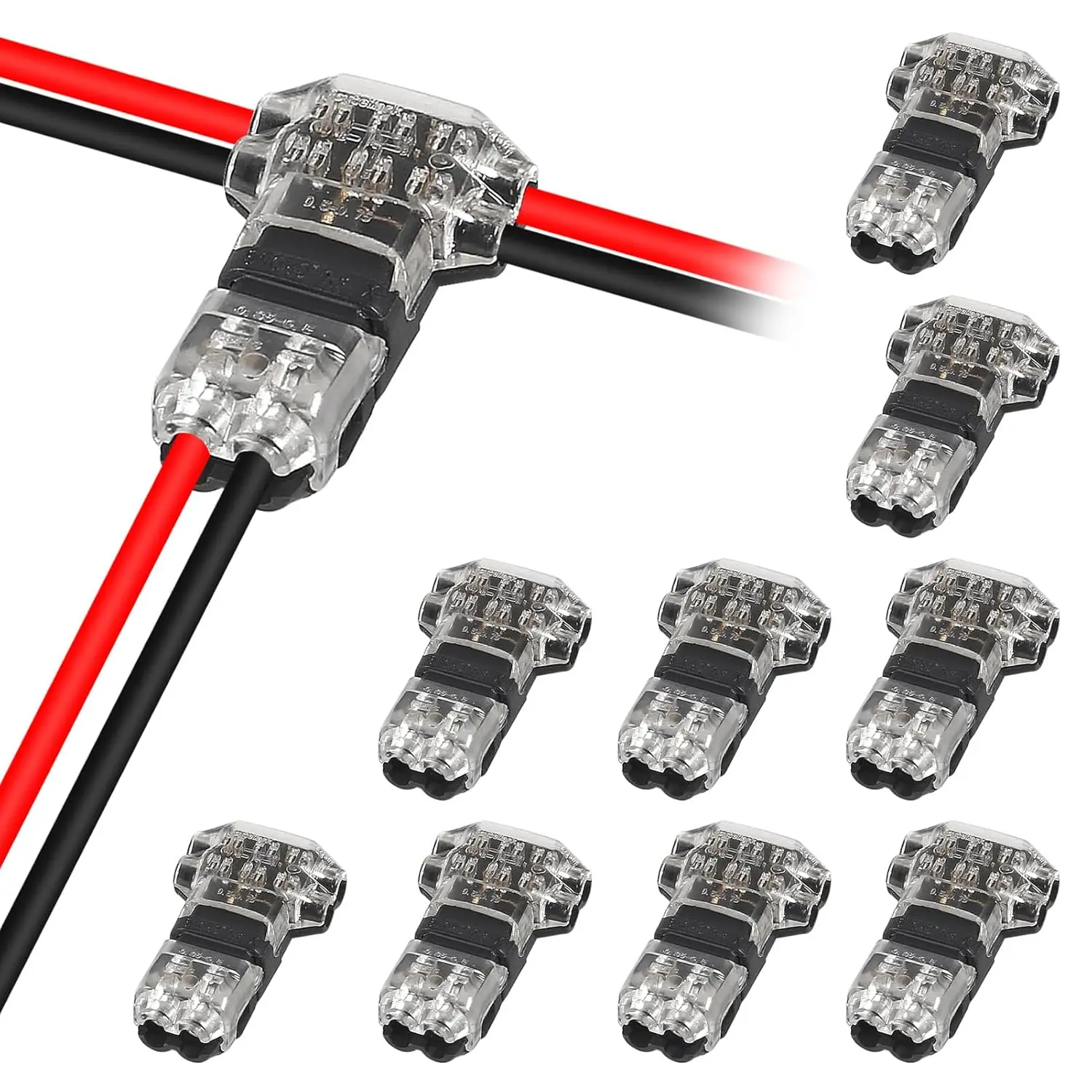
The T-Tap Quick Splice Wire Connectors are a pragmatic low-voltage solution engineered for rapid, solderless, and strip-free wire tapping, primarily targeting automotive, LED lighting, and small-scale DIY electrical projects. These connectors address the common frustration of time-consuming traditional wire splicing methods, offering a streamlined approach to creating branch circuits. Their design prioritizes ease of use and a secure electrical connection, making them a valuable addition to any low-voltage toolkit.
Traditional wire tapping often involves stripping insulation, twisting wires, and then soldering or crimping, a process that is both labor-intensive and requires specialized tools. These T-tap connectors eliminate these steps entirely. The transparent housing allows for visual confirmation of proper wire seating before the connection is finalized.
Installation is remarkably straightforward. A main wire is inserted into one channel, and a tap wire into another. The connector's hinged design then clamps down, piercing the insulation of both wires simultaneously to establish an electrical bridge. This method drastically reduces installation time, a critical factor in projects with numerous connections.
Compared to older methods like soldering, which demands heat, flux, and a steady hand, or even traditional crimp connectors that require precise stripping and a dedicated crimping tool, these T-taps offer a significant upgrade in speed and simplicity. They are a clear step forward for efficiency.
For any electrical connection, integrity is paramount. These connectors utilize a metal contact blade designed to pierce the wire insulation and establish a direct connection with the copper conductor. The internal contacts are typically tin-plated brass, chosen for its good conductivity and resistance to corrosion.
When properly installed, the clamping mechanism exerts consistent pressure on the wire, ensuring the contact blade maintains firm engagement with the conductor. This mechanical pressure is crucial for preventing intermittent connections, which can lead to flickering lights or unreliable circuit operation. A solid connection is non-negotiable.
Unlike twist-on wire nuts, which rely on the spring tension and the integrity of the twisted wires, these T-taps provide a more controlled and consistent contact point. The enclosed design also offers a degree of protection against accidental dislodgement or environmental exposure, enhancing overall circuit reliability in appropriate applications.
The connectors are specifically designed for 22-20 AWG (American Wire Gauge) wires, as indicated by the circuit diagram. This range covers common low-voltage applications. It is a precise fit.
Using wires outside this specified gauge can compromise the connection. If the wire is too thin, the contact blade may not adequately pierce the insulation or make sufficient contact with the conductor, leading to a weak or intermittent connection. Conversely, if the wire is too thick, it may not fit into the channel, or the clamping mechanism could fail to close properly, potentially damaging the connector or the wire itself.
While some similar products might claim a broader range like 18-24 AWG, adherence to the manufacturer's stated 22-20 AWG for this specific model is critical for optimal performance and safety. Always verify wire gauge before installation. This ensures proper electrical contact.
Electrical safety is the primary concern for any electrician. These T-tap connectors are intended for low-voltage DC applications, typically found in automotive wiring, LED strip installations, and other hobbyist projects. They are not rated for high-voltage AC household wiring.
Overloading a low-voltage circuit with excessive current can lead to overheating, insulation degradation, and potential fire hazards. The small gauge wires these connectors accommodate are inherently limited in their current carrying capacity. It is imperative to calculate the total amperage draw of the connected devices and ensure it remains well within the safe limits for 22-20 AWG wire.
For instance, imagine installing LED accent lighting in a vehicle. If too many high-power LEDs are tapped into a single circuit using these connectors, the cumulative current could exceed the wire's rating, causing the wire and the connector to heat up dangerously. Always use appropriate circuit protection, such as fuses, to prevent overcurrent conditions. Safety first.
The transparent housing of these connectors is constructed from a premium plastic, likely polycarbonate or a similar engineering polymer. This material offers good insulation properties and a degree of mechanical strength. The clear nature allows for visual inspection of the wire seating.
The plastic feels dense and rigid, suggesting good mold precision. This rigidity is important for maintaining the clamping force on the wires over time. The internal metal contacts, as previously mentioned, are typically tin-plated brass, which provides a balance of conductivity and corrosion resistance, particularly in environments where moisture might be a concern, though these are not fully waterproof.
Compared to connectors made from brittle, lower-grade plastics, the material choice here suggests a focus on longevity and consistent performance. The robust construction minimizes the risk of the connector cracking or deforming under normal installation pressures. This ensures a lasting connection.
The T-tap design makes these connectors incredibly versatile for creating branch circuits without interrupting the main power line. This is particularly useful in scenarios where a new accessory needs to draw power from an existing circuit.
Consider a scenario in automotive customization: adding under-dash LED lighting or a new USB charging port. Instead of cutting and splicing the vehicle's existing wiring harness, these T-taps allow for a clean, non-invasive connection. The original circuit remains intact.
Similarly, for home DIY projects involving low-voltage LED strip lighting, these connectors simplify the process of extending runs or creating intricate lighting patterns. Picture illuminating a bookshelf or under-cabinet area; these connectors make it easy to tap into a power source without extensive rewiring. They offer quick circuit expansion.
At a price point of approximately $5.40 for a pack of 10, these connectors represent excellent value. The cost per connection is minimal. This makes them highly economical.
The true value, however, extends beyond the initial purchase price. The time saved during installation, by eliminating stripping and soldering, translates directly into labor cost savings for professionals or increased efficiency for hobbyists. Furthermore, the ability to create reliable connections without specialized tools reduces the barrier to entry for many DIY enthusiasts.
When compared to the cumulative cost of traditional crimp terminals, heat shrink, and the time investment for each connection, these T-taps offer a superior return on investment for low-voltage applications. They streamline the entire process, making projects faster and less frustrating. This is a smart investment.
While highly effective for their intended purpose, these T-tap connectors do have limitations. They are not designed for high-amperage applications or environments requiring a hermetically sealed, waterproof connection. For outdoor use or marine applications, a more robust, sealed connector with gel filling would be necessary.
Proper installation technique is crucial. Ensure both the main wire and the tap wire are fully seated within their respective channels before closing the connector. A firm, audible click indicates a secure closure. Failure to fully seat the wires can result in a poor connection or even damage to the wire insulation without making proper contact.
Regular inspection of connections, especially in vibration-prone environments like vehicles, is a good practice. While designed for a solid connection, extreme vibration over long periods could theoretically affect the contact integrity. These are not for every application.
Imagine completing complex low-voltage wiring projects with unprecedented speed and confidence, knowing each connection is secure and reliable. Picture the satisfaction of clean, professional-looking installations without the mess of solder or the bulk of traditional crimps. These T-Tap Quick Splice Wire Connectors empower users to tackle intricate wiring tasks, from custom automotive lighting to elaborate LED displays, transforming tedious work into an efficient, enjoyable process. The time saved and the reliability gained will allow for more ambitious projects and a higher standard of craftsmanship, making every low-voltage electrical endeavor a testament to precision and efficiency.
Streamlined Installation and Efficiency
Traditional wire tapping often involves stripping insulation, twisting wires, and then soldering or crimping, a process that is both labor-intensive and requires specialized tools. These T-tap connectors eliminate these steps entirely. The transparent housing allows for visual confirmation of proper wire seating before the connection is finalized.
Installation is remarkably straightforward. A main wire is inserted into one channel, and a tap wire into another. The connector's hinged design then clamps down, piercing the insulation of both wires simultaneously to establish an electrical bridge. This method drastically reduces installation time, a critical factor in projects with numerous connections.
Compared to older methods like soldering, which demands heat, flux, and a steady hand, or even traditional crimp connectors that require precise stripping and a dedicated crimping tool, these T-taps offer a significant upgrade in speed and simplicity. They are a clear step forward for efficiency.
Connection Integrity and Electrical Reliability
For any electrical connection, integrity is paramount. These connectors utilize a metal contact blade designed to pierce the wire insulation and establish a direct connection with the copper conductor. The internal contacts are typically tin-plated brass, chosen for its good conductivity and resistance to corrosion.
When properly installed, the clamping mechanism exerts consistent pressure on the wire, ensuring the contact blade maintains firm engagement with the conductor. This mechanical pressure is crucial for preventing intermittent connections, which can lead to flickering lights or unreliable circuit operation. A solid connection is non-negotiable.
Unlike twist-on wire nuts, which rely on the spring tension and the integrity of the twisted wires, these T-taps provide a more controlled and consistent contact point. The enclosed design also offers a degree of protection against accidental dislodgement or environmental exposure, enhancing overall circuit reliability in appropriate applications.
Wire Gauge Compatibility and Application Scope
The connectors are specifically designed for 22-20 AWG (American Wire Gauge) wires, as indicated by the circuit diagram. This range covers common low-voltage applications. It is a precise fit.
Using wires outside this specified gauge can compromise the connection. If the wire is too thin, the contact blade may not adequately pierce the insulation or make sufficient contact with the conductor, leading to a weak or intermittent connection. Conversely, if the wire is too thick, it may not fit into the channel, or the clamping mechanism could fail to close properly, potentially damaging the connector or the wire itself.
While some similar products might claim a broader range like 18-24 AWG, adherence to the manufacturer's stated 22-20 AWG for this specific model is critical for optimal performance and safety. Always verify wire gauge before installation. This ensures proper electrical contact.
Safety Considerations for Low-Voltage Circuits
Electrical safety is the primary concern for any electrician. These T-tap connectors are intended for low-voltage DC applications, typically found in automotive wiring, LED strip installations, and other hobbyist projects. They are not rated for high-voltage AC household wiring.
Overloading a low-voltage circuit with excessive current can lead to overheating, insulation degradation, and potential fire hazards. The small gauge wires these connectors accommodate are inherently limited in their current carrying capacity. It is imperative to calculate the total amperage draw of the connected devices and ensure it remains well within the safe limits for 22-20 AWG wire.
For instance, imagine installing LED accent lighting in a vehicle. If too many high-power LEDs are tapped into a single circuit using these connectors, the cumulative current could exceed the wire's rating, causing the wire and the connector to heat up dangerously. Always use appropriate circuit protection, such as fuses, to prevent overcurrent conditions. Safety first.
Material Science and Durability
The transparent housing of these connectors is constructed from a premium plastic, likely polycarbonate or a similar engineering polymer. This material offers good insulation properties and a degree of mechanical strength. The clear nature allows for visual inspection of the wire seating.
The plastic feels dense and rigid, suggesting good mold precision. This rigidity is important for maintaining the clamping force on the wires over time. The internal metal contacts, as previously mentioned, are typically tin-plated brass, which provides a balance of conductivity and corrosion resistance, particularly in environments where moisture might be a concern, though these are not fully waterproof.
Compared to connectors made from brittle, lower-grade plastics, the material choice here suggests a focus on longevity and consistent performance. The robust construction minimizes the risk of the connector cracking or deforming under normal installation pressures. This ensures a lasting connection.
Versatility in Application Scenarios
The T-tap design makes these connectors incredibly versatile for creating branch circuits without interrupting the main power line. This is particularly useful in scenarios where a new accessory needs to draw power from an existing circuit.
Consider a scenario in automotive customization: adding under-dash LED lighting or a new USB charging port. Instead of cutting and splicing the vehicle's existing wiring harness, these T-taps allow for a clean, non-invasive connection. The original circuit remains intact.
Similarly, for home DIY projects involving low-voltage LED strip lighting, these connectors simplify the process of extending runs or creating intricate lighting patterns. Picture illuminating a bookshelf or under-cabinet area; these connectors make it easy to tap into a power source without extensive rewiring. They offer quick circuit expansion.
Value Proposition and Cost-Effectiveness
At a price point of approximately $5.40 for a pack of 10, these connectors represent excellent value. The cost per connection is minimal. This makes them highly economical.
The true value, however, extends beyond the initial purchase price. The time saved during installation, by eliminating stripping and soldering, translates directly into labor cost savings for professionals or increased efficiency for hobbyists. Furthermore, the ability to create reliable connections without specialized tools reduces the barrier to entry for many DIY enthusiasts.
When compared to the cumulative cost of traditional crimp terminals, heat shrink, and the time investment for each connection, these T-taps offer a superior return on investment for low-voltage applications. They streamline the entire process, making projects faster and less frustrating. This is a smart investment.
Limitations and Best Practices
While highly effective for their intended purpose, these T-tap connectors do have limitations. They are not designed for high-amperage applications or environments requiring a hermetically sealed, waterproof connection. For outdoor use or marine applications, a more robust, sealed connector with gel filling would be necessary.
Proper installation technique is crucial. Ensure both the main wire and the tap wire are fully seated within their respective channels before closing the connector. A firm, audible click indicates a secure closure. Failure to fully seat the wires can result in a poor connection or even damage to the wire insulation without making proper contact.
Regular inspection of connections, especially in vibration-prone environments like vehicles, is a good practice. While designed for a solid connection, extreme vibration over long periods could theoretically affect the contact integrity. These are not for every application.
The Professional's Choice for Low-Voltage Taps
Imagine completing complex low-voltage wiring projects with unprecedented speed and confidence, knowing each connection is secure and reliable. Picture the satisfaction of clean, professional-looking installations without the mess of solder or the bulk of traditional crimps. These T-Tap Quick Splice Wire Connectors empower users to tackle intricate wiring tasks, from custom automotive lighting to elaborate LED displays, transforming tedious work into an efficient, enjoyable process. The time saved and the reliability gained will allow for more ambitious projects and a higher standard of craftsmanship, making every low-voltage electrical endeavor a testament to precision and efficiency.