T-Type Low Voltage Wire Splice Connector
Official Store Deal
Expert Analysis Overview
Precision in Low-Voltage Tapping: An Electrician's Perspective
The T-Type Low Voltage Wire Connector is a specialized electrical splicing solution designed for rapid, solderless connections in low-current applications, prioritizing installation speed and connection integrity over traditional methods. This product targets users requiring quick, reliable taps into existing wiring without the need for stripping insulation or soldering, a common pain point in many low-voltage installations.
Rapid Connection Architecture
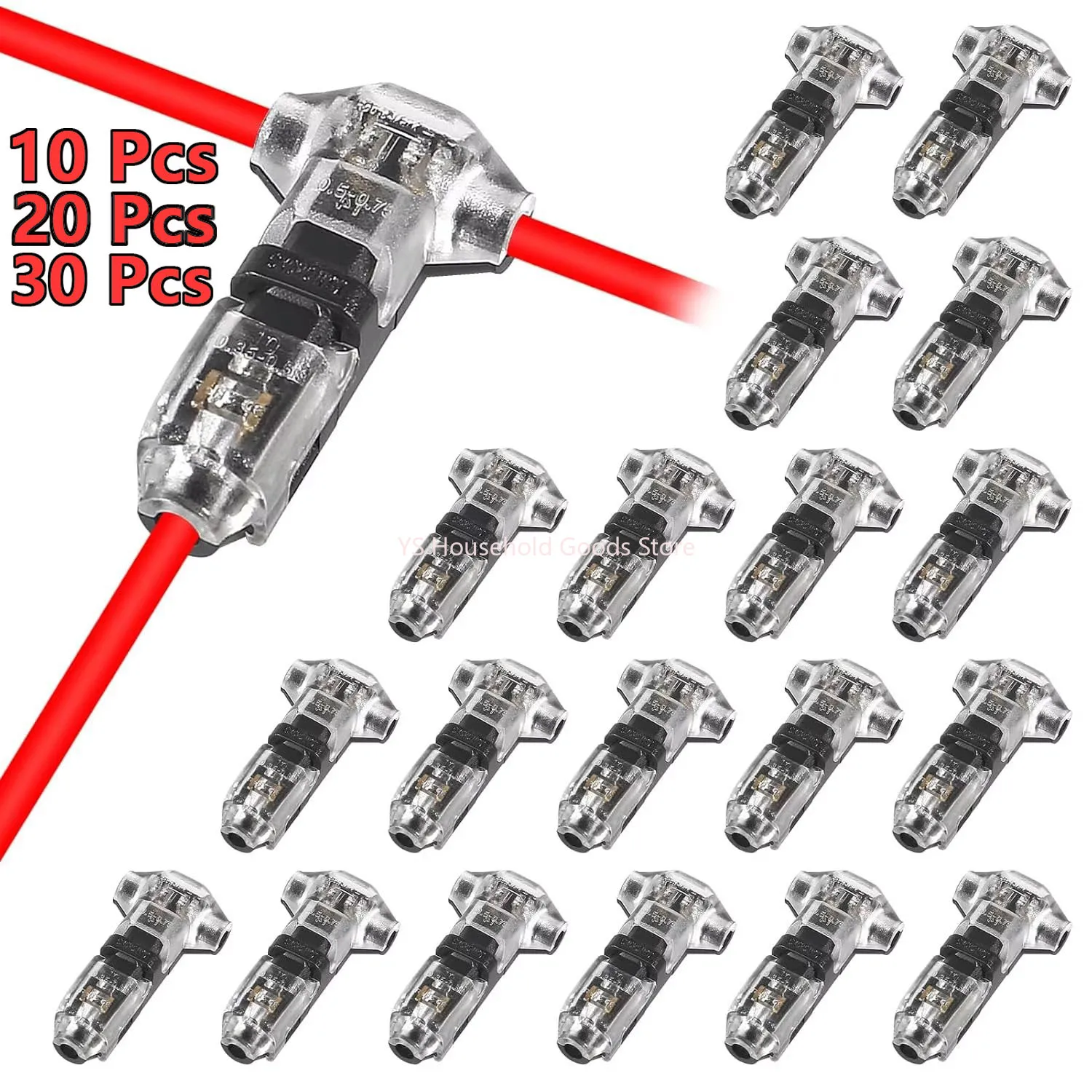
The core functionality of these connectors lies in their quick-splice, T-tap design. This mechanism allows for a branch wire to be connected to a main wire without interrupting the main circuit or requiring extensive preparation. The transparent housing is a critical design choice.
This visual transparency enables immediate verification of proper wire seating and contact, a significant advantage over opaque connectors where internal connection quality remains hidden. Users can visually confirm the conductor engagement, reducing the risk of intermittent connections or complete circuit failures due to improper installation. It's a simple check.
Compared to traditional methods like soldering, which demands heat, flux, and skill, or crimp connectors that require specialized tools and insulation stripping, these T-taps offer a substantial reduction in installation time and complexity. They streamline the process, making low-voltage wiring accessible to a broader range of users, from DIY enthusiasts to professional installers on tight schedules.
Conductor Versatility and Gauge Management
These connectors are engineered to work with a specific range of wire gauges, primarily 18-24 AWG. This covers a broad spectrum of low-voltage applications, including automotive wiring, LED lighting installations, and various small electronic projects. The design accommodates solid, stranded, and flexible wires.
For optimal performance and safety, matching the wire gauge precisely to the connector's specifications is paramount. Using wires outside the recommended 18-24 AWG range can lead to inadequate electrical contact, potential overheating, or a loose connection that may fail over time. Proper gauge selection ensures a secure and efficient electrical path.
It is crucial to acknowledge the explicit warning regarding 18 AWG wires: "Our wire connectors may not work with ALL 18 AWG wires, because 18 AWG wires in the market are not exactly same." This transparency is commendable. This indicates that variations in insulation thickness or conductor diameter among different manufacturers' 18 AWG wires could affect the connector's ability to make a consistently reliable connection. Users should perform a test fit if unsure.
Material Integrity and Electrical Performance
The connectors are marketed with claims of "Rock Solid" construction and "Premium Plastic." The visible clear polycarbonate or similar polymer housing suggests good insulation properties and resistance to common environmental factors in typical low-voltage settings. The internal metallic components, responsible for the electrical connection, are designed for "Excellent Electrical Conductivity."
High-quality conductive materials are essential to minimize resistance across the splice, preventing voltage drop and heat generation. A secure connection is vital. Poor conductivity can lead to inefficient power transfer, dimming of lights in LED applications, or even localized overheating if the current draw is at the upper end of the connector's rating. The design aims to maintain circuit integrity.
Unlike generic, flimsy plastic connectors that can become brittle or lose their grip over time, the emphasis on "Premium Plastic" implies a greater resistance to UV degradation, temperature fluctuations, and physical stress. This contributes to the long-term reliability of the electrical connection, reducing the need for future maintenance or repairs in installed systems.
Safety Compliance and Application Suitability
As a low-voltage connector, its primary application is in circuits where current and voltage levels are inherently lower, reducing the immediate risk of severe electrical shock or large-scale fire hazards compared to mains voltage applications. However, even low-voltage systems require proper installation to prevent localized overheating or short circuits. The circuit diagram clearly illustrates a T-connection.
These connectors are particularly well-suited for adding accessories in automotive electrical systems, tapping into existing LED strip lighting, or creating branch circuits for small DC-powered devices. Their compact dimensions, approximately 13mm x 26mm x 7mm, allow for installation in confined spaces where traditional splicing methods would be impractical. Size matters for tight spots.
When compared to simply twisting wires together and taping them, these T-taps offer a significantly safer and more reliable connection. The mechanical integrity provided by the connector's housing and internal contacts ensures a stable connection that is less susceptible to vibration or accidental dislodgement, which are common failure points in improvised wiring solutions. This is a clear upgrade.
Installation Simplicity and Troubleshooting
The "No Stripping" feature is a major selling point, simplifying the installation process considerably. Users simply insert the main wire and the branch wire into their respective channels and then press down the metal contact. This action pierces the wire insulation, establishing electrical contact with the conductor. It's a straightforward process.
Troubleshooting potential issues with these connectors typically revolves around ensuring proper wire insertion and gauge compatibility. If a circuit fails after installation, the transparent housing allows for quick visual inspection to confirm that both wires are fully seated and that the metal contact has properly pierced the insulation. This visual feedback is invaluable.
Should a connection issue arise, the non-destructive nature of the installation (no stripping) means that wires can often be removed and re-inserted into a new connector without significant wire damage, unlike methods that require cutting or stripping. This reduces material waste and simplifies rework. The ease of use is a definite advantage.
The Long-Term Value Proposition
The initial cost of these connectors is offset by the significant time savings during installation and the enhanced reliability they offer compared to less robust alternatives. For projects involving numerous connections, the cumulative time saved by avoiding stripping and soldering can be substantial. This translates directly into labor cost reductions for professionals.
Furthermore, the secure, insulated connection minimizes the risk of future electrical faults, which can be costly and time-consuming to diagnose and repair. Investing in quality connectors like these reduces the total cost of ownership for any electrical system. It's a smart investment.
Imagine completing your low-voltage wiring projects with unprecedented speed and confidence, knowing each connection is secure and visually verifiable. Envision a clean, organized electrical system free from the bulk of traditional splices, operating flawlessly for years. This connector simplifies complex tasks, allowing you to focus on the project's overall success rather than wrestling with individual wire connections.