T-Type Quick Splice Low Voltage Wire Connectors
Official Store Deal
Expert Analysis Overview
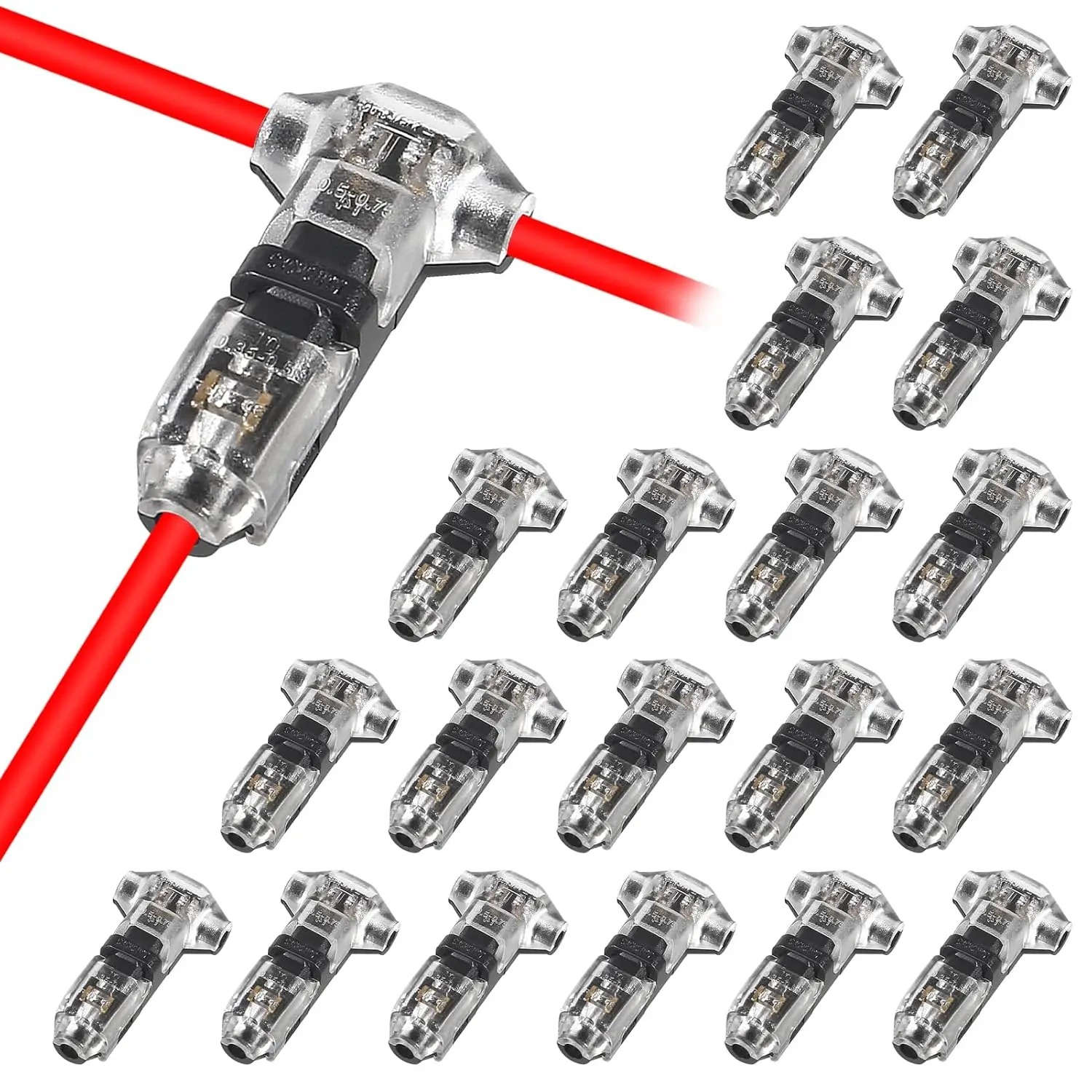
The T-Type Quick Splice Low Voltage Wire Connectors are a practical, time-saving solution designed for rapid, secure electrical connections in low-current applications. This particular set of 10 connectors targets DIY enthusiasts and professional technicians alike, offering a streamlined method for branching off existing circuits without the need for traditional wire stripping or soldering. The transparent housing allows for immediate visual confirmation of proper wire seating, a critical aspect for ensuring reliable electrical continuity.
These connectors represent a significant departure from conventional wiring techniques. Traditional methods often involve stripping insulation, twisting wires, and then either soldering or crimping with specialized tools. Each step introduces potential points of failure or requires a certain skill level to execute flawlessly. The solderless design of these T-tap connectors bypasses these complexities entirely. A simple squeeze with pliers is all that is needed to establish a connection, making them ideal for quick field repairs or installations where time is a premium.
Unlike older, more cumbersome wire taps that often struggled with inconsistent contact or insulation damage, these units employ an insulation displacement contact (IDC) mechanism. This method precisely cuts through the wire's insulation to make direct contact with the conductor, creating a gas-tight connection that resists oxidation. The precision molding of the plastic body, evident in the clear, unblemished surfaces, indicates a manufacturing process focused on consistent performance. This ensures the internal metal contacts align perfectly with the wire, a crucial detail for long-term electrical stability. A clean connection is paramount.
Compared to the labor-intensive process of soldering, which demands a heat source, flux, and solder, these connectors offer an immediate, tool-light alternative. This is particularly advantageous in environments where open flames or high heat are impractical or unsafe, such as within vehicle interiors or near sensitive electronic components. The reduction in required tools also simplifies a technician's toolkit, making on-the-go repairs more feasible.
At the core of these connectors is the ability to create a secure branch connection. The main wire passes through one channel, while the tap wire enters perpendicularly. The internal metal blade, typically made from a conductive copper alloy, is designed to pierce the insulation of both wires simultaneously when the connector is closed. This action establishes a direct electrical pathway, allowing current to flow from the main line to the branched circuit. The design minimizes resistance, crucial for maintaining voltage levels in low-power systems.
The transparent polycarbonate or similar polymer housing provides a clear view of the connection point. This visual feedback is invaluable for verifying that the wires are fully seated and that the IDC blades have properly engaged the conductors. Without this transparency, technicians would be left guessing, potentially leading to intermittent connections or complete circuit failures. Visual inspection saves time.
Consider a scenario involving the installation of accent lighting in a vehicle. Running new wires from the fuse box for every single light can be overly complex and time-consuming. These T-tap connectors allow for clean, efficient branching from an existing power line, such as a dome light circuit or a tail light wire, to power additional LED strips or small auxiliary lights. This capability significantly reduces installation complexity and material waste.
The construction of these connectors emphasizes both mechanical integrity and environmental protection. The plastic housing, while transparent, exhibits a robust feel, resisting deformation under moderate pressure. This structural rigidity helps maintain the integrity of the internal contacts, preventing them from shifting or losing grip on the wires, even under minor vibrations or thermal expansion and contraction cycles. The material choice also contributes to its dielectric strength, effectively insulating the live connection from external elements.
While not explicitly rated for waterproofing, the tight-fitting design offers a degree of protection against dust and incidental moisture. For applications in damp environments, such as outdoor landscape lighting, additional sealing with electrical tape or heat-shrink tubing around the connector would be a prudent measure. This proactive approach ensures the longevity of the connection, preventing corrosion of the metal contacts which could lead to increased resistance or complete circuit failure. Corrosion is a silent killer.
Compared to twist-on wire nuts, which can sometimes loosen over time due to vibration or improper installation, these T-tap connectors provide a more mechanically secure grip on the conductors. The clamping action of the IDC blades, combined with the locking mechanism of the plastic housing, creates a connection that is less susceptible to accidental dislodgement. This enhanced stability translates directly into improved long-term reliability for the electrical system.
One critical aspect of any wire connector is its compatibility with various wire gauges. The product images indicate compatibility with 18-24 AWG wires, though a circuit diagram specifically references 22-20 AWG. This broader range of 18-24 AWG makes these connectors highly versatile for a multitude of low-voltage applications. This includes common automotive wiring, LED lighting installations, small appliance repairs, and even hobby electronics projects. The ability to handle both solid and stranded wire types further expands their utility, accommodating different wiring standards found in various systems.
For those unfamiliar, AWG (American Wire Gauge) is a standardized system for denoting wire diameter. A lower AWG number indicates a thicker wire, capable of carrying more current. The 18-24 AWG range is typical for circuits carrying a few amperes, making these connectors suitable for signal wires, auxiliary lighting, and low-power accessories. Attempting to use these with wires outside the specified range, particularly thicker wires, risks damaging the connector or creating an unreliable, high-resistance connection. Proper gauge matching is essential.
Imagine a scenario where a technician needs to quickly add a reverse camera to a vehicle. Tapping into the existing reverse light circuit is a common practice. These connectors allow for a swift, non-destructive tap into the vehicle's wiring harness, avoiding the need to cut and splice wires, which can void warranties or introduce potential points of failure if not done correctly. The ease of installation minimizes vehicle downtime and labor costs.
In low-voltage DC applications, maintaining signal integrity primarily translates to minimizing voltage drop across the connection. Any resistance introduced by a connector will cause a small voltage drop, which can be detrimental to sensitive electronics or cause LED lights to dim. The insulation displacement contact method employed by these connectors is designed to create a low-resistance connection by ensuring direct metal-to-metal contact with the wire's conductor.
The quality of the internal metal contacts plays a significant role here. High-conductivity materials, typically tinned copper or brass, are used to minimize resistive losses. The firm clamping action ensures a consistent contact pressure, which further reduces resistance and prevents intermittent connections that could manifest as flickering lights or unreliable sensor readings. A stable connection is key.
Compared to poorly executed soldered joints or loose crimp connectors, these T-taps offer a more consistent and predictable connection resistance. While no connector is entirely lossless, the design aims to keep resistive losses well within acceptable limits for their intended low-voltage, low-current applications. For critical applications requiring absolute minimal voltage drop, such as high-power audio systems or sensitive data lines, a direct soldered connection might still be preferred, but for general utility, these perform admirably.
The primary appeal of these connectors lies in their unparalleled ease of installation. The process is straightforward: insert the main wire into one channel, the tap wire into the perpendicular channel, and then close the hinged cover with a pair of standard pliers. The internal blades do the work of piercing the insulation and making contact. This 'no stripping, no soldering' methodology drastically reduces installation time and eliminates the need for specialized tools like wire strippers, soldering irons, or heat guns.
This simplicity makes them highly accessible to individuals with limited electrical experience, empowering DIYers to tackle projects that might otherwise seem daunting. For professionals, it translates into faster job completion times and increased efficiency, particularly when working in confined spaces or awkward positions where traditional wiring methods would be cumbersome. Time is money.
Consider the installation of a complex multi-zone LED lighting system in a home. Each zone might require multiple tap points from a central power bus. Using these connectors allows for rapid expansion and modification of the lighting layout without the tedious work of preparing each wire end. The clear housing provides immediate confirmation that each wire is correctly seated before the connector is fully closed, preventing rework.
These T-Type Quick Splice Low Voltage Wire Connectors offer significant value for anyone regularly working with low-voltage electrical systems. Their design prioritizes speed, ease of use, and reliability, making them a superior alternative to many traditional splicing methods. The ability to create branch connections without stripping or soldering is a major advantage, reducing both labor and the potential for installation errors. The transparent body is a thoughtful addition, providing crucial visual feedback during installation.
While their primary application is in low-current scenarios, their robust construction and effective insulation displacement contact mechanism ensure a stable and durable connection. The convenience they offer in automotive, lighting, and general electrical repair contexts makes them an indispensable item in any toolkit. Investing in these connectors means investing in efficiency and peace of mind, knowing that connections are secure and professionally executed. Imagine completing your wiring projects in a fraction of the time, with clean, reliable connections that stand the test of time, freeing you to enjoy the results of your work sooner and with greater confidence in the electrical integrity of your setup. Your next project will be simpler, faster, and more reliable.
The Ingenuity of Solderless Connections
These connectors represent a significant departure from conventional wiring techniques. Traditional methods often involve stripping insulation, twisting wires, and then either soldering or crimping with specialized tools. Each step introduces potential points of failure or requires a certain skill level to execute flawlessly. The solderless design of these T-tap connectors bypasses these complexities entirely. A simple squeeze with pliers is all that is needed to establish a connection, making them ideal for quick field repairs or installations where time is a premium.
Unlike older, more cumbersome wire taps that often struggled with inconsistent contact or insulation damage, these units employ an insulation displacement contact (IDC) mechanism. This method precisely cuts through the wire's insulation to make direct contact with the conductor, creating a gas-tight connection that resists oxidation. The precision molding of the plastic body, evident in the clear, unblemished surfaces, indicates a manufacturing process focused on consistent performance. This ensures the internal metal contacts align perfectly with the wire, a crucial detail for long-term electrical stability. A clean connection is paramount.
Compared to the labor-intensive process of soldering, which demands a heat source, flux, and solder, these connectors offer an immediate, tool-light alternative. This is particularly advantageous in environments where open flames or high heat are impractical or unsafe, such as within vehicle interiors or near sensitive electronic components. The reduction in required tools also simplifies a technician's toolkit, making on-the-go repairs more feasible.
The Mechanics of Reliable Power Distribution
At the core of these connectors is the ability to create a secure branch connection. The main wire passes through one channel, while the tap wire enters perpendicularly. The internal metal blade, typically made from a conductive copper alloy, is designed to pierce the insulation of both wires simultaneously when the connector is closed. This action establishes a direct electrical pathway, allowing current to flow from the main line to the branched circuit. The design minimizes resistance, crucial for maintaining voltage levels in low-power systems.
The transparent polycarbonate or similar polymer housing provides a clear view of the connection point. This visual feedback is invaluable for verifying that the wires are fully seated and that the IDC blades have properly engaged the conductors. Without this transparency, technicians would be left guessing, potentially leading to intermittent connections or complete circuit failures. Visual inspection saves time.
Consider a scenario involving the installation of accent lighting in a vehicle. Running new wires from the fuse box for every single light can be overly complex and time-consuming. These T-tap connectors allow for clean, efficient branching from an existing power line, such as a dome light circuit or a tail light wire, to power additional LED strips or small auxiliary lights. This capability significantly reduces installation complexity and material waste.
Durability and Environmental Resilience
The construction of these connectors emphasizes both mechanical integrity and environmental protection. The plastic housing, while transparent, exhibits a robust feel, resisting deformation under moderate pressure. This structural rigidity helps maintain the integrity of the internal contacts, preventing them from shifting or losing grip on the wires, even under minor vibrations or thermal expansion and contraction cycles. The material choice also contributes to its dielectric strength, effectively insulating the live connection from external elements.
While not explicitly rated for waterproofing, the tight-fitting design offers a degree of protection against dust and incidental moisture. For applications in damp environments, such as outdoor landscape lighting, additional sealing with electrical tape or heat-shrink tubing around the connector would be a prudent measure. This proactive approach ensures the longevity of the connection, preventing corrosion of the metal contacts which could lead to increased resistance or complete circuit failure. Corrosion is a silent killer.
Compared to twist-on wire nuts, which can sometimes loosen over time due to vibration or improper installation, these T-tap connectors provide a more mechanically secure grip on the conductors. The clamping action of the IDC blades, combined with the locking mechanism of the plastic housing, creates a connection that is less susceptible to accidental dislodgement. This enhanced stability translates directly into improved long-term reliability for the electrical system.
Wire Gauge Compatibility and Application Versatility
One critical aspect of any wire connector is its compatibility with various wire gauges. The product images indicate compatibility with 18-24 AWG wires, though a circuit diagram specifically references 22-20 AWG. This broader range of 18-24 AWG makes these connectors highly versatile for a multitude of low-voltage applications. This includes common automotive wiring, LED lighting installations, small appliance repairs, and even hobby electronics projects. The ability to handle both solid and stranded wire types further expands their utility, accommodating different wiring standards found in various systems.
For those unfamiliar, AWG (American Wire Gauge) is a standardized system for denoting wire diameter. A lower AWG number indicates a thicker wire, capable of carrying more current. The 18-24 AWG range is typical for circuits carrying a few amperes, making these connectors suitable for signal wires, auxiliary lighting, and low-power accessories. Attempting to use these with wires outside the specified range, particularly thicker wires, risks damaging the connector or creating an unreliable, high-resistance connection. Proper gauge matching is essential.
Imagine a scenario where a technician needs to quickly add a reverse camera to a vehicle. Tapping into the existing reverse light circuit is a common practice. These connectors allow for a swift, non-destructive tap into the vehicle's wiring harness, avoiding the need to cut and splice wires, which can void warranties or introduce potential points of failure if not done correctly. The ease of installation minimizes vehicle downtime and labor costs.
Signal Integrity and Voltage Drop Considerations
In low-voltage DC applications, maintaining signal integrity primarily translates to minimizing voltage drop across the connection. Any resistance introduced by a connector will cause a small voltage drop, which can be detrimental to sensitive electronics or cause LED lights to dim. The insulation displacement contact method employed by these connectors is designed to create a low-resistance connection by ensuring direct metal-to-metal contact with the wire's conductor.
The quality of the internal metal contacts plays a significant role here. High-conductivity materials, typically tinned copper or brass, are used to minimize resistive losses. The firm clamping action ensures a consistent contact pressure, which further reduces resistance and prevents intermittent connections that could manifest as flickering lights or unreliable sensor readings. A stable connection is key.
Compared to poorly executed soldered joints or loose crimp connectors, these T-taps offer a more consistent and predictable connection resistance. While no connector is entirely lossless, the design aims to keep resistive losses well within acceptable limits for their intended low-voltage, low-current applications. For critical applications requiring absolute minimal voltage drop, such as high-power audio systems or sensitive data lines, a direct soldered connection might still be preferred, but for general utility, these perform admirably.
Installation Simplicity and User Experience
The primary appeal of these connectors lies in their unparalleled ease of installation. The process is straightforward: insert the main wire into one channel, the tap wire into the perpendicular channel, and then close the hinged cover with a pair of standard pliers. The internal blades do the work of piercing the insulation and making contact. This 'no stripping, no soldering' methodology drastically reduces installation time and eliminates the need for specialized tools like wire strippers, soldering irons, or heat guns.
This simplicity makes them highly accessible to individuals with limited electrical experience, empowering DIYers to tackle projects that might otherwise seem daunting. For professionals, it translates into faster job completion times and increased efficiency, particularly when working in confined spaces or awkward positions where traditional wiring methods would be cumbersome. Time is money.
Consider the installation of a complex multi-zone LED lighting system in a home. Each zone might require multiple tap points from a central power bus. Using these connectors allows for rapid expansion and modification of the lighting layout without the tedious work of preparing each wire end. The clear housing provides immediate confirmation that each wire is correctly seated before the connector is fully closed, preventing rework.
Final Evaluation of Value and Utility
These T-Type Quick Splice Low Voltage Wire Connectors offer significant value for anyone regularly working with low-voltage electrical systems. Their design prioritizes speed, ease of use, and reliability, making them a superior alternative to many traditional splicing methods. The ability to create branch connections without stripping or soldering is a major advantage, reducing both labor and the potential for installation errors. The transparent body is a thoughtful addition, providing crucial visual feedback during installation.
While their primary application is in low-current scenarios, their robust construction and effective insulation displacement contact mechanism ensure a stable and durable connection. The convenience they offer in automotive, lighting, and general electrical repair contexts makes them an indispensable item in any toolkit. Investing in these connectors means investing in efficiency and peace of mind, knowing that connections are secure and professionally executed. Imagine completing your wiring projects in a fraction of the time, with clean, reliable connections that stand the test of time, freeing you to enjoy the results of your work sooner and with greater confidence in the electrical integrity of your setup. Your next project will be simpler, faster, and more reliable.