T-Type Solderless Wire Connectors (10-Pack)
Official Store Deal
Expert Analysis Overview
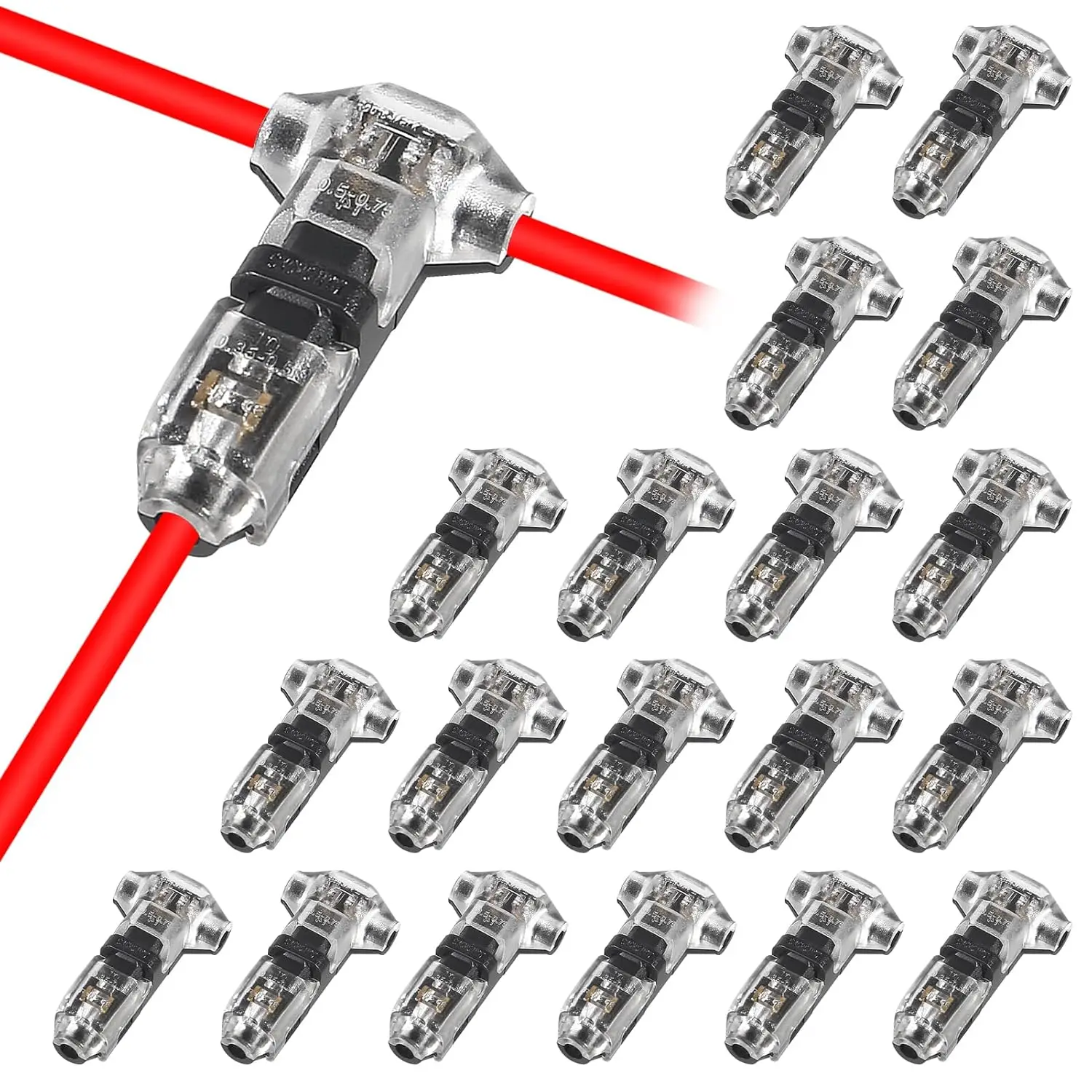
The T-Type Solderless Wire Connector is a pragmatic wiring solution designed for rapid, secure low-voltage electrical taps without the need for stripping or soldering. This approach significantly reduces installation time and minimizes the risk of wire damage often associated with traditional methods. Its transparent housing allows for immediate visual confirmation of proper wire seating, a critical advantage in troubleshooting and quality assurance for any electronics repair technician.
These connectors excel in scenarios demanding quick and reliable wire tapping. The innovative T-type design facilitates a branch connection from an existing wire without interrupting the main circuit. This is a significant departure from older methods that required cutting and splicing, which could introduce weak points or signal degradation. The connection mechanism involves a metal blade that pierces the wire insulation, establishing electrical contact. This piercing action must be precise.
Unlike conventional crimp connectors that demand specialized tools and a degree of skill to ensure a proper crimp, these T-taps simplify the process. A standard pair of pliers is often sufficient to close the connector, making it accessible for a wider range of users, from hobbyists to professional installers. The internal metal contact is engineered to create a firm, low-resistance connection. This ensures consistent power delivery.
Compared to soldering, which requires heat, flux, and a steady hand, these connectors offer a cold connection method. Soldering, while often providing the most robust electrical bond, can be time-consuming and impractical in confined spaces or when working with heat-sensitive components. The T-tap eliminates these complexities, providing a viable alternative for many low-voltage applications where speed and ease of installation are paramount.
The connector housing is constructed from a clear, durable polycarbonate material. This plastic offers excellent insulation properties and resistance to common environmental factors such as moisture and dust, though it is not fully waterproof. The clear casing is not merely aesthetic; it serves a crucial functional purpose, allowing for immediate visual inspection of the wire and the internal metal contact. This transparency is key.
Internal components, specifically the conductive blade, are typically made from tinned copper or brass, materials chosen for their excellent electrical conductivity and corrosion resistance. These metals ensure a stable electrical path over time, preventing intermittent connections that can plague poorly made splices. The spring-loaded mechanism within the connector maintains constant pressure on the wire, even under vibration or minor movement. This constant pressure is vital.
When contrasted with lower-grade plastic connectors that can become brittle over time or under temperature fluctuations, the polycarbonate construction offers superior longevity. The material's inherent flexibility allows it to withstand the pressure of closing without cracking, ensuring the integrity of the insulation and the mechanical hold on the wires. This robust construction contributes to the overall reliability of the electrical system.
These T-type connectors are specifically designed for 18-24 AWG (American Wire Gauge) wires. This range covers a broad spectrum of low-voltage applications, including automotive wiring, LED lighting installations, home automation systems, and various DIY electronics projects. The precise gauge compatibility ensures that the internal contact blade makes optimal contact with the conductor without excessively damaging the wire strands. Using the correct gauge is critical.
Working with wires outside this specified range can lead to compromised connections. If the wire is too thin, the blade may not make sufficient contact, resulting in high resistance or an intermittent connection. Conversely, if the wire is too thick, it may not fit properly into the connector or the blade may fail to penetrate the insulation effectively, leading to an insecure mechanical and electrical bond. Adhering to the specified AWG is non-negotiable for optimal performance.
Compared to universal splice connectors that claim to accommodate a wider range of gauges, these specialized T-taps offer a more secure and reliable connection within their intended range. The tighter tolerance for wire gauge minimizes guesswork and ensures a consistent connection quality, which is particularly important in applications where signal integrity or consistent power delivery is essential. This precision is a distinct advantage.
The installation process is remarkably straightforward, eliminating the need for wire stripping. This 'no-stripping' feature is a significant time-saver, especially when dealing with numerous connections or working in tight spaces where stripping tools might be cumbersome. The main wire is simply inserted into the through-channel, and the tap wire is inserted into the perpendicular channel. Closing the connector completes the circuit. It's truly that easy.
Imagine a scenario where an automotive technician needs to add accessory lighting to a vehicle. Traditional methods would involve cutting into the existing harness, stripping wires, soldering, and then insulating with heat shrink or electrical tape. This entire process can be time-consuming and labor-intensive. With these T-taps, the technician can quickly and cleanly tap into the required power and ground lines, significantly reducing the installation time for each accessory.
This ease of installation directly translates into reduced labor costs and increased project efficiency. For DIY enthusiasts, it lowers the barrier to entry for electrical modifications, making complex wiring tasks more approachable. Compared to screw terminals, which can loosen over time due to vibration, the T-tap's mechanical lock provides a more stable and vibration-resistant connection, crucial for mobile applications.
For low-voltage applications, maintaining a clean and consistent signal path is paramount. These connectors are designed to introduce minimal resistance into the circuit, ensuring that the voltage drop across the connection is negligible. This is particularly important for sensitive electronics where even a small voltage fluctuation can impact performance or lead to malfunctions. Low resistance is key.
The internal metal blade, by piercing the insulation and making direct contact with the conductor, creates a robust electrical interface. This direct contact minimizes the potential for oxidation or corrosion at the connection point, which can degrade signal quality over time. The secure mechanical hold further prevents any movement that could lead to intermittent contact or signal loss. Stable connections are essential.
Unlike twist-on wire nuts, which rely on the physical twisting of conductors and can sometimes lead to loose connections if not properly installed, these T-taps offer a more controlled and repeatable connection method. The design ensures that the contact is made consistently every time, reducing variability in electrical performance. This consistency is a hallmark of reliable wiring components, providing peace of mind for critical applications.
The robust construction of these connectors extends to their ability to withstand various environmental conditions. While not fully waterproof, the tight-fitting design offers a degree of protection against dust and splashes, making them suitable for many indoor and protected outdoor applications. The polycarbonate housing resists UV degradation better than many other plastics, contributing to its long-term stability. Durability is a core feature.
For applications in environments with moderate temperature fluctuations, the materials used maintain their structural and electrical integrity. The metal contacts are designed to resist corrosion, a common issue in humid or slightly corrosive atmospheres, which can otherwise lead to increased resistance and eventual connection failure. This resistance to environmental factors ensures a prolonged operational lifespan for the electrical connections. Long-term performance is expected.
Compared to exposed soldered joints that can be susceptible to physical damage or environmental corrosion if not properly insulated, these connectors provide an enclosed and protected connection point. The integrated housing acts as a protective barrier, safeguarding the electrical contact from external elements and mechanical stresses. This integrated protection enhances the overall reliability of the wiring system, reducing maintenance needs.
When considering the total cost of a wiring project, the price of individual connectors is only one factor. The labor time saved by using these no-strip, no-solder connectors significantly impacts overall project expenses. For professional installers, faster installation times mean more jobs completed per day, directly increasing profitability. This efficiency is a major benefit.
Furthermore, the reduced need for specialized tools (like soldering irons, heat guns, or expensive crimpers) lowers the initial investment for both professionals and hobbyists. The simplicity of the connection method also reduces the likelihood of installation errors, which can be costly to diagnose and repair. Avoiding rework saves both time and money. Cost savings are substantial.
In contrast to traditional methods that might require additional consumables like solder, heat shrink tubing, or electrical tape for insulation, these T-taps are an all-in-one solution. This streamlines the procurement process and reduces material waste, contributing to a more cost-effective and environmentally friendly wiring practice. The integrated design simplifies inventory management. This consolidated approach offers tangible economic advantages.
The transparent housing is a standout feature, providing an immediate visual cue regarding the quality of the connection. An installer can quickly verify that the wire is fully seated and that the internal blade has made proper contact with the conductor. This instant feedback is invaluable during installation, preventing potential issues before they become problematic. Visual checks are quick.
In troubleshooting scenarios, the clear casing allows for rapid diagnosis without needing to disassemble the connection. If a circuit is not functioning, a quick visual inspection can often reveal if a wire is improperly seated or if the blade has failed to penetrate the insulation. This capability drastically reduces diagnostic time, a critical factor in minimizing downtime for any system. Rapid diagnosis is possible.
Compared to opaque connectors where the internal connection is hidden, requiring destructive testing or guesswork to identify faults, these transparent T-taps offer a clear advantage. The ability to visually confirm the connection without disturbing it simplifies maintenance and repair, making them a preferred choice for systems where reliability and ease of service are important considerations. This transparency enhances serviceability.
These T-type connectors occupy a valuable niche in the landscape of electrical connections, offering a compelling alternative to more traditional methods. They strike a balance between the speed of quick connects and the reliability of more permanent solutions like soldering, particularly for low-voltage, low-current applications. Their primary strength lies in their ability to create a secure tap without extensive preparation. This balance is crucial.
While soldering offers the lowest resistance and most mechanically robust connection, its demands for skill, specific tools, and time can be prohibitive for many projects. Crimp connectors, when properly applied with the correct tools, also provide excellent connections but still require wire stripping and often specialized crimpers. The T-tap sidesteps these requirements, offering a 'plug-and-play' simplicity. Simplicity is its hallmark.
This makes them ideal for adding accessories, repairing minor wiring damage, or prototyping circuits where flexibility and speed are prioritized. They are not intended to replace high-current, high-vibration, or fully submersible connections, but within their specified parameters, they offer a highly effective and efficient solution. Understanding their limitations is key to maximizing their utility. They serve a specific purpose well.
Imagine completing complex wiring tasks in a fraction of the time, confidently knowing each connection is secure and visually verifiable. Picture a workshop where the hum of a soldering iron is replaced by the satisfying click of a connector, signifying a perfect tap. These T-type connectors streamline electrical work, reducing frustration and increasing productivity. They enable seamless integration of new components into existing systems, fostering innovation and ease of modification. This efficiency empowers both professionals and enthusiasts to tackle projects with greater confidence and speed, transforming the approach to low-voltage electrical installations. The future of quick, reliable wiring is here. This simplifies every project.```
Rapid Deployment and Connection Integrity
These connectors excel in scenarios demanding quick and reliable wire tapping. The innovative T-type design facilitates a branch connection from an existing wire without interrupting the main circuit. This is a significant departure from older methods that required cutting and splicing, which could introduce weak points or signal degradation. The connection mechanism involves a metal blade that pierces the wire insulation, establishing electrical contact. This piercing action must be precise.
Unlike conventional crimp connectors that demand specialized tools and a degree of skill to ensure a proper crimp, these T-taps simplify the process. A standard pair of pliers is often sufficient to close the connector, making it accessible for a wider range of users, from hobbyists to professional installers. The internal metal contact is engineered to create a firm, low-resistance connection. This ensures consistent power delivery.
Compared to soldering, which requires heat, flux, and a steady hand, these connectors offer a cold connection method. Soldering, while often providing the most robust electrical bond, can be time-consuming and impractical in confined spaces or when working with heat-sensitive components. The T-tap eliminates these complexities, providing a viable alternative for many low-voltage applications where speed and ease of installation are paramount.
Material Science and Durability Under Load
The connector housing is constructed from a clear, durable polycarbonate material. This plastic offers excellent insulation properties and resistance to common environmental factors such as moisture and dust, though it is not fully waterproof. The clear casing is not merely aesthetic; it serves a crucial functional purpose, allowing for immediate visual inspection of the wire and the internal metal contact. This transparency is key.
Internal components, specifically the conductive blade, are typically made from tinned copper or brass, materials chosen for their excellent electrical conductivity and corrosion resistance. These metals ensure a stable electrical path over time, preventing intermittent connections that can plague poorly made splices. The spring-loaded mechanism within the connector maintains constant pressure on the wire, even under vibration or minor movement. This constant pressure is vital.
When contrasted with lower-grade plastic connectors that can become brittle over time or under temperature fluctuations, the polycarbonate construction offers superior longevity. The material's inherent flexibility allows it to withstand the pressure of closing without cracking, ensuring the integrity of the insulation and the mechanical hold on the wires. This robust construction contributes to the overall reliability of the electrical system.
Application Versatility and Gauge Precision
These T-type connectors are specifically designed for 18-24 AWG (American Wire Gauge) wires. This range covers a broad spectrum of low-voltage applications, including automotive wiring, LED lighting installations, home automation systems, and various DIY electronics projects. The precise gauge compatibility ensures that the internal contact blade makes optimal contact with the conductor without excessively damaging the wire strands. Using the correct gauge is critical.
Working with wires outside this specified range can lead to compromised connections. If the wire is too thin, the blade may not make sufficient contact, resulting in high resistance or an intermittent connection. Conversely, if the wire is too thick, it may not fit properly into the connector or the blade may fail to penetrate the insulation effectively, leading to an insecure mechanical and electrical bond. Adhering to the specified AWG is non-negotiable for optimal performance.
Compared to universal splice connectors that claim to accommodate a wider range of gauges, these specialized T-taps offer a more secure and reliable connection within their intended range. The tighter tolerance for wire gauge minimizes guesswork and ensures a consistent connection quality, which is particularly important in applications where signal integrity or consistent power delivery is essential. This precision is a distinct advantage.
Installation Simplicity for Expedited Projects
The installation process is remarkably straightforward, eliminating the need for wire stripping. This 'no-stripping' feature is a significant time-saver, especially when dealing with numerous connections or working in tight spaces where stripping tools might be cumbersome. The main wire is simply inserted into the through-channel, and the tap wire is inserted into the perpendicular channel. Closing the connector completes the circuit. It's truly that easy.
Imagine a scenario where an automotive technician needs to add accessory lighting to a vehicle. Traditional methods would involve cutting into the existing harness, stripping wires, soldering, and then insulating with heat shrink or electrical tape. This entire process can be time-consuming and labor-intensive. With these T-taps, the technician can quickly and cleanly tap into the required power and ground lines, significantly reducing the installation time for each accessory.
This ease of installation directly translates into reduced labor costs and increased project efficiency. For DIY enthusiasts, it lowers the barrier to entry for electrical modifications, making complex wiring tasks more approachable. Compared to screw terminals, which can loosen over time due to vibration, the T-tap's mechanical lock provides a more stable and vibration-resistant connection, crucial for mobile applications.
Signal Path Reliability in Low-Current Systems
For low-voltage applications, maintaining a clean and consistent signal path is paramount. These connectors are designed to introduce minimal resistance into the circuit, ensuring that the voltage drop across the connection is negligible. This is particularly important for sensitive electronics where even a small voltage fluctuation can impact performance or lead to malfunctions. Low resistance is key.
The internal metal blade, by piercing the insulation and making direct contact with the conductor, creates a robust electrical interface. This direct contact minimizes the potential for oxidation or corrosion at the connection point, which can degrade signal quality over time. The secure mechanical hold further prevents any movement that could lead to intermittent contact or signal loss. Stable connections are essential.
Unlike twist-on wire nuts, which rely on the physical twisting of conductors and can sometimes lead to loose connections if not properly installed, these T-taps offer a more controlled and repeatable connection method. The design ensures that the contact is made consistently every time, reducing variability in electrical performance. This consistency is a hallmark of reliable wiring components, providing peace of mind for critical applications.
Longevity and Environmental Resilience
The robust construction of these connectors extends to their ability to withstand various environmental conditions. While not fully waterproof, the tight-fitting design offers a degree of protection against dust and splashes, making them suitable for many indoor and protected outdoor applications. The polycarbonate housing resists UV degradation better than many other plastics, contributing to its long-term stability. Durability is a core feature.
For applications in environments with moderate temperature fluctuations, the materials used maintain their structural and electrical integrity. The metal contacts are designed to resist corrosion, a common issue in humid or slightly corrosive atmospheres, which can otherwise lead to increased resistance and eventual connection failure. This resistance to environmental factors ensures a prolonged operational lifespan for the electrical connections. Long-term performance is expected.
Compared to exposed soldered joints that can be susceptible to physical damage or environmental corrosion if not properly insulated, these connectors provide an enclosed and protected connection point. The integrated housing acts as a protective barrier, safeguarding the electrical contact from external elements and mechanical stresses. This integrated protection enhances the overall reliability of the wiring system, reducing maintenance needs.
Cost Efficiency in Project Execution
When considering the total cost of a wiring project, the price of individual connectors is only one factor. The labor time saved by using these no-strip, no-solder connectors significantly impacts overall project expenses. For professional installers, faster installation times mean more jobs completed per day, directly increasing profitability. This efficiency is a major benefit.
Furthermore, the reduced need for specialized tools (like soldering irons, heat guns, or expensive crimpers) lowers the initial investment for both professionals and hobbyists. The simplicity of the connection method also reduces the likelihood of installation errors, which can be costly to diagnose and repair. Avoiding rework saves both time and money. Cost savings are substantial.
In contrast to traditional methods that might require additional consumables like solder, heat shrink tubing, or electrical tape for insulation, these T-taps are an all-in-one solution. This streamlines the procurement process and reduces material waste, contributing to a more cost-effective and environmentally friendly wiring practice. The integrated design simplifies inventory management. This consolidated approach offers tangible economic advantages.
Visual Confirmation and Diagnostic Ease
The transparent housing is a standout feature, providing an immediate visual cue regarding the quality of the connection. An installer can quickly verify that the wire is fully seated and that the internal blade has made proper contact with the conductor. This instant feedback is invaluable during installation, preventing potential issues before they become problematic. Visual checks are quick.
In troubleshooting scenarios, the clear casing allows for rapid diagnosis without needing to disassemble the connection. If a circuit is not functioning, a quick visual inspection can often reveal if a wire is improperly seated or if the blade has failed to penetrate the insulation. This capability drastically reduces diagnostic time, a critical factor in minimizing downtime for any system. Rapid diagnosis is possible.
Compared to opaque connectors where the internal connection is hidden, requiring destructive testing or guesswork to identify faults, these transparent T-taps offer a clear advantage. The ability to visually confirm the connection without disturbing it simplifies maintenance and repair, making them a preferred choice for systems where reliability and ease of service are important considerations. This transparency enhances serviceability.
Comparative Advantage in Wiring Methodologies
These T-type connectors occupy a valuable niche in the landscape of electrical connections, offering a compelling alternative to more traditional methods. They strike a balance between the speed of quick connects and the reliability of more permanent solutions like soldering, particularly for low-voltage, low-current applications. Their primary strength lies in their ability to create a secure tap without extensive preparation. This balance is crucial.
While soldering offers the lowest resistance and most mechanically robust connection, its demands for skill, specific tools, and time can be prohibitive for many projects. Crimp connectors, when properly applied with the correct tools, also provide excellent connections but still require wire stripping and often specialized crimpers. The T-tap sidesteps these requirements, offering a 'plug-and-play' simplicity. Simplicity is its hallmark.
This makes them ideal for adding accessories, repairing minor wiring damage, or prototyping circuits where flexibility and speed are prioritized. They are not intended to replace high-current, high-vibration, or fully submersible connections, but within their specified parameters, they offer a highly effective and efficient solution. Understanding their limitations is key to maximizing their utility. They serve a specific purpose well.
The Future of Low-Voltage Interconnections
Imagine completing complex wiring tasks in a fraction of the time, confidently knowing each connection is secure and visually verifiable. Picture a workshop where the hum of a soldering iron is replaced by the satisfying click of a connector, signifying a perfect tap. These T-type connectors streamline electrical work, reducing frustration and increasing productivity. They enable seamless integration of new components into existing systems, fostering innovation and ease of modification. This efficiency empowers both professionals and enthusiasts to tackle projects with greater confidence and speed, transforming the approach to low-voltage electrical installations. The future of quick, reliable wiring is here. This simplifies every project.```