T-Type Stripping-Free Quick Splice Wire Connector
Official Store Deal
Expert Analysis Overview
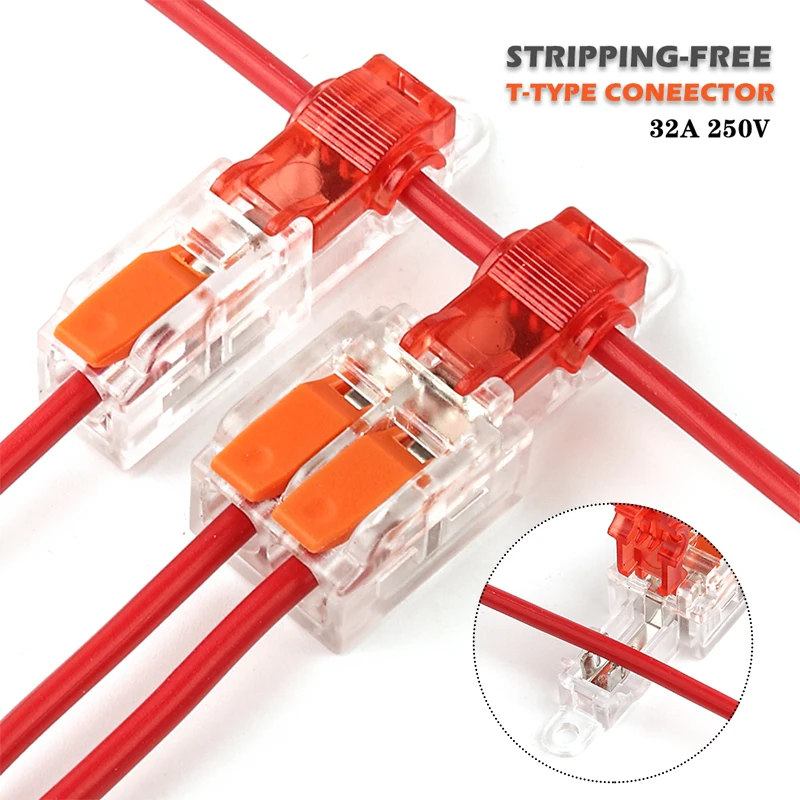
The T-Type Stripping-Free Quick Splice Wire Connector is a time-saving, innovative electrical junction solution designed for rapid, secure wire branching in low to medium voltage applications. This connector streamlines the process of creating parallel connections without the need for traditional wire stripping, a significant advantage for both professional electricians and DIY enthusiasts seeking efficiency and reduced labor.
This connector's core appeal lies in its stripping-free design. Unlike conventional methods that demand precise insulation removal, this unit integrates a piercing contact mechanism. The internal copper conductor, specifically engineered with a sharp, robust profile, penetrates the wire's insulation upon closure, establishing a direct electrical connection. This eliminates the tedious and often error-prone step of stripping wires, which can lead to damaged strands or inconsistent contact points.
The mechanism relies on a carefully calibrated pressure system. When the connector's lid is pressed down, the internal metal element slices through the wire's outer jacket, making contact with the conductor. This ensures a consistent connection every time, provided the correct wire gauge is used. The clear PA/PC housing allows for visual confirmation of proper wire seating, a critical safety check that traditional methods often lack. A secure connection is paramount.
Compared to twist-on wire nuts or crimp connectors, the stripping-free design offers a distinct advantage in speed and consistency. Twist-on connectors require careful stripping and twisting, which can be inconsistent in tension and prone to loosening over time. Crimp connectors, while secure, necessitate specialized crimping tools and the correct die for each wire gauge. This T-Type connector simplifies the entire process, requiring only standard pliers for the initial branch connection, making it a more accessible and faster option for many common wiring tasks.
The construction of these connectors prioritizes both electrical performance and mechanical durability. The main body is crafted from a blend of PA (Polyamide) and PC (Polycarbonate). Polyamide offers excellent mechanical strength, rigidity, and resistance to abrasion, ensuring the connector can withstand physical stress during installation and throughout its service life. Polycarbonate, known for its high impact strength and transparency, provides the clear housing that allows for visual inspection of the wire insertion and contact.
The internal contact element, often referred to as the circlip, is made from chromium nickel steel. This material choice is critical for its spring properties and corrosion resistance. The steel maintains consistent pressure on the wire conductor, ensuring a stable electrical connection over time, even under vibration or thermal cycling. Chromium nickel steel also resists oxidation and galvanic corrosion, which are common failure modes in less robust connectors, particularly in environments with fluctuating humidity.
For optimal conductivity, the actual conductor material within the connector is copper. Copper is the industry standard for electrical wiring due to its exceptional electrical conductivity and thermal properties. The use of copper ensures minimal resistance across the connection point, reducing heat generation and power loss. This combination of PA/PC for the housing, chromium nickel steel for the spring contact, and copper for the conductor creates a highly reliable and safe electrical junction. Each material plays a vital role.
These connectors are rated for a maximum current of 32 Amperes and a voltage of 250 Volts. This rating positions them firmly within the range suitable for most residential and light commercial electrical applications, including lighting circuits, small appliance wiring, and various control circuits. Understanding these limits is crucial for preventing overcurrent situations, which can lead to excessive heat, insulation degradation, and potential fire hazards. Proper circuit design is essential.
The specified wire range is 1-4.0mm² (18-12 AWG). This covers a common spectrum of wire sizes encountered in electrical installations. The metric measurement (mm²) refers to the cross-sectional area of the conductor, while AWG (American Wire Gauge) is a standard for wire diameter. An 18 AWG wire is relatively thin, suitable for low-power devices, while 12 AWG is thicker, capable of carrying more current, often used for dedicated appliance circuits or longer runs. This broad compatibility enhances versatility.
When working with different wire gauges, it is imperative to ensure that the chosen wire falls within the connector's specified range. Using wires that are too thin may result in an inadequate connection, leading to high resistance and heat. Conversely, forcing an oversized wire into the connector can damage the internal contact mechanism or the wire's insulation, compromising the connection's integrity and safety. The connector is designed for specific wire dimensions. Always verify wire gauge accuracy before installation. This prevents electrical fires.
The installation process for these T-Type connectors is remarkably straightforward, designed for quick and secure branching. The first step involves opening the splitter and inserting the main wire into the designated slot. This main wire, which will be branched from, does not require stripping. The connector's design guides the wire into the correct position for the piercing contact.
Once the main wire is seated, the lid is closed and pressed tightly with tools, typically standard pliers. This action engages the internal piercing element, which cuts through the wire's insulation and establishes a secure electrical connection with the conductor. A firm, even pressure ensures full penetration and optimal contact. The tactile feedback confirms engagement.
Next, the handle for the branch wire is opened, and the branch wire is inserted. This secondary wire, which will carry power from the main line, also does not require stripping. The design allows for easy insertion into its dedicated terminal. Finally, the handle is closed, completing the wiring process. This final closure secures the branch wire, creating a reliable and insulated connection. The entire process takes seconds, significantly reducing installation time compared to traditional methods that involve stripping, twisting, and taping.
Electrical safety is paramount, and while these connectors offer convenience, proper application is non-negotiable. The 32A/250V rating must be respected. Overloading the connector beyond its rated current can cause excessive heat buildup, leading to insulation breakdown, short circuits, and potential fire hazards. Always ensure the circuit's maximum load does not exceed the connector's capacity. This is a critical safety measure.
The insulation provided by the PA/PC housing is designed to prevent accidental contact with live conductors. However, the integrity of this insulation depends on proper installation. Any damage to the housing during installation or subsequent handling can compromise its protective properties. Visual inspection after installation is crucial to confirm the housing is intact and fully closed. A secure enclosure is vital.
Regular checks of terminal quality are essential, especially in installations subject to vibration or temperature fluctuations. While the chromium nickel steel circlip is designed for stable contact, environmental factors can degrade any electrical connection over time. For critical applications, periodic inspection for signs of discoloration, melting, or loose connections is recommended. These connectors are not typically rated for outdoor or wet environments unless specifically stated, and their use should be restricted to dry, protected locations to maintain long-term reliability and safety. Always prioritize safety standards.
The durability of these connectors is influenced by the quality of their materials and the environment in which they are installed. The robust PA/PC housing offers good resistance to common chemicals and UV exposure, though prolonged direct sunlight or harsh chemical environments could degrade the plastic over many years. The internal copper conductor and chromium nickel steel circlip are inherently resistant to corrosion in typical indoor conditions, ensuring a stable electrical path.
However, these connectors are not designed for extreme conditions. High humidity, corrosive atmospheres, or significant mechanical stress can accelerate wear and tear. For applications in such environments, specialized, sealed, or industrial-grade connectors would be more appropriate. The clear housing, while beneficial for visual inspection, also means the internal components are not hermetically sealed, making them unsuitable for direct exposure to moisture or dust ingress. Proper environmental consideration extends product life.
Compared to traditional soldered connections, which can offer superior long-term stability in certain conditions, these quick connectors trade some of that ultimate robustness for ease and speed of installation. However, for the vast majority of common electrical tasks, their longevity is more than adequate, often outlasting the lifespan of the appliance or fixture they connect. The convenience factor is undeniable.
Unlike traditional wire connectors that demand time-consuming stripping, twisting, and taping, this T-Type connector utilizes a piercing contact mechanism to establish a connection in seconds. This feature significantly reduces labor time on projects, allowing for faster completion and increased productivity. The consistent connection quality also minimizes rework, a common issue with manual stripping and twisting.
This product represents a clear upgrade in wiring capability. It allows for quick, reliable branching from an existing wire without interrupting the main circuit, provided the power is off during installation. Imagine completing a complex lighting installation, adding multiple fixtures to a single run, with each connection taking mere moments. The frustration of nicked wires or loose connections becomes a distant memory. This efficiency translates directly into cost savings for professionals and less hassle for DIYers. The ease of use is a major benefit.
Picture a scenario where a new light fixture needs to be added to an existing circuit. Instead of cutting the main wire, stripping both ends, adding a new wire, and then using multiple wire nuts, this connector allows for a simple, non-invasive tap. The process is clean, quick, and requires minimal tools. This capability transforms what could be a lengthy and intricate task into a swift, manageable operation, ensuring projects stay on schedule and within budget. This connector empowers faster, safer work.
These T-Type stripping-free connectors offer a compelling value proposition for specific electrical tasks. Their primary strength lies in their ability to provide quick, reliable, and insulated branch connections without the need for specialized tools or extensive electrical expertise. The clear housing, robust materials, and appropriate electrical ratings make them a safe choice when used within their specified parameters. They simplify complex wiring.
For electricians, these connectors can significantly reduce installation time on projects involving numerous branch connections, such as recessed lighting arrays or multi-fixture installations. For homeowners tackling DIY projects, they provide a user-friendly solution that minimizes the learning curve and reduces the risk of improper connections. The cost-per-use is exceptionally low, especially considering the time saved. This product delivers tangible benefits.
Imagine the satisfaction of completing an electrical project with confidence, knowing each connection is secure and professionally made, all without the tedious effort of traditional methods. The T-Type Stripping-Free Quick Splice Wire Connector is not just a component; it is a tool that enhances efficiency, promotes safety, and simplifies electrical work, allowing more time for other tasks. This is smart wiring.
Precision Engineering for Expedited Wiring
This connector's core appeal lies in its stripping-free design. Unlike conventional methods that demand precise insulation removal, this unit integrates a piercing contact mechanism. The internal copper conductor, specifically engineered with a sharp, robust profile, penetrates the wire's insulation upon closure, establishing a direct electrical connection. This eliminates the tedious and often error-prone step of stripping wires, which can lead to damaged strands or inconsistent contact points.
The mechanism relies on a carefully calibrated pressure system. When the connector's lid is pressed down, the internal metal element slices through the wire's outer jacket, making contact with the conductor. This ensures a consistent connection every time, provided the correct wire gauge is used. The clear PA/PC housing allows for visual confirmation of proper wire seating, a critical safety check that traditional methods often lack. A secure connection is paramount.
Compared to twist-on wire nuts or crimp connectors, the stripping-free design offers a distinct advantage in speed and consistency. Twist-on connectors require careful stripping and twisting, which can be inconsistent in tension and prone to loosening over time. Crimp connectors, while secure, necessitate specialized crimping tools and the correct die for each wire gauge. This T-Type connector simplifies the entire process, requiring only standard pliers for the initial branch connection, making it a more accessible and faster option for many common wiring tasks.
Robust Material Selection for Electrical Integrity
The construction of these connectors prioritizes both electrical performance and mechanical durability. The main body is crafted from a blend of PA (Polyamide) and PC (Polycarbonate). Polyamide offers excellent mechanical strength, rigidity, and resistance to abrasion, ensuring the connector can withstand physical stress during installation and throughout its service life. Polycarbonate, known for its high impact strength and transparency, provides the clear housing that allows for visual inspection of the wire insertion and contact.
The internal contact element, often referred to as the circlip, is made from chromium nickel steel. This material choice is critical for its spring properties and corrosion resistance. The steel maintains consistent pressure on the wire conductor, ensuring a stable electrical connection over time, even under vibration or thermal cycling. Chromium nickel steel also resists oxidation and galvanic corrosion, which are common failure modes in less robust connectors, particularly in environments with fluctuating humidity.
For optimal conductivity, the actual conductor material within the connector is copper. Copper is the industry standard for electrical wiring due to its exceptional electrical conductivity and thermal properties. The use of copper ensures minimal resistance across the connection point, reducing heat generation and power loss. This combination of PA/PC for the housing, chromium nickel steel for the spring contact, and copper for the conductor creates a highly reliable and safe electrical junction. Each material plays a vital role.
Electrical Capacity and Wire Compatibility
These connectors are rated for a maximum current of 32 Amperes and a voltage of 250 Volts. This rating positions them firmly within the range suitable for most residential and light commercial electrical applications, including lighting circuits, small appliance wiring, and various control circuits. Understanding these limits is crucial for preventing overcurrent situations, which can lead to excessive heat, insulation degradation, and potential fire hazards. Proper circuit design is essential.
The specified wire range is 1-4.0mm² (18-12 AWG). This covers a common spectrum of wire sizes encountered in electrical installations. The metric measurement (mm²) refers to the cross-sectional area of the conductor, while AWG (American Wire Gauge) is a standard for wire diameter. An 18 AWG wire is relatively thin, suitable for low-power devices, while 12 AWG is thicker, capable of carrying more current, often used for dedicated appliance circuits or longer runs. This broad compatibility enhances versatility.
When working with different wire gauges, it is imperative to ensure that the chosen wire falls within the connector's specified range. Using wires that are too thin may result in an inadequate connection, leading to high resistance and heat. Conversely, forcing an oversized wire into the connector can damage the internal contact mechanism or the wire's insulation, compromising the connection's integrity and safety. The connector is designed for specific wire dimensions. Always verify wire gauge accuracy before installation. This prevents electrical fires.
Installation Simplicity and Security
The installation process for these T-Type connectors is remarkably straightforward, designed for quick and secure branching. The first step involves opening the splitter and inserting the main wire into the designated slot. This main wire, which will be branched from, does not require stripping. The connector's design guides the wire into the correct position for the piercing contact.
Once the main wire is seated, the lid is closed and pressed tightly with tools, typically standard pliers. This action engages the internal piercing element, which cuts through the wire's insulation and establishes a secure electrical connection with the conductor. A firm, even pressure ensures full penetration and optimal contact. The tactile feedback confirms engagement.
Next, the handle for the branch wire is opened, and the branch wire is inserted. This secondary wire, which will carry power from the main line, also does not require stripping. The design allows for easy insertion into its dedicated terminal. Finally, the handle is closed, completing the wiring process. This final closure secures the branch wire, creating a reliable and insulated connection. The entire process takes seconds, significantly reducing installation time compared to traditional methods that involve stripping, twisting, and taping.
Safety Protocols and Performance Assurance
Electrical safety is paramount, and while these connectors offer convenience, proper application is non-negotiable. The 32A/250V rating must be respected. Overloading the connector beyond its rated current can cause excessive heat buildup, leading to insulation breakdown, short circuits, and potential fire hazards. Always ensure the circuit's maximum load does not exceed the connector's capacity. This is a critical safety measure.
The insulation provided by the PA/PC housing is designed to prevent accidental contact with live conductors. However, the integrity of this insulation depends on proper installation. Any damage to the housing during installation or subsequent handling can compromise its protective properties. Visual inspection after installation is crucial to confirm the housing is intact and fully closed. A secure enclosure is vital.
Regular checks of terminal quality are essential, especially in installations subject to vibration or temperature fluctuations. While the chromium nickel steel circlip is designed for stable contact, environmental factors can degrade any electrical connection over time. For critical applications, periodic inspection for signs of discoloration, melting, or loose connections is recommended. These connectors are not typically rated for outdoor or wet environments unless specifically stated, and their use should be restricted to dry, protected locations to maintain long-term reliability and safety. Always prioritize safety standards.
Longevity and Environmental Considerations
The durability of these connectors is influenced by the quality of their materials and the environment in which they are installed. The robust PA/PC housing offers good resistance to common chemicals and UV exposure, though prolonged direct sunlight or harsh chemical environments could degrade the plastic over many years. The internal copper conductor and chromium nickel steel circlip are inherently resistant to corrosion in typical indoor conditions, ensuring a stable electrical path.
However, these connectors are not designed for extreme conditions. High humidity, corrosive atmospheres, or significant mechanical stress can accelerate wear and tear. For applications in such environments, specialized, sealed, or industrial-grade connectors would be more appropriate. The clear housing, while beneficial for visual inspection, also means the internal components are not hermetically sealed, making them unsuitable for direct exposure to moisture or dust ingress. Proper environmental consideration extends product life.
Compared to traditional soldered connections, which can offer superior long-term stability in certain conditions, these quick connectors trade some of that ultimate robustness for ease and speed of installation. However, for the vast majority of common electrical tasks, their longevity is more than adequate, often outlasting the lifespan of the appliance or fixture they connect. The convenience factor is undeniable.
The Upgrade in Wiring Efficiency
Unlike traditional wire connectors that demand time-consuming stripping, twisting, and taping, this T-Type connector utilizes a piercing contact mechanism to establish a connection in seconds. This feature significantly reduces labor time on projects, allowing for faster completion and increased productivity. The consistent connection quality also minimizes rework, a common issue with manual stripping and twisting.
This product represents a clear upgrade in wiring capability. It allows for quick, reliable branching from an existing wire without interrupting the main circuit, provided the power is off during installation. Imagine completing a complex lighting installation, adding multiple fixtures to a single run, with each connection taking mere moments. The frustration of nicked wires or loose connections becomes a distant memory. This efficiency translates directly into cost savings for professionals and less hassle for DIYers. The ease of use is a major benefit.
Picture a scenario where a new light fixture needs to be added to an existing circuit. Instead of cutting the main wire, stripping both ends, adding a new wire, and then using multiple wire nuts, this connector allows for a simple, non-invasive tap. The process is clean, quick, and requires minimal tools. This capability transforms what could be a lengthy and intricate task into a swift, manageable operation, ensuring projects stay on schedule and within budget. This connector empowers faster, safer work.
Final Assessment of Value and Application
These T-Type stripping-free connectors offer a compelling value proposition for specific electrical tasks. Their primary strength lies in their ability to provide quick, reliable, and insulated branch connections without the need for specialized tools or extensive electrical expertise. The clear housing, robust materials, and appropriate electrical ratings make them a safe choice when used within their specified parameters. They simplify complex wiring.
For electricians, these connectors can significantly reduce installation time on projects involving numerous branch connections, such as recessed lighting arrays or multi-fixture installations. For homeowners tackling DIY projects, they provide a user-friendly solution that minimizes the learning curve and reduces the risk of improper connections. The cost-per-use is exceptionally low, especially considering the time saved. This product delivers tangible benefits.
Imagine the satisfaction of completing an electrical project with confidence, knowing each connection is secure and professionally made, all without the tedious effort of traditional methods. The T-Type Stripping-Free Quick Splice Wire Connector is not just a component; it is a tool that enhances efficiency, promotes safety, and simplifies electrical work, allowing more time for other tasks. This is smart wiring.