TENSTAR ROBOT Solid State Relay Module
Official Store Deal
Expert Analysis Overview
The TENSTAR ROBOT Solid State Relay Module is a critical interface component designed for precise, silent control of AC loads from low-voltage DC logic, targeting automation engineers and hobbyists building microcontroller-based systems. This module offers a significant upgrade over traditional mechanical relays, particularly in applications demanding high switching frequency, noise reduction, and extended operational lifespan. Its robust design and integrated safety features make it a reliable choice for integrating AC power control into digital projects.
This module utilizes Solid State Relays (SSRs), specifically the G3MB-202P model, which operate without moving parts. Unlike electromechanical relays that rely on physical contacts to open and close circuits, SSRs employ semiconductor devices like TRIACs or SCRs for switching. This fundamental difference eliminates contact bounce, arcing, and mechanical wear, which are common failure points in traditional relays. The absence of moving parts also means completely silent operation, a distinct advantage in noise-sensitive environments.
In practical applications, the silent operation of SSRs is invaluable. Imagine an automated lighting system in a quiet office or bedroom; mechanical relays would introduce an audible click with every switch, which can be disruptive. SSRs provide seamless, inaudible control. This makes them perfect for home automation, theatrical lighting, or industrial control panels where acoustic noise is a concern. The switching speed is also significantly faster.
Compared to standard mechanical relays, the G3MB-202P SSR offers superior longevity and reliability, especially in high-cycle applications. Mechanical relays have a finite number of operations before contacts degrade, often in the tens of thousands. SSRs, by contrast, can perform millions of switching cycles without degradation, translating to a much longer service life and reduced maintenance. This is a substantial return on investment.
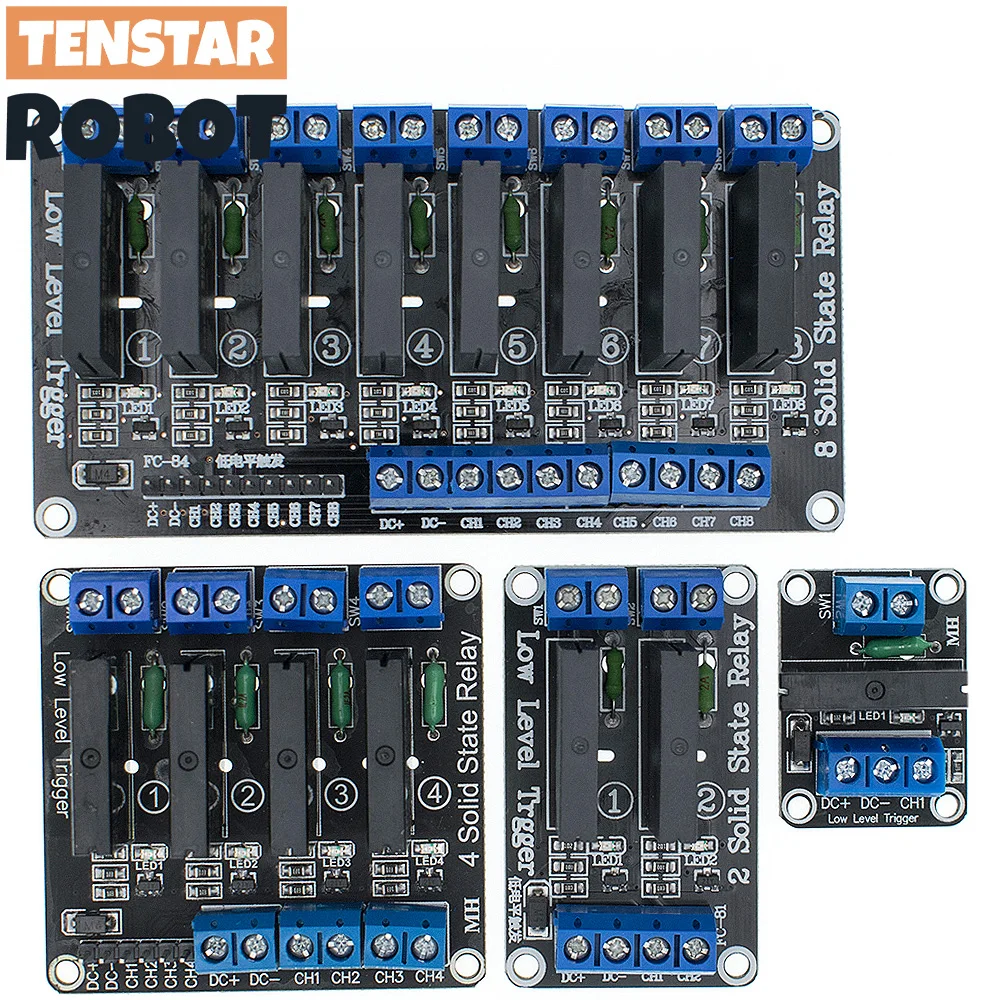
These modules are available in 1, 2, 4, and 8-channel configurations, providing flexibility for various project requirements. The visual input confirms the availability of these different channel counts, with each channel operating independently. This modularity allows users to select the exact number of control points needed without unnecessary overhead.
For a small project, a single-channel module might suffice to control a single light or appliance. For more complex automation, such as a smart home system managing multiple zones of lighting, heating, or ventilation, the 4-channel or 8-channel Boards offer a compact and integrated solution. This scalability simplifies wiring and reduces the overall footprint of the control system. Each channel is clearly labeled.
This range of options contrasts sharply with systems requiring individual relay boards for each channel, which can quickly become cumbersome and expensive. The integrated multi-channel boards streamline the design process, offering a cleaner and more professional installation. This design choice enhances project efficiency.
The modules are designed for a 5V low-level trigger, making them directly compatible with popular microcontrollers like Arduino, Raspberry Pi, and ESP32. A low-level trigger means the relay activates when the input pin receives a low voltage signal (typically 0V or ground). This is a common configuration for many digital logic circuits.
When integrated into a control system, this low-level triggering simplifies the programming logic. A microcontroller can easily pull a digital output pin low to activate the corresponding relay channel. This direct compatibility eliminates the need for additional level-shifting circuitry, reducing complexity and potential points of failure. Setup is straightforward.
Unlike some high-level trigger relays that require a positive voltage to activate, the low-level trigger design is often preferred for its inherent safety in certain scenarios, as a floating input might default to a high state. This design choice ensures reliable activation from standard 5V logic outputs, a common standard in hobbyist and professional electronics.
Each module is rated for switching 240V AC at up to 2A, incorporating a resistive fuse for overcurrent protection. This capacity allows for direct control of many common Household Appliances or lighting circuits within its specified limits. The resistive fuse is a critical safety component, designed to open the circuit if the current draw exceeds 2A, preventing damage to the relay and connected load, and mitigating fire hazards.
Overcurrent protection is vital. The 2A limit necessitates careful load calculation. Exceeding this can lead to fuse failure or relay damage. Proper wire gauge is essential for all connections to handle the 2A current safely without overheating. The terminals appear robust enough for appropriate wire sizes. Always verify the load's actual current draw before connecting it to the module. This prevents unexpected failures.
Unlike mechanical relays that often handle higher instantaneous currents but suffer from contact wear, these SSRs offer consistent performance within their specified resistive load. This makes them ideal for repetitive switching tasks where longevity is paramount. The 2A rating is suitable for many LED lighting arrays, small motors, or heating elements, but not for high-power appliances like electric heaters or large motors.
The printed circuit board (PCB) exhibits a clean layout with clear silkscreen markings for input and output connections, channel numbers, and power indicators. The black PCB material suggests a standard FR-4 substrate, offering good mechanical strength and electrical insulation. The component soldering appears consistent and free from obvious defects, indicating a controlled manufacturing process.
Terminal quality is paramount for electrical safety. The blue screw-terminal blocks for both DC input and AC output connections are a positive feature. These terminals provide secure connections for wires, reducing the risk of loose contacts, arcing, and potential fire hazards. Proper tightening is crucial. The terminals are clearly labeled for DC+, DC-, and individual channels (CH1, CH2, etc.), simplifying wiring. The AC output terminals are also clearly marked.
Compared to modules with less robust push-in or solder-pad connections, these screw terminals offer superior reliability for semi-permanent installations. The ability to securely fasten wires ensures stable electrical contact, which is critical for both performance and safety in any AC switching application. This attention to detail minimizes installation risks.
Designed with Arduino users in mind, these modules integrate seamlessly into existing Arduino projects. The 5V operating voltage and low-level trigger mechanism align perfectly with Arduino's digital output capabilities. This allows for straightforward programming using the Arduino IDE and its extensive library ecosystem.
Imagine automating a grow tent with precise control over lighting cycles, ventilation fans, and irrigation pumps. An Arduino board, combined with one of these multi-channel SSR modules, can manage all these AC-powered components with ease and reliability. The silent operation is a bonus. The simplicity of connecting the module to an Arduino's digital pins makes it accessible even for beginners.
This direct compatibility offers a significant advantage over modules requiring complex driver circuits or voltage converters, which add cost and complexity to a project. The plug-and-play nature with Arduino makes it a preferred choice for rapid prototyping and deployment in various automation tasks. It truly simplifies project development.
While SSRs offer many advantages, they do generate heat during operation, especially when switching higher currents. The G3MB-202P relays are designed for 2A, and at this current, some heat will be dissipated. The module's design, with individual relays mounted on the PCB, allows for some natural convection cooling.
For continuous operation at or near the 2A limit, careful consideration of ambient temperature and potential heat sinking is advisable. Although the module does not feature large external heatsinks, the internal design of the G3MB-202P is optimized for its rated current. Ensuring adequate airflow around the module can prevent thermal buildup. Overheating can reduce lifespan.
Unlike mechanical relays that dissipate minimal heat through their coil, SSRs, being semiconductor devices, have an inherent on-state resistance that generates heat. This is a trade-off for their silent, fast, and long-lasting operation. For applications requiring higher currents, external heatsinks or forced air cooling would be necessary, but for 2A, the integrated design is generally sufficient under normal conditions.
The inherent design of solid-state relays contributes significantly to their operational longevity. Without mechanical parts to wear out, the primary factors affecting lifespan are thermal management and electrical stress. Operating the module within its specified voltage and current limits, and ensuring proper cooling, will maximize its service life.
For industrial or long-term home automation projects, the reliability of SSRs translates into reduced downtime and maintenance costs. The consistent performance over millions of cycles means less frequent component replacement. This is a key benefit for critical systems. The resistive fuse also protects the relay itself from catastrophic overcurrent events.
Compared to mechanical relays that can fail due to contact welding, spring fatigue, or coil burnout, SSRs offer a more predictable failure mode, typically related to thermal stress if operated outside specifications. This predictability allows for better system design and preventative maintenance planning. The robust construction ensures consistent performance.
This TENSTAR ROBOT Solid State Relay Module provides a powerful and reliable solution for controlling AC loads with low-voltage logic. Its silent operation, high switching speed, and long lifespan make it an excellent choice for a wide array of automation projects, from simple lighting control to complex industrial systems. The modular channel options and Arduino compatibility further enhance its utility, allowing engineers and hobbyists to build sophisticated control systems with confidence and precision. Imagine the possibilities of seamlessly integrating high-voltage devices into your digital projects, knowing that safety and reliability are built into the core of this component.
Silent Switching Power: The SSR Advantage
This module utilizes Solid State Relays (SSRs), specifically the G3MB-202P model, which operate without moving parts. Unlike electromechanical relays that rely on physical contacts to open and close circuits, SSRs employ semiconductor devices like TRIACs or SCRs for switching. This fundamental difference eliminates contact bounce, arcing, and mechanical wear, which are common failure points in traditional relays. The absence of moving parts also means completely silent operation, a distinct advantage in noise-sensitive environments.
In practical applications, the silent operation of SSRs is invaluable. Imagine an automated lighting system in a quiet office or bedroom; mechanical relays would introduce an audible click with every switch, which can be disruptive. SSRs provide seamless, inaudible control. This makes them perfect for home automation, theatrical lighting, or industrial control panels where acoustic noise is a concern. The switching speed is also significantly faster.
Compared to standard mechanical relays, the G3MB-202P SSR offers superior longevity and reliability, especially in high-cycle applications. Mechanical relays have a finite number of operations before contacts degrade, often in the tens of thousands. SSRs, by contrast, can perform millions of switching cycles without degradation, translating to a much longer service life and reduced maintenance. This is a substantial return on investment.
Scalable Control: Channel Configurations
These modules are available in 1, 2, 4, and 8-channel configurations, providing flexibility for various project requirements. The visual input confirms the availability of these different channel counts, with each channel operating independently. This modularity allows users to select the exact number of control points needed without unnecessary overhead.
For a small project, a single-channel module might suffice to control a single light or appliance. For more complex automation, such as a smart home system managing multiple zones of lighting, heating, or ventilation, the 4-channel or 8-channel Boards offer a compact and integrated solution. This scalability simplifies wiring and reduces the overall footprint of the control system. Each channel is clearly labeled.
This range of options contrasts sharply with systems requiring individual relay boards for each channel, which can quickly become cumbersome and expensive. The integrated multi-channel boards streamline the design process, offering a cleaner and more professional installation. This design choice enhances project efficiency.
Logic Integration: Low-Level Triggering
The modules are designed for a 5V low-level trigger, making them directly compatible with popular microcontrollers like Arduino, Raspberry Pi, and ESP32. A low-level trigger means the relay activates when the input pin receives a low voltage signal (typically 0V or ground). This is a common configuration for many digital logic circuits.
When integrated into a control system, this low-level triggering simplifies the programming logic. A microcontroller can easily pull a digital output pin low to activate the corresponding relay channel. This direct compatibility eliminates the need for additional level-shifting circuitry, reducing complexity and potential points of failure. Setup is straightforward.
Unlike some high-level trigger relays that require a positive voltage to activate, the low-level trigger design is often preferred for its inherent safety in certain scenarios, as a floating input might default to a high state. This design choice ensures reliable activation from standard 5V logic outputs, a common standard in hobbyist and professional electronics.
Load Management: Voltage and Amperage Capacity
Each module is rated for switching 240V AC at up to 2A, incorporating a resistive fuse for overcurrent protection. This capacity allows for direct control of many common Household Appliances or lighting circuits within its specified limits. The resistive fuse is a critical safety component, designed to open the circuit if the current draw exceeds 2A, preventing damage to the relay and connected load, and mitigating fire hazards.
Overcurrent protection is vital. The 2A limit necessitates careful load calculation. Exceeding this can lead to fuse failure or relay damage. Proper wire gauge is essential for all connections to handle the 2A current safely without overheating. The terminals appear robust enough for appropriate wire sizes. Always verify the load's actual current draw before connecting it to the module. This prevents unexpected failures.
Unlike mechanical relays that often handle higher instantaneous currents but suffer from contact wear, these SSRs offer consistent performance within their specified resistive load. This makes them ideal for repetitive switching tasks where longevity is paramount. The 2A rating is suitable for many LED lighting arrays, small motors, or heating elements, but not for high-power appliances like electric heaters or large motors.
Structural Integrity: PCB and Terminal Quality
The printed circuit board (PCB) exhibits a clean layout with clear silkscreen markings for input and output connections, channel numbers, and power indicators. The black PCB material suggests a standard FR-4 substrate, offering good mechanical strength and electrical insulation. The component soldering appears consistent and free from obvious defects, indicating a controlled manufacturing process.
Terminal quality is paramount for electrical safety. The blue screw-terminal blocks for both DC input and AC output connections are a positive feature. These terminals provide secure connections for wires, reducing the risk of loose contacts, arcing, and potential fire hazards. Proper tightening is crucial. The terminals are clearly labeled for DC+, DC-, and individual channels (CH1, CH2, etc.), simplifying wiring. The AC output terminals are also clearly marked.
Compared to modules with less robust push-in or solder-pad connections, these screw terminals offer superior reliability for semi-permanent installations. The ability to securely fasten wires ensures stable electrical contact, which is critical for both performance and safety in any AC switching application. This attention to detail minimizes installation risks.
Microcontroller Synergy: Arduino Compatibility
Designed with Arduino users in mind, these modules integrate seamlessly into existing Arduino projects. The 5V operating voltage and low-level trigger mechanism align perfectly with Arduino's digital output capabilities. This allows for straightforward programming using the Arduino IDE and its extensive library ecosystem.
Imagine automating a grow tent with precise control over lighting cycles, ventilation fans, and irrigation pumps. An Arduino board, combined with one of these multi-channel SSR modules, can manage all these AC-powered components with ease and reliability. The silent operation is a bonus. The simplicity of connecting the module to an Arduino's digital pins makes it accessible even for beginners.
This direct compatibility offers a significant advantage over modules requiring complex driver circuits or voltage converters, which add cost and complexity to a project. The plug-and-play nature with Arduino makes it a preferred choice for rapid prototyping and deployment in various automation tasks. It truly simplifies project development.
Thermal Dynamics: Heat Dissipation
While SSRs offer many advantages, they do generate heat during operation, especially when switching higher currents. The G3MB-202P relays are designed for 2A, and at this current, some heat will be dissipated. The module's design, with individual relays mounted on the PCB, allows for some natural convection cooling.
For continuous operation at or near the 2A limit, careful consideration of ambient temperature and potential heat sinking is advisable. Although the module does not feature large external heatsinks, the internal design of the G3MB-202P is optimized for its rated current. Ensuring adequate airflow around the module can prevent thermal buildup. Overheating can reduce lifespan.
Unlike mechanical relays that dissipate minimal heat through their coil, SSRs, being semiconductor devices, have an inherent on-state resistance that generates heat. This is a trade-off for their silent, fast, and long-lasting operation. For applications requiring higher currents, external heatsinks or forced air cooling would be necessary, but for 2A, the integrated design is generally sufficient under normal conditions.
Operational Longevity: Reliability Factors
The inherent design of solid-state relays contributes significantly to their operational longevity. Without mechanical parts to wear out, the primary factors affecting lifespan are thermal management and electrical stress. Operating the module within its specified voltage and current limits, and ensuring proper cooling, will maximize its service life.
For industrial or long-term home automation projects, the reliability of SSRs translates into reduced downtime and maintenance costs. The consistent performance over millions of cycles means less frequent component replacement. This is a key benefit for critical systems. The resistive fuse also protects the relay itself from catastrophic overcurrent events.
Compared to mechanical relays that can fail due to contact welding, spring fatigue, or coil burnout, SSRs offer a more predictable failure mode, typically related to thermal stress if operated outside specifications. This predictability allows for better system design and preventative maintenance planning. The robust construction ensures consistent performance.
This TENSTAR ROBOT Solid State Relay Module provides a powerful and reliable solution for controlling AC loads with low-voltage logic. Its silent operation, high switching speed, and long lifespan make it an excellent choice for a wide array of automation projects, from simple lighting control to complex industrial systems. The modular channel options and Arduino compatibility further enhance its utility, allowing engineers and hobbyists to build sophisticated control systems with confidence and precision. Imagine the possibilities of seamlessly integrating high-voltage devices into your digital projects, knowing that safety and reliability are built into the core of this component.