Tin-Plated Electronic Jumper Wires (24/26AWG, 6-Color)
Official Store Deal
Expert Analysis Overview
These tin-plated electronic wires are an essential, cost-effective solution for hobbyists and professional technicians engaged in prototyping, repair, and custom circuit building. Their consistent gauge and reliable conductivity make them a foundational component for any electronics workbench. Unlike generic, unplated wires that quickly succumb to oxidation, these wires offer enhanced solderability and long-term connection stability, directly addressing common frustrations with signal integrity and component longevity.
The wires are available in 24AWG and 26AWG configurations, featuring a tin-plated copper conductor. American Wire Gauge (AWG) specifies the diameter of the conductor, with smaller numbers indicating a larger diameter and thus lower resistance. This selection provides flexibility for various current requirements and physical constraints within a circuit.
In practical application, the 24AWG wires are suitable for slightly higher current paths or longer runs where minimal voltage drop is critical. The 26AWG wires, being thinner, excel in dense layouts where space is at a premium, such as intricate PCB modifications or compact breadboard designs. Both gauges ensure efficient signal transmission without significant impedance.
Compared to bare copper, the tin-plating significantly retards oxidation. This is crucial for maintaining low resistance connections over time, especially in environments with fluctuating humidity. It ensures that the wire's electrical characteristics remain stable, preventing frustrating intermittent faults that often plague projects using inferior wiring.
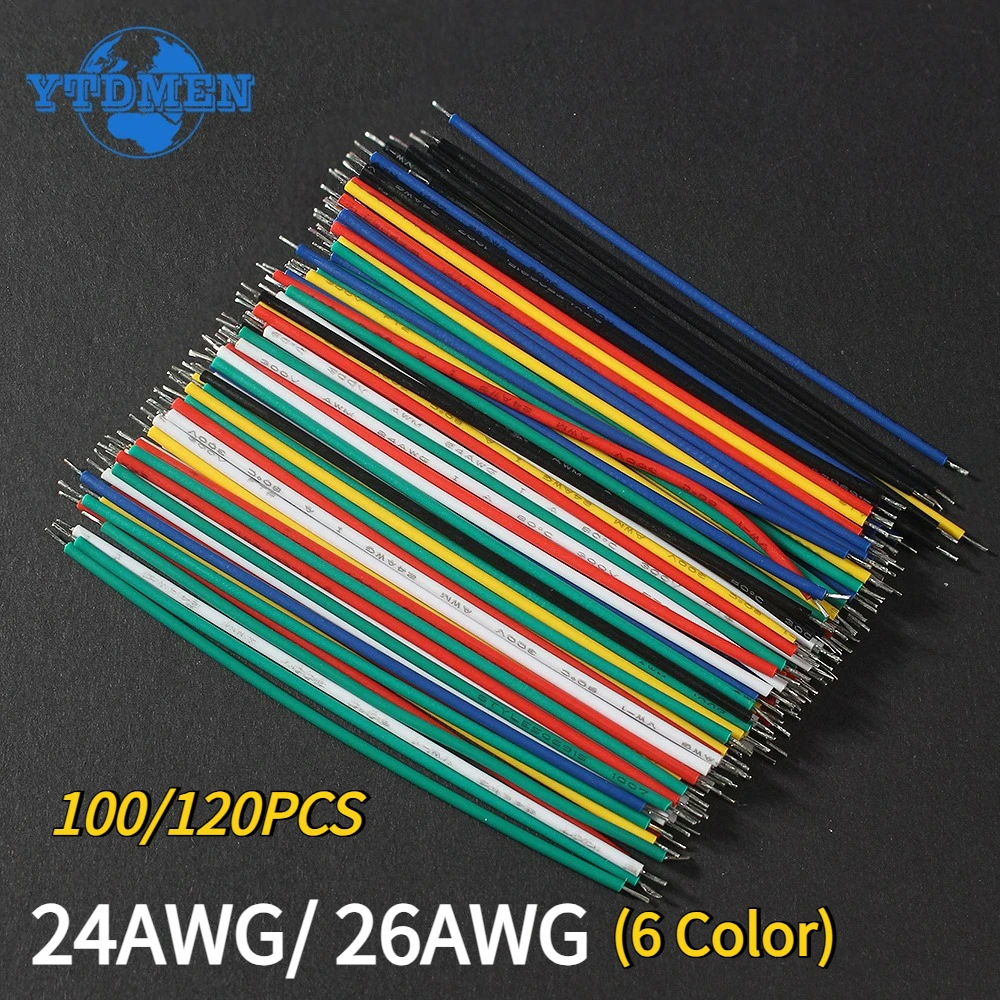
The wires feature a durable PVC insulation, presented in a practical palette of six distinct colors: Red, Blue, Green, White, Yellow, and Black. This color coding is not merely aesthetic; it is a fundamental tool for circuit organization.
During prototyping or repair, the vibrant colors allow for immediate identification of different signal lines, power rails, or ground connections. This visual distinction dramatically reduces the likelihood of wiring errors, which can be time-consuming to diagnose and potentially damaging to sensitive components. The insulation itself offers adequate protection against minor abrasions and short circuits, a common occurrence in busy work environments.
This insulation strikes a balance between protective thickness and flexibility. While some ultra-flexible silicone wires exist for specialized applications, the PVC here provides sufficient pliability for routing within enclosures and across breadboards without kinking excessively. It is a practical choice for general-purpose electronic work, offering a good compromise between durability and ease of manipulation.
Each copper strand is meticulously tin-plated. This process involves coating the copper with a thin layer of tin, a metal known for its excellent solderability and corrosion resistance. It is a critical feature for long-term reliability.
The tin-plating vastly improves the wire's ability to accept solder, creating strong, low-resistance joints quickly and efficiently. Imagine attempting to solder an oxidized bare copper wire; the process is frustrating, often resulting in cold joints or requiring excessive heat, which can damage surrounding components. Tin-plating eliminates this struggle, ensuring clean, reliable solder connections every time.
This protective layer also acts as a barrier against environmental factors. Bare copper oxidizes when exposed to air and moisture, forming a resistive layer that degrades signal quality and increases connection resistance. The tin-plating prevents this, ensuring that connections remain electrically sound for extended periods, a significant upgrade over unplated alternatives that often lead to premature circuit failures.
Many of these wires arrive with pre-stripped ends, ready for immediate use. This thoughtful preparation saves valuable time during assembly and prototyping. The consistency of the stripped length is a subtle but important detail.
For rapid prototyping on a breadboard, having pre-stripped ends means less time spent with wire strippers and more time focusing on circuit design. This efficiency translates directly into faster project completion and reduced frustration. The clean, consistent stripping also ensures optimal contact within breadboard sockets or screw terminals.
Consider the alternative: manually stripping dozens of wires for a complex project. This repetitive task is not only tedious but also prone to inconsistencies, potentially leading to poorly seated connections or damaged wire strands. The pre-stripped nature of these wires streamlines the workflow, making them a superior choice for both speed and reliability compared to bulk wire that requires individual preparation.
These wires are exceptionally well-suited for breadboard prototyping and temporary connections on PCBs. Their semi-rigid nature (especially if solid core, which is typical for jumper wires) allows them to hold their shape once inserted, maintaining a tidy and traceable circuit layout.
When designing and testing new circuits, the ability to quickly insert, remove, and rearrange connections is paramount. The wires provide a secure fit in standard breadboard holes, ensuring reliable electrical contact without the need for soldering. This facilitates rapid iteration and debugging, allowing engineers and hobbyists to experiment freely with different circuit configurations.
Compared to permanent soldering, which requires desoldering and resoldering for every change, these jumper wires transform the prototyping process. They enable a dynamic approach to circuit development, significantly accelerating the design cycle and reducing the risk of component damage from repeated heat exposure.
Beyond prototyping, these wires are indispensable for repairing and modifying existing electronic devices. They are suitable for a wide array of applications, including Household Appliances, LED lighting, electronic toys, automotive wiring, and general PCB connection lines. This versatility makes them a staple in any repair kit.
Imagine a scenario where a small internal wire in an electronic toy has frayed or broken. Instead of discarding the entire device, a technician can easily cut a length of this wire, strip the ends, and solder it into place, restoring functionality. This capability extends the life of countless gadgets and reduces electronic waste, offering a sustainable approach to consumer electronics.
The cost-effectiveness of using these wires for repair is substantial. Replacing a small section of damaged wiring with an affordable jumper wire is far more economical than purchasing a new appliance or sending a device for professional, often expensive, repair. This empowers individuals to undertake their own fixes, saving money and fostering a deeper understanding of electronics.
The construction of these wires emphasizes material resilience, ensuring they can withstand the rigors of a busy electronics workshop. The combination of tin-plated copper and robust PVC insulation contributes to their overall durability.
These wires are designed to endure repeated bending, minor tugs, and the occasional accidental contact with tools, common occurrences in any prototyping or repair environment. Their consistent quality means fewer instances of insulation tearing or conductors breaking prematurely, which could otherwise lead to frustrating troubleshooting sessions.
Unlike flimsy, poorly insulated wires that quickly degrade, these cables maintain their structural and electrical integrity over time. This reliability is a key factor in maintaining an efficient and safe workspace, as it minimizes the risk of unexpected failures or short circuits during active projects.
The inclusion of six distinct colors (Red, Blue, Green, White, Yellow, Black) is a significant advantage for maintaining organized and traceable circuits. This systematic approach to wiring is invaluable for both simple and complex projects.
Utilizing a consistent color scheme—for example, red for VCC, black for ground, and other colors for data lines—makes debugging and modification significantly easier. A quick glance at the circuit provides immediate insight into the flow of power and signals, preventing confusion and reducing the time spent tracing individual wires. It's a simple yet powerful organizational tool.
This color-coding system is a stark contrast to using a single-color wire for an entire project, which can quickly devolve into a tangled, indecipherable mess. The visual clarity provided by these multi-colored wires enhances productivity and minimizes errors, making complex circuits more manageable and less intimidating.
Offered in packs of 100 or 120 pieces, these wires provide an excellent value proposition for their quantity and quality. This bulk packaging ensures that users have an ample supply for multiple projects without the immediate need for reordering.
For hobbyists embarking on several projects or educators outfitting a classroom, having a generous supply of reliable jumper wires is incredibly beneficial. It eliminates the interruption of running out of a specific color or gauge mid-project, allowing for uninterrupted creative flow and practical learning experiences. The cost-per-wire is remarkably low.
This volume purchase strategy is economically sound, especially when compared to buying smaller, more expensive packs. It represents a sensible investment for anyone regularly working with electronics, ensuring that essential components are always on hand, ready for the next design or repair challenge.
The consistent quality and reliable performance of these wires play a crucial role in avoiding costly mistakes in electronics work. Using dependable wiring from the outset can prevent a cascade of issues that might otherwise lead to component damage or project delays.
Poor quality wires can lead to intermittent connections, shorts, or insufficient power delivery, all of which can damage sensitive microcontrollers, sensors, or other expensive components. By investing in these tin-plated wires, users minimize the risk of such failures, protecting their valuable Hardware and the time invested in their projects. It's a small expenditure that yields significant protection.
Consider the hidden costs associated with troubleshooting a circuit where the wiring itself is suspect. Hours can be lost chasing phantom faults that are ultimately traced back to a flimsy connection. These wires eliminate that variable, allowing technicians to focus on the actual circuit design rather than the integrity of the basic connections, saving both time and potential component replacement costs.
Imagine your workbench, organized and efficient, with every connection solid and every signal clear. These tin-plated wires empower you to tackle intricate circuit designs and critical repairs with confidence, knowing that the foundation of your electronic creations is robust and reliable. Your projects will progress smoothly, your debugging sessions will be shorter, and your finished products will perform exactly as intended, bringing your innovative ideas to life with precision and ease.
The Backbone of Circuitry: Understanding the Wires
Gauge and Conductivity: The Core Specification
The wires are available in 24AWG and 26AWG configurations, featuring a tin-plated copper conductor. American Wire Gauge (AWG) specifies the diameter of the conductor, with smaller numbers indicating a larger diameter and thus lower resistance. This selection provides flexibility for various current requirements and physical constraints within a circuit.
In practical application, the 24AWG wires are suitable for slightly higher current paths or longer runs where minimal voltage drop is critical. The 26AWG wires, being thinner, excel in dense layouts where space is at a premium, such as intricate PCB modifications or compact breadboard designs. Both gauges ensure efficient signal transmission without significant impedance.
Compared to bare copper, the tin-plating significantly retards oxidation. This is crucial for maintaining low resistance connections over time, especially in environments with fluctuating humidity. It ensures that the wire's electrical characteristics remain stable, preventing frustrating intermittent faults that often plague projects using inferior wiring.
Insulation Integrity: Protection and Flexibility
The wires feature a durable PVC insulation, presented in a practical palette of six distinct colors: Red, Blue, Green, White, Yellow, and Black. This color coding is not merely aesthetic; it is a fundamental tool for circuit organization.
During prototyping or repair, the vibrant colors allow for immediate identification of different signal lines, power rails, or ground connections. This visual distinction dramatically reduces the likelihood of wiring errors, which can be time-consuming to diagnose and potentially damaging to sensitive components. The insulation itself offers adequate protection against minor abrasions and short circuits, a common occurrence in busy work environments.
This insulation strikes a balance between protective thickness and flexibility. While some ultra-flexible silicone wires exist for specialized applications, the PVC here provides sufficient pliability for routing within enclosures and across breadboards without kinking excessively. It is a practical choice for general-purpose electronic work, offering a good compromise between durability and ease of manipulation.
Precision in Every Strand: Construction and Reliability
The Tinning Advantage: Preventing Corrosion
Each copper strand is meticulously tin-plated. This process involves coating the copper with a thin layer of tin, a metal known for its excellent solderability and corrosion resistance. It is a critical feature for long-term reliability.
The tin-plating vastly improves the wire's ability to accept solder, creating strong, low-resistance joints quickly and efficiently. Imagine attempting to solder an oxidized bare copper wire; the process is frustrating, often resulting in cold joints or requiring excessive heat, which can damage surrounding components. Tin-plating eliminates this struggle, ensuring clean, reliable solder connections every time.
This protective layer also acts as a barrier against environmental factors. Bare copper oxidizes when exposed to air and moisture, forming a resistive layer that degrades signal quality and increases connection resistance. The tin-plating prevents this, ensuring that connections remain electrically sound for extended periods, a significant upgrade over unplated alternatives that often lead to premature circuit failures.
Termination Quality: Ready for Connection
Many of these wires arrive with pre-stripped ends, ready for immediate use. This thoughtful preparation saves valuable time during assembly and prototyping. The consistency of the stripped length is a subtle but important detail.
For rapid prototyping on a breadboard, having pre-stripped ends means less time spent with wire strippers and more time focusing on circuit design. This efficiency translates directly into faster project completion and reduced frustration. The clean, consistent stripping also ensures optimal contact within breadboard sockets or screw terminals.
Consider the alternative: manually stripping dozens of wires for a complex project. This repetitive task is not only tedious but also prone to inconsistencies, potentially leading to poorly seated connections or damaged wire strands. The pre-stripped nature of these wires streamlines the workflow, making them a superior choice for both speed and reliability compared to bulk wire that requires individual preparation.
Connecting the Dots: Application Versatility
Prototyping on Breadboards: Rapid Iteration
These wires are exceptionally well-suited for breadboard prototyping and temporary connections on PCBs. Their semi-rigid nature (especially if solid core, which is typical for jumper wires) allows them to hold their shape once inserted, maintaining a tidy and traceable circuit layout.
When designing and testing new circuits, the ability to quickly insert, remove, and rearrange connections is paramount. The wires provide a secure fit in standard breadboard holes, ensuring reliable electrical contact without the need for soldering. This facilitates rapid iteration and debugging, allowing engineers and hobbyists to experiment freely with different circuit configurations.
Compared to permanent soldering, which requires desoldering and resoldering for every change, these jumper wires transform the prototyping process. They enable a dynamic approach to circuit development, significantly accelerating the design cycle and reducing the risk of component damage from repeated heat exposure.
Repair and Modification: Breathing New Life into Electronics
Beyond prototyping, these wires are indispensable for repairing and modifying existing electronic devices. They are suitable for a wide array of applications, including Household Appliances, LED lighting, electronic toys, automotive wiring, and general PCB connection lines. This versatility makes them a staple in any repair kit.
Imagine a scenario where a small internal wire in an electronic toy has frayed or broken. Instead of discarding the entire device, a technician can easily cut a length of this wire, strip the ends, and solder it into place, restoring functionality. This capability extends the life of countless gadgets and reduces electronic waste, offering a sustainable approach to consumer electronics.
The cost-effectiveness of using these wires for repair is substantial. Replacing a small section of damaged wiring with an affordable jumper wire is far more economical than purchasing a new appliance or sending a device for professional, often expensive, repair. This empowers individuals to undertake their own fixes, saving money and fostering a deeper understanding of electronics.
Longevity in the Lab: Durability and Storage
Material Resilience: Withstanding the Workshop
The construction of these wires emphasizes material resilience, ensuring they can withstand the rigors of a busy electronics workshop. The combination of tin-plated copper and robust PVC insulation contributes to their overall durability.
These wires are designed to endure repeated bending, minor tugs, and the occasional accidental contact with tools, common occurrences in any prototyping or repair environment. Their consistent quality means fewer instances of insulation tearing or conductors breaking prematurely, which could otherwise lead to frustrating troubleshooting sessions.
Unlike flimsy, poorly insulated wires that quickly degrade, these cables maintain their structural and electrical integrity over time. This reliability is a key factor in maintaining an efficient and safe workspace, as it minimizes the risk of unexpected failures or short circuits during active projects.
Organized Connectivity: The Six-Color System
The inclusion of six distinct colors (Red, Blue, Green, White, Yellow, Black) is a significant advantage for maintaining organized and traceable circuits. This systematic approach to wiring is invaluable for both simple and complex projects.
Utilizing a consistent color scheme—for example, red for VCC, black for ground, and other colors for data lines—makes debugging and modification significantly easier. A quick glance at the circuit provides immediate insight into the flow of power and signals, preventing confusion and reducing the time spent tracing individual wires. It's a simple yet powerful organizational tool.
This color-coding system is a stark contrast to using a single-color wire for an entire project, which can quickly devolve into a tangled, indecipherable mess. The visual clarity provided by these multi-colored wires enhances productivity and minimizes errors, making complex circuits more manageable and less intimidating.
The Cost-Benefit Analysis of Connectivity
Value Proposition: Quantity and Quality
Offered in packs of 100 or 120 pieces, these wires provide an excellent value proposition for their quantity and quality. This bulk packaging ensures that users have an ample supply for multiple projects without the immediate need for reordering.
For hobbyists embarking on several projects or educators outfitting a classroom, having a generous supply of reliable jumper wires is incredibly beneficial. It eliminates the interruption of running out of a specific color or gauge mid-project, allowing for uninterrupted creative flow and practical learning experiences. The cost-per-wire is remarkably low.
This volume purchase strategy is economically sound, especially when compared to buying smaller, more expensive packs. It represents a sensible investment for anyone regularly working with electronics, ensuring that essential components are always on hand, ready for the next design or repair challenge.
Avoiding Costly Mistakes: The Role of Reliable Wiring
The consistent quality and reliable performance of these wires play a crucial role in avoiding costly mistakes in electronics work. Using dependable wiring from the outset can prevent a cascade of issues that might otherwise lead to component damage or project delays.
Poor quality wires can lead to intermittent connections, shorts, or insufficient power delivery, all of which can damage sensitive microcontrollers, sensors, or other expensive components. By investing in these tin-plated wires, users minimize the risk of such failures, protecting their valuable Hardware and the time invested in their projects. It's a small expenditure that yields significant protection.
Consider the hidden costs associated with troubleshooting a circuit where the wiring itself is suspect. Hours can be lost chasing phantom faults that are ultimately traced back to a flimsy connection. These wires eliminate that variable, allowing technicians to focus on the actual circuit design rather than the integrity of the basic connections, saving both time and potential component replacement costs.
Imagine your workbench, organized and efficient, with every connection solid and every signal clear. These tin-plated wires empower you to tackle intricate circuit designs and critical repairs with confidence, knowing that the foundation of your electronic creations is robust and reliable. Your projects will progress smoothly, your debugging sessions will be shorter, and your finished products will perform exactly as intended, bringing your innovative ideas to life with precision and ease.