TLZWLA 5x20mm 250V Time-Lag Ceramic Fuses with Axial Leads
Official Store Deal
Expert Analysis Overview
The TLZWLA 5x20mm 250V Time-Lag Ceramic Fuses are essential circuit protection components, specifically engineered for applications requiring delayed response to transient overcurrents without nuisance tripping. These devices serve as critical safeguards, preventing catastrophic damage to sensitive electronic equipment and mitigating fire hazards. A fuse is a sacrificial device. Its primary function is to interrupt an electrical circuit when current exceeds a safe level. This action protects downstream components from overcurrent conditions. Without proper fusing, a simple fault can escalate into a major system failure, potentially leading to costly repairs or even fire. These TLZWLA fuses are designed to prevent such outcomes. They are a first line of defense.
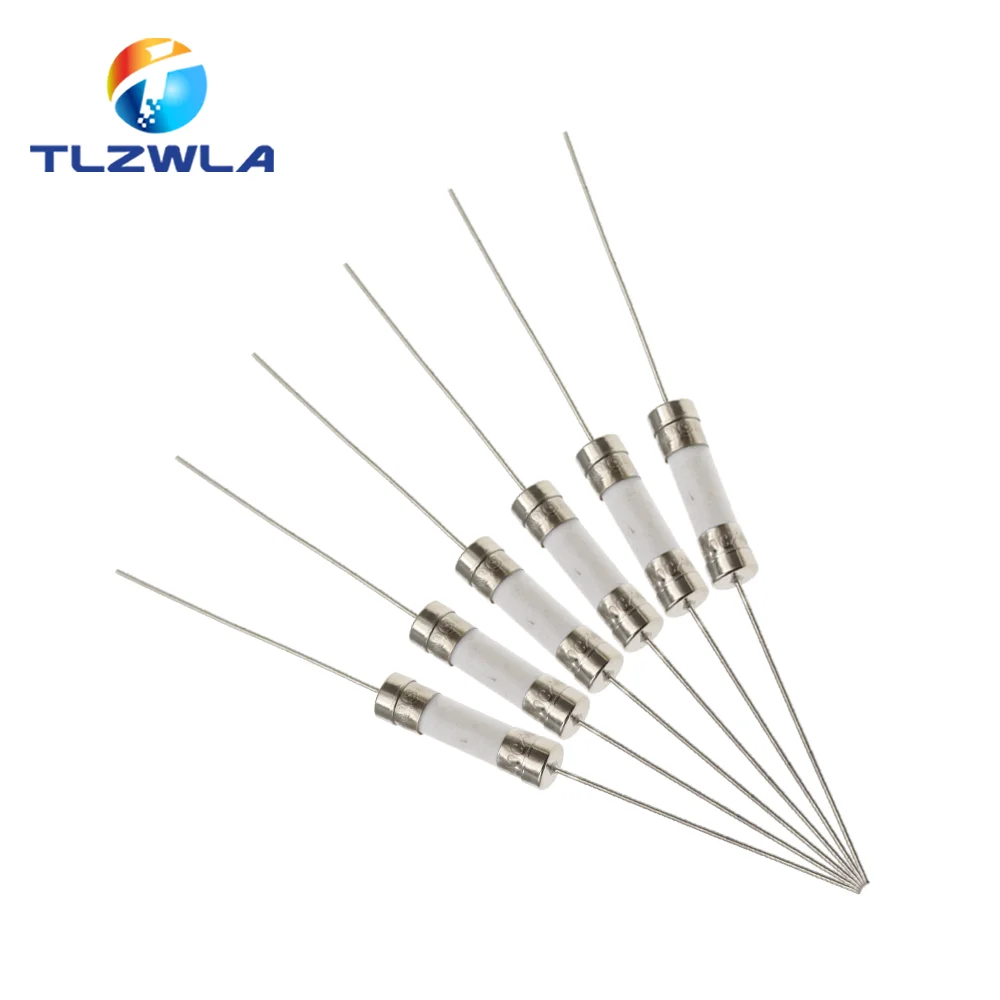
Circuit protection is paramount in any electrical system. These TLZWLA fuses, identified as 5x20mm time-lag ceramic types, are designed to open a circuit when an overcurrent condition persists for a specific duration. The visual evidence confirms their standard cylindrical form factor with axial leads. This design facilitates through-hole mounting on printed circuit boards or direct inline wiring. The 5x20mm dimension is a globally recognized standard, ensuring broad compatibility. This standardization simplifies component sourcing.
The implication of using such a component is direct and significant: enhanced system reliability. By allowing momentary inrush currents, common in motor starts or capacitor charging, these fuses prevent unnecessary interruptions. This capability ensures continuous operation for inductive or capacitive loads. They are not fast-acting. This intelligent delay is crucial.
Compared to standard fast-blow fuses, which react almost instantaneously to overcurrents, time-lag fuses offer a crucial delay. This distinction is vital for equipment that experiences temporary current spikes during normal operation. Selecting the correct fuse type is critical. Misapplication can lead to constant nuisance trips or, worse, inadequate protection.
The construction material of a fuse body significantly impacts its performance characteristics. These TLZWLA fuses feature a ceramic body, a deliberate choice for superior electrical and thermal properties. Ceramic offers a higher breaking capacity compared to traditional glass fuses. This means it can safely interrupt larger fault currents without exploding. It handles extreme conditions.
The use of ceramic implies enhanced safety and durability, particularly in demanding environments where high fault currents are a possibility. Ceramic bodies are less prone to shattering under high fault currents or thermal stress, which is a common failure mode for glass fuses. This reduces the risk of arc flash and material ejection. They withstand higher temperatures. This material choice is a safety feature.
Unlike glass fuses, which are transparent and allow visual inspection of the fuse element, ceramic fuses are opaque. While this prevents a quick visual check for a blown element, the trade-off is a significantly improved ability to handle higher fault currents and thermal cycling. This is a critical design choice. The internal sand filling in ceramic fuses also aids in arc quenching, further enhancing safety.
The product title initially presents a contradiction, mentioning both "Fast Break" and "Slow Blow." However, the accompanying datasheet clearly identifies these as "215 Series 5x20mm Time-Lag Fuses." Time-lag, or slow-blow, is the definitive characteristic. This clarifies the intended application. The "Fast Break" mention is a mislabeling.
This time-lag characteristic is engineered to prevent premature fuse operation during harmless, temporary current surges. Equipment like power supplies, motors, and transformers often draw higher currents for a brief period upon startup. A fast-acting fuse would trip immediately, causing unnecessary downtime. These fuses tolerate such transients. They provide robust protection.
The distinction from fast-acting fuses is crucial for system uptime. Fast-acting fuses are ideal for protecting purely resistive loads or highly sensitive semiconductor devices where even momentary overcurrents are detrimental. Time-lag fuses, conversely, are tailored for inductive or capacitive loads, where inrush currents are expected. They offer robust protection. This intelligent delay is a key benefit.
The fuses are equipped with axial leads, thin metallic wires extending from each end of the cylindrical body. This design is standard for through-hole mounting applications on printed circuit boards (PCBs) or for inline wiring within electrical enclosures. The leads are typically solderable, ensuring a permanent connection. This method is reliable.
The presence of axial leads implies straightforward integration into existing circuit designs. Technicians can easily insert these fuses into pre-drilled holes on a PCB and secure them with solder. This method provides a reliable mechanical and electrical connection, crucial for vibration-prone environments. Proper soldering techniques are essential. Cold solder joints compromise safety.
Compared to cartridge fuses that require a separate fuse holder, axial lead fuses offer a more compact and often more permanent installation. While replacement might involve desoldering, the direct integration reduces component count and potential points of failure. This simplifies assembly. The lead material itself is typically tinned copper, ensuring good conductivity and solderability.
These fuses are rated for 250V and are available in a wide range of amperages, from 0.5A to 25A. This broad selection ensures compatibility with numerous low-voltage and mains-voltage applications. The voltage rating indicates the maximum voltage the fuse can safely interrupt. Exceeding this rating can lead to dangerous arcing.
The implication of such a diverse amperage range is versatility across various electronic and electrical systems. Whether protecting a delicate control circuit drawing half an amp or a power supply handling up to 25 amps, a suitable rating is available. Correct selection prevents both under-protection and nuisance tripping. Always match the fuse to the circuit's normal operating current. Over-fusing is a serious safety risk.
Unlike a single-amperage pack, this offering provides flexibility for technicians and hobbyists who work with diverse projects. Having a range of values on hand minimizes downtime during prototyping or repair. This saves time and resources. It also allows for proper fuse derating, where the fuse is selected at 75% of its continuous current rating for optimal longevity.
The datasheet provided indicates that the 215 series fuses hold multiple international safety certifications, including UL, VDE, CCC, and others. These certifications are not merely badges; they represent rigorous testing and adherence to established safety standards. Compliance is non-negotiable. These marks signify quality.
The presence of these certifications implies that the fuses have been independently verified to perform as specified under fault conditions. This provides assurance regarding their breaking capacity, time-current characteristics, and overall safety. Using certified components reduces liability and ensures adherence to electrical codes. This is a critical factor.
In contrast to uncertified or generic fuses, which may fail unpredictably or inadequately during an overcurrent event, certified fuses offer a predictable and safe failure mode. This adherence to standards is critical for both product safety and regulatory compliance in commercial applications. Safety is paramount. It protects both equipment and personnel.
The visual inspection of the fuses reveals a robust construction, featuring a white ceramic body and metallic end caps. The axial leads appear to be securely crimped or welded to these end caps, ensuring a stable electrical connection. Build quality directly impacts reliability. Inferior construction leads to premature failure.
This construction implies a high degree of mechanical integrity and resistance to environmental factors such as temperature fluctuations. The ceramic body provides excellent insulation and thermal stability, while the metal end caps ensure good conductivity and secure termination points. These components are durable. They are designed for consistent performance.
Unlike fuses with flimsy construction that might suffer from poor contact resistance or mechanical failure, these fuses appear designed for long-term reliability within their specified operating parameters. The visible materials suggest a commitment to functional longevity. They are built to last. This reduces maintenance frequency.
The product is offered in a pack of 10 pieces, which presents a significant value proposition for professionals and enthusiasts alike. Having multiple fuses on hand, especially across a range of amperages, is a practical approach to maintenance and repair. Bulk purchasing is efficient. It streamlines operations.
This bulk offering implies readiness for unforeseen circuit issues or for projects requiring multiple fuse replacements. Instead of ordering individual fuses as needed, which incurs shipping costs and delays, a stock of these components ensures immediate availability. Downtime is minimized. This proactive approach saves time.
Compared to purchasing fuses individually from local electronics stores, which often carry higher per-unit costs, this bulk pack provides a cost-effective solution. It reduces the overall expenditure on essential circuit protection components over time. This is a smart investment. It optimizes inventory management.
One of the most common frustrations in electronics is unexpected equipment failure due to power surges or transient overcurrents. These events can instantly fry sensitive components, leading to costly repairs or complete system replacement. The problem is pervasive. It causes significant financial strain.
These TLZWLA time-lag ceramic fuses are specifically engineered to address this pain point. By allowing brief, harmless current spikes to pass, they prevent nuisance tripping. However, when a dangerous overcurrent condition persists, they reliably interrupt the circuit. This protects your investment. They act decisively when needed.
Unlike systems without proper fusing, which are vulnerable to cascading failures from a single fault, integrating these fuses provides a critical line of defense. They act as a sacrificial component, absorbing the damage so your more expensive equipment does not. This is a simple, effective solution. It safeguards your entire setup.
Many standard circuit protection solutions offer basic functionality but lack the nuanced response required for complex electronic systems. Generic fuses might trip too easily or, worse, fail to clear a fault effectively, leading to ongoing frustration and potential damage. This can be a major headache.
These TLZWLA time-lag ceramic fuses represent a significant upgrade from basic protection. Their ceramic construction provides a higher breaking capacity, crucial for safely interrupting large fault currents. The time-lag characteristic ensures an intelligent response to current fluctuations, optimizing system uptime. They are a superior choice. They offer advanced performance.
Compared to entry-level glass fuses, which are often limited in their fault current interruption capabilities and thermal stability, these ceramic fuses offer enhanced safety and reliability for a broader range of applications. This makes them a preferred component for discerning electricians and engineers who prioritize robust protection. They perform better. This is a professional-grade solution.
The careful selection and installation of circuit protection devices like these TLZWLA time-lag ceramic fuses are fundamental to the long-term health and safety of any electrical system. Imagine the peace of mind knowing that your valuable electronics are shielded from unexpected power anomalies, preventing costly repairs and extending equipment lifespan. Envision a workshop where project delays due to blown components are a rarity, thanks to a readily available stock of reliable fuses that perform exactly as expected. Picture a home entertainment system or industrial control panel operating flawlessly, its sensitive internal circuitry safeguarded by these robust guardians against overcurrent, ensuring uninterrupted service and safety. This proactive approach to protection ensures not only the longevity of your equipment but also the safety of your environment, making these fuses an indispensable part of any well-designed electrical setup.
The Guardians of Current Flow
Circuit protection is paramount in any electrical system. These TLZWLA fuses, identified as 5x20mm time-lag ceramic types, are designed to open a circuit when an overcurrent condition persists for a specific duration. The visual evidence confirms their standard cylindrical form factor with axial leads. This design facilitates through-hole mounting on printed circuit boards or direct inline wiring. The 5x20mm dimension is a globally recognized standard, ensuring broad compatibility. This standardization simplifies component sourcing.
The implication of using such a component is direct and significant: enhanced system reliability. By allowing momentary inrush currents, common in motor starts or capacitor charging, these fuses prevent unnecessary interruptions. This capability ensures continuous operation for inductive or capacitive loads. They are not fast-acting. This intelligent delay is crucial.
Compared to standard fast-blow fuses, which react almost instantaneously to overcurrents, time-lag fuses offer a crucial delay. This distinction is vital for equipment that experiences temporary current spikes during normal operation. Selecting the correct fuse type is critical. Misapplication can lead to constant nuisance trips or, worse, inadequate protection.
Anatomy of Protection: Ceramic vs. Glass
The construction material of a fuse body significantly impacts its performance characteristics. These TLZWLA fuses feature a ceramic body, a deliberate choice for superior electrical and thermal properties. Ceramic offers a higher breaking capacity compared to traditional glass fuses. This means it can safely interrupt larger fault currents without exploding. It handles extreme conditions.
The use of ceramic implies enhanced safety and durability, particularly in demanding environments where high fault currents are a possibility. Ceramic bodies are less prone to shattering under high fault currents or thermal stress, which is a common failure mode for glass fuses. This reduces the risk of arc flash and material ejection. They withstand higher temperatures. This material choice is a safety feature.
Unlike glass fuses, which are transparent and allow visual inspection of the fuse element, ceramic fuses are opaque. While this prevents a quick visual check for a blown element, the trade-off is a significantly improved ability to handle higher fault currents and thermal cycling. This is a critical design choice. The internal sand filling in ceramic fuses also aids in arc quenching, further enhancing safety.
Precision Timing: Understanding Time-Lag Characteristics
The product title initially presents a contradiction, mentioning both "Fast Break" and "Slow Blow." However, the accompanying datasheet clearly identifies these as "215 Series 5x20mm Time-Lag Fuses." Time-lag, or slow-blow, is the definitive characteristic. This clarifies the intended application. The "Fast Break" mention is a mislabeling.
This time-lag characteristic is engineered to prevent premature fuse operation during harmless, temporary current surges. Equipment like power supplies, motors, and transformers often draw higher currents for a brief period upon startup. A fast-acting fuse would trip immediately, causing unnecessary downtime. These fuses tolerate such transients. They provide robust protection.
The distinction from fast-acting fuses is crucial for system uptime. Fast-acting fuses are ideal for protecting purely resistive loads or highly sensitive semiconductor devices where even momentary overcurrents are detrimental. Time-lag fuses, conversely, are tailored for inductive or capacitive loads, where inrush currents are expected. They offer robust protection. This intelligent delay is a key benefit.
The Critical Connection: Axial Leads and Mounting
The fuses are equipped with axial leads, thin metallic wires extending from each end of the cylindrical body. This design is standard for through-hole mounting applications on printed circuit boards (PCBs) or for inline wiring within electrical enclosures. The leads are typically solderable, ensuring a permanent connection. This method is reliable.
The presence of axial leads implies straightforward integration into existing circuit designs. Technicians can easily insert these fuses into pre-drilled holes on a PCB and secure them with solder. This method provides a reliable mechanical and electrical connection, crucial for vibration-prone environments. Proper soldering techniques are essential. Cold solder joints compromise safety.
Compared to cartridge fuses that require a separate fuse holder, axial lead fuses offer a more compact and often more permanent installation. While replacement might involve desoldering, the direct integration reduces component count and potential points of failure. This simplifies assembly. The lead material itself is typically tinned copper, ensuring good conductivity and solderability.
Voltage and Amperage: Matching the Load
These fuses are rated for 250V and are available in a wide range of amperages, from 0.5A to 25A. This broad selection ensures compatibility with numerous low-voltage and mains-voltage applications. The voltage rating indicates the maximum voltage the fuse can safely interrupt. Exceeding this rating can lead to dangerous arcing.
The implication of such a diverse amperage range is versatility across various electronic and electrical systems. Whether protecting a delicate control circuit drawing half an amp or a power supply handling up to 25 amps, a suitable rating is available. Correct selection prevents both under-protection and nuisance tripping. Always match the fuse to the circuit's normal operating current. Over-fusing is a serious safety risk.
Unlike a single-amperage pack, this offering provides flexibility for technicians and hobbyists who work with diverse projects. Having a range of values on hand minimizes downtime during prototyping or repair. This saves time and resources. It also allows for proper fuse derating, where the fuse is selected at 75% of its continuous current rating for optimal longevity.
Ensuring Compliance: Safety Standards and Certifications
The datasheet provided indicates that the 215 series fuses hold multiple international safety certifications, including UL, VDE, CCC, and others. These certifications are not merely badges; they represent rigorous testing and adherence to established safety standards. Compliance is non-negotiable. These marks signify quality.
The presence of these certifications implies that the fuses have been independently verified to perform as specified under fault conditions. This provides assurance regarding their breaking capacity, time-current characteristics, and overall safety. Using certified components reduces liability and ensures adherence to electrical codes. This is a critical factor.
In contrast to uncertified or generic fuses, which may fail unpredictably or inadequately during an overcurrent event, certified fuses offer a predictable and safe failure mode. This adherence to standards is critical for both product safety and regulatory compliance in commercial applications. Safety is paramount. It protects both equipment and personnel.
Longevity and Reliability: The Build Quality
The visual inspection of the fuses reveals a robust construction, featuring a white ceramic body and metallic end caps. The axial leads appear to be securely crimped or welded to these end caps, ensuring a stable electrical connection. Build quality directly impacts reliability. Inferior construction leads to premature failure.
This construction implies a high degree of mechanical integrity and resistance to environmental factors such as temperature fluctuations. The ceramic body provides excellent insulation and thermal stability, while the metal end caps ensure good conductivity and secure termination points. These components are durable. They are designed for consistent performance.
Unlike fuses with flimsy construction that might suffer from poor contact resistance or mechanical failure, these fuses appear designed for long-term reliability within their specified operating parameters. The visible materials suggest a commitment to functional longevity. They are built to last. This reduces maintenance frequency.
Strategic Stocking: Value in Bulk
The product is offered in a pack of 10 pieces, which presents a significant value proposition for professionals and enthusiasts alike. Having multiple fuses on hand, especially across a range of amperages, is a practical approach to maintenance and repair. Bulk purchasing is efficient. It streamlines operations.
This bulk offering implies readiness for unforeseen circuit issues or for projects requiring multiple fuse replacements. Instead of ordering individual fuses as needed, which incurs shipping costs and delays, a stock of these components ensures immediate availability. Downtime is minimized. This proactive approach saves time.
Compared to purchasing fuses individually from local electronics stores, which often carry higher per-unit costs, this bulk pack provides a cost-effective solution. It reduces the overall expenditure on essential circuit protection components over time. This is a smart investment. It optimizes inventory management.
The Unseen Threat: Protecting Against Transients
One of the most common frustrations in electronics is unexpected equipment failure due to power surges or transient overcurrents. These events can instantly fry sensitive components, leading to costly repairs or complete system replacement. The problem is pervasive. It causes significant financial strain.
These TLZWLA time-lag ceramic fuses are specifically engineered to address this pain point. By allowing brief, harmless current spikes to pass, they prevent nuisance tripping. However, when a dangerous overcurrent condition persists, they reliably interrupt the circuit. This protects your investment. They act decisively when needed.
Unlike systems without proper fusing, which are vulnerable to cascading failures from a single fault, integrating these fuses provides a critical line of defense. They act as a sacrificial component, absorbing the damage so your more expensive equipment does not. This is a simple, effective solution. It safeguards your entire setup.
The Professional's Choice: An Upgrade in Circuit Defense
Many standard circuit protection solutions offer basic functionality but lack the nuanced response required for complex electronic systems. Generic fuses might trip too easily or, worse, fail to clear a fault effectively, leading to ongoing frustration and potential damage. This can be a major headache.
These TLZWLA time-lag ceramic fuses represent a significant upgrade from basic protection. Their ceramic construction provides a higher breaking capacity, crucial for safely interrupting large fault currents. The time-lag characteristic ensures an intelligent response to current fluctuations, optimizing system uptime. They are a superior choice. They offer advanced performance.
Compared to entry-level glass fuses, which are often limited in their fault current interruption capabilities and thermal stability, these ceramic fuses offer enhanced safety and reliability for a broader range of applications. This makes them a preferred component for discerning electricians and engineers who prioritize robust protection. They perform better. This is a professional-grade solution.
Final Considerations for System Integrity
The careful selection and installation of circuit protection devices like these TLZWLA time-lag ceramic fuses are fundamental to the long-term health and safety of any electrical system. Imagine the peace of mind knowing that your valuable electronics are shielded from unexpected power anomalies, preventing costly repairs and extending equipment lifespan. Envision a workshop where project delays due to blown components are a rarity, thanks to a readily available stock of reliable fuses that perform exactly as expected. Picture a home entertainment system or industrial control panel operating flawlessly, its sensitive internal circuitry safeguarded by these robust guardians against overcurrent, ensuring uninterrupted service and safety. This proactive approach to protection ensures not only the longevity of your equipment but also the safety of your environment, making these fuses an indispensable part of any well-designed electrical setup.