TNCE Brazilian Smart Plug with Power Monitor
Official Store Deal
Expert Analysis Overview
The TNCE Brazilian Smart Plug: A Deep Dive into Connected Power Management
The TNCE Brazilian Smart Plug is a highly adaptable power monitoring solution engineered for users navigating the complexities of modern home automation, particularly within the Brazilian electrical standard. It offers a critical choice between direct Wi-Fi integration and the more robust Zigbee 3.0 protocol, catering to diverse smart home architectures. This device directly addresses the pervasive challenge of energy consumption awareness, transforming passive outlets into active data points within a connected ecosystem.
Architectural Flexibility: Wi-Fi vs. Zigbee 3.0
This smart plug presents a fundamental choice: Wi-Fi 2.4GHz or Zigbee 3.0. Each protocol offers distinct advantages, influencing system latency and overall network topology. A user's existing smart home infrastructure heavily dictates the optimal selection.
The Wi-Fi variant connects directly to a home's 2.4GHz wireless network. This simplifies initial setup. No additional bridge Hardware is necessary. It integrates seamlessly with applications like Tuya Smart and Smart Life, providing immediate app control. This direct connection minimizes hardware overhead.
Conversely, the Zigbee 3.0 version operates on a mesh network, requiring a dedicated Zigbee 3.0 gateway. This gateway acts as a translator, allowing Zigbee devices to communicate with the broader internet and smart home platforms. The mesh architecture inherently offers improved signal reliability and lower power consumption for individual devices. It builds a more resilient network.
Compared to a generic Wi-Fi-only plug, the inclusion of a Zigbee 3.0 option represents a significant upgrade for serious home automation enthusiasts. While Wi-Fi can introduce network congestion and higher latency in dense smart home environments, Zigbee excels in creating a responsive, interconnected web of devices. The choice empowers users.
Electrical Fortitude and Intelligent Monitoring
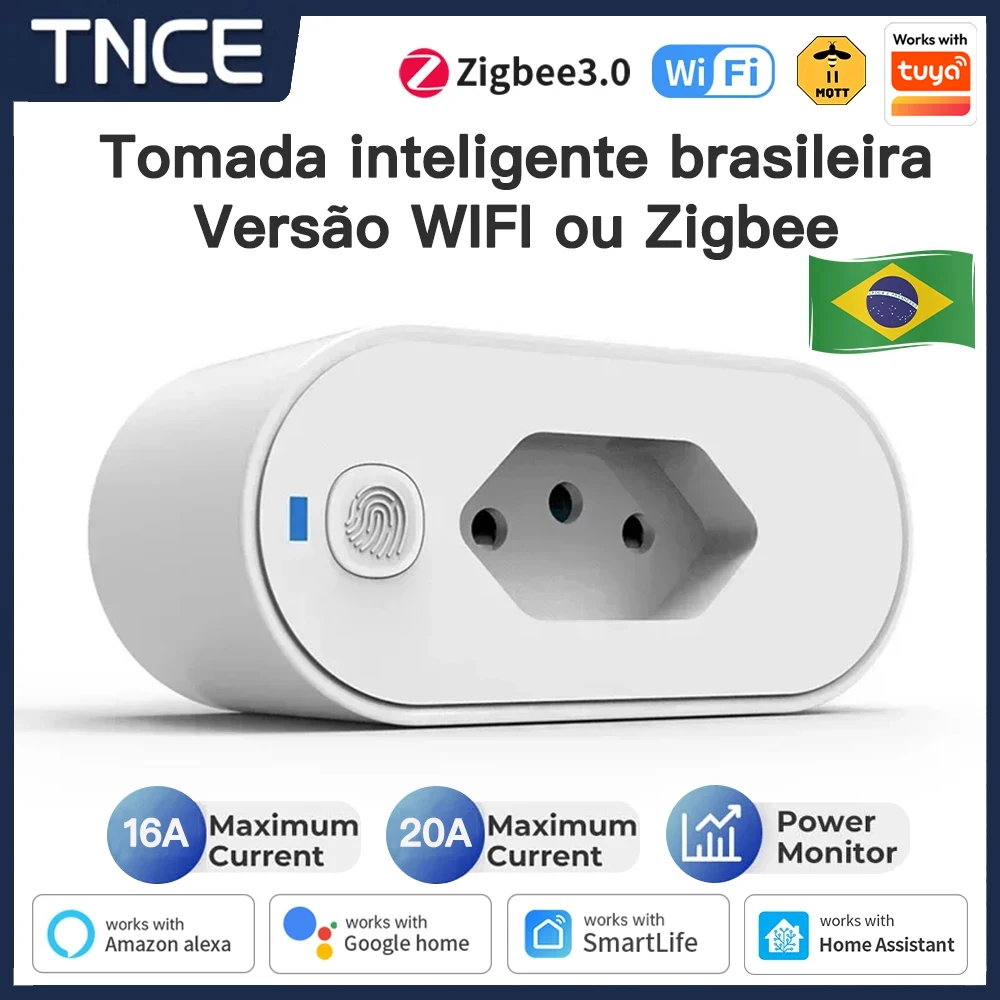
The TNCE smart plug is available in both 16A and 20A maximum current ratings, providing substantial capacity for demanding appliances. This robust electrical design ensures compatibility with a wide range of household devices, from common lamps to more power-hungry kitchen equipment. Power management is critical.
Integrated power monitoring is a standout feature. This functionality tracks real-time and historical electricity consumption, presenting valuable data to the user. The associated smart home application visualizes this data, allowing for granular analysis of energy usage patterns. This empowers informed decisions.
Imagine operating a high-wattage heater or a heavy-duty blender. The ability to observe its exact power draw and cumulative energy expenditure offers immediate financial and environmental benefits. Users can identify energy vampires. This capability surpasses standard smart plugs that merely offer on/off control, providing a tangible return on investment through optimized energy habits. It saves money.
Ergonomics and Build Quality: Brazilian Standard Precision
The physical design of the TNCE smart plug adheres to the Brazilian NBR 14136 standard. This specific form factor ensures perfect compatibility with local wall outlets, a crucial detail often overlooked in international markets. The plug's matte white plastic finish suggests a durable, non-obtrusive aesthetic that blends into most home décors. Its compact profile prevents obstruction of adjacent outlets.
The device features a tactile manual control button, centrally located for easy access. This button provides immediate physical override for power switching, a fundamental safety and convenience feature. An integrated LED indicator provides visual feedback on the plug's operational status and connection. It glows blue when active.
Unlike many budget smart plugs that exhibit flimsy construction or loose tolerances, the apparent mold precision of this unit indicates a focus on fit and finish. The dense feel of the plastic, as suggested by its visual solidity, contributes to a perception of longevity. This build quality is essential.
Advanced Automation: Scheduling and Inching Capabilities
Beyond basic remote control, the TNCE smart plug incorporates sophisticated automation features like scheduling and an inching function. These capabilities move the device beyond a simple switch, enabling truly intelligent control over connected appliances. Automation simplifies life.
The scheduling function allows users to define precise on/off times for connected devices. This can range from automating morning coffee routines to ensuring lights are off when leaving for work. Multiple schedules can be configured, adapting to daily or weekly routines. This saves effort.
The inching function is a specialized feature for momentary power delivery. When activated, the plug automatically deactivates after a user-defined short period (e.g., 5 seconds). Picture needing a quick burst of power for a specific task, like charging a small battery for a set duration or momentarily activating a solenoid. This prevents accidental prolonged operation.
These advanced functions differentiate the TNCE plug from basic timers or on/off switches. They offer a level of granular control that significantly enhances convenience and safety within a smart home environment. The system is flexible.
Ecosystem Integration: Tuya, Alexa, Google Home, and Home Assistant
The TNCE smart plug's integration capabilities are broad, encompassing popular ecosystems like Tuya Smart, Smart Life, Amazon Alexa, and Google Home. For the more technically inclined, its protocol choices also open avenues for Home Assistant integration. Connectivity is paramount.
The Wi-Fi version integrates directly with Tuya Smart and Smart Life apps, providing a familiar interface for device management, scheduling, and power monitoring. From these apps, it easily links to Alexa and Google Home for voice control. This is straightforward.
The Zigbee 3.0 version, while requiring a gateway, offers distinct advantages for Home Assistant users. Zigbee devices often allow for local control, meaning commands are processed within the home network rather than relying on cloud servers. This significantly reduces latency and improves reliability, especially during internet outages. Local control is key.
A crucial point for the Zigbee version is its specific note regarding Tuya Smart/Smart Life direct support. While a Zigbee 3.0 gateway connected to Tuya/Smart Life can manage the plug, the explicit statement "Zigbee3.0 does not support Tuya Smart, Smart Life" implies a potential limitation in direct app pairing or feature access without that intermediary hub. For Home Assistant users, however, this might be less of a concern, as they often prefer direct Zigbee coordinator integration for maximum control. This requires careful setup.
The Home Automation Engineer's Perspective: Latency and Local Control
From a home automation engineer's standpoint, the choice between Wi-Fi and Zigbee 3.0 is not trivial; it's a strategic decision impacting system responsiveness and resilience. Wi-Fi offers simplicity. Zigbee offers performance.
Wi-Fi devices, while easy to set up, can contribute to network congestion and rely heavily on cloud services. This can introduce perceptible delays between issuing a command and the device responding. Imagine pressing a smart switch and waiting a full second for a light to react. This lag frustrates users.
Zigbee 3.0, with its mesh networking and potential for local control (especially when integrated with platforms like Home Assistant via a compatible coordinator), provides a superior experience in terms of latency. Commands are processed almost instantaneously. This responsiveness is invaluable for critical automations. The network is robust.
For users building complex automation routines, particularly those involving multiple devices reacting in sequence, the low latency of Zigbee is a distinct advantage. It ensures a cohesive and fluid smart home experience. This is a significant factor.
The Value Proposition: Beyond the Outlet
This TNCE smart plug transcends the role of a simple power adapter. It functions as an intelligent node within a larger ecosystem, offering capabilities that directly translate into tangible benefits for the user. Its value extends beyond its initial purchase price.
The integrated power monitoring, for instance, provides a clear return on investment by enabling users to identify and curb wasteful energy consumption. Over time, these savings can easily offset the cost of the device. It pays for itself.
The dual connectivity options provide future-proofing and adaptability. Should a user decide to transition from a purely Wi-Fi setup to a more robust Zigbee mesh network, this plug offers that flexibility without requiring a complete system overhaul. This adaptability is key.
Compared to basic smart plugs that lack energy monitoring or advanced scheduling, this unit offers a more comprehensive solution. It provides not just control, but also insight and automation, making it a valuable addition to any modern smart home. It upgrades the experience.
Final Thoughts on an Intelligent Power Solution
The TNCE Brazilian Smart Plug stands as a compelling option for those seeking to integrate power management into their smart home. Its dual protocol support, high current capacity, and comprehensive feature set — including robust power monitoring and advanced scheduling — position it as a versatile tool. The choice between Wi-Fi and Zigbee caters to different architectural preferences, with the latter offering superior performance for latency-sensitive applications and local control enthusiasts. Its adherence to the Brazilian electrical standard fills a specific market need, ensuring direct compatibility.
Imagine a home where every appliance operates on an optimized schedule, where energy consumption is transparent, and where voice commands instantly control your environment. This smart plug brings that vision closer. Picture effortlessly commanding your coffee maker to start brewing as you wake, or having your air purifier activate only when air quality dips, all while seeing exactly how much power these actions consume. This device empowers a more efficient and responsive living space, transforming ordinary power outlets into intelligent conduits for a truly connected life.