TOMZN 4P 63A Manual Transfer Switch
Official Store Deal
Expert Analysis Overview
The TOMZN 4P 63A Manual Transfer Switch is a critical safety device engineered for seamless and secure power source transitions in three-phase electrical systems. This component is essential for installations requiring a deliberate, controlled method to switch between a primary power supply and a backup, such as a generator.
This manual transfer switch features a 4-pole configuration, indicating its suitability for three-phase systems with a neutral conductor. The 63A current rating signifies its capacity to handle substantial electrical loads, making it appropriate for various residential, commercial, and light industrial applications.
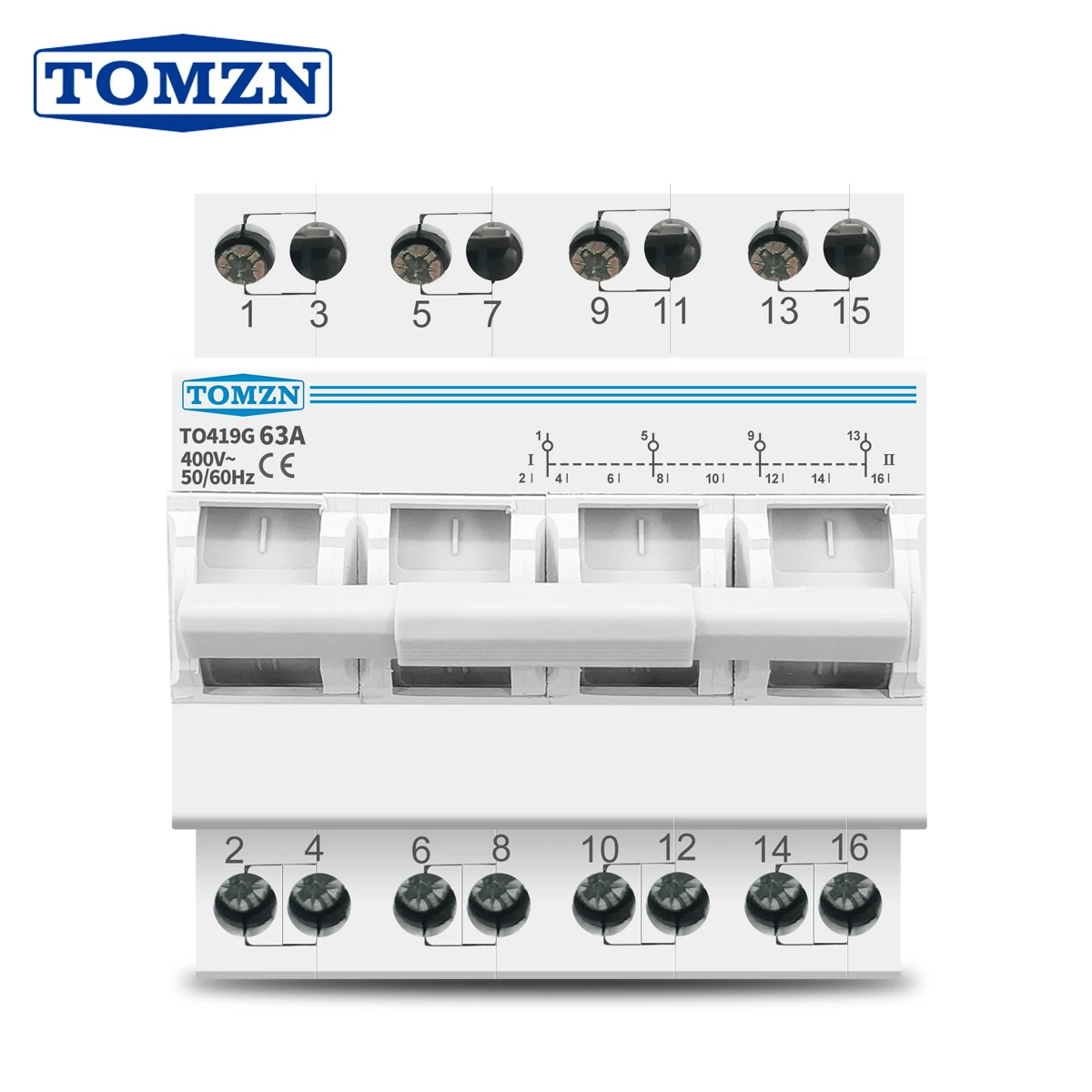
The visible robust white plastic housing suggests a durable construction. The design incorporates clearly labeled input and output terminals, crucial for correct wiring and safe operation. Each pole has distinct connection points.
Unlike standard circuit breakers that primarily offer overcurrent protection, this device's core purpose is isolation and transfer. It ensures complete electrical separation between two power sources, preventing dangerous back-feeding. This isolation is paramount for personnel safety during maintenance or power outages.
A key safety feature is the integrated mechanical interlock. This mechanism physically prevents both power sources from being connected to the load simultaneously.
When one source is engaged, the interlock ensures the other remains disconnected. This prevents catastrophic short circuits and equipment damage. Such a design is a fundamental requirement for safe dual-power installations.
Standard isolating switches often lack this critical interlock. The TOMZN unit's integrated interlock simplifies installation and enhances operational safety, reducing the risk of human error.
The device is rated for 400V~ and 50/60Hz, aligning with common three-phase electrical standards globally. The CE marking indicates compliance with European safety, health, and environmental protection requirements.
These specifications confirm its suitability for a wide range of electrical infrastructures. Proper voltage and frequency matching are vital for system stability. Incorrect ratings can lead to equipment failure or hazardous conditions.
Many generic switches might not explicitly state compliance. The CE certification provides an assurance of manufacturing quality and adherence to recognized safety benchmarks, a significant advantage for professional installations.
The images reveal screw-type terminals, designed for secure wire connections. The numbered terminals (1-16) provide a clear guide for wiring the primary power, standby power, and the load.
Secure terminal connections are non-negotiable for electrical safety. Loose connections can generate heat, leading to arcing, fire hazards, and power interruptions. The visible terminal design appears capable of accommodating appropriate wire gauges for 63A circuits.
Compared to quick-connect or spring-loaded terminals, screw terminals offer a robust, field-serviceable connection. Proper torque application is essential for optimal performance and safety.
Installation typically involves mounting the switch on a DIN rail within an electrical panel. The compact form factor allows for integration into existing enclosures.
Correct wiring is paramount. The provided diagram illustrates the connection points for normal power, standby power, and the load. Following these instructions precisely prevents operational errors and ensures safety.
Many manual transfer switches can be complex to wire. This unit's clear labeling and diagram simplify the process, reducing installation time and potential mistakes compared to more intricate setups.
The switch operates via a set of manual levers, allowing for direct control over power source selection. Positions 'I' and 'II' represent the two power sources, with a 'Middle' position for complete disconnection.
Manual control offers a distinct advantage in situations where human intervention is preferred or necessary. It provides immediate feedback on the switch's state. This direct engagement ensures the operator is fully aware of the power configuration.
Automatic transfer switches (ATS) offer convenience but can be more complex and expensive. This manual switch provides a reliable, straightforward alternative for applications where immediate, automated transfer is not a critical requirement.
Ensuring electrical safety is the primary concern for any transfer switch. This unit's design, with its mechanical interlock and clear operating positions, prioritizes preventing dangerous conditions.
Reliability in power transfer is crucial for maintaining essential services during outages. A robust manual switch minimizes the risk of failure points associated with complex electronic controls.
Inferior switches may compromise on interlock mechanisms or material quality. The TOMZN unit appears to offer a dependable solution for critical power management, reducing the likelihood of electrical hazards.
The visible construction suggests a product built for sustained operation. The materials appear to be standard for electrical switchgear, designed to withstand typical operational stresses.
Long-term durability is a significant factor in electrical infrastructure. Frequent switching or harsh environmental conditions can degrade components. This switch's design implies a reasonable service life under specified conditions.
Investing in a durable switch reduces replacement frequency and maintenance costs. This unit represents a practical choice for installations requiring consistent performance over time.
This TOMZN manual transfer switch offers a cost-effective solution for managing dual power sources. Its simplicity and robust mechanical design contribute to its overall value.
The initial investment is typically lower than that for an equivalent automatic transfer switch. This makes it an attractive option for budget-conscious projects that still demand high safety standards.
Considering its safety features, compliance, and straightforward operation, the switch provides significant long-term value. It ensures reliable power management without the complexities of automated systems. Imagine the peace of mind knowing your critical systems can be safely and deliberately switched between power sources, maintaining essential operations during unforeseen outages. This device provides the control and security necessary for uninterrupted functionality, ensuring your electrical infrastructure remains resilient and safe.
Core Functionality and Design
This manual transfer switch features a 4-pole configuration, indicating its suitability for three-phase systems with a neutral conductor. The 63A current rating signifies its capacity to handle substantial electrical loads, making it appropriate for various residential, commercial, and light industrial applications.
The visible robust white plastic housing suggests a durable construction. The design incorporates clearly labeled input and output terminals, crucial for correct wiring and safe operation. Each pole has distinct connection points.
Unlike standard circuit breakers that primarily offer overcurrent protection, this device's core purpose is isolation and transfer. It ensures complete electrical separation between two power sources, preventing dangerous back-feeding. This isolation is paramount for personnel safety during maintenance or power outages.
Mechanical Interlock Mechanism
A key safety feature is the integrated mechanical interlock. This mechanism physically prevents both power sources from being connected to the load simultaneously.
When one source is engaged, the interlock ensures the other remains disconnected. This prevents catastrophic short circuits and equipment damage. Such a design is a fundamental requirement for safe dual-power installations.
Standard isolating switches often lack this critical interlock. The TOMZN unit's integrated interlock simplifies installation and enhances operational safety, reducing the risk of human error.
Electrical Specifications and Compliance
The device is rated for 400V~ and 50/60Hz, aligning with common three-phase electrical standards globally. The CE marking indicates compliance with European safety, health, and environmental protection requirements.
These specifications confirm its suitability for a wide range of electrical infrastructures. Proper voltage and frequency matching are vital for system stability. Incorrect ratings can lead to equipment failure or hazardous conditions.
Many generic switches might not explicitly state compliance. The CE certification provides an assurance of manufacturing quality and adherence to recognized safety benchmarks, a significant advantage for professional installations.
Terminal Quality and Wire Management
The images reveal screw-type terminals, designed for secure wire connections. The numbered terminals (1-16) provide a clear guide for wiring the primary power, standby power, and the load.
Secure terminal connections are non-negotiable for electrical safety. Loose connections can generate heat, leading to arcing, fire hazards, and power interruptions. The visible terminal design appears capable of accommodating appropriate wire gauges for 63A circuits.
Compared to quick-connect or spring-loaded terminals, screw terminals offer a robust, field-serviceable connection. Proper torque application is essential for optimal performance and safety.
Installation and Operational Considerations
Installation typically involves mounting the switch on a DIN rail within an electrical panel. The compact form factor allows for integration into existing enclosures.
Correct wiring is paramount. The provided diagram illustrates the connection points for normal power, standby power, and the load. Following these instructions precisely prevents operational errors and ensures safety.
Many manual transfer switches can be complex to wire. This unit's clear labeling and diagram simplify the process, reducing installation time and potential mistakes compared to more intricate setups.
Manual Operation and Control
The switch operates via a set of manual levers, allowing for direct control over power source selection. Positions 'I' and 'II' represent the two power sources, with a 'Middle' position for complete disconnection.
Manual control offers a distinct advantage in situations where human intervention is preferred or necessary. It provides immediate feedback on the switch's state. This direct engagement ensures the operator is fully aware of the power configuration.
Automatic transfer switches (ATS) offer convenience but can be more complex and expensive. This manual switch provides a reliable, straightforward alternative for applications where immediate, automated transfer is not a critical requirement.
Safety and Reliability
Ensuring electrical safety is the primary concern for any transfer switch. This unit's design, with its mechanical interlock and clear operating positions, prioritizes preventing dangerous conditions.
Reliability in power transfer is crucial for maintaining essential services during outages. A robust manual switch minimizes the risk of failure points associated with complex electronic controls.
Inferior switches may compromise on interlock mechanisms or material quality. The TOMZN unit appears to offer a dependable solution for critical power management, reducing the likelihood of electrical hazards.
Durability and Longevity
The visible construction suggests a product built for sustained operation. The materials appear to be standard for electrical switchgear, designed to withstand typical operational stresses.
Long-term durability is a significant factor in electrical infrastructure. Frequent switching or harsh environmental conditions can degrade components. This switch's design implies a reasonable service life under specified conditions.
Investing in a durable switch reduces replacement frequency and maintenance costs. This unit represents a practical choice for installations requiring consistent performance over time.
Value Proposition
This TOMZN manual transfer switch offers a cost-effective solution for managing dual power sources. Its simplicity and robust mechanical design contribute to its overall value.
The initial investment is typically lower than that for an equivalent automatic transfer switch. This makes it an attractive option for budget-conscious projects that still demand high safety standards.
Considering its safety features, compliance, and straightforward operation, the switch provides significant long-term value. It ensures reliable power management without the complexities of automated systems. Imagine the peace of mind knowing your critical systems can be safely and deliberately switched between power sources, maintaining essential operations during unforeseen outages. This device provides the control and security necessary for uninterrupted functionality, ensuring your electrical infrastructure remains resilient and safe.