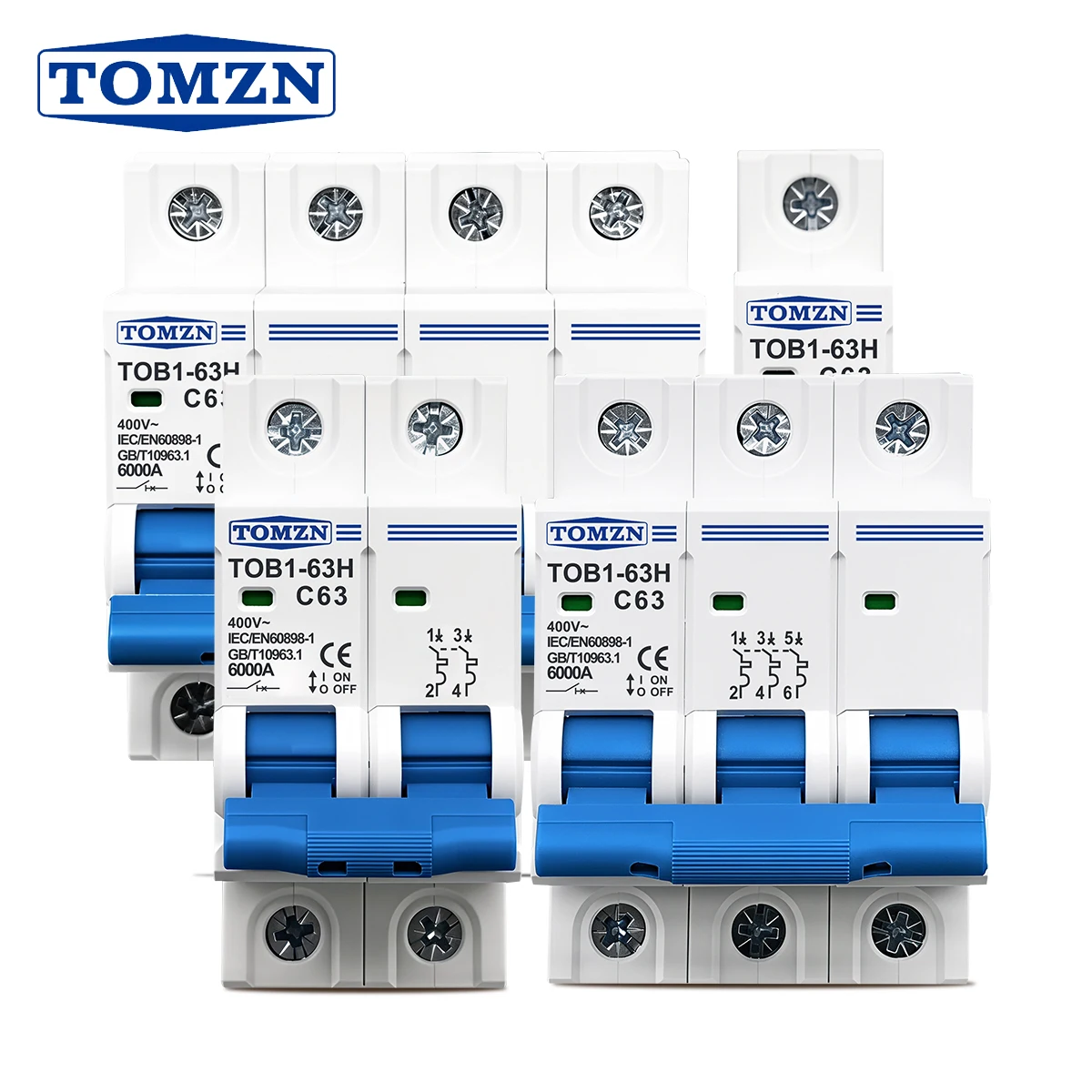
TOMZN TOB1-63H C Curve Mini Circuit Breaker
Official Store Deal
Expert Analysis Overview
The TOMZN TOB1-63H C Curve Mini Circuit Breaker is a robust protective device essential for safeguarding AC electrical circuits in hobbyist solar installations and residential grids. This component ensures the longevity and safety of connected appliances and wiring by rapidly interrupting fault currents. Its design caters to a wide array of current requirements and pole configurations, making it a versatile choice for diverse electrical setups.
This mini circuit breaker (MCB) is engineered to provide critical overcurrent and short-circuit protection. It prevents damage to electrical equipment and wiring caused by current surges. A C-curve characteristic means it trips between 5 and 10 times its rated current, ideal for general-purpose circuits with moderate inrush currents, such as lighting, standard outlets, and small motors often found in solar-powered homes.
Solar energy systems, particularly those with AC coupling, rely heavily on dependable circuit protection. The TOB1-63H facilitates the safe distribution of power from inverters to household loads. It ensures system stability.
Compared to older fuse-based systems, MCBs offer resettable protection, simplifying fault recovery. This reduces maintenance time and costs significantly.
Available in a broad range of current ratings from 3A to 63A, this MCB can be precisely matched to specific circuit loads. This flexibility is crucial for optimizing energy distribution without oversizing or undersizing protection. Proper sizing prevents nuisance tripping while maintaining safety.
For a solar enthusiast designing an off-grid cabin, selecting the correct amperage for each circuit – be it for LED lighting (low amperage) or a well pump (higher amperage) – is paramount. The wide selection accommodates various power demands.
Generic circuit breakers often come with limited amperage options, forcing compromises in circuit design. The TOMZN range offers granular control.
The TOB1-63H is offered in 1P, 2P, 3P, and 4P pole configurations. This allows for tailored protection for single-phase, split-phase, or three-phase AC systems. Matching the pole count to the circuit type is a fundamental safety practice.
In a typical residential solar setup, a 2P breaker might protect the main AC output from an inverter, while 1P breakers handle individual branch circuits. This modularity simplifies system design.
Many basic MCBs only offer 1P or 2P options, limiting their application in more complex three-phase installations. This product's range provides comprehensive coverage.
With a breaking capacity of 6kA, this MCB can safely interrupt fault currents up to 6000 Amperes. This capability is vital for containing severe electrical faults without catastrophic failure of the breaker itself. Safety is non-negotiable.
In scenarios involving a direct short circuit, the breaker must reliably open the circuit to prevent fire or equipment damage. The 6kA rating provides a substantial safety margin for most residential and light commercial applications.
Lower-rated breakers might weld shut or explode under high fault currents, exacerbating the danger. This rating offers peace of mind.
The 230/400V~ voltage rating and 50/60Hz frequency compatibility make this MCB suitable for global application. It integrates seamlessly into standard AC electrical panels. Its DIN rail mounting ensures straightforward installation.
For solar hobbyists expanding an existing grid-tied system, ensuring new components like circuit breakers match the local utility's voltage and frequency is critical. This breaker meets common international standards.
Some specialized equipment might require specific voltage or frequency ranges, but this model covers the most prevalent AC power standards. It offers broad utility.
The C-curve characteristic is designed for general protection of circuits where the inrush current is moderate. This includes many resistive and inductive loads. It prevents nuisance tripping from motor start-ups.
Consider an off-grid system powering a refrigerator or a small workshop with power tools. These devices have momentary current spikes upon startup. A C-curve breaker tolerates these brief surges without tripping prematurely, ensuring continuous operation.
B-curve breakers trip faster and are better for purely resistive loads, while D-curve breakers are for very high inrush currents. The C-curve strikes a practical balance for most general applications.
The visible materials imply a durable plastic housing, designed to withstand the rigors of an electrical panel environment. The robust construction contributes to the product's lifespan. Reliability is key.
Electrical components in solar installations are often exposed to varying temperatures and continuous operation. A well-built MCB ensures consistent performance over many years, minimizing the need for replacements.
Flimsy, poorly constructed breakers can degrade quickly, leading to intermittent faults or complete failure. This unit appears built for endurance.
This TOMZN MCB represents a crucial investment in the safety and efficiency of any AC electrical system, particularly those integrated with solar power. Its adaptable current ratings, multiple pole configurations, and reliable fault interruption capabilities empower users to build robust, self-sustaining energy systems with confidence. Imagine the peace of mind knowing your solar-powered home or workshop is protected by dependable circuit breakers, allowing you to focus on harnessing clean energy without worrying about electrical hazards. This component provides the foundational safety needed for modern, eco-conscious electrical management.
Safeguarding Your Solar Investment
This mini circuit breaker (MCB) is engineered to provide critical overcurrent and short-circuit protection. It prevents damage to electrical equipment and wiring caused by current surges. A C-curve characteristic means it trips between 5 and 10 times its rated current, ideal for general-purpose circuits with moderate inrush currents, such as lighting, standard outlets, and small motors often found in solar-powered homes.
Solar energy systems, particularly those with AC coupling, rely heavily on dependable circuit protection. The TOB1-63H facilitates the safe distribution of power from inverters to household loads. It ensures system stability.
Compared to older fuse-based systems, MCBs offer resettable protection, simplifying fault recovery. This reduces maintenance time and costs significantly.
Current Handling Prowess
Available in a broad range of current ratings from 3A to 63A, this MCB can be precisely matched to specific circuit loads. This flexibility is crucial for optimizing energy distribution without oversizing or undersizing protection. Proper sizing prevents nuisance tripping while maintaining safety.
For a solar enthusiast designing an off-grid cabin, selecting the correct amperage for each circuit – be it for LED lighting (low amperage) or a well pump (higher amperage) – is paramount. The wide selection accommodates various power demands.
Generic circuit breakers often come with limited amperage options, forcing compromises in circuit design. The TOMZN range offers granular control.
Architectural Versatility: Pole Configurations
The TOB1-63H is offered in 1P, 2P, 3P, and 4P pole configurations. This allows for tailored protection for single-phase, split-phase, or three-phase AC systems. Matching the pole count to the circuit type is a fundamental safety practice.
In a typical residential solar setup, a 2P breaker might protect the main AC output from an inverter, while 1P breakers handle individual branch circuits. This modularity simplifies system design.
Many basic MCBs only offer 1P or 2P options, limiting their application in more complex three-phase installations. This product's range provides comprehensive coverage.
Robust Fault Interruption
With a breaking capacity of 6kA, this MCB can safely interrupt fault currents up to 6000 Amperes. This capability is vital for containing severe electrical faults without catastrophic failure of the breaker itself. Safety is non-negotiable.
In scenarios involving a direct short circuit, the breaker must reliably open the circuit to prevent fire or equipment damage. The 6kA rating provides a substantial safety margin for most residential and light commercial applications.
Lower-rated breakers might weld shut or explode under high fault currents, exacerbating the danger. This rating offers peace of mind.
Integration and Compatibility
The 230/400V~ voltage rating and 50/60Hz frequency compatibility make this MCB suitable for global application. It integrates seamlessly into standard AC electrical panels. Its DIN rail mounting ensures straightforward installation.
For solar hobbyists expanding an existing grid-tied system, ensuring new components like circuit breakers match the local utility's voltage and frequency is critical. This breaker meets common international standards.
Some specialized equipment might require specific voltage or frequency ranges, but this model covers the most prevalent AC power standards. It offers broad utility.
The C-Curve Advantage
The C-curve characteristic is designed for general protection of circuits where the inrush current is moderate. This includes many resistive and inductive loads. It prevents nuisance tripping from motor start-ups.
Consider an off-grid system powering a refrigerator or a small workshop with power tools. These devices have momentary current spikes upon startup. A C-curve breaker tolerates these brief surges without tripping prematurely, ensuring continuous operation.
B-curve breakers trip faster and are better for purely resistive loads, while D-curve breakers are for very high inrush currents. The C-curve strikes a practical balance for most general applications.
Long-Term Reliability
The visible materials imply a durable plastic housing, designed to withstand the rigors of an electrical panel environment. The robust construction contributes to the product's lifespan. Reliability is key.
Electrical components in solar installations are often exposed to varying temperatures and continuous operation. A well-built MCB ensures consistent performance over many years, minimizing the need for replacements.
Flimsy, poorly constructed breakers can degrade quickly, leading to intermittent faults or complete failure. This unit appears built for endurance.
This TOMZN MCB represents a crucial investment in the safety and efficiency of any AC electrical system, particularly those integrated with solar power. Its adaptable current ratings, multiple pole configurations, and reliable fault interruption capabilities empower users to build robust, self-sustaining energy systems with confidence. Imagine the peace of mind knowing your solar-powered home or workshop is protected by dependable circuit breakers, allowing you to focus on harnessing clean energy without worrying about electrical hazards. This component provides the foundational safety needed for modern, eco-conscious electrical management.