TTP223 Capacitive Touch Button Module (10-Pack)
Official Store Deal
Expert Analysis Overview
The Silent Command: Integrating TTP223 Touch Modules into a Voice-Controlled Ecosystem
The TTP223 Capacitive Touch Button Module is a remarkably adaptable electronic component, purpose-built for creating modern, touch-sensitive interfaces within smart home and DIY automation projects. This compact sensor array empowers enthusiasts and developers to transcend the limitations of traditional mechanical switches, paving the way for intuitive, silent, and aesthetically integrated control systems. For any voice control fanatic, the ultimate goal is a home that responds effortlessly, often without a visible interface. These modules are key enablers of that vision.
Intuitive Interaction: The Science of Capacitive Sensing
The core of the TTP223 module lies in its capacitive sensing technology. This method detects changes in capacitance, typically caused by the proximity or direct touch of a human finger. The human body, acting as a conductor, introduces a measurable change in the electrical field of the sensor. The module registers this change, translating it into a digital signal.
This technology offers significant advantages over resistive touch or conventional mechanical buttons. It eliminates moving parts, a critical factor for longevity. Fewer components mean fewer failures. This makes the TTP223 a reliable choice for long-term installations.
Compared to older switch types, capacitive sensing provides a smoother, more responsive user experience. There is no physical click, only a gentle contact. This is ideal for discreet controls in a sophisticated smart home environment.
Operational Flexibility: Adapting to Any Scenario
These modules are explicitly designed with both self-locking and no-locking modes. This dual functionality is implemented through simple solder jumpers on the PCB. The flexibility is remarkable.
In self-locking mode, a single touch toggles the output state, much like a standard latching switch. Press once for 'on', press again for 'off'. This behavior is perfect for controlling lights, fans, or other devices that require persistent states.
Conversely, the no-locking mode provides a momentary output. The output remains active only as long as the touch is maintained. This acts exactly like a push-button. This is invaluable for triggering single events, such as opening a garage door or initiating a specific smart home routine that only needs a brief signal.
This inherent versatility means a single type of module can fulfill various roles. It reduces inventory complexity for builders. Designers can achieve diverse control schemes with minimal hardware variation.
Seamless Integration: The Backbone of Voice Control
The TTP223 modules feature a compact form factor with clearly labeled VCC, GND, and OUT pins. This simplifies wiring significantly. Their small size makes them ideal for embedding into custom enclosures, furniture, or behind non-metallic surfaces. This is a critical aspect for achieving a truly integrated smart home.
Connecting these modules to microcontrollers like Arduino, ESP32, or Raspberry Pi is straightforward. These microcontrollers then act as the bridge to voice assistants such as Alexa or Google Home. A touch on a hidden surface can trigger a routine. This enhances the user experience by providing a physical backup to voice commands.
Unlike bulky, visible physical switches that disrupt interior design, these tiny modules enable discreet, almost invisible integration. They facilitate the creation of a clean, minimalist aesthetic. This allows the focus to remain on the environment, not the controls.
Built to Last: Reliability Through Design
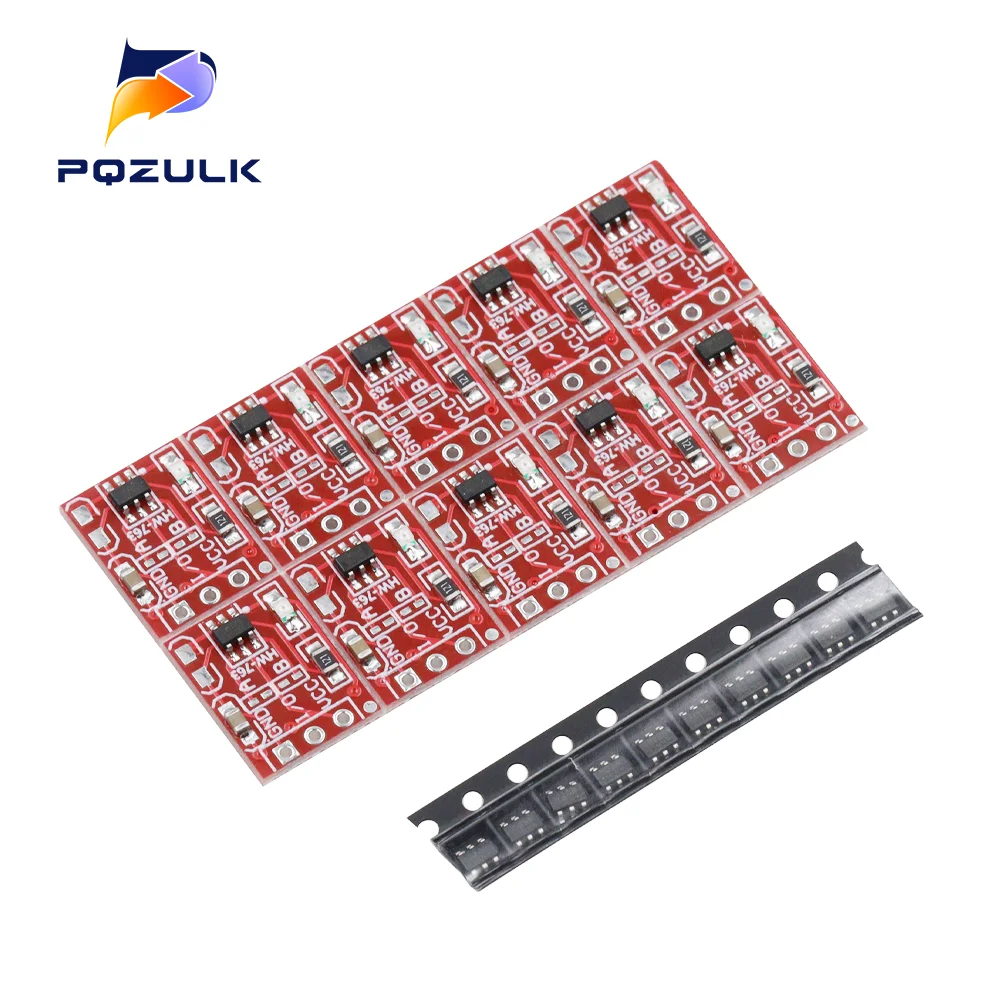
The red PCB with surface-mount components visible in the images indicates a modern manufacturing process. The absence of moving parts, a hallmark of capacitive sensing, directly translates to enhanced durability. There is no mechanical wear and tear to consider.
Mechanical switches inevitably degrade over time due to repeated actuation, dust ingress, or material fatigue. Capacitive touch sensors are immune to these issues. They offer a significantly longer operational lifespan. This means fewer replacements and less maintenance.
For high-traffic applications, such as frequently used light switches or access panels, this reliability is paramount. It ensures consistent performance day in and day out. This provides peace of mind for the end-user.
The Maker's Canvas: Empowering DIY and Prototyping
These modules, often supplied in multi-packs or on component strips, are a boon for hobbyists and product developers. They abstract away the complexities of capacitive sensor design. Users can focus on application logic.
Designing a stable capacitive touch sensor from scratch involves careful PCB layout, noise reduction, and precise component selection. These pre-built modules eliminate that intricate design work. They significantly accelerate the prototyping phase. This allows for rapid iteration and testing.
Educational settings also benefit greatly. Students can quickly implement touch interfaces in their projects. This lowers the barrier to entry for learning about human-computer interaction. It fosters innovation in a practical way.
Powering Efficiency: Lean Operation for Smart Devices
The TTP223 IC and its surrounding minimal components are designed for low power consumption. This is a crucial feature for many modern electronic projects. Energy efficiency is a key consideration.
When idle, these capacitive sensors draw very little current. This makes them highly suitable for battery-powered applications. Devices like remote controls, portable smart gadgets, or off-grid sensors can benefit immensely. Longer battery life is always a plus.
Compared to continuously active infrared sensors or power-hungry mechanical relays, the TTP223's low operational current contributes to a more sustainable smart home ecosystem. It extends the operational period between charges or battery replacements. This is a tangible benefit for any user.
Invisible Controls: Aesthetic Freedom for Modern Spaces
The small size and the ability to operate through non-conductive materials provide immense aesthetic advantages. The modules can be hidden. They disappear behind panels.
Consider mounting these modules behind a wooden tabletop, a plastic wall panel, or even a thin glass surface. The touch sensor remains fully functional, yet completely invisible. This creates clean, uncluttered living spaces. It embodies true smart home integration.
Traditional switches often dictate interior design choices due to their visible presence. These modules liberate designers. They allow for greater creative freedom. Controls can be seamlessly integrated into furniture, artwork, or architectural features, enhancing the overall sophistication of a space.
Enhancing Voice Control: A Synergistic Approach
For the voice control fanatic, these modules are not just alternatives; they are enhancements. A voice command might occasionally fail due to ambient noise or misinterpretation. A subtle, integrated touch point provides a reliable, silent backup.
Furthermore, these modules enable the creation of custom, intuitive touch interfaces that trigger complex smart home routines. Imagine a hidden touch sensor on a bedside table. A tap could activate a