TTP223 Capacitive Touch Sensor Module
Official Store Deal
Expert Analysis Overview
The TTP223 Capacitive Touch Sensor Module is a remarkably compact and efficient single-channel digital touch sensor, a foundational component for any discerning home automation engineer crafting custom input solutions. This module offers a modern, solid-state alternative to traditional mechanical buttons, providing a seamless and discreet interface for a myriad of interactive projects. Its design prioritizes simplicity and robust functionality, making it an indispensable tool for integrating touch-sensitive controls into existing or new smart home ecosystems.
Capacitive sensing operates on the principle of detecting changes in capacitance. The human body, being conductive, introduces a significant change in capacitance when it approaches or touches a conductive surface. This fundamental shift is precisely what the TTP223 chip is engineered to detect, converting a physical touch into a clear digital signal. It's a remarkably intuitive interaction.
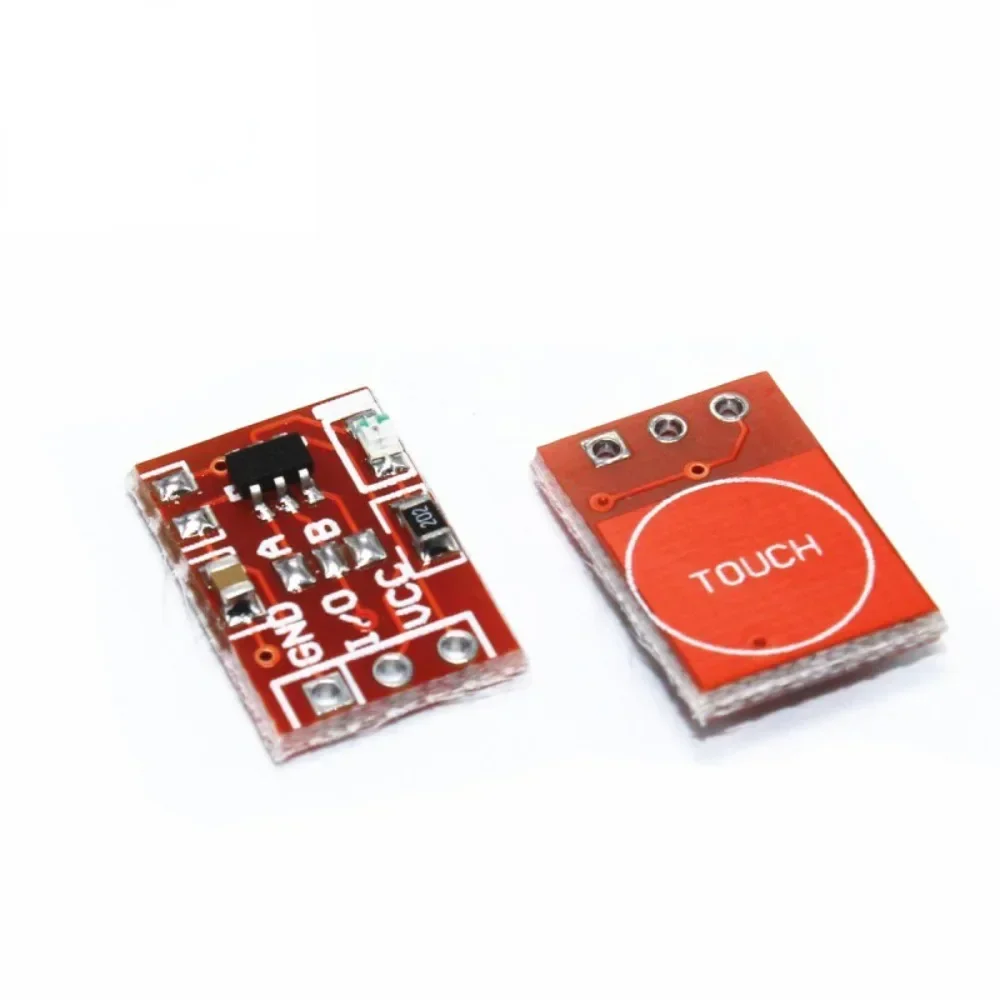
This particular module implements the TTP223-BA6 chip, a dedicated touch detection IC. The compact red PCB, measuring approximately 15mm by 11mm, houses the necessary support circuitry, including a handful of surface-mount resistors and capacitors, alongside the central chip. The small footprint is immediately apparent, allowing for integration into extremely confined spaces.
Compared to conventional mechanical switches, which rely on physical displacement and metallic contacts, capacitive sensors offer superior longevity. There are no moving parts to wear out, no springs to fatigue, and no contacts to oxidize. This translates directly to enhanced reliability and a significantly extended operational lifespan for integrated devices.
One of the module's key strengths lies in its configurable output behavior. The TTP223 supports both momentary and self-locking (toggle) modes, determined by the configuration of the A and B pads visible on the PCB. By default, the module typically operates in a momentary high-output mode, meaning the output goes high only while the touch pad is actively engaged.
For applications requiring a persistent state change, the self-locking mode is invaluable. This configuration transforms the touch sensor into a toggle switch; one touch activates the output, and another touch deactivates it. Imagine controlling a light with a single, elegant tap, without needing to hold a button down. This is a powerful capability.
This adaptability offers significant design flexibility over fixed-function input devices. Instead of being constrained by the inherent behavior of a physical switch, engineers can tailor the response to the exact requirements of their automation routine, from simple momentary triggers for doorbells to latching controls for lighting circuits.
The TTP223 module produces a clean digital output signal, making it exceptionally easy to interface with virtually any microcontroller. Boards like the ESP32, ESP8266, Arduino, or Raspberry Pi can read the output pin directly. This direct digital output ensures minimal processing overhead and rapid response times within a home automation framework.
Integrating these sensors allows for sophisticated, event-driven automation. Picture a scenario where a discreetly placed touch sensor beneath a countertop triggers under-cabinet lighting, or a hidden panel activates a specific home theatre scene. The local control capability is paramount; the sensor's state is directly readable by the local microcontroller, bypassing any cloud dependency or potential internet latency.
Unlike many proprietary smart switches that force users into specific ecosystems or cloud services, the TTP223 offers unparalleled customizability. It empowers the DIY enthusiast to design truly unique interfaces that are deeply integrated into their local Home Assistant or other open-source automation platforms, ensuring privacy and robust performance without external reliance.
The visual inspection of the module reveals a meticulously designed, compact circuit board. The vivid red solder mask contrasts sharply with the silver traces and component pads, indicating clear manufacturing quality. The small form factor, with dimensions of approximately 15mm by 11mm, makes it one of the most space-efficient touch sensors available.
The absence of any exposed wires or delicate components, beyond the clearly labeled header pins (VCC, GND, I/O), speaks to its inherent robustness. The surface-mount components are tightly integrated, minimizing susceptibility to physical damage or environmental factors. This is a solid-state device.
Compared to larger, pre-packaged touch sensors, this module's minimal size allows for incredibly discreet integration. It can be hidden behind thin layers of wood, plastic, or glass, transforming ordinary surfaces into interactive control points. This capability is crucial for maintaining clean aesthetics in modern smart home installations, where visible buttons can often detract from the overall design.
In the context of home automation, response latency is a critical factor. The TTP223 exhibits extremely fast detection and output switching, typically within tens of milliseconds. This rapid response ensures that actions triggered by a touch feel instantaneous, enhancing the user experience and making automated interactions feel natural and intuitive.
While this specific module often comes with a fixed sensitivity, the underlying TTP223 chip generally allows for external capacitance adjustment to fine-tune its detection range. This is important when considering the thickness and dielectric properties of any overlay material used to conceal the sensor. Proper calibration ensures reliable detection without false positives.
This instant feedback contrasts sharply with slower, polling-based input methods or systems reliant on network communication. For critical automation tasks, such as emergency lighting or security triggers, the TTP223's direct and swift response provides a significant advantage, eliminating perceptible delays that can frustrate users or compromise system effectiveness.
Power consumption is a significant consideration for any always-on component in a home automation system. The TTP223 module boasts extremely low quiescent current draw, typically in the microampere range when idle. This makes it an ideal candidate for battery-powered projects or installations where minimizing overall energy consumption is a priority.
The solid-state nature of the TTP223 chip and its minimal component count contribute directly to its high reliability. Without mechanical parts subject to wear and tear, the module maintains consistent performance over long periods. It is designed for continuous operation, a necessity for any integrated home system.
Comparing its longevity to mechanical buttons, which inevitably degrade due to physical actuation, the TTP223 stands out. Its electronic detection method ensures that its performance remains stable throughout its operational life, offering a 'set and forget' solution for input, reducing maintenance and replacement cycles.
The availability of these modules in multi-packs (5 or 10 pieces) at a very accessible price point underscores their exceptional value. This makes them incredibly attractive for hobbyists and professionals undertaking large-scale projects, where numerous touch inputs are required without incurring prohibitive costs. It's an economical choice.
Beyond just cost, the TTP223 module serves as an excellent educational tool. Its straightforward operation allows beginners to easily grasp concepts of digital input, capacitive sensing, and basic circuit integration. It provides a tangible, immediate result for learning about electronics and programming microcontrollers.
Ultimately, this module acts as a significant upgrade from basic pushbuttons, both in terms of aesthetics and modern interface design. It enables the creation of truly integrated, seamless smart home experiences where control points are invisible, intuitive, and highly responsive. Imagine navigating your smart home with discreet touches, transforming your living space into a truly interactive environment, where technology fades into the background, responding effortlessly to your presence and intent. The subtle glow of an LED confirming your input, the gentle click of a relay engaging a device – all initiated by an imperceptible touch, enhancing the elegance and functionality of your automated domain.
The Intricacies of Capacitive Sensing
Capacitive sensing operates on the principle of detecting changes in capacitance. The human body, being conductive, introduces a significant change in capacitance when it approaches or touches a conductive surface. This fundamental shift is precisely what the TTP223 chip is engineered to detect, converting a physical touch into a clear digital signal. It's a remarkably intuitive interaction.
This particular module implements the TTP223-BA6 chip, a dedicated touch detection IC. The compact red PCB, measuring approximately 15mm by 11mm, houses the necessary support circuitry, including a handful of surface-mount resistors and capacitors, alongside the central chip. The small footprint is immediately apparent, allowing for integration into extremely confined spaces.
Compared to conventional mechanical switches, which rely on physical displacement and metallic contacts, capacitive sensors offer superior longevity. There are no moving parts to wear out, no springs to fatigue, and no contacts to oxidize. This translates directly to enhanced reliability and a significantly extended operational lifespan for integrated devices.
Versatile Operational Modes
One of the module's key strengths lies in its configurable output behavior. The TTP223 supports both momentary and self-locking (toggle) modes, determined by the configuration of the A and B pads visible on the PCB. By default, the module typically operates in a momentary high-output mode, meaning the output goes high only while the touch pad is actively engaged.
For applications requiring a persistent state change, the self-locking mode is invaluable. This configuration transforms the touch sensor into a toggle switch; one touch activates the output, and another touch deactivates it. Imagine controlling a light with a single, elegant tap, without needing to hold a button down. This is a powerful capability.
This adaptability offers significant design flexibility over fixed-function input devices. Instead of being constrained by the inherent behavior of a physical switch, engineers can tailor the response to the exact requirements of their automation routine, from simple momentary triggers for doorbells to latching controls for lighting circuits.
Seamless Integration into Home Automation
The TTP223 module produces a clean digital output signal, making it exceptionally easy to interface with virtually any microcontroller. Boards like the ESP32, ESP8266, Arduino, or Raspberry Pi can read the output pin directly. This direct digital output ensures minimal processing overhead and rapid response times within a home automation framework.
Integrating these sensors allows for sophisticated, event-driven automation. Picture a scenario where a discreetly placed touch sensor beneath a countertop triggers under-cabinet lighting, or a hidden panel activates a specific home theatre scene. The local control capability is paramount; the sensor's state is directly readable by the local microcontroller, bypassing any cloud dependency or potential internet latency.
Unlike many proprietary smart switches that force users into specific ecosystems or cloud services, the TTP223 offers unparalleled customizability. It empowers the DIY enthusiast to design truly unique interfaces that are deeply integrated into their local Home Assistant or other open-source automation platforms, ensuring privacy and robust performance without external reliance.
Physical Design and Robustness
The visual inspection of the module reveals a meticulously designed, compact circuit board. The vivid red solder mask contrasts sharply with the silver traces and component pads, indicating clear manufacturing quality. The small form factor, with dimensions of approximately 15mm by 11mm, makes it one of the most space-efficient touch sensors available.
The absence of any exposed wires or delicate components, beyond the clearly labeled header pins (VCC, GND, I/O), speaks to its inherent robustness. The surface-mount components are tightly integrated, minimizing susceptibility to physical damage or environmental factors. This is a solid-state device.
Compared to larger, pre-packaged touch sensors, this module's minimal size allows for incredibly discreet integration. It can be hidden behind thin layers of wood, plastic, or glass, transforming ordinary surfaces into interactive control points. This capability is crucial for maintaining clean aesthetics in modern smart home installations, where visible buttons can often detract from the overall design.
Performance and Responsiveness
In the context of home automation, response latency is a critical factor. The TTP223 exhibits extremely fast detection and output switching, typically within tens of milliseconds. This rapid response ensures that actions triggered by a touch feel instantaneous, enhancing the user experience and making automated interactions feel natural and intuitive.
While this specific module often comes with a fixed sensitivity, the underlying TTP223 chip generally allows for external capacitance adjustment to fine-tune its detection range. This is important when considering the thickness and dielectric properties of any overlay material used to conceal the sensor. Proper calibration ensures reliable detection without false positives.
This instant feedback contrasts sharply with slower, polling-based input methods or systems reliant on network communication. For critical automation tasks, such as emergency lighting or security triggers, the TTP223's direct and swift response provides a significant advantage, eliminating perceptible delays that can frustrate users or compromise system effectiveness.
Power Efficiency and Reliability
Power consumption is a significant consideration for any always-on component in a home automation system. The TTP223 module boasts extremely low quiescent current draw, typically in the microampere range when idle. This makes it an ideal candidate for battery-powered projects or installations where minimizing overall energy consumption is a priority.
The solid-state nature of the TTP223 chip and its minimal component count contribute directly to its high reliability. Without mechanical parts subject to wear and tear, the module maintains consistent performance over long periods. It is designed for continuous operation, a necessity for any integrated home system.
Comparing its longevity to mechanical buttons, which inevitably degrade due to physical actuation, the TTP223 stands out. Its electronic detection method ensures that its performance remains stable throughout its operational life, offering a 'set and forget' solution for input, reducing maintenance and replacement cycles.
Exceptional Value for DIY Enthusiasts
The availability of these modules in multi-packs (5 or 10 pieces) at a very accessible price point underscores their exceptional value. This makes them incredibly attractive for hobbyists and professionals undertaking large-scale projects, where numerous touch inputs are required without incurring prohibitive costs. It's an economical choice.
Beyond just cost, the TTP223 module serves as an excellent educational tool. Its straightforward operation allows beginners to easily grasp concepts of digital input, capacitive sensing, and basic circuit integration. It provides a tangible, immediate result for learning about electronics and programming microcontrollers.
Ultimately, this module acts as a significant upgrade from basic pushbuttons, both in terms of aesthetics and modern interface design. It enables the creation of truly integrated, seamless smart home experiences where control points are invisible, intuitive, and highly responsive. Imagine navigating your smart home with discreet touches, transforming your living space into a truly interactive environment, where technology fades into the background, responding effortlessly to your presence and intent. The subtle glow of an LED confirming your input, the gentle click of a relay engaging a device – all initiated by an imperceptible touch, enhancing the elegance and functionality of your automated domain.