Tuya Mini WiFi Smart Switch Module
Official Store Deal
Expert Analysis Overview
The Core of Connected Living: A Deep Dive into the Tuya Mini WiFi Smart Switch Module
The Tuya Mini WiFi Smart Switch Module is a highly adaptable and cost-effective relay designed for integrating traditional electrical appliances into a modern smart home ecosystem. This device targets the home automation enthusiast and the practical homeowner alike, offering a pathway to intelligent control without extensive rewiring or expensive overhauls. Its compact form factor and broad compatibility make it a compelling choice for a wide array of DIY smart home projects.
Connectivity and Ecosystem Integration
At its operational heart, the module utilizes 2.4GHz Wi-Fi connectivity. This choice is strategic. The 2.4GHz band provides a longer range and better penetration through obstacles compared to 5GHz, which is crucial for devices potentially installed within walls or behind fixtures. This ensures a stable connection across typical residential environments.
Unlike many proprietary smart home protocols, Wi-Fi leverages existing home network infrastructure. No dedicated hub is required. This simplifies initial setup. The module integrates seamlessly with the Tuya Smart and Smart Life applications, which act as a centralized control platform. These applications provide a robust interface for device management, scheduling, and automation routines, all accessible remotely via the cloud.
For advanced users, the reliance on the Tuya ecosystem does present a nuanced consideration regarding local control. While the primary mode of operation is cloud-dependent, the widespread adoption of Tuya devices has fostered community-driven efforts to integrate them into local home automation platforms like Home Assistant. This often involves flashing custom firmware or utilizing specific API integrations, enabling greater privacy and reduced latency by bypassing the cloud for critical commands. Such an approach transforms the module from a simple smart switch into a powerful, locally controlled automation component, a significant upgrade for those prioritizing system independence.
Power Handling and Application Versatility
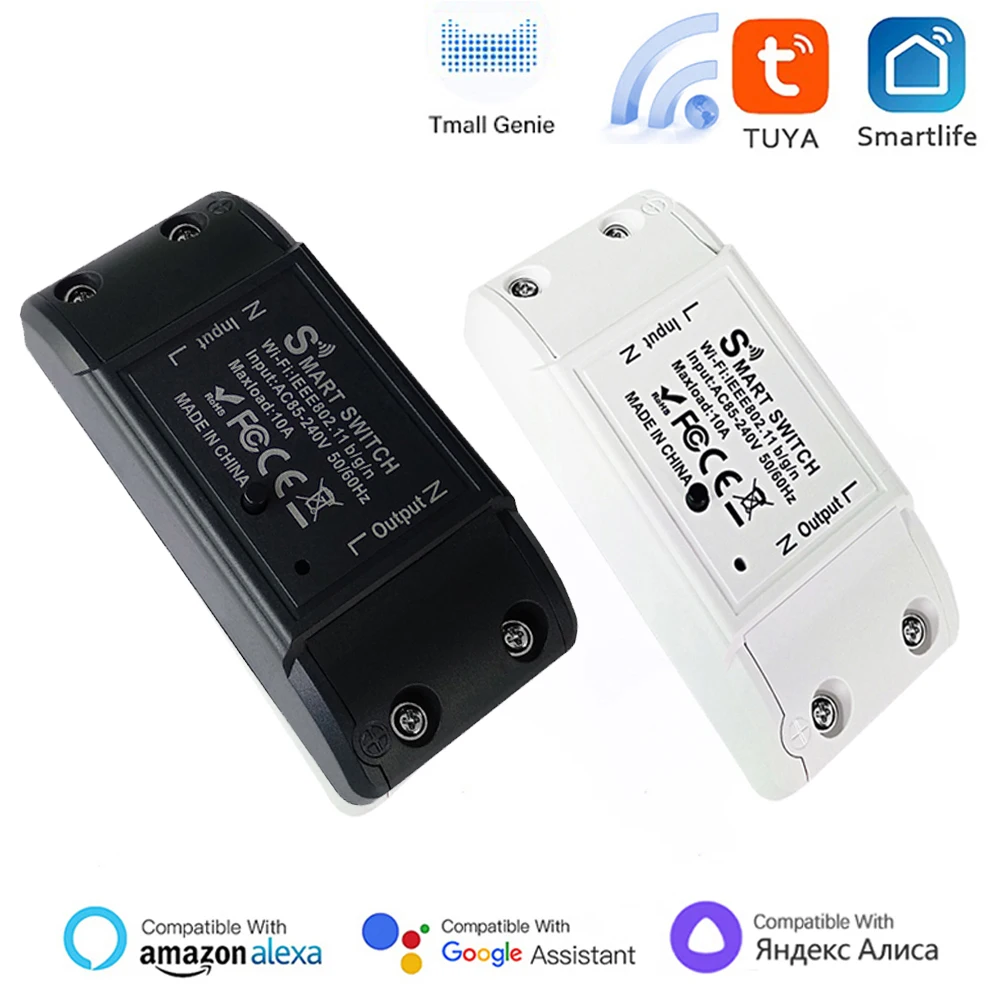
The module is rated for a maximum current of 10A. This capacity makes it suitable for controlling a substantial range of household electrical appliances and lighting fixtures. Common applications include standard incandescent bulbs, LED lighting arrays, ceiling fans, humidifiers, and bedside lamps, as visibly illustrated. This is a practical power rating.
Its 10A capacity is a key differentiator from lower-rated modules. Many basic smart relays are limited to 5A or less, restricting their use to very light loads. The 10A rating allows for more flexibility. This means a single module can manage a standard string of kitchen under-cabinet lights or a medium-sized bedroom fan without concern for overloading. This broadens its utility significantly for the average household. The module becomes a versatile workhorse.
Compared to smart bulbs, which integrate the smart technology directly into the light source, this module offers a different kind of value. Instead of replacing every bulb with a smart equivalent, which can be costly and limit bulb choice, this module transforms the entire circuit. Any bulb connected to the controlled circuit becomes 'smart', allowing users to retain their preferred lighting aesthetics while gaining automation capabilities. This approach is often more economical and less wasteful, especially for fixtures with multiple bulbs.
Form Factor and Installation Dynamics
The designation as a "Mini WiFi Switch" is not merely marketing; it reflects the device's compact physical dimensions. This small footprint is critical for its primary use case: retrofitting existing electrical installations. The module is designed to fit into standard wall switch boxes or behind existing fixtures, converting them into smart devices without requiring visible changes to the room's aesthetic. Space is often at a premium in these locations.
The installation process, while DIY-oriented, requires a basic understanding of electrical wiring. The provided wiring diagram clearly shows input (Lin, Nin) and output (Lout, Nout) connections. This indicates a requirement for both live and neutral wires at the installation point. Many older homes might lack a neutral wire in their switch boxes, which is a crucial consideration for potential buyers. However, for fixtures or outlets where both are present, the installation is straightforward, connecting the module in series with the load.
The DIY aspect empowers users. It offers a sense of control over their home's infrastructure. Unlike pre-built smart switches that replace the entire wall plate, this module integrates invisibly. This maintains the original look of the room. This approach also allows for greater flexibility in choosing switch types, from traditional toggles to momentary push buttons, as the module handles the actual switching logic. This adaptability is key for custom installations.
Intelligent Control Capabilities
The module supports a comprehensive suite of smart control methods, enhancing convenience and accessibility. Voice control is natively supported through popular platforms like Amazon Alexa, Google Assistant, Tmall Genie, and Yandex Alice. This enables hands-free operation, allowing users to simply speak commands to turn lights or appliances on and off. A spoken command can change a room's ambiance.
Beyond voice, the Tuya/Smart Life application provides granular control. Users can switch devices remotely, set up intricate schedules, and implement countdown timers for automatic power-off. This level of programmability is invaluable for energy saving and daily routines. Imagine lights turning on automatically at sunset or a fan switching off after an hour. These features are easily configured.
Group control is another significant feature. This allows multiple modules, or other Tuya-compatible devices, to be managed simultaneously as a single entity. For instance, all lights in a living room can be grouped and controlled with a single command or tap. This simplifies managing complex lighting schemes. It streamlines daily interactions. This capability significantly enhances the user experience, moving beyond individual device control to holistic scene management.
User Experience and Collaborative Control
One of the module's practical benefits is its Family Sharing feature. This allows primary users to grant access to other household members through the Tuya Smart or Smart Life app. Each family member can then control the smart devices from their own smartphone, eliminating the need for shared accounts or physical access to the primary user's device. This promotes collective management.
This collaborative control extends to both individual device operation and group control. A family member can turn on a specific bedside lamp, or activate a pre-defined 'movie night' scene that dims lights and powers on entertainment devices. This flexibility caters to diverse household needs and preferences. It makes smart home technology truly integrated into family life. The system adapts to everyone.
The user interface within the Tuya ecosystem is generally intuitive. Setting up schedules, creating automation rules, and managing device groups are typically straightforward processes. This ease of use lowers the barrier to entry for smart home adoption, even for those less technically inclined. The visual feedback from the app confirms commands, providing confidence in the system's operation. This direct interaction is reassuring.
Performance Metrics and Latency Considerations
In home automation, response time is critical for a seamless experience. While specific latency figures are not provided, as a Wi-Fi-based device operating through a cloud service, there will inherently be a slight delay compared to local-only protocols like Zigbee or Z-Wave. This delay is usually imperceptible for routine tasks like turning on a light. However, for time-sensitive automations or rapid sequence commands, it might be noticeable. The network speed plays a role.
The module's performance is also tied to the stability and bandwidth of the home's 2.4GHz Wi-Fi network. A congested network or weak signal can introduce further delays or connectivity issues. Proper Wi-Fi planning, including router placement and channel selection, can mitigate these potential performance bottlenecks. A strong signal is paramount for reliability. Users should ensure their network is optimized for IoT devices.
Despite these inherent Wi-Fi characteristics, the module's integration with major voice assistants suggests a well-optimized cloud backend. Voice commands are processed quickly, translating into responsive device actions. The visible presence of a physical button on the module itself (likely for manual override or pairing) also provides a direct, zero-latency control option, ensuring functionality even if the network is down. This redundancy is a thoughtful addition.
Longevity and Durability Outlook
The visible construction of the Tuya Mini WiFi Smart Switch Module, as depicted in the product images, suggests a sturdy plastic casing. This material choice is standard for internal electrical components, offering adequate insulation and protection against dust and minor impacts. The white and black color options indicate a clean, unobtrusive design suitable for concealed installations. The screw terminals for wiring appear robust.
Internal components are designed to handle the specified 10A current. This implies appropriate gauge wiring and relay mechanisms capable of repeated switching cycles. While a teardown is not possible from the images, the "CE" and "FCC" markings suggest adherence to European and US regulatory standards for electrical safety and electromagnetic compatibility. These certifications are important indicators of quality. They ensure fundamental safety.
Compared to cheaper, uncertified alternatives, the presence of these markings provides a baseline assurance of design integrity and manufacturing quality. The product is intended for long-term installation. This means the internal electronics must withstand continuous operation and environmental factors like temperature fluctuations within an electrical box. A well-designed power supply and reliable relay are critical for sustained performance over years of use. This is not a disposable gadget.
Value Proposition and Market Positioning
The Tuya Mini WiFi Smart Switch Module offers significant value as an entry point into smart home automation or an expansion for existing setups. Its competitive pricing, combined with the ability to convert any traditional appliance or lighting fixture into a smart device, provides a high return on investment. The cost-per-device conversion is exceptionally low compared to purchasing dedicated smart appliances.
This module positions itself as an upgrade from basic timer switches or manual controls. It offers dynamic control, remote access, and integration into larger automation routines that simple mechanical timers cannot. The ability to control devices via voice or app from anywhere adds a layer of convenience that quickly justifies the investment. It simplifies daily tasks. The module enhances lifestyle.
Furthermore, its compatibility with a wide array of smart assistants and the Tuya ecosystem's extensive device support ensures future expandability. Users are not locked into a niche ecosystem. This flexibility future-proofs the investment to a degree, allowing for seamless integration with new smart devices as needs evolve. It's a foundational component for a truly intelligent home. This module represents smart, adaptable technology.
Elevating Your Home's Intelligence
Imagine stepping into a home where your environment anticipates your needs. Lights fade on as you enter a room, perfectly timed for your arrival. Your morning coffee machine begins brewing before your alarm sounds. The fan in the bedroom switches off automatically as the temperature drops. This module makes such scenarios effortlessly achievable, transforming mundane routines into seamless, automated experiences. It's not just about convenience; it's about reclaiming moments, optimizing energy, and crafting a living space that intelligently responds to your life. The future of your home is within reach, waiting to be configured to your exact desires, making every day feel a little more effortless and a lot more connected.