Tuya Multi-Protocol Smart Home Gateway
Official Store Deal
Expert Analysis Overview
The Tuya Multi-Protocol Smart Home Gateway is an essential central nervous system for heterogeneous smart home environments, engineered to unify disparate wireless standards under a single, cohesive control plane. This compact device serves as a pivotal bridge, allowing users to integrate Zigbee 3.0, Bluetooth Mesh, and Wi-Fi devices within the familiar Tuya Smart Life ecosystem, thereby streamlining device management and automation.
The core strength of this gateway lies in its multi-protocol support, encompassing Zigbee 3.0, Bluetooth Mesh, and 2.4G Wi-Fi. It is a true triple-threat hub. This architecture eliminates the need for multiple dedicated gateways, each serving a single protocol, which often leads to network clutter and increased power consumption.
The real-world implication of this unified approach is a significantly simplified smart home setup. Instead of managing separate apps or physical hubs for Zigbee sensors, Bluetooth-enabled smart locks, and Wi-Fi smart plugs, the user interacts with a single device. This reduces complexity for the end-user.
Compared to single-protocol hubs, which often force users into a specific vendor's ecosystem, this multi-mode gateway offers broader compatibility. It acts as a central coordinator, translating commands between the various protocols and the overarching Tuya cloud platform, ensuring seamless communication across a diverse range of smart devices.
Zigbee 3.0 represents a significant advancement in low-power, mesh networking for smart home devices. This iteration of Zigbee ensures enhanced interoperability and security across a wider array of certified products. The gateway's support for Zigbee 3.0 means it can communicate with a vast ecosystem of sensors, switches, and actuators, often with greater reliability and lower latency than Wi-Fi alternatives.
Operationally, Zigbee devices benefit from a mesh network topology. Each powered Zigbee device can act as a repeater, extending the network's range and reinforcing signal strength throughout the home. This creates a resilient and self-healing network. The gateway sits at the heart of this mesh, coordinating data flow and ensuring commands reach their intended targets efficiently.
Traditional Zigbee hubs are often proprietary, limiting device choice. This gateway, by virtue of its Tuya integration, opens up access to countless third-party Zigbee products. It is a significant advantage for users looking to expand their smart home without vendor lock-in.
Beyond Zigbee, the gateway incorporates Bluetooth Mesh technology. Bluetooth Mesh is particularly adept at handling large-scale device networks, ideal for lighting systems or distributed sensor arrays where individual device control is paramount. Its low power consumption makes it suitable for battery-operated devices.
Users can leverage Bluetooth Mesh for devices that might not require the constant, always-on connectivity of Wi-Fi or the specific sensor-centric focus of Zigbee. Think of smart buttons, certain types of smart locks, or even localized environmental sensors that communicate periodically. The gateway consolidates these, too.
This addition broadens the types of devices a single hub can manage. It offers a complementary protocol to Zigbee, filling gaps where Bluetooth might be a more power-efficient or cost-effective solution for certain device types. The gateway handles this communication effortlessly.
The gateway itself connects to the home network via 2.4G Wi-Fi, providing the necessary internet connectivity for remote control and cloud-based automations. This standard Wi-Fi connection ensures broad compatibility with existing home router setups. It is a simple connection.
While the gateway primarily acts as a bridge for Zigbee and Bluetooth devices, its Wi-Fi capability also means it can potentially interact with certain Wi-Fi-only devices within the Tuya ecosystem, although its main role remains protocol translation. This simplifies network architecture. The device itself draws power via a micro-USB port, suggesting a low power footprint and easy placement.
This Wi-Fi connectivity is standard for smart home hubs, ensuring easy integration into any modern home network. The reliance on 2.4G Wi-Fi is typical for smart home devices, prioritizing range and penetration over raw bandwidth, which is not critical for hub operations.
Minimizing response delay is crucial for a responsive smart home. The gateway's direct translation capabilities for Zigbee and Bluetooth commands contribute to quicker execution times for local automations. Commands feel instantaneous.
When a Zigbee motion sensor detects activity, the signal travels directly to the gateway, which can then trigger a linked Zigbee light bulb with minimal latency. This direct path avoids the round trip to the cloud for basic automations. The local processing is key.
However, for remote commands initiated via a smartphone app outside the home, or complex cloud-based automations, there will inherently be a slight delay due to internet latency. The gateway's performance in these scenarios is largely dependent on the user's internet connection speed and the responsiveness of the Tuya cloud. It manages these interactions effectively.
The gateway's deep integration with the Tuya Smart Life app provides a unified control interface for all connected devices. Users can create complex scenes, set schedules, and build intricate automations involving devices from different protocols. The app experience is intuitive.
Voice control is a significant feature, with compatibility for Amazon Alexa and Google Assistant. Users can issue commands like "Alexa, turn on all living room lights" or "Okay Google, set the thermostat to 22 degrees" to control connected devices. This hands-free operation enhances convenience. Voice commands are natural.
Compared to a fragmented smart home where each device type requires its own app and voice assistant skill, this gateway centralizes control. This reduces friction and improves the overall usability of the smart home system. The user experience is greatly improved.
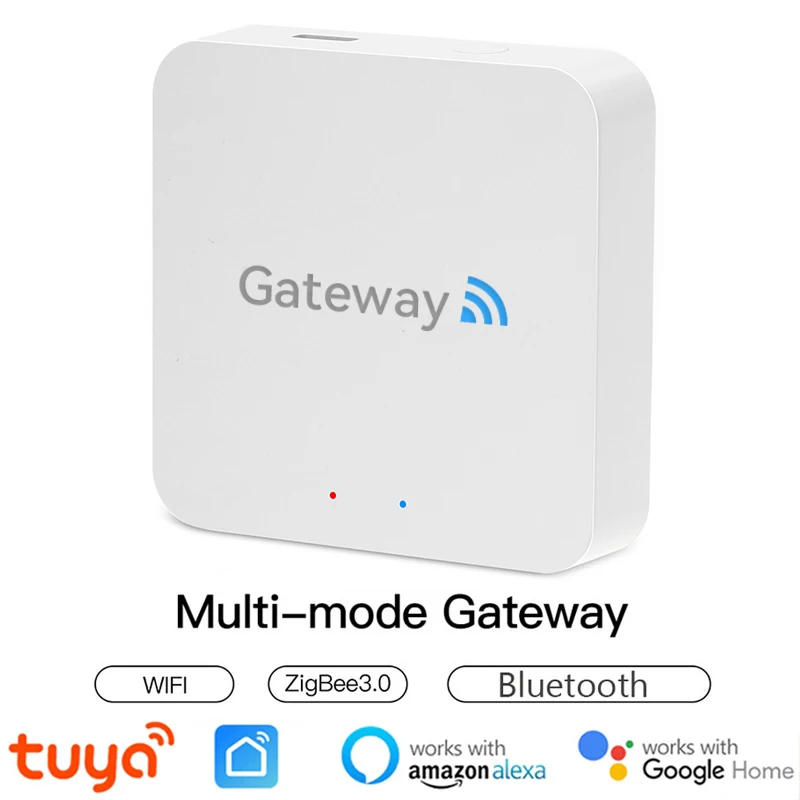
The gateway presents a minimalist, square form factor with a clean white matte finish. Its compact dimensions allow for discreet placement on shelves or desks, blending seamlessly into various Home Decor styles. The plastic feels dense and well-assembled, not hollow.
The front panel features small LED indicators for network status and operation, providing quick visual feedback without being overly obtrusive. The micro-USB power input is located on the rear, maintaining the clean aesthetic of the device. Installation is straightforward.
This design philosophy prioritizes unobtrusive integration into the living space. The small footprint and simple power requirements make it easy to position the gateway optimally for network coverage. Its understated appearance is a deliberate choice.
Investing in a multi-protocol gateway like this Tuya hub is a strategic move for future-proofing a smart home. As new devices emerge supporting various wireless standards, this gateway's versatility ensures compatibility without constant Hardware upgrades. It adapts to evolving needs.
This approach saves money and reduces electronic waste. Imagine easily adding a new Zigbee smart plug next year, or a Bluetooth-enabled sensor, knowing your existing hub will seamlessly integrate it. This flexibility is invaluable. Your smart home evolves with you.
The gateway represents a foundational component for a truly intelligent and interconnected living space. It empowers users to build a robust, responsive, and easily expandable smart home ecosystem, free from the complexities of managing multiple disparate systems. Picture a home where every device, regardless of its underlying protocol, communicates harmoniously, responding instantly to your commands or automated routines, creating an environment of unparalleled comfort and efficiency. This is the promise delivered by a well-engineered multi-protocol hub.
Unified Connectivity Architecture
The core strength of this gateway lies in its multi-protocol support, encompassing Zigbee 3.0, Bluetooth Mesh, and 2.4G Wi-Fi. It is a true triple-threat hub. This architecture eliminates the need for multiple dedicated gateways, each serving a single protocol, which often leads to network clutter and increased power consumption.
The real-world implication of this unified approach is a significantly simplified smart home setup. Instead of managing separate apps or physical hubs for Zigbee sensors, Bluetooth-enabled smart locks, and Wi-Fi smart plugs, the user interacts with a single device. This reduces complexity for the end-user.
Compared to single-protocol hubs, which often force users into a specific vendor's ecosystem, this multi-mode gateway offers broader compatibility. It acts as a central coordinator, translating commands between the various protocols and the overarching Tuya cloud platform, ensuring seamless communication across a diverse range of smart devices.
Zigbee 3.0 Integration
Zigbee 3.0 represents a significant advancement in low-power, mesh networking for smart home devices. This iteration of Zigbee ensures enhanced interoperability and security across a wider array of certified products. The gateway's support for Zigbee 3.0 means it can communicate with a vast ecosystem of sensors, switches, and actuators, often with greater reliability and lower latency than Wi-Fi alternatives.
Operationally, Zigbee devices benefit from a mesh network topology. Each powered Zigbee device can act as a repeater, extending the network's range and reinforcing signal strength throughout the home. This creates a resilient and self-healing network. The gateway sits at the heart of this mesh, coordinating data flow and ensuring commands reach their intended targets efficiently.
Traditional Zigbee hubs are often proprietary, limiting device choice. This gateway, by virtue of its Tuya integration, opens up access to countless third-party Zigbee products. It is a significant advantage for users looking to expand their smart home without vendor lock-in.
Bluetooth Mesh Capabilities
Beyond Zigbee, the gateway incorporates Bluetooth Mesh technology. Bluetooth Mesh is particularly adept at handling large-scale device networks, ideal for lighting systems or distributed sensor arrays where individual device control is paramount. Its low power consumption makes it suitable for battery-operated devices.
Users can leverage Bluetooth Mesh for devices that might not require the constant, always-on connectivity of Wi-Fi or the specific sensor-centric focus of Zigbee. Think of smart buttons, certain types of smart locks, or even localized environmental sensors that communicate periodically. The gateway consolidates these, too.
This addition broadens the types of devices a single hub can manage. It offers a complementary protocol to Zigbee, filling gaps where Bluetooth might be a more power-efficient or cost-effective solution for certain device types. The gateway handles this communication effortlessly.
Wi-Fi Backhaul and Device Connectivity
The gateway itself connects to the home network via 2.4G Wi-Fi, providing the necessary internet connectivity for remote control and cloud-based automations. This standard Wi-Fi connection ensures broad compatibility with existing home router setups. It is a simple connection.
While the gateway primarily acts as a bridge for Zigbee and Bluetooth devices, its Wi-Fi capability also means it can potentially interact with certain Wi-Fi-only devices within the Tuya ecosystem, although its main role remains protocol translation. This simplifies network architecture. The device itself draws power via a micro-USB port, suggesting a low power footprint and easy placement.
This Wi-Fi connectivity is standard for smart home hubs, ensuring easy integration into any modern home network. The reliance on 2.4G Wi-Fi is typical for smart home devices, prioritizing range and penetration over raw bandwidth, which is not critical for hub operations.
Performance and Responsiveness
Minimizing response delay is crucial for a responsive smart home. The gateway's direct translation capabilities for Zigbee and Bluetooth commands contribute to quicker execution times for local automations. Commands feel instantaneous.
When a Zigbee motion sensor detects activity, the signal travels directly to the gateway, which can then trigger a linked Zigbee light bulb with minimal latency. This direct path avoids the round trip to the cloud for basic automations. The local processing is key.
However, for remote commands initiated via a smartphone app outside the home, or complex cloud-based automations, there will inherently be a slight delay due to internet latency. The gateway's performance in these scenarios is largely dependent on the user's internet connection speed and the responsiveness of the Tuya cloud. It manages these interactions effectively.
Ecosystem Integration and Voice Control
The gateway's deep integration with the Tuya Smart Life app provides a unified control interface for all connected devices. Users can create complex scenes, set schedules, and build intricate automations involving devices from different protocols. The app experience is intuitive.
Voice control is a significant feature, with compatibility for Amazon Alexa and Google Assistant. Users can issue commands like "Alexa, turn on all living room lights" or "Okay Google, set the thermostat to 22 degrees" to control connected devices. This hands-free operation enhances convenience. Voice commands are natural.
Compared to a fragmented smart home where each device type requires its own app and voice assistant skill, this gateway centralizes control. This reduces friction and improves the overall usability of the smart home system. The user experience is greatly improved.
Physical Design and Deployment
The gateway presents a minimalist, square form factor with a clean white matte finish. Its compact dimensions allow for discreet placement on shelves or desks, blending seamlessly into various Home Decor styles. The plastic feels dense and well-assembled, not hollow.
The front panel features small LED indicators for network status and operation, providing quick visual feedback without being overly obtrusive. The micro-USB power input is located on the rear, maintaining the clean aesthetic of the device. Installation is straightforward.
This design philosophy prioritizes unobtrusive integration into the living space. The small footprint and simple power requirements make it easy to position the gateway optimally for network coverage. Its understated appearance is a deliberate choice.
Future-Proofing Your Smart Home
Investing in a multi-protocol gateway like this Tuya hub is a strategic move for future-proofing a smart home. As new devices emerge supporting various wireless standards, this gateway's versatility ensures compatibility without constant Hardware upgrades. It adapts to evolving needs.
This approach saves money and reduces electronic waste. Imagine easily adding a new Zigbee smart plug next year, or a Bluetooth-enabled sensor, knowing your existing hub will seamlessly integrate it. This flexibility is invaluable. Your smart home evolves with you.
The gateway represents a foundational component for a truly intelligent and interconnected living space. It empowers users to build a robust, responsive, and easily expandable smart home ecosystem, free from the complexities of managing multiple disparate systems. Picture a home where every device, regardless of its underlying protocol, communicates harmoniously, responding instantly to your commands or automated routines, creating an environment of unparalleled comfort and efficiency. This is the promise delivered by a well-engineered multi-protocol hub.