Tuya WiFi Mini Smart Switch Module
Official Store Deal
Expert Analysis Overview
The Tuya WiFi Smart Switch Module is a compact, highly adaptable smart relay designed for seamless integration into existing electrical systems, targeting users building robust, app-controlled home automation networks. This device offers a pragmatic approach to digitizing traditional lighting and appliance circuits without requiring extensive rewiring or visible modifications to wall plates. Its unassuming form factor and versatile channel options make it a compelling choice for both new smart home installations and retrofitting older setups. The module's reliance on the ubiquitous WiFi 2.4G protocol ensures broad compatibility and straightforward setup, bypassing the need for dedicated smart home hubs that often complicate initial deployments.
The core of this smart switch module's operation lies in its WiFi 2.4G connectivity. This protocol choice allows for direct communication with a home router, eliminating the additional expense and complexity of a separate Zigbee or Z-Wave hub. The direct connection simplifies the initial pairing process, making it accessible even for users new to smart home technology. Network setup is quick.
Operating on WiFi 2.4G means each module directly connects to the home's wireless network. This architecture provides immediate responsiveness for individual commands issued via the Tuya Smart Life application or voice assistants. For a typical residential setup, this direct IP control offers sufficient speed for most automation tasks, such as turning lights on or off. Response times are generally swift.
Compared to mesh network protocols like Zigbee or Z-Wave, WiFi devices don't require a central coordinator to relay commands across a network of devices. While this simplifies initial deployment, a large number of WiFi devices can, in some scenarios, contribute to network congestion on the 2.4GHz band. However, modern routers are increasingly adept at managing numerous client connections, mitigating this concern for most users. The direct connection is efficient.
The physical dimensions of these modules are remarkably small, measuring approximately 1.65 x 1.65 inches. This miniature size is a critical design feature, allowing the switch to be discreetly installed behind traditional wall switches or within standard electrical junction boxes. The white, matte plastic casing feels dense and well-constructed, suggesting good mold precision and durability for an in-wall component. Installation is discreet.
This compact footprint is a significant advantage for retrofitting existing electrical systems. Unlike bulkier smart switches that demand specific deep gang boxes, these modules can often fit into tighter spaces, preserving the aesthetic of existing wall plates and switches. The screw terminals are clearly labeled for Live, Neutral, Input, and Output, facilitating straightforward wiring by a qualified electrician or experienced DIYer. Space constraints are often overcome.
Older smart home modules often presented challenges with their physical size, sometimes requiring modifications to wall boxes or causing switches to protrude. This mini module represents an upgrade, designed specifically to minimize such installation headaches. Its unobtrusive nature means the smart functionality is integrated seamlessly without altering the visible decor of a room. The design is a major improvement.
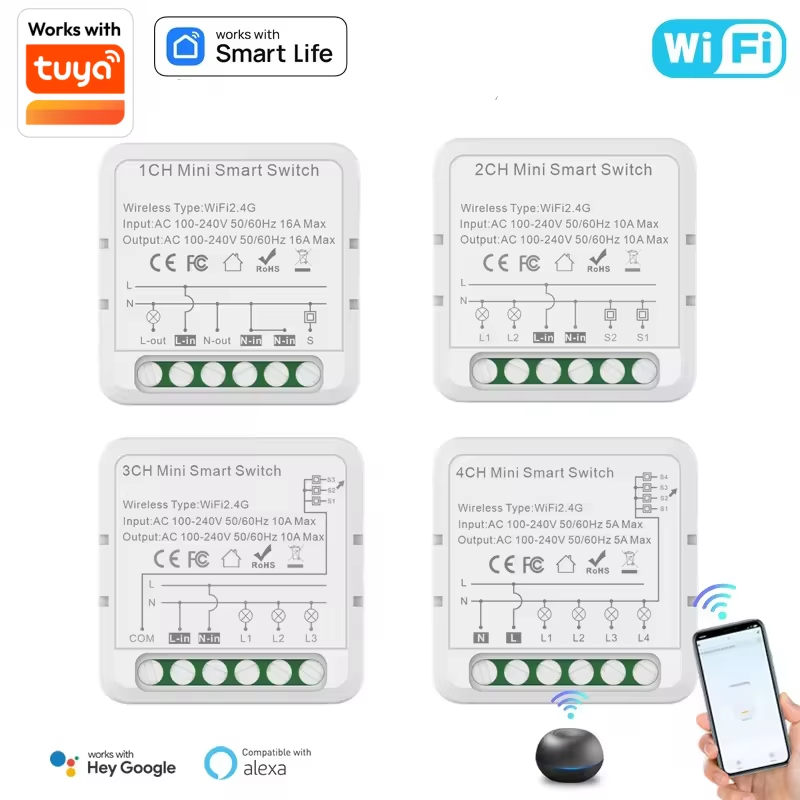
These modules are available in 1-channel, 2-channel, 3-channel, and 4-channel (gang) configurations. This versatility allows users to select the exact number of independent circuits they need to control from a single module. A single module can manage multiple light fixtures or small appliances.
For example, a 4-channel module can simultaneously manage four separate lighting circuits within a single room, or control a ceiling fan, its integrated light, and two independent lamps, all from one hidden device. This consolidation streamlines wiring and reduces the number of individual smart devices required for a multi-load scenario. The flexibility is impressive.
Opting for a multi-channel module offers significant cost-effectiveness compared to purchasing multiple single-channel devices for a similar number of loads. Furthermore, it simplifies the management within the Tuya Smart Life app, as multiple controls can be grouped under a single physical device entry. This design choice provides a more integrated and efficient automation solution, particularly for areas with several independent electrical loads. Efficiency gains are clear.
Control of the Tuya WiFi Smart Switch Module is primarily facilitated through the Tuya Smart Life mobile application. This app provides a centralized interface for scheduling, setting up automation routines, and manually toggling connected devices. The interface is intuitive, allowing for quick configuration of complex scenes and timers. App control is robust.
Beyond the app, these modules offer voice control compatibility with popular platforms such as Amazon Alexa, Google Home, and Alice. This integration allows users to command their lights or appliances using simple voice commands, adding a layer of convenience to daily routines. Imagine turning off all bedroom lights with a single phrase from your bed. Voice commands are responsive.
Crucially, these modules support 2-way control, meaning the traditional physical wall switch remains fully functional alongside the smart app and voice controls. This is a significant advantage over smart bulbs that often require the physical switch to remain 'on'. The module ensures that anyone, regardless of their familiarity with smart home tech, can still operate the lights manually. This maintains household convenience, preventing frustration for guests or family members unfamiliar with the smart home setup. Traditional switches still work.
Each module is rated for an input and output of AC 100-240V at 50/60Hz, with a maximum current of 16A. This broad voltage compatibility makes it suitable for electrical systems worldwide, from North America to Europe and Asia. The 16A maximum current rating is substantial for residential applications. Power handling is excellent.
An 16A rating means the module can comfortably handle most standard lighting circuits, including incandescent, LED, and fluorescent fixtures, as well as many small to medium-sized appliances such as fans, coffee makers, or desk lamps. This capacity provides a significant safety margin for typical household loads, minimizing the risk of overload or premature device failure. The module manages diverse loads.
Compared to older smart relays that often capped out at 10A or 12A, this 16A rating allows for greater flexibility in what can be connected. It ensures that even a circuit with multiple high-wattage LED fixtures or a more demanding appliance can be safely integrated into the smart home ecosystem. This higher capacity contributes to the module's overall reliability and versatility. Higher capacity is a clear benefit.
The modules operate within the Tuya Smart Life ecosystem, which is one of the largest and most widely supported smart home platforms. This means seamless integration with a vast array of other Tuya-compatible devices, allowing for complex automation routines and scenes. Picture managing all your living room lamps, blinds, and even your smart thermostat from a single app. The ecosystem is expansive.
Users can set up advanced automations, such as scheduling lights to turn on at sunset, triggering a fan when a smart temperature sensor detects a rise, or having exterior lights activate when a motion sensor detects movement. The cloud-based nature of Tuya allows for remote control of devices from anywhere in the world with an internet connection, providing peace of mind and enhanced security. Remote access is a core feature.
For advanced users and those who prioritize local control, the WiFi protocol offers potential for deeper integration with platforms like Home Assistant. While the stock firmware relies on the Tuya cloud, the underlying ESP8266/ESP32 chips often found in such devices open avenues for custom firmware, allowing for entirely local operation and minimizing reliance on external servers. This capability is invaluable for those seeking maximum privacy and ultra-low latency within their complex Home Assistant setup. The potential for local control is a significant draw for enthusiasts. Response delay is minimized with local control.
Performance of these WiFi smart modules is generally characterized by quick response times when controlled via the Smart Life app or voice assistants. The direct connection to the router, as opposed to routing through a hub and then to the cloud, often results in commands being executed with minimal perceived lag. This means lights turn on almost instantly when commanded. Latency is low.
Reliability within the Tuya ecosystem is well-established, with robust cloud infrastructure supporting millions of devices. The modules themselves are designed for continuous operation within standard residential electrical environments. The internal components are engineered for sustained performance. Dependability is a hallmark.
Unlike some earlier generations of smart switches that could occasionally drop offline or become unresponsive, the mature Tuya platform and improved WiFi chipsets in these modules offer a more stable connection. Regular firmware updates through the Tuya app also contribute to ongoing performance enhancements and security patches, ensuring the devices remain current and reliable over time. Stability has improved significantly.
These Tuya WiFi Mini Smart Switch Modules represent a practical and powerful step in home automation. Their compact size, multi-channel capabilities, and broad compatibility with major voice assistants make them an excellent choice for upgrading any home. The ability to maintain traditional switch functionality while adding advanced smart controls ensures a seamless transition for all household members. For those seeking to integrate these into a complex Home Assistant setup, the WiFi protocol offers an accessible pathway to advanced local control, ensuring minimal response delay and maximum customization. Imagine a home where every light and appliance responds to your voice, your schedule, or even your presence, all managed effortlessly through a discreet, reliable system. This module makes that vision a tangible reality, offering convenience, efficiency, and a truly connected living experience.
Connectivity and Network Integration
The core of this smart switch module's operation lies in its WiFi 2.4G connectivity. This protocol choice allows for direct communication with a home router, eliminating the additional expense and complexity of a separate Zigbee or Z-Wave hub. The direct connection simplifies the initial pairing process, making it accessible even for users new to smart home technology. Network setup is quick.
Operating on WiFi 2.4G means each module directly connects to the home's wireless network. This architecture provides immediate responsiveness for individual commands issued via the Tuya Smart Life application or voice assistants. For a typical residential setup, this direct IP control offers sufficient speed for most automation tasks, such as turning lights on or off. Response times are generally swift.
Compared to mesh network protocols like Zigbee or Z-Wave, WiFi devices don't require a central coordinator to relay commands across a network of devices. While this simplifies initial deployment, a large number of WiFi devices can, in some scenarios, contribute to network congestion on the 2.4GHz band. However, modern routers are increasingly adept at managing numerous client connections, mitigating this concern for most users. The direct connection is efficient.
Compact Form Factor and Installation Versatility
The physical dimensions of these modules are remarkably small, measuring approximately 1.65 x 1.65 inches. This miniature size is a critical design feature, allowing the switch to be discreetly installed behind traditional wall switches or within standard electrical junction boxes. The white, matte plastic casing feels dense and well-constructed, suggesting good mold precision and durability for an in-wall component. Installation is discreet.
This compact footprint is a significant advantage for retrofitting existing electrical systems. Unlike bulkier smart switches that demand specific deep gang boxes, these modules can often fit into tighter spaces, preserving the aesthetic of existing wall plates and switches. The screw terminals are clearly labeled for Live, Neutral, Input, and Output, facilitating straightforward wiring by a qualified electrician or experienced DIYer. Space constraints are often overcome.
Older smart home modules often presented challenges with their physical size, sometimes requiring modifications to wall boxes or causing switches to protrude. This mini module represents an upgrade, designed specifically to minimize such installation headaches. Its unobtrusive nature means the smart functionality is integrated seamlessly without altering the visible decor of a room. The design is a major improvement.
Multi-Channel Control Capabilities
These modules are available in 1-channel, 2-channel, 3-channel, and 4-channel (gang) configurations. This versatility allows users to select the exact number of independent circuits they need to control from a single module. A single module can manage multiple light fixtures or small appliances.
For example, a 4-channel module can simultaneously manage four separate lighting circuits within a single room, or control a ceiling fan, its integrated light, and two independent lamps, all from one hidden device. This consolidation streamlines wiring and reduces the number of individual smart devices required for a multi-load scenario. The flexibility is impressive.
Opting for a multi-channel module offers significant cost-effectiveness compared to purchasing multiple single-channel devices for a similar number of loads. Furthermore, it simplifies the management within the Tuya Smart Life app, as multiple controls can be grouped under a single physical device entry. This design choice provides a more integrated and efficient automation solution, particularly for areas with several independent electrical loads. Efficiency gains are clear.
Comprehensive Control Methods and Two-Way Functionality
Control of the Tuya WiFi Smart Switch Module is primarily facilitated through the Tuya Smart Life mobile application. This app provides a centralized interface for scheduling, setting up automation routines, and manually toggling connected devices. The interface is intuitive, allowing for quick configuration of complex scenes and timers. App control is robust.
Beyond the app, these modules offer voice control compatibility with popular platforms such as Amazon Alexa, Google Home, and Alice. This integration allows users to command their lights or appliances using simple voice commands, adding a layer of convenience to daily routines. Imagine turning off all bedroom lights with a single phrase from your bed. Voice commands are responsive.
Crucially, these modules support 2-way control, meaning the traditional physical wall switch remains fully functional alongside the smart app and voice controls. This is a significant advantage over smart bulbs that often require the physical switch to remain 'on'. The module ensures that anyone, regardless of their familiarity with smart home tech, can still operate the lights manually. This maintains household convenience, preventing frustration for guests or family members unfamiliar with the smart home setup. Traditional switches still work.
Robust Power Handling and Safety
Each module is rated for an input and output of AC 100-240V at 50/60Hz, with a maximum current of 16A. This broad voltage compatibility makes it suitable for electrical systems worldwide, from North America to Europe and Asia. The 16A maximum current rating is substantial for residential applications. Power handling is excellent.
An 16A rating means the module can comfortably handle most standard lighting circuits, including incandescent, LED, and fluorescent fixtures, as well as many small to medium-sized appliances such as fans, coffee makers, or desk lamps. This capacity provides a significant safety margin for typical household loads, minimizing the risk of overload or premature device failure. The module manages diverse loads.
Compared to older smart relays that often capped out at 10A or 12A, this 16A rating allows for greater flexibility in what can be connected. It ensures that even a circuit with multiple high-wattage LED fixtures or a more demanding appliance can be safely integrated into the smart home ecosystem. This higher capacity contributes to the module's overall reliability and versatility. Higher capacity is a clear benefit.
Advanced Integration and Automation Potential
The modules operate within the Tuya Smart Life ecosystem, which is one of the largest and most widely supported smart home platforms. This means seamless integration with a vast array of other Tuya-compatible devices, allowing for complex automation routines and scenes. Picture managing all your living room lamps, blinds, and even your smart thermostat from a single app. The ecosystem is expansive.
Users can set up advanced automations, such as scheduling lights to turn on at sunset, triggering a fan when a smart temperature sensor detects a rise, or having exterior lights activate when a motion sensor detects movement. The cloud-based nature of Tuya allows for remote control of devices from anywhere in the world with an internet connection, providing peace of mind and enhanced security. Remote access is a core feature.
For advanced users and those who prioritize local control, the WiFi protocol offers potential for deeper integration with platforms like Home Assistant. While the stock firmware relies on the Tuya cloud, the underlying ESP8266/ESP32 chips often found in such devices open avenues for custom firmware, allowing for entirely local operation and minimizing reliance on external servers. This capability is invaluable for those seeking maximum privacy and ultra-low latency within their complex Home Assistant setup. The potential for local control is a significant draw for enthusiasts. Response delay is minimized with local control.
Performance and Reliability
Performance of these WiFi smart modules is generally characterized by quick response times when controlled via the Smart Life app or voice assistants. The direct connection to the router, as opposed to routing through a hub and then to the cloud, often results in commands being executed with minimal perceived lag. This means lights turn on almost instantly when commanded. Latency is low.
Reliability within the Tuya ecosystem is well-established, with robust cloud infrastructure supporting millions of devices. The modules themselves are designed for continuous operation within standard residential electrical environments. The internal components are engineered for sustained performance. Dependability is a hallmark.
Unlike some earlier generations of smart switches that could occasionally drop offline or become unresponsive, the mature Tuya platform and improved WiFi chipsets in these modules offer a more stable connection. Regular firmware updates through the Tuya app also contribute to ongoing performance enhancements and security patches, ensuring the devices remain current and reliable over time. Stability has improved significantly.
Conclusion: The Smart Home Evolution
These Tuya WiFi Mini Smart Switch Modules represent a practical and powerful step in home automation. Their compact size, multi-channel capabilities, and broad compatibility with major voice assistants make them an excellent choice for upgrading any home. The ability to maintain traditional switch functionality while adding advanced smart controls ensures a seamless transition for all household members. For those seeking to integrate these into a complex Home Assistant setup, the WiFi protocol offers an accessible pathway to advanced local control, ensuring minimal response delay and maximum customization. Imagine a home where every light and appliance responds to your voice, your schedule, or even your presence, all managed effortlessly through a discreet, reliable system. This module makes that vision a tangible reality, offering convenience, efficiency, and a truly connected living experience.